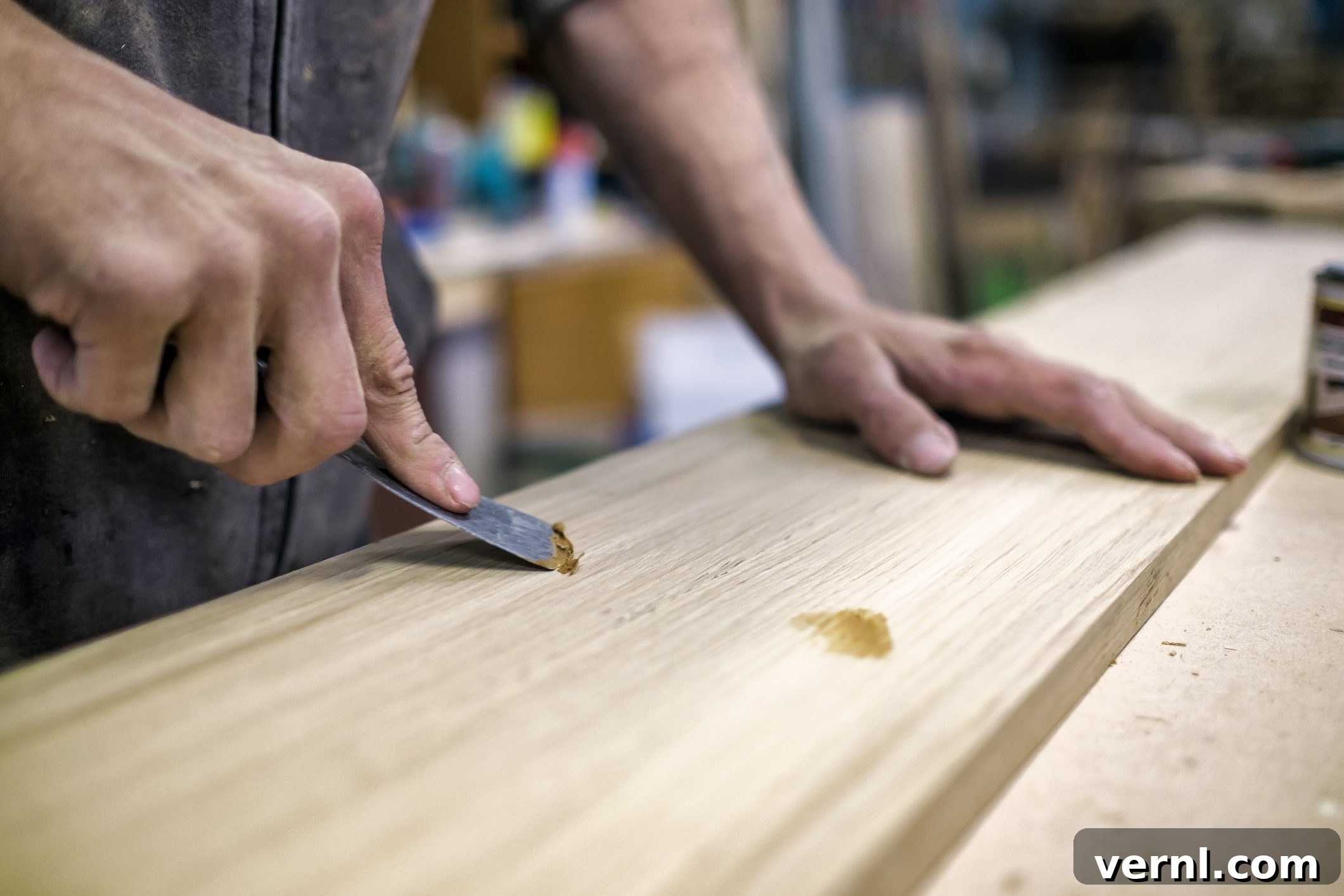
The Essential Guide to Wood Fillers vs. Wood Putty: Understanding Your Wood Repair Options
For centuries, artisans and woodworkers have faced the challenge of repairing and perfecting wooden surfaces. From the ancient Egyptians who pioneered early forms of varnishes and lacquers, the concept of mixing natural hardening resins with readily available materials like wood dust or limestone to create a basic wood filler has been a common practice. This historical ingenuity laid the groundwork for the diverse range of wood repair products we have today.
Modern woodworkers now navigate a more complex landscape of materials, often encountering products like wood putty, which traditionally differs significantly from wood filler by being predominantly synthetic. However, the continuous evolution of materials means that many contemporary wood fillers also incorporate synthetic compounds. This blurring of lines between traditional filler and putty, further complicated by hybrid solutions like epoxy wood fillers that blend characteristics of both, can make selecting the right product a daunting task.
Adding to the confusion, manufacturers and retailers don’t always provide clear distinctions between “wood filler” and “wood putty,” often using the terms interchangeably. This article aims to cut through that ambiguity, offering a definitive guide to help you make informed decisions for your woodworking projects. Let’s clarify the fundamental difference: Wood fillers are designed to be sanded and stained, making them ideal for unfinished woodwork. Wood putty, on the other hand, is best suited for repairing cracks and small holes on already finished woodwork.
What Is Wood Filler?
At its core, wood filler is a specialized compound designed to seamlessly integrate with wood fibers. It’s typically a suspension of a sandable material, such as wood dust (cellulose), gypsum, limestone, or fibrous clay minerals like attapulgite, within a solution of hardening resin. This resin, which can be solvent- or water-based, acts as a binder, allowing the filler to soak into the wood’s porous structure and form a strong, durable bond upon curing. An excellent historical example, still relevant today, is a simple mixture of fine wood dust combined with lacquer, varnish, or glue, demonstrating the timeless principle behind these products.
Contemporary wood fillers have built upon this foundation, offering enhanced performance and versatility. For instance, products like DAP Plastic Wood All Purpose Wood Filler utilize real wood fibers combined with a robust solvent-based hardening resin, mimicking the natural characteristics of wood itself. Other formulations might incorporate mineral components into their solvent- or water-based resins, each designed for specific applications and properties. Regardless of their exact composition, all true wood fillers share three defining characteristics that set them apart:
- They Harden as They Cure: This is crucial for structural integrity. As the solvents evaporate or chemical reactions occur, the filler transforms from a pliable paste into a rigid, solid mass, becoming an integral part of the wood surface.
- They Are Sandable: The ability to be sanded smooth is paramount for achieving a flush, unnoticeable repair. This allows woodworkers to feather the filler seamlessly into the surrounding wood, preparing the surface for subsequent finishing steps without visible bumps or edges.
- They Are Stainable: This characteristic is vital for repairs on unfinished wood where the final appearance needs to match the natural wood grain and color. While most fillers are porous enough to absorb some stain, those containing a higher percentage of real wood fibers generally accept stain more effectively, yielding a more consistent and natural finish. Fillers with significant mineral content might stain less uniformly, potentially requiring careful color matching.
Wood grain filler represents a specialized category within wood fillers. This spreadable paste is formulated with an even finer consistency, specifically designed to fill the minute pores and open grain patterns of flat interior wood surfaces, such as tabletops, countertops, and cabinet doors. Applied with a putty knife and then sanded flat, it creates an exceptionally smooth canvas, enhancing the clarity and uniformity of the final finish by preventing uneven absorption of stains and topcoats.
When To Use Wood Filler
Traditional one-part wood fillers are indispensable tools for preparing interior woodwork before the application of stains, paints, or other finishes. Their ability to harden, be sanded, and absorb stain makes them perfect for pre-finishing corrections. Here are some common scenarios where wood filler is your go-to choice:
- Repairing Nicks, Scratches, and Gouges: On unfinished furniture, cabinets, or trim, wood filler effectively fills in minor imperfections, creating a smooth surface ready for staining or painting. It helps restore the integrity and aesthetic appeal of the piece.
- Filling Holes and Gaps in Wood Flooring: Whether it’s small nail holes, minor divots, or even larger gaps between floorboards during a refinishing project, wood filler like Pro Finisher can be used to create a solid, stable surface that can be sanded flush and stained to match the existing floor.
- Molding and Shaping Damaged Edges: For tabletops, countertops, or shelves with chipped or damaged edges, wood filler can be meticulously applied, molded, and then sanded to perfectly recreate the original profile, allowing for a seamless repair before the final finish is applied.
While most one-part wood fillers are recommended exclusively for interior use due to their limited weather resistance, two-part wood fillers offer a significantly more robust solution. Products such as Minwax High Performance Wood Filler contain a separate hardener component that, when mixed with the filler, initiates a rapid chemical reaction. This results in an incredibly dense, rock-hard substance that not only withstands harsh weather conditions but also becomes strong enough to be drilled, tapped, and even hold screws securely. This remarkable durability makes two-part fillers suitable for both indoor and outdoor applications, including structural repairs. While they are sandable to achieve a smooth surface, their dense, non-porous nature often means they are not stainable in the traditional sense, though they can usually be painted. These two-part systems share many characteristics with epoxy wood fillers, effectively blurring the lines between traditional wood filler and the more resilient properties typically associated with wood putty due to their extreme density and hardness.
What Is Wood Putty?
In contrast to wood filler, wood putty is formulated for a distinctly different purpose and possesses a unique set of characteristics. It is significantly denser and more pliable than most wood fillers, often requiring application with a putty knife due to its thicker consistency. Composed primarily of plastics and oil-based solvents, wood putty maintains a certain degree of flexibility even after application, rather than hardening into a rigid mass.
This inherent pliability gives wood putty several key advantages: it will not shrink, crack, or fall out over time, even with minor wood movement. However, this non-hardening property also means that wood putty is generally not sandable. Attempting to sand it will typically result in smearing rather than smoothing. Furthermore, wood putty is typically not stainable because its oil-based composition prevents it from absorbing wood stains effectively. To circumvent this, many types of wood putty, such as those found in the Coconix Floor and Furniture Repair Kit, are pre-colorized to match a wide array of popular wood tones, eliminating the need for staining altogether.
Wood putty is specifically designed for cosmetic repairs on surfaces that have already been finished. Its primary role is to subtly conceal imperfections without requiring further sanding or finishing processes. If you need to hide a scratch on a finished dining room table or seamlessly cover nail holes on a painted baseboard, wood putty is the appropriate choice. Products like Guardsman Wood Repair Filler Sticks exemplify the convenience of wood putty, offering easy, mess-free touch-ups on finished furniture surfaces.
When To Use Wood Putty
The versatility of wood putty extends to both interior and exterior applications, making it a valuable tool for quick and effective cosmetic repairs on finished surfaces. Its non-hardening, pliable nature is perfect for situations where sanding and staining are either undesirable or impractical:
- Filling Dents, Cracks, and Small Holes on Finished Surfaces: For furniture, flooring, interior trim, or cabinetry that has already been stained, painted, or varnished, wood putty provides an excellent solution for filling minor imperfections. It blends in discreetly without disturbing the existing finish.
- Repairing Gouges and Cracks in Exterior Woodwork: While wood putty is not typically structural, certain formulations are suitable for exterior cosmetic repairs. When used outdoors, especially on painted surfaces, it can fill minor cracks and gouges, but it usually needs to be painted over to ensure weather resistance and aesthetic consistency.
- Addressing Cracks in Decking Boards: For minor surface cracks in decking, a pliable wood putty can offer a temporary cosmetic fix. However, for more durable and long-lasting repairs that prevent cracks from spreading, a two-part wood filler (which, as discussed, shares characteristics with hardening putty) is a superior option. Its ability to bond with the wood and cure to a rock-hard consistency provides structural reinforcement and better resistance to the elements and foot traffic.
Key Differences: Wood Filler vs. Wood Putty
To summarize and provide a clear distinction, here’s a breakdown of the primary differences between wood filler and wood putty:
| Feature | Wood Filler | Wood Putty |
|---|---|---|
| Composition | Wood fibers/minerals suspended in hardening resin (solvent or water-based). | Plastics and oil-based solvents. |
| Curing/Hardening | Hardens significantly as it cures, becoming rigid. | Remains pliable and flexible; does not harden. |
| Sandability | Yes, it can be sanded smooth to create an even surface. | No, it smears and cannot be sanded effectively. |
| Stainability | Yes, most types can absorb stain (especially wood fiber-based ones). | No, it does not absorb stain. Often comes pre-colored. |
| Shrinkage/Cracking | Minimal shrinkage; can sometimes crack if applied too thickly without proper curing. | No shrinkage or cracking due to its pliable nature. |
| Best Use Case | Unfinished wood for structural or cosmetic repairs before staining/painting. | Finished wood for cosmetic repairs on existing surfaces. |
| Durability (Interior/Exterior) | One-part for interior; two-part/epoxy for interior & exterior, often drillable. | Generally for interior finished surfaces; some exterior grades exist but usually require painting. |
Tips for Successful Wood Repair
- Surface Preparation: Always ensure the wood surface is clean, dry, and free of any loose debris before applying either filler or putty. This promotes optimal adhesion and a smoother finish.
- Matching Colors: If you are staining, choose a wood filler that explicitly states it is stainable and test it on a scrap piece of the same wood if possible. For wood putty, select a pre-colored option that closely matches your finished wood.
- Application Technique: Apply wood filler in thin layers, allowing each layer to dry completely before applying the next, especially for deeper holes. Use a putty knife or spreader to press the material firmly into the void, ensuring good contact.
- Patience is Key: Allow adequate drying and curing time. Rushing the process, particularly with wood fillers, can lead to poor adhesion, cracking, or uneven finishes.
Conclusion
Navigating the world of wood repair doesn’t have to be complicated. By understanding the fundamental differences between wood filler and wood putty, and recognizing when to use each, you empower yourself to achieve professional-looking results. Whether you’re preparing unfinished furniture for a flawless stain or simply touching up a scratch on a cherished heirloom, choosing the correct product ensures durability, aesthetics, and ultimately, the success of your woodworking project. Remember: filler for unfinished, sandable, and stainable repairs; putty for finished, non-sandable, and cosmetic touch-ups.