As the last vestiges of winter snow finally melt away, giving way to the gentle spring showers and revitalizing sunshine, it’s the perfect time to assess the state of your lawn. Like many homeowners in my quiet, blue-collar neighborhood, I often find myself contending with stubborn problem spots where maintaining healthy, flourishing grass seems like an uphill battle. I’ve long understood that aerating your lawn every few years is one of the most effective strategies for cultivating a vibrant, lush, and resilient turf.
Lawn aeration is a vital process that involves punching small holes, or extracting cores, from the soil. This crucial step allows essential elements like air, moisture, and nutrients to deeply penetrate the grass roots. The result is a stronger root system that can grow deeper into the soil, leading to a denser, more robust, and ultimately healthier lawn that can better withstand environmental stresses.
In the past, my approach to aeration involved the significant undertaking of renting a large, heavy core-aerating machine. While effective for an entire lawn, this method came with its own set of challenges. Maneuvering such a bulky piece of equipment across my property was a considerable hassle, and for addressing just a few small patches of troubled turf, it felt like an unnecessary expenditure of both time and money.
It was during a recent visit to my local garden center that I serendipitously discovered the Corona Yardbreather Aerator. This innovative manual tool immediately struck me as the perfect solution for tackling those smaller, problematic areas. Excited by its potential, I promptly purchased one, eager to put it to the test and see if it could deliver the targeted aeration my lawn needed.
Understanding the Importance of Lawn Aeration for a Thriving Yard
Before diving into the specifics of the Corona Yardbreather, it’s worth reiterating why lawn aeration is a cornerstone of effective lawn care. Over time, soil in lawns can become compacted due to foot traffic, mowing, heavy rains, and even the natural settling of the soil. This compaction chokes off grass roots, preventing them from accessing the vital oxygen, water, and nutrients they need to grow. The result is thinning grass, bare spots, increased susceptibility to disease and pests, and poor water absorption, leading to runoff rather than deep penetration.
Aeration effectively reverses this compaction. By creating small channels in the soil, it:
- Improves Air Exchange: Allows oxygen to reach the root zone, which is crucial for healthy root development and beneficial microbial activity.
- Enhances Water Penetration: Water can more easily soak into the soil rather than pooling on the surface or running off, ensuring roots receive adequate hydration.
- Boosts Nutrient Uptake: Fertilizers and other soil amendments can penetrate deeper, becoming more accessible to the grass roots, leading to more efficient nutrient utilization.
- Encourages Stronger Root Growth: Deeper, healthier roots make the lawn more resilient to drought, heat stress, and various environmental pressures.
- Reduces Thatch Buildup: Aeration helps break down thatch (a layer of dead grass material between the green blades and the soil surface) by improving soil contact and microbial activity.
Incorporating aeration into your annual lawn care routine, especially in spring or fall, is a proactive step towards a consistently beautiful and healthy landscape.
What is the Corona Yardbreather Aerator?
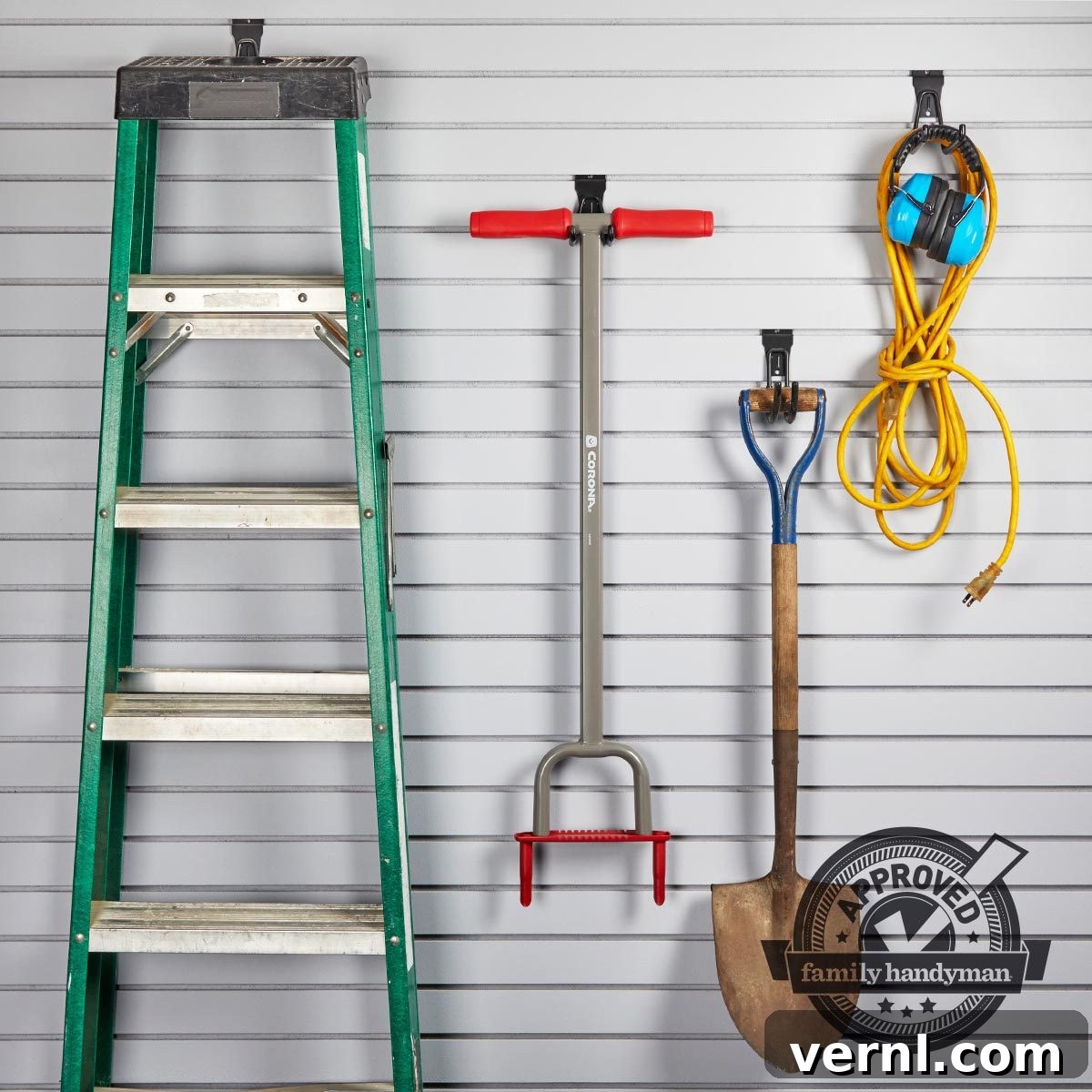
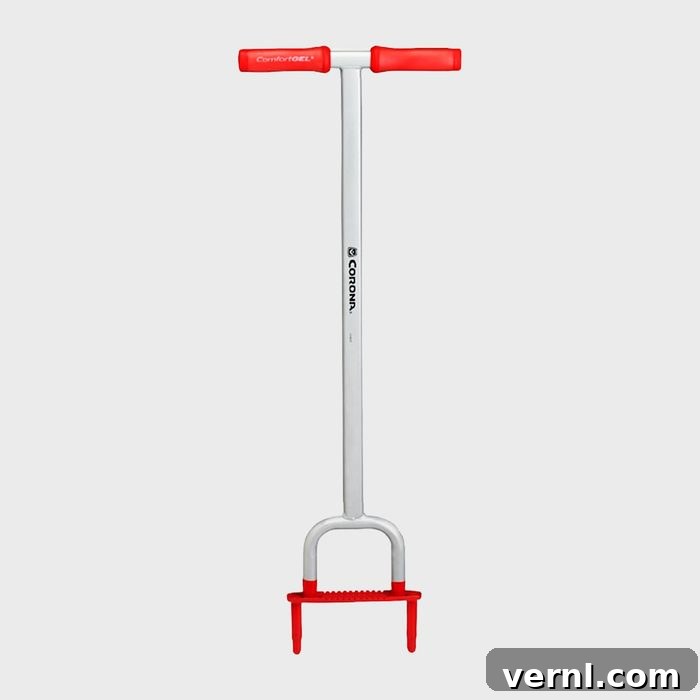
The Corona Yardbreather is a purpose-built manual aerator designed for efficiency and ease of use. Crafted from sturdy, yet lightweight tubular steel, this tool measures just over three feet in length, from its cutting tips to its comfortable handle grips. It features soft, ergonomically designed rubber handles that provide a secure and comfortable grip, reducing fatigue during use. A critical design element is the slip-resistant grooves on its footplate, which enhance stability and safety as you apply downward pressure with your foot.
The core function of the Yardbreather is its ability to repeatedly cut and automatically eject 3-1/2-inch soil plugs with each step. This mechanism is key to its effectiveness, ensuring that new channels are created while the removed soil cores are cleanly expelled, preventing clogging under ideal conditions.
Upon my initial inspection, the Yardbreather impressed me with its solid construction and apparent durability. Its length felt perfectly suited to my 5-foot 11-inch frame, allowing for comfortable operation without excessive bending. Furthermore, my large work boots fit snugly and securely within the footplate enclosure, providing excellent leverage. With the forecast predicting the warmest Saturday of the spring season, I was particularly eager to get outdoors and put this promising tool through its paces.
Testing the Corona Yardbreather: Beyond the Patches
While my initial intention for the Yardbreather was to address specific problem areas, I decided to push its limits and truly understand its capabilities. I wanted to experience what it would be like to use this manual tool for a much larger task: aerating my entire 1800-square-foot front yard, in addition to the various problematic patches scattered across my property. This comprehensive test would allow me to evaluate its performance not just for targeted repairs, but also for more extensive lawn maintenance, providing a more thorough assessment of its strengths and potential limitations.
Manual Aeration vs. Rental Machines: A Cost-Benefit Analysis
The decision between a manual aerator like the Yardbreather and a heavy-duty rental machine often comes down to the size of your lawn, your budget, and your physical capacity. Rental machines, typically gas-powered, can cover large areas quickly and efficiently, making them ideal for expansive lawns or properties with severe compaction issues. However, they come with significant drawbacks: rental fees, transportation challenges (often requiring a truck or trailer), maintenance responsibilities, and the sheer effort of operating a heavy, vibrating piece of machinery. For many homeowners, the cost-effectiveness and convenience simply don’t align with their needs.
This is where manual aerators shine. While more labor-intensive for vast spaces, they are incredibly cost-effective, requiring only an initial investment. They are easy to store, require no fuel or complex maintenance, and offer precise control, which is invaluable for targeting specific problem spots, high-traffic zones, or smaller urban lawns. The Corona Yardbreather positions itself perfectly within this niche, offering an accessible and practical solution for focused aeration needs without the complexities associated with larger machines.
Performance Review: A Hands-On Experience with the Yardbreather
Embarking on the aeration of my 1800-square-foot front yard with the Corona Yardbreather was undeniably a significant workout! I began by systematically plunging the tool into the ground, stepping on the footplate with firm pressure, and moving methodically down my 90-foot property line, spacing each plunge approximately eight inches apart. With each step, the tool’s clever design was supposed to automatically eject two core plugs – one from each side of the aerator’s twin tines.
Initially, the process was smooth. However, as I progressed into the second row, maintaining the same eight-inch spacing, I encountered an issue: the plug cutter on the right side of the tool began to clog, failing to eject the soil core. This required me to stop and manually clear the obstruction. I had to pause twice in that row, and subsequently at least once in nearly every other row across the yard, to pry out the stubbornly lodged plugs. My makeshift tools evolved from a small twig to a more effective flathead screwdriver, which I retrieved from the garage. This recurring clogging became increasingly irritating as the task wore on, breaking the rhythm and adding considerable time to the project. Despite this hiccup, the finished product was visually satisfying; the yard was thoroughly aerated and ready for the subsequent application of fertilizer.
Durability and Ergonomics Under Pressure
Despite the clogging issue, the tool itself demonstrated impressive comfort, solidity, and overall robust construction. The Yardbreather’s tubular steel shaft proved exceptionally rigid, showing no signs of bending or twisting even as I repeatedly stomped down on the footplate. This unwavering stability was maintained even when the plug cutters encountered unexpected obstacles like buried rocks or stubborn tree roots. The tool absorbed these impacts without faltering, a testament to its durable design and quality materials.
Unraveling the Clogging Mystery: Soil Conditions and Composition
After completing the arduous task, I delved deeper into understanding why the plug blockage occurred. I learned that several factors can contribute to this, but the most likely culprits are soil moisture levels and soil makeup. Given that I undertook this project in April, following a period of ample rainfall, the soil was undoubtedly moist. This excess moisture resulted in the extracted plugs being muddier and softer, making them far more prone to jamming within the tines rather than ejecting cleanly.
Soil composition is another critical consideration. The Corona Yardbreather, like many core aerators, is not recommended for use in lawns with significant amounts of clay in the soil makeup, precisely because clayey soil tends to be dense, sticky, and highly susceptible to clogging when moist. If you’re uncertain about your soil type, consulting a local gardener or visiting a nearby garden center for advice is a smart move. Alternatively, taking a core sample yourself and examining its texture and composition will provide the most accurate and informed assessment for your specific lawn.
Why the Corona Yardbreather is a Smart Investment for Your Lawn Care Arsenal
The Corona Yardbreather Lawn Aerator stands out as a strong, meticulously constructed tool designed for longevity and effective performance. While using it for expansive areas might feel like a significant workout, it truly excels and proves ideal for tackling persistent problem spots, high-traffic zones, or maintaining smaller urban lawns. This manual aerator efficiently performs its core task of soil aeration, but its effectiveness is optimized when the soil has had sufficient time to dry out somewhat after rainfall and is not predominantly composed of dense, clay-like material.
For an affordable price point of around $30, the Corona Yardbreather represents a fantastic and highly practical addition to any garage or gardening shed. It offers an accessible, low-maintenance way to keep your lawn looking vibrant, healthy, and pristine for many years to come, without the recurring costs and logistical challenges of renting heavier machinery. Its targeted approach allows homeowners to address specific areas of concern proactively, preventing minor issues from escalating into major lawn problems.
Maximizing Your Aeration Efforts: Best Practices for Using the Yardbreather
To get the most out of your Corona Yardbreather and ensure optimal performance, consider these helpful tips:
- Timing is Everything: Aerate when your grass is actively growing – typically in late spring or early fall. Avoid aerating during periods of extreme heat or drought stress.
- Moisture Control: The sweet spot for soil moisture is crucial. The soil should be moist enough to allow the tines to penetrate easily, but not so wet that it becomes muddy and clogs the tool. A good rule of thumb is to water your lawn lightly a day or two before aerating, or wait a couple of days after a significant rain.
- Prepare Your Lawn: Mow your lawn to its regular height before aerating. This makes it easier to see your progress and ensures the tool won’t get tangled in tall grass.
- Develop a Pattern: For even coverage, work in a systematic pattern across your lawn, perhaps overlapping slightly on each pass. This ensures no spots are missed, even if you’re only tackling specific patches.
- What to Do After Aeration: Aeration creates ideal conditions for overseeding, fertilizing, and top-dressing. The newly created holes provide excellent seed-to-soil contact and allow nutrients to reach deeper roots more effectively.
- Tool Maintenance: After each use, clean any residual soil from the tines and footplate. A quick rinse and wipe-down will prevent rust and ensure the tool is ready for its next task. Storing it in a dry place will prolong its lifespan.
By following these guidelines, you can significantly enhance the effectiveness of the Corona Yardbreather, transforming your lawn into a greener, healthier, and more resilient oasis.
Where to Buy Your Corona Yardbreather Lawn Aerator
Ready to take control of your lawn’s health? You can conveniently purchase the Corona Yardbreather Lawn Aerator online or find it in-store at your local Home Depot, Tractor Supply Co., or Lowe’s. Invest in your lawn today and enjoy the benefits of a stronger, more beautiful yard tomorrow!