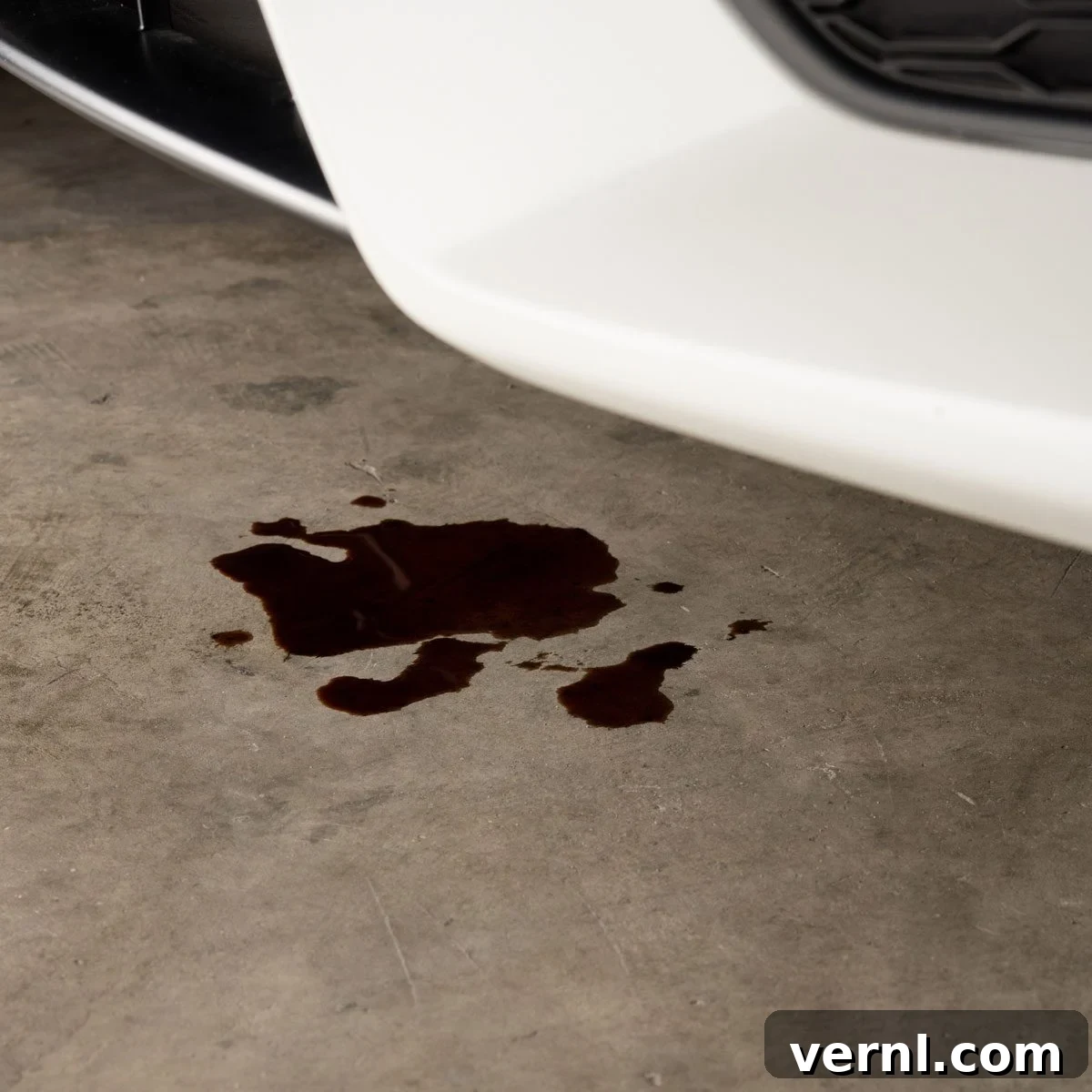
Few sights are as disheartening to a car owner as a dark, glistening puddle beneath their parked vehicle. An engine oil leak is more than just a messy annoyance; it’s a critical indicator that your vehicle requires immediate attention. Allowing your engine to lose too much oil too quickly can lead to severe lubrication deficiencies, which can culminate in catastrophic engine damage or even complete engine failure. Therefore, understanding the root causes of oil leaks and addressing them promptly is absolutely vital for maintaining your vehicle’s health, preserving its lifespan, and avoiding exorbitant repair costs down the road.
Understanding Why Your Car Leaks Oil: Common Causes and Solutions
The vast majority of engine oil leaks stem from the deterioration of engine gaskets, O-rings, and seals. These essential components, engineered to create a tight, impermeable barrier between various engine parts, are subjected to relentless stress. Over time, constant exposure to extreme heat, significant pressure fluctuations, and the naturally corrosive properties of engine fluids causes them to shrink, harden, and become brittle. This degradation process inevitably creates minuscule pathways for oil to escape, resulting in those telltale puddles and a significant risk to your engine’s long-term health. Key areas frequently identified as sources of an engine oil leak include the oil pan drain plug, the oil filter housing, and especially the rocker (valve) cover gaskets. Let’s explore these and other prevalent reasons why a car might be leaking oil.
A primary catalyst for premature gasket and seal failure is insufficient vehicle maintenance. Extending the intervals between recommended oil changes allows engine oil to break down significantly. As oil ages, it becomes saturated with impurities; condensation from temperature changes and combustion by-products accumulate, turning what was once a protective lubricant into a contaminated, acidic sludge. Once engine oil becomes overloaded with these contaminants, acidic compounds begin to form. These acids are highly corrosive and actively attack and degrade the rubber, silicone, and composite materials used in engine gaskets and seals. This chemical assault weakens their structural integrity, making them brittle, prone to cracking, and ultimately leading to oil leaks. Therefore, regular oil changes are not merely about lubrication; they are fundamental to preserving the health and longevity of your engine’s crucial sealing components. It is always wise to have any suspected oil leak thoroughly inspected by a certified mechanic to ensure an accurate diagnosis and proper repair, thereby safeguarding your vehicle from more severe and expensive issues in the future.
Gaskets, Seals, and O-rings: Your Engine’s Essential Barriers
Engine gaskets, seals, and O-rings are meticulously designed components that play an indispensable role in your engine’s operation. Their fundamental function is dual-pronged: primarily, they are engineered to securely contain engine oil within its designated channels, galleries, and compartments, preventing any leakage. Equally important, they act as vital defensive barriers, keeping out harmful external elements such as dust, dirt, and moisture. The intrusion of these contaminants can severely accelerate oil breakdown, contaminate delicate internal engine parts, and ultimately lead to premature wear and damage. When these critical sealing elements succumb to wear, age, or damage, engine oil inevitably finds a path to escape, signaling a problem that demands prompt and professional attention.
Diagnosing the precise source of an oil leak can sometimes be complex, as oil can travel before dripping. However, understanding the common points of failure and their characteristic signs can significantly aid in identifying the issue. Here’s a detailed breakdown of where you might observe leaking oil:
- Rocker (Valve) Cover Gaskets: These gaskets are responsible for sealing the valve covers to the cylinder head, effectively preventing oil from escaping the upper part of the engine. A failing rocker cover gasket often presents with noticeable dirt and gunk buildup around the top of the engine, particularly directly on or near the valve covers. You might also spot small, localized puddles of oil around the cylinder head indents and spark plug wells. Another unmistakable sign is a distinctive burning oil smell, especially prevalent when the engine is hot, caused by oil dripping onto the scorching exhaust manifold. Furthermore, oil spots or drip stains appearing directly under the center of the engine could indicate this common issue. Fortunately, leaky rocker cover gaskets are typically among the more straightforward oil leaks to identify and, for many mechanically inclined individuals, a manageable DIY repair.
- Front and Timing Cover Gasket and Seal: Situated at the very front of the engine, these gaskets and seals are crucial for sealing the timing chain or timing belt cover to the engine block. A leak originating from this specific area will typically manifest as oil visibly seeping or steadily dripping from the front or central section of the engine block. Given that these components protect the vital timing mechanism, which synchronizes engine’s camshaft and crankshaft, addressing such a leak promptly is imperative. Ignoring it could lead to potential damage to the timing system, affecting engine performance and potentially causing catastrophic failure if the timing belt or chain becomes contaminated or breaks.
- Front Main Seal, Timing Cover Gasket, or Seal: These seals are specifically positioned at the front end of the crankshaft, often located just behind the harmonic balancer and within or behind the timing cover. When the front main seal or any related timing cover seals fail, you will frequently observe engine oil being “slung” or sprayed extensively over the drive belts (such as the serpentine belt) and/or the timing belt. This occurs because the rotating crankshaft mechanically throws the escaping oil outwards. A significant leak here not only results in considerable oil loss but can also contaminate and degrade the drive belts themselves, leading to premature wear, squealing, or even sudden failure of the belts, which can incapacitate systems like power steering, the alternator, and air conditioning.
- Rear Main Oil Seal: This is arguably one of the most problematic oil leaks to repair, as the seal is located at the very back of the engine, where the crankshaft exits to connect to the transmission. If the top and front sections of your engine appear thoroughly dry, yet you consistently observe oil dripping from between the engine block and the transmission bell housing, a failing rear main oil seal is a very strong suspect. Further confirmation often necessitates the removal of the transmission inspection cover to visually ascertain if the flywheel, which resides in this specific area, is coated in oil. Repairing a rear main seal is typically a highly labor-intensive and costly procedure, almost always requiring the complete removal of the transmission to access and replace the seal.
- Camshaft Seal: Located at the rear of the cylinder head, the camshaft seal prevents oil from escaping where the camshaft passes through the cylinder head. A faulty camshaft seal will typically manifest as an oily residue or distinct drip stains found below the rocker cover and usually towards the rear section of the engine block. While not as common as rocker cover leaks, it represents a distinct source that should be meticulously checked if other top-end engine leaks have been ruled out during diagnosis.
- Oil Pan Gasket: The oil pan gasket is designed to create a tight seal between the oil pan and the bottom of the engine block. A leak originating specifically from this gasket can be particularly challenging and misleading to diagnose. This is because the force of gravity will cause oil from almost any other leaking engine gasket or seal (situated higher up) to eventually drip down onto the oil pan before falling to the ground. This often creates the deceptive illusion that the oil pan gasket itself is the primary source of the leak. Therefore, if you observe oil drops anywhere beneath the engine, it is absolutely crucial for your mechanic to thoroughly clean the engine and then meticulously verify that the leak originates directly from the seam of the oil pan gasket, rather than being mere runoff from a different, higher source. A genuine oil pan gasket leak will show oil seeping directly from the junction where the pan meets the engine block.
- Oil Filter Adapter Mounting Gasket: If you pinpoint oil dripping specifically from the immediate vicinity of the oil filter, the issue could be with the oil filter itself or, more commonly, with the gasket that seals the oil filter adapter to the engine block. It is essential to inspect both components diligently. A prevalent mistake during oil changes is over-tightening the oil filter, which can not only damage the filter’s own integrated seal but can also exert excessive stress on, and potentially compromise, the oil filter adapter mounting gasket. This can lead to persistent leaks even after the oil filter has been correctly replaced in subsequent services.
- Head Gasket: While less common as a direct external oil leak source, a failing head gasket can indeed cause oil to escape externally, though it is frequently misdiagnosed as a rocker cover or camshaft seal leak due to its proximity. More typically, a severely compromised head gasket will manifest through internal leaks, allowing engine coolant to mix with the oil (creating a milky sludge), or enabling coolant to enter the combustion chambers. This internal burning of coolant usually results in visible white smoke coming from the tailpipe, often accompanied by engine overheating, unexplained coolant loss, or a noticeable loss of engine power. An external oil leak from the head gasket usually indicates a more advanced and severe stage of failure, often requiring extensive engine repair.
- Dipstick Tube O-ring: A seemingly minor yet frequently overlooked source of oil leaks is the small O-ring located at the base of the dipstick tube, where it inserts into the engine block or oil pan. If your engine’s dipstick tube feels noticeably loose, wobbly, or shows signs of cracking, it’s highly probable that this O-ring is no longer sealing effectively, leading to a potentially significant oil leak. Furthermore, if the dipstick’s mounting bracket is broken or entirely missing, the tube can shift, further compromising the seal. It is paramount to address this issue promptly, not solely to stop the leak, but also to ensure you can accurately check your engine oil level – a fundamental task for proper engine maintenance and health.
Beyond Gaskets and Seals: Other Critical Causes of Oil Leaks
While gaskets and seals are often the primary suspects, other components within your engine’s intricate oil system can also develop problematic leaks. These alternative sources, though sometimes less obvious to diagnose, can be equally detrimental to your engine’s health if not promptly identified and resolved:
- Oil Pressure Sending Unit: This small but crucial sensor is responsible for accurately monitoring your engine’s oil pressure and transmitting that vital data to your dashboard gauge or warning light. Because it is directly threaded into the engine’s pressurized oil system, a failing oil pressure sending unit can cause anything from a slow, intermittent seep to a sudden, dramatic gusher of oil. A clear indication of a failing unit is an erratic oil pressure warning light flickering erratically on your dashboard, or inconsistent and unreliable oil pressure readings on the gauge. In more modern vehicles, a faulty sending unit can even transmit erroneous low oil pressure data to the engine’s computer, potentially triggering a safety shutdown of the engine for no apparent mechanical reason, leaving you stranded.
- Oil Pan Damage: The oil pan, situated at the very bottom of the engine, is inherently vulnerable to external impacts. Driving over significant road debris, encountering a deep pothole at speed, or accidentally scraping a curb can cause direct damage, resulting in a puncture, crack, or deformity in the oil pan itself. Even a seemingly minor crack can lead to a continuous and progressively accelerating oil leak, as the oil pan houses the engine’s entire oil reservoir. Such damage demands immediate attention and often necessitates the complete replacement of the oil pan to ensure a leak-free seal and prevent further oil loss.
- Oil Pan Drain Plug Issues: This small yet critical component serves as the access point for draining old oil during routine oil changes. Problems most commonly arise from improper tightening procedures. Over-tightening the oil pan drain plug or the oil filter during an oil change can crush their respective sealing gaskets, creating tiny gaps through which oil can escape. More severely, over-tightening the drain plug can strip the delicate threads inside the oil pan itself. While replacing a stripped drain plug with an oversized one or a specialized repair kit is a relatively straightforward fix (though it typically requires draining all new engine oil), if the threads within the oil pan are irreparably damaged, you’re looking at a significantly more costly repair that might involve re-tapping the threads, using a helicoil, or in severe cases, replacing the entire oil pan. Always use a torque wrench to ensure precise and correct tightening.
- A Bad, Stuck, or Clogged PCV (Positive Crankcase Ventilation) Valve: The PCV valve is a vital, often overlooked component in your engine’s emissions control system. Its primary function is to relieve crankcase pressure by venting harmful “blow-by” gases (combustion gases that escape past the piston rings) back into the engine’s intake manifold to be re-burned. If this valve becomes faulty, stuck in a closed position, or clogged with sludge and carbon deposits, it cannot adequately vent these gases, leading to an excessive buildup of internal engine pressure. This increased pressure can then force oil past various engine O-rings, gaskets, or seals, effectively creating new oil leaks or exacerbating existing ones. A malfunctioning PCV valve can cause a myriad of related headaches, making it a crucial component to inspect if you’re experiencing multiple or unexplained oil leaks across your engine.
The Impact of Poor Installation on Engine Oil Leaks
Occasionally, engine oil leaks are not a consequence of component failure due to age or wear, but rather the result of errors made during previous maintenance or repair procedures. Improper installation practices can swiftly compromise the integrity of even brand-new parts, leading to immediate or delayed leaks that can be frustrating to diagnose:
- Improper Part Installation: Correct and meticulous installation of gaskets, seals, and other components within the oil system is paramount for preventing leaks. For instance, over-tightening bolts can crush and distort gaskets, permanently compromising their ability to form a proper seal. Conversely, not tightening bolts sufficiently, or failing to adhere to a specific tightening sequence (which is often crucial for components like valve covers, cylinder heads, or oil pans), can result in uneven pressure distribution, creating subtle gaps or distortions where oil can inevitably escape. Every component has specific torque specifications and, in many cases, a particular tightening pattern that must be precisely followed to ensure an effective and lasting seal. Ignoring these manufacturer guidelines can lead to persistent, costly, and frustrating oil leaks.
- Oil Filter “Double Gasket” Error: This is a surprisingly common, yet potentially catastrophic, mistake that can occur during an oil filter replacement. It happens when the old oil filter’s rubber gasket sticks firmly to the engine block during removal, and the technician (or DIY enthusiast) fails to notice its presence. Consequently, a new oil filter, complete with its own fresh sealing gasket, is then installed directly on top of the old, stuck gasket. This “double gasket” scenario prevents a proper, tight seal from forming between the new filter and the engine’s filter mounting surface. The immediate and inevitable result is often a massive, rapid loss of engine oil, which, if not caught and rectified immediately, can lead to severe engine damage or even total engine failure due to critical oil starvation. It is an essential best practice to always visually confirm that the old gasket has been completely removed from the engine block before installing any new oil filter.