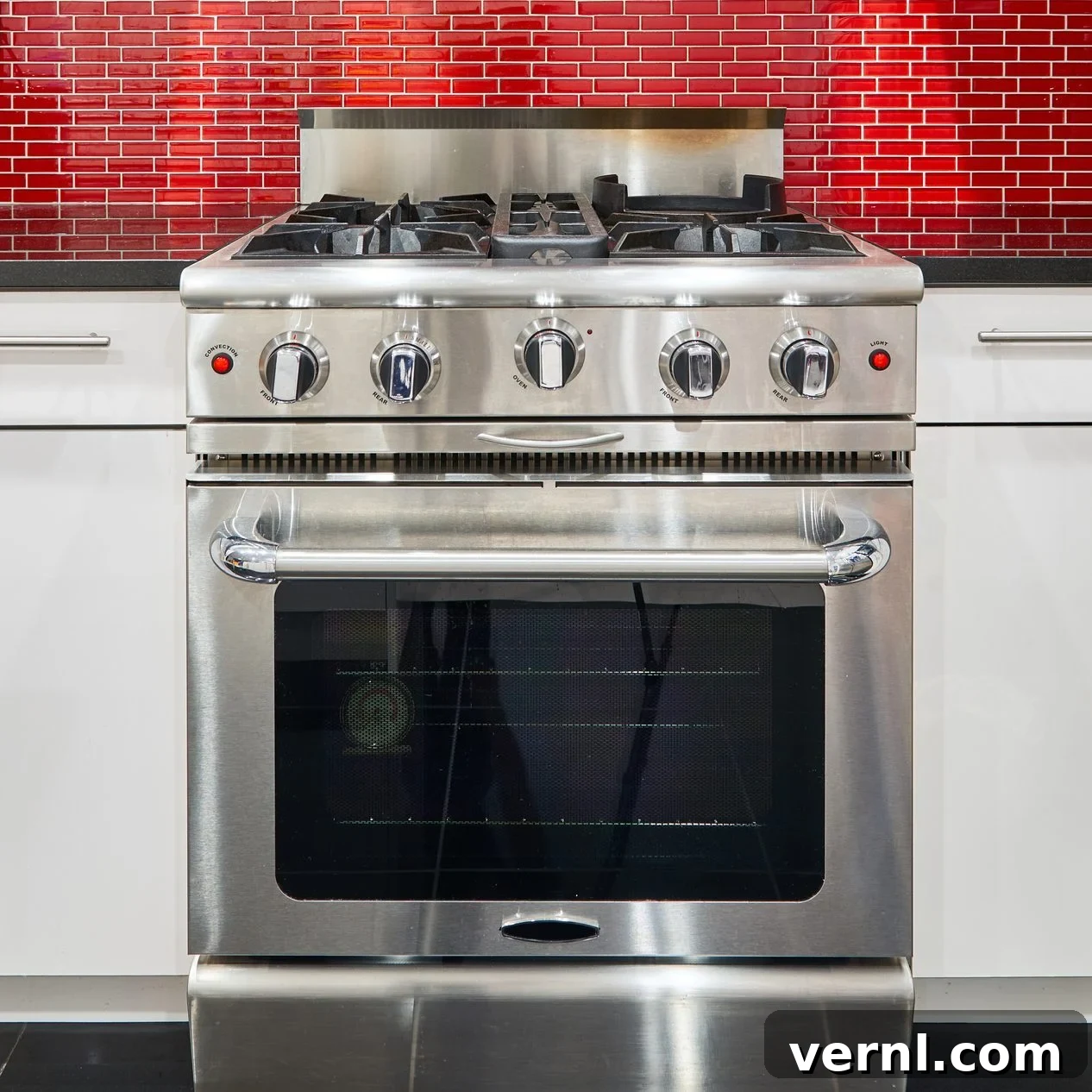
The Hidden Dangers of Self-Cleaning Ovens: An Expert’s Guide to Safer Alternatives
In my extensive career spanning over three decades as a dedicated appliance repair professional, one particular service call consistently ranks as the most frequent and frustrating: fixing ovens that have ceased functioning after their owners utilized the self-cleaning feature. The allure of a sparkling clean oven with minimal effort is undeniably strong, yet when we meticulously evaluate the risk-to-benefit ratio, the act of engaging your oven’s self-clean cycle can be likened to navigating shark-infested waters. While there’s no absolute guarantee of a catastrophic encounter, the probability of experiencing significant issues, based on my vast experience, is alarmingly high. This article aims to demystify the self-cleaning process, expose its inherent dangers, outline the costly repairs it often necessitates, and ultimately provide you with safer, more effective cleaning methodologies that will prolong your appliance’s life and ensure your household’s safety.
Understanding the Self-Cleaning Oven Mechanism: A Recipe for Disaster?
At its core, a self-cleaning oven is designed to incinerate food debris, grease, and grime, converting them into a fine ash that can then be easily wiped away. This impressive feat of pyrolytic cleaning is achieved by elevating the oven’s interior temperature to an astounding level, often reaching upwards of 900 to 1,000 degrees Fahrenheit (approximately 480 to 540 degrees Celsius), and maintaining this extreme heat for an extended duration, typically between three to five hours. While effective at burning away residue, therein lies the fundamental problem. Such intense and prolonged heat is not benign; it subjects the intricate and delicate components of your oven to immense thermal stress, often pushing them beyond their designed limits and leading to premature failure.
The Costly Aftermath: Components Most Vulnerable to Self-Cleaning Cycles
The relentless high temperatures generated during the self-cleaning cycle place an immense strain on numerous internal components of your oven. Here’s a detailed look at the parts most susceptible to damage, outlining the typical symptoms and the associated repair costs:
-
The High-Limit Switch: The Sentinel of Safety That Often Fails First
This critical safety device is arguably the most common casualty of the self-clean cycle. The high-limit switch acts as a thermostat, designed to cut off power to the heating elements or igniters if the oven’s internal temperature exceeds a safe threshold. Paradoxically, the extreme heat of the self-clean cycle itself can cause this switch to trip permanently or fail altogether. When it fails, your oven will typically stop heating entirely, rendering all its cooking functions inoperable. You might also notice the cooling fan activating, even when the oven isn’t actively heating, as it attempts to dissipate heat from a system it believes is still hot. Replacing a high-limit switch is a task best left to a qualified professional, and you can expect repair costs to hover around $200, excluding labor and parts.
-
The Persistent Door Lock: A Consequence of Thermal Stress
During the self-cleaning process, the oven door automatically locks to prevent accidental opening and potential burns. Unfortunately, the intense heat can cause the locking mechanism, its associated motor, or the control board that manages it, to warp, seize, or malfunction. A common scenario is the door remaining stubbornly locked long after the two-hour cooling period has elapsed, preventing access to your oven. This inconvenient and frustrating issue also necessitates a professional repair, with costs typically mirroring those of a high-limit switch replacement, often around $200.
-
Melted or Ruptured Heating Elements: The Heart of Your Oven Under Duress
The very components responsible for generating heat – the bake, broil, or convection elements – are themselves at risk. While designed to withstand high temperatures, the prolonged and extreme heat of the self-clean cycle can cause these elements to overheat, blister, crack, or even melt. You might notice visible damage, a lack of heating, or uneven cooking after such an event. Replacing these critical elements is a skilled job, requiring careful handling and precise installation, making it another task for a professional. Depending on the specific element and oven model, this repair can range from $200 to $300.
-
Fried Relay Board or Electronic Controller: The Brain Under Fire
Modern ovens rely heavily on sophisticated electronic control boards and relay switches to manage all functions. These delicate circuit boards, packed with sensitive components, are highly susceptible to heat damage. While self-cleaning ovens incorporate ventilation, the sheer volume of super-high heat vented during the cycle can still cause components on the circuit board to overheat, short-circuit, or degrade. Symptoms can vary wildly, from erratic behavior to complete system failure. Repairing or replacing a damaged control board is one of the most expensive oven fixes, requiring a professional and potentially costing anywhere from $300 to $600 or more, depending on the complexity of the board and labor rates.
-
Melted Control Knobs: A Minor Annoyance with Visible Impact
While less critical than internal component failures, it’s not uncommon for the plastic or composite control knobs on the oven’s exterior to melt or warp due to the intense heat radiating from the oven during the self-clean cycle. This is an aesthetic and functional nuisance. Fortunately, this is generally an easy and inexpensive DIY fix, requiring only the purchase of replacement knobs.
-
Burst Oven Light Bulb: A Small but Common Casualty
The standard incandescent oven light bulb is not designed to withstand temperatures approaching 1,000 degrees Fahrenheit. The rapid expansion and contraction, coupled with the extreme heat, often cause the bulb to burst. Like melted knobs, this is an inexpensive and straightforward DIY replacement, though it adds to the list of minor damages.
Is Self-Cleaning an Oven Truly Safe? Unveiling the Hidden Hazards
Beyond the potential for costly mechanical failures, the self-cleaning cycle presents several significant safety concerns that often go unhighlighted:
-
The Silent Killer: Carbon Monoxide Release
As the oven incinerates baked-on food and grease, it releases carbon monoxide (CO), a colorless, odorless, and highly toxic gas. The amount of CO released is directly proportional to the amount of dirt and grease present at the start of the cycle. Unlike your home’s water heater or furnace, which typically vent combustion gases, including CO, to the exterior of your house, your oven does not have an external vent for its self-cleaning emissions. Instead, this dangerous gas is allowed to dissipate directly into your kitchen and, by extension, your entire home. While there is ongoing debate regarding the exact clinical evidence of how much CO is released during a typical cycle and its concentration levels, the potential for exposure to this “silent killer” is a serious concern that should not be overlooked. Adequate ventilation, such as opening windows and using a range hood, is paramount if one insists on using this feature, and a functional carbon monoxide detector is highly recommended.
-
Severe Burn Risk: A Hazard for All Ages
For four to six hours, your oven’s exterior surfaces can become dangerously hot, hot enough to cause severe burns upon contact. The radiant heat emanating from the oven can also significantly raise the ambient temperature in your kitchen. Most oven manufacturers include explicit warnings in their user manuals advising that small children and pets must be kept out of the kitchen entirely during and immediately after the self-cleaning cycle. Even for adults, accidental contact can result in painful and potentially serious injuries.
-
The Terrifying Reality: Oven Fires and House Fires
Perhaps the most alarming danger associated with the self-cleaning cycle is the possibility of an oven catching fire, which can quickly escalate into a full-blown house fire. If there’s an excessive buildup of grease and food debris, or if a component malfunctions, the extreme temperatures can ignite these residues, leading to flames inside the oven cavity. News reports and anecdotal evidence from fire departments frequently confirm instances of ovens catching fire during this cycle. This risk, though statistically lower than component failure, carries the most severe potential consequences, including property damage, injury, or even loss of life. Proper ventilation and ensuring the oven is relatively clean *before* a self-clean cycle are often cited as ways to mitigate this, but the risk can never be entirely eliminated.
-
Smoke, Fumes, and Respiratory Irritation
Beyond carbon monoxide, the incineration of food particles and grease often produces copious amounts of smoke and unpleasant, pungent fumes. These airborne particles and volatile organic compounds (VOCs) can irritate the eyes, nose, and throat, trigger asthma attacks, or exacerbate other respiratory conditions. The unpleasant odors can linger in the home for hours, if not days, especially if ventilation is poor.
Is There Any Redeemable Quality to a Self-Cleaning Oven?
Despite the litany of risks and potential expenses, self-cleaning ovens do possess one distinct, albeit indirect, benefit, which ironically stems from the very feature that causes problems:
-
Enhanced Insulation for Greater Energy Efficiency
To safely contain the immense heat generated during the self-clean cycle and prevent surrounding cabinetry from catching fire, self-cleaning ovens are constructed with significantly more insulation around the oven chamber compared to conventional ovens. This extra layer of insulation, while crucial for high-temperature cleaning, offers a tangible advantage during normal baking or roasting. It drastically reduces heat loss, ensuring that the oven maintains a more consistent temperature and operates more efficiently. Consequently, the oven uses less energy to cook your food, which translates into savings on your electricity or gas bill over time.
In fact, while a self-cleaning oven typically costs about $100 more upfront than a comparable standard oven, the energy savings accrued over four to five years of regular baking and roasting due to this upgraded insulation can often offset that initial additional investment. So, ironically, the design requirement for self-cleaning functionality inadvertently makes the oven more efficient for its primary purpose of cooking.
The Expert’s Recommendation: How to Clean Your Oven Safely and Effectively
Given the significant risks and potential costs associated with the self-cleaning feature, my professional advice is unequivocally to avoid it. Thankfully, there are numerous effective, safer, and less damaging ways to clean your oven, often using readily available household items and requiring only a moderate amount of elbow grease. These methods not only protect your appliance but also safeguard your family’s health.
1. The Power of Baking Soda and Vinegar: A Natural Deep Clean
This classic combination is a phenomenal, non-toxic alternative for tackling stubborn grease and baked-on food.
- Preparation: First, ensure your oven is completely cool and empty. Remove all racks, which can be cleaned separately in a sink with hot, soapy water, or soaked in a bathtub if very greasy.
- The Paste: In a bowl, mix about half a cup of baking soda with a few tablespoons of water to create a thick, spreadable paste. Adjust the consistency as needed. For heavily soiled areas, you might need more baking soda.
- Application: Wearing gloves, spread the baking soda paste over all the interior surfaces of your oven, avoiding the heating elements and the oven light. Pay extra attention to greasy spots and baked-on residue, applying a thicker layer there.
- Waiting Game: Allow the paste to sit for at least 12 hours, or ideally, overnight. The longer it sits, the better it can break down the grime.
- Scrub and Wipe: After the waiting period, use a damp cloth or sponge to wipe away the dried baking soda paste and the loosened grime. For particularly stubborn spots, a plastic scraper or a stiff-bristled brush can be very effective.
- Vinegar Rinse: Once most of the baking soda and grime are removed, spray the remaining residue with white vinegar. The vinegar will react with any leftover baking soda, creating a gentle foam that helps loosen any remaining bits and neutralizes odors. Wipe clean with a damp cloth. Repeat until your oven is sparkling clean and all residue is gone.
2. Steam Cleaning Your Oven: For Lighter Grime
For ovens with lighter soil or for regular maintenance, steam cleaning can be a quick and effective method.
- Fill with Water: Place an oven-safe bowl or pot filled with one to two cups of water inside your cool oven. You can add a splash of white vinegar or lemon juice for added cleaning power and freshness.
- Heat It Up: Turn your oven to a low-to-medium temperature (e.g., 250-300°F or 120-150°C) for about 20-30 minutes. The water will boil and create steam, which helps to loosen baked-on residue.
- Cool Down and Wipe: Turn off the oven and allow it to cool completely. Once cool, the softened grime should be much easier to wipe away with a damp cloth or sponge.
3. The Dishwasher Tablet Trick: Surprising Effectiveness
Many people swear by the effectiveness of dishwasher tablets for oven cleaning, leveraging their concentrated cleaning agents.
- Dampen Tablet: Put on rubber gloves. Slightly dampen a dishwasher tablet (not a gel pack) under the tap.
- Scrub Directly: Use the damp tablet directly on the oven surfaces, scrubbing in small circles. The abrasive nature and concentrated detergents in the tablet will help lift grease and grime.
- Wipe Clean: Once you’ve scrubbed the dirty areas, use a damp cloth to wipe away the dissolved grime and any tablet residue. Repeat as necessary.
4. Tackling the Oven Door Glass: A Clear View to Success
Often, the oven door glass can be the dirtiest part. For a truly sparkling result, you might need to go beyond a simple surface wipe. Many oven doors are designed with removable panels, allowing access to the inner glass panes where grease often accumulates and gets trapped.
- Check Manual: Consult your oven’s user manual for specific instructions on how to safely remove the oven door or its inner glass panels.
- Disassemble (if possible): Carefully follow the instructions to remove the door or detach the inner glass panels.
- Clean Thoroughly: Use the baking soda paste method, a commercial oven cleaner (with proper ventilation and safety gear), or even a specialized glass cleaner on both sides of the glass.
- Reassemble: Once sparkling clean and dry, carefully reassemble the door components. This extra effort will make your oven look as good as new.
5. Preventing Future Buildup: The Best Defense
The easiest way to clean your oven is to prevent it from getting excessively dirty in the first place:
- Immediate Wipes: Wipe up spills and splatters as soon as they occur and the oven is cool.
- Oven Liners: Consider using reusable or disposable oven liners on the bottom rack to catch drips.
- Regular Light Cleaning: Incorporate a quick wipe-down into your regular kitchen cleaning routine, even if it’s just once a month.
Conclusion: Prioritizing Safety and Longevity Over Convenience
While the concept of a self-cleaning oven offers an appealing convenience, the substantial risks to your appliance’s longevity, your financial well-being through costly repairs, and critically, your household’s safety, far outweigh the perceived benefits. As an appliance repair expert who has witnessed countless failures directly attributed to this feature, I strongly advocate for alternative, manual cleaning methods. Not only are these methods safer and more reliable, but they are often more effective at achieving a truly spotless oven without placing undue stress on its vital components.
By opting for a hands-on approach with natural cleaners or appropriate commercial products, you actively protect your investment, mitigate fire and carbon monoxide risks, and extend the functional life of your oven for many years to come. Make the conscious choice for safer oven maintenance; your appliance, your wallet, and your family will thank you.