Understanding Your Car’s Braking System: A Comprehensive Guide to Safety and Performance
Brakes are, without a doubt, the most critical safety system in any vehicle. They are your primary defense against collisions, designed to bring thousands of pounds of moving metal and plastic to a swift, controlled stop. Imagine the immense responsibility of converting the kinetic energy of a fast-moving vehicle into heat, all with a relatively modest effort on the brake pedal – typically around 70 pounds of force, similar to the effort required to bite into a tough piece of steak. This crucial process demands a flawless brake system, essential for the safety of drivers, passengers, and pedestrians alike.
This comprehensive guide will delve into the fascinating mechanics of a modern automotive braking system. We’ll explore the various types of brakes, dissect their main components, explain how they work in harmony, and identify the most common brake system problems you might encounter. Understanding your brakes is not just about maintenance; it’s about ensuring peace of mind and maximizing your vehicle’s safety potential.
What Are the Different Types of Car Brakes?
While the fundamental purpose of any brake system remains the same – to slow or stop a vehicle – modern automotive technology has evolved to offer several sophisticated types, often working in conjunction to enhance safety and efficiency:
- Hydraulic Brakes: The Foundation of Modern Braking. All contemporary vehicles rely on hydraulic brakes as their primary stopping mechanism. These systems utilize the incompressibility of brake fluid to transmit force. When the brake pedal is pressed, it pressurizes this fluid, which is then transferred through brake lines to the wheel brake assemblies. These assemblies, whether disc or drum, use the pressurized fluid to apply friction material against rotating components, generating the necessary friction and heat to slow the vehicle down. It’s a simple yet incredibly effective principle that has been the backbone of automotive braking for decades.
- Anti-lock Braking System (ABS): Enhancing Control in Emergencies. An indispensable safety feature, ABS works in tandem with the hydraulic system to prevent wheel lock-up during hard or sudden braking. It employs sophisticated wheel speed sensors to monitor the rotational speed of each wheel. If a sensor detects that a wheel is about to lock up (stop rotating while the vehicle is still moving), a computer control module (ECU) rapidly modulates the hydraulic pressure to that specific wheel’s brake assembly via an electro-hydraulic actuator. This rapid cycling of brake pressure prevents the wheels from skidding, allowing the driver to maintain steering control even under extreme braking conditions. ABS significantly reduces stopping distances on slippery surfaces and helps drivers avoid obstacles during emergency stops.
- Regenerative Braking Systems: The Hybrid and EV Advantage. Commonly found in hybrid and electric vehicles, regenerative braking offers a unique approach to slowing down while simultaneously improving fuel efficiency and extending range. Instead of relying solely on friction, this system harnesses the electric driveline. When the driver lifts off the accelerator or lightly presses the brake pedal, the electric motor reverses its function, acting as a generator. This process creates resistance against the wheels, slowing the car down, and converts the vehicle’s kinetic energy back into electrical energy, which is then stored in the high-voltage batteries. While regenerative braking handles the initial slowing, the traditional hydraulic friction brakes seamlessly engage to bring the vehicle to a complete stop, especially during panic stops or high-speed braking scenarios. This dual system reduces wear and tear on conventional brake components.
- Parking Brakes: Securing Your Vehicle. Also known as an emergency brake or handbrake, the parking brake operates independently of the hydraulic or regenerative braking system. Its primary function is to mechanically apply the rear brake assemblies (or sometimes all four, depending on the vehicle) to keep the vehicle stationary when parked, particularly on inclines. It serves as a crucial backup safety system, capable of slowing or stopping the vehicle in the rare event of a complete hydraulic brake system failure. Parking brakes can be actuated by a hand lever, a foot pedal, or an electronic button in modern vehicles.
What Are the Main Parts of the Hydraulic Braking System?
A sophisticated network of components works together to create the robust hydraulic braking system in your car. Understanding each part’s role is key to appreciating the engineering marvel that keeps you safe:
Master Cylinder: The Heart of the Hydraulic System
The master cylinder is arguably the most crucial component in the hydraulic braking system. When you press the brake pedal, a mechanical linkage (push rod) acts upon internal pistons and seals within the master cylinder. This action pressurizes the brake fluid contained within the cylinder, forcing it through rigid brake lines and flexible brake hoses to the individual wheel brake assemblies, specifically the brake calipers (for disc brakes) and wheel cylinders (for drum brakes). Modern master cylinders typically feature a dual-circuit design, meaning they have two separate hydraulic circuits. This redundancy is a critical safety feature; if one circuit fails due to a leak, the other circuit can still provide some braking capability, ensuring you retain partial stopping power. This design prevents a total loss of brakes from a single point of failure.
Power Brake Booster: Amplifying Your Effort
Imagine the immense force required to stop a multi-thousand-pound vehicle with just your foot. This is where the power brake booster comes in. This vital component greatly assists drivers by multiplying the force they apply to the brake pedal, significantly reducing pedal effort while enhancing braking performance. Most common types are vacuum boosters, which utilize engine vacuum to create a pressure differential that amplifies the pedal force. Diesel engines, which produce little to no engine vacuum, often use hydro-boosters, which derive pressure from the power steering pump. Electric boosters are also becoming more prevalent, particularly in hybrid and electric vehicles, offering consistent boost regardless of engine operation. By making braking easier and more effective, boosters contribute significantly to driving safety and comfort.
Brake Lines and Hoses: The Conduits of Pressure
Brake lines and hoses are the arteries of the hydraulic system, responsible for safely transferring pressurized fluid from the master cylinder to each wheel brake assembly. Brake lines are typically constructed from double-walled steel for durability and resistance to damage, running along the vehicle’s chassis. Brake hoses, made of multi-layer rubber and synthetic compounds, connect the rigid lines to the calipers and wheel cylinders at the wheels. These hoses are flexible to accommodate the movement of the suspension system. The integrity of these components is paramount; any leak or damage can compromise the entire hydraulic system, leading to a loss of braking effectiveness.
Disc Brake Assemblies: High-Performance Stopping
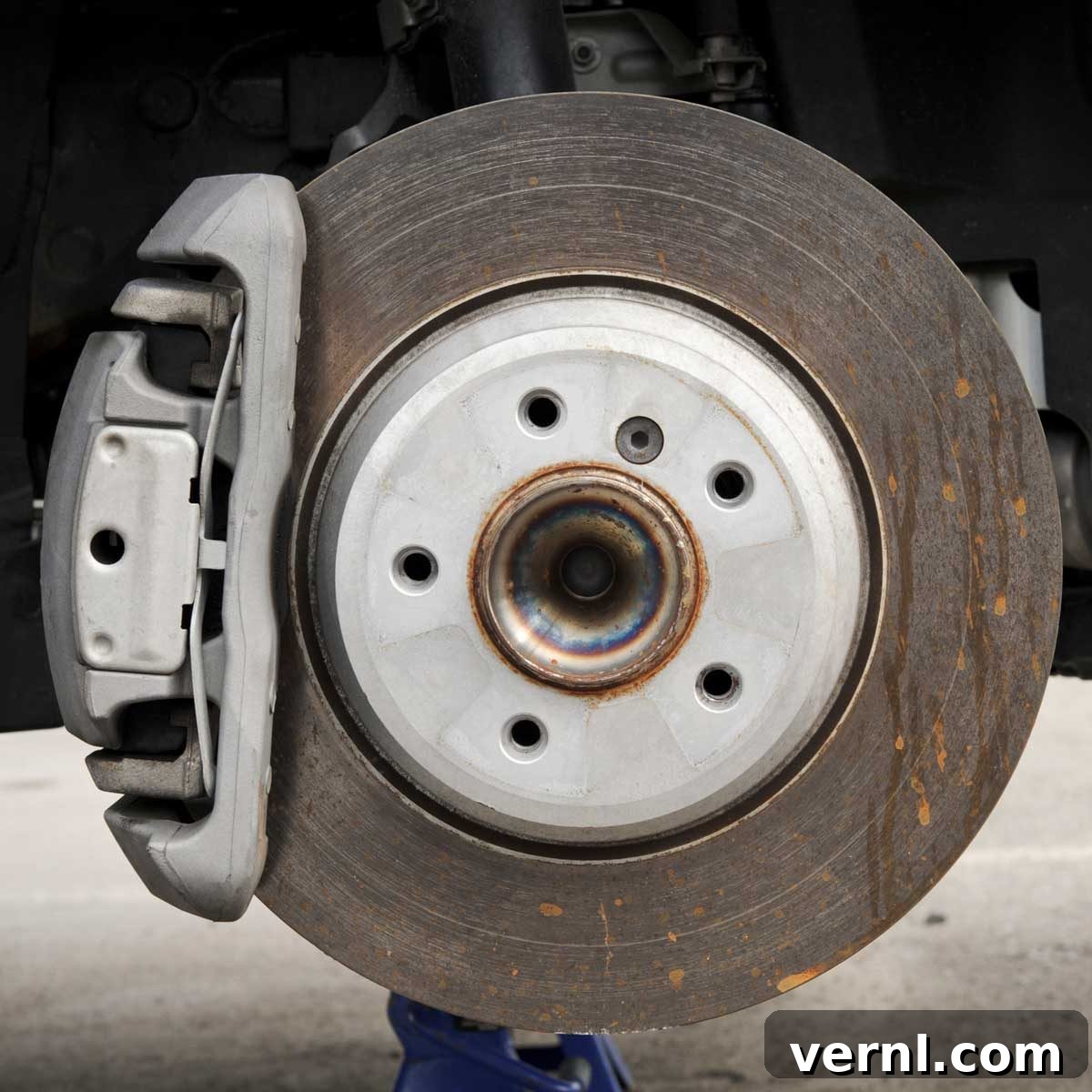
The majority of modern vehicles, especially on the front wheels, utilize disc brake assemblies due to their superior performance, heat dissipation, and resistance to fade. A complete disc brake assembly consists of several key elements:
- Brake Caliper: This component houses the brake pads and hydraulic pistons. When pressurized brake fluid enters the caliper, the pistons push the brake pads against the rotor. Calipers can be fixed (mounted rigidly) or floating (slide on pins).
- Brake Pads: These are friction materials mounted on a steel backing plate. Made from various compounds (organic, semi-metallic, ceramic), they are designed to create friction when pressed against the rotor.
- Disc Rotor: Also known as a brake disc, this is a large metal disc (usually cast iron, often vented for cooling) that rotates with the wheel. The brake pads clamp onto both sides of the rotor to generate friction.
- Mounting Hardware: Springs, clips, and pins hold the pads in place and allow them to move freely, yet securely, within the caliper.
Drum Brake Assemblies: Reliable Rear Braking
While less common on front axles today, drum brake assemblies are still widely used on the rear axles of many vehicles, particularly older models and some trucks, due to their cost-effectiveness and effectiveness as parking brakes. A drum brake assembly comprises:
- Backing Plate: A rigid steel plate that serves as the foundation, mounting the various drum brake components.
- Wheel Cylinder: A hydraulic cylinder mounted on the backing plate. When pressurized fluid enters, its pistons push the brake shoes outward.
- Brake Shoes/Linings: Curved metal shoes with friction material (linings) bonded to their outer surfaces. These linings are pressed against the inner surface of the brake drum.
- Hold-down and Pull-back Springs: These springs hold the brake shoes against the backing plate and pull them back into their resting position when the brakes are released, preventing drag.
- Brake Drum: A hollow, cup-shaped component made of cast iron that rotates with the wheel, enclosing the brake shoes and wheel cylinder.
- Automatic Self-brake Adjusting Mechanism: A crucial system that automatically adjusts the brake shoes closer to the drum as the linings wear, maintaining a consistent pedal feel and effective braking.
Brake Switches: Informing the Driver
Modern braking systems incorporate several electronic switches designed to monitor the system’s status and alert the driver to potential issues. The brake warning lamp switch is perhaps the most critical, illuminating a warning light on the dashboard if the master cylinder’s fluid level drops below a safe threshold, or if there’s a significant pressure imbalance between the two hydraulic circuits, indicating a potential system problem. Additionally, a separate parking brake warning light alerts the driver when the parking brake is engaged, preventing accidental driving with it on.
Parking Brake: An Independent Safety Net
As mentioned earlier, the parking brake provides a crucial independent mechanical braking function, separate from the primary hydraulic system. By mechanically locking the rear brake assemblies (or sometimes all four, depending on the design), it ensures the car remains stationary when parked, especially on sloped surfaces. Beyond parking, it serves as an emergency braking mechanism, capable of slowing a vehicle down in the event of a catastrophic failure of the hydraulic system, providing a vital layer of safety. While its primary role is static, its emergency function is a testament to its importance. It’s worth noting that hybrid vehicles, despite their regenerative capabilities, still include all the same mechanical and hydraulic parts as a standard hydraulic brake system for full stopping power and redundancy.
How Does the Braking System Work? A Symphony of Physics and Engineering
The process of bringing a moving vehicle to a stop is a remarkable display of mechanical and hydraulic engineering, converting the vehicle’s immense kinetic energy into heat energy through a carefully orchestrated sequence:
The journey begins when the driver depresses the brake pedal. This seemingly simple action initiates a powerful chain reaction. The brake pedal, acting as a lever, mechanically amplifies the force applied by the driver’s foot. This amplified force is then further multiplied by the power brake booster. The booster, whether vacuum, hydraulic, or electric, significantly reduces the physical effort required from the driver, making braking more efficient and comfortable.
The boosted force is then transmitted to the master cylinder. Inside the master cylinder, this mechanical force is converted into immense hydraulic pressure, as the internal pistons push against the incompressible brake fluid. The master cylinder further increases this brake fluid pressure, which is then distributed evenly and efficiently through the network of double-walled steel brake lines and flexible rubber hoses to each of the vehicle’s wheel brake assemblies.
At the wheels, the process diverges slightly depending on the type of brake assembly:
- For Disc Brakes: The pressurized fluid enters the brake caliper, forcing the caliper pistons to extend. These pistons, in turn, squeeze the brake pads inward, clamping them firmly against both sides of the rotating brake rotors. This clamping action generates significant friction between the pads and the rotors.
- For Drum Brakes: The pressurized fluid flows into the wheel cylinders. The pistons within the wheel cylinders slide outward, forcing the brake shoes against the inner surface of the rotating brake drum. This creates a wedging or jamming action, similar in principle to how a bicycle coaster brake works, generating friction.
In both disc and drum systems, the core principle is the same: the generation of friction and heat. This heat-friction, created by the pads clamping against the rotors or the shoes pushing against the drums, is the mechanism by which the kinetic energy of the spinning wheels is converted into thermal energy. This continuous transfer of energy slows the rotation of the rotors and axles (and consequently, the wheels). Coupled with the friction generated between the tires and the road surface, this ultimately brings the car to a controlled and complete stop.
In a regenerative braking system, found in hybrids and electric vehicles, an additional layer of complexity and efficiency is introduced. When the driver eases off the accelerator or applies the brake pedal lightly, the electric drive motor reverses its operation. Instead of consuming power to propel the vehicle, it begins to act as a generator. This “reverse” operation places a drag on the wheels, effectively slowing the car down without relying heavily on the friction brakes. Simultaneously, this process generates electricity, which is then directed back to recharge the vehicle’s high-voltage batteries, significantly improving energy efficiency. While regenerative braking provides the vast majority of the initial stopping power during normal driving, the traditional hydraulic system seamlessly engages during panic stops, hard braking from high speeds, or when the vehicle needs to come to a complete standstill, ensuring maximum safety and stopping effectiveness.
Signs the Braking System Isn’t Working Properly: Don’t Ignore the Warnings
Your vehicle’s braking system provides distinct indicators when something is amiss. Paying attention to these signs and addressing them promptly is crucial for your safety and to prevent more costly repairs down the line. Never ignore a brake warning light or any unusual behavior from your brakes.
Grinding (Metal-to-Metal), Squealing, or Noisy Brakes
Unusual noises from your brakes are almost always a clear indicator of a problem. A high-pitched squeal often signals that your brake pads are reaching the end of their lifespan; many pads are equipped with a metal wear indicator that purposefully rubs against the rotor when the friction material is low, producing this sound as an audible warning. However, a much more serious grinding noise typically indicates metal-to-metal contact. This happens when the brake pads or shoes are completely worn through, allowing their metal backing plates to rub directly against the disc rotors or brake drums. This not only significantly reduces braking effectiveness but also causes severe damage, potentially deep scoring, to the rotors or drums, leading to expensive repairs. Other causes for noisy brakes can include worn, rusted, missing, or broken brake hardware, excessive brake dust accumulation, rust buildup on rotors or drums, or even a foreign object like a stone or rust fragment jammed between a rotor and pad. (Here’s how to check brake pads without removing the wheel if you suspect wear.)
Steering Wheel or Brake Pedal Vibrating When Stopping
If you experience a noticeable vibration in your steering wheel or through the brake pedal when applying the brakes, it’s a strong sign of an issue with the brake rotors or drums. This often points to “excess rotor run-out,” commonly known as warped rotors. This condition occurs when the thickness of the rotor varies across its surface, or when the rotor itself is not perfectly flat. As the brake pads press against the uneven surface, it creates a pulsing or vibrating sensation. Similarly, drums can become “out-of-round,” causing a similar vibration. Other contributing factors can include badly rusted rotors or drums, contaminated brake linings that create uneven friction, or cracked, damaged, or glazed (hardened and shiny) rotors or drums, all of which compromise smooth and consistent braking.
Spongy or Fading Brake Pedal
A brake pedal that feels “spongy” or soft, or one that requires more effort and travel to achieve effective braking (brake fade), indicates a problem within the hydraulic system. The most common culprits include low brake fluid levels, which reduce the system’s capacity to build pressure, or air trapped within the brake fluid. Air is compressible, unlike brake fluid, so when you press the pedal, you’re compressing the air instead of directly transferring pressure to the wheels, leading to that soft, spongy feel. A leak in the hydraulic system, which could be in a brake line, hose, caliper, or wheel cylinder, would also result in a loss of fluid and pressure, causing the pedal to feel soft or “fade.”
Low Brake Pedal, Excess Pedal Travel
If your brake pedal goes unusually far down before the brakes engage effectively, or feels “low,” it suggests excessive clearance within the braking system. This can be caused by worn brake pads or shoe linings that have too much space to travel before making contact. In drum brake systems, a malfunctioning automatic self-adjusting mechanism is a common cause; if it’s not correctly adjusting the shoes closer to the drum as they wear, the pedal travel will increase. Additionally, a misadjusted master cylinder push rod, which connects the brake pedal to the master cylinder, can also contribute to excessive pedal travel.
Pulling to One Side When Stopping
When your vehicle consistently pulls to one side during braking, it indicates an imbalance in braking force between the left and right wheels, typically on the front axle. This could be due to a seized or leaking brake caliper or wheel cylinder on one side, causing it to apply too much or too little pressure compared to the other side. Contaminated brake linings (e.g., with grease or brake fluid) on one wheel can also reduce friction on that side, leading to an imbalance. A faulty self-brake adjusting mechanism in drum brakes can also cause uneven braking. Excessive buildup of brake dust inside a drum brake can also contribute to uneven friction. In some cases, a front-end alignment that is out of adjustment can exacerbate this issue.
Dragging Brakes
If you notice a burning smell, reduced fuel economy, or a feeling that your vehicle is being held back even when you’re not applying the brakes, you might be experiencing dragging brakes. This occurs when the brake components fail to fully release after the pedal is let go. Common causes include weak, damaged, or rusted brake hardware (springs, pins) that prevent the pads or shoes from retracting. A seized brake caliper piston or wheel cylinder can keep pressure applied to the friction material. A collapsed brake hose can act as a one-way valve, trapping fluid pressure in the caliper/cylinder. Misadjusted parking brake cables or a misadjusted master cylinder push rod can also cause the brakes to remain partially engaged.
Grabbing or Locking Brakes
Brakes that suddenly “grab” or lock up with minimal pedal effort can be extremely dangerous. This symptom may point to sticking or binding brake hardware, which prevents smooth engagement. Failing or failed anti-lock wheel speed sensors can send incorrect signals to the ABS module, leading to erratic braking behavior. Brake lining friction surfaces contaminated by grease, oil, or brake fluid can cause an overly aggressive and unpredictable grab. Furthermore, a defective power brake booster can sometimes cause over-assistance, making the brakes too sensitive. In any case, this symptom demands immediate attention.
Excessive Brake Pedal Effort
If you find yourself having to push the brake pedal much harder than usual to achieve adequate stopping power, it suggests a problem with the brake assist system or restricted fluid flow. This could be due to a seized brake caliper or wheel cylinder, which is not applying pressure efficiently. Clogged or collapsed brake hoses can restrict fluid flow, preventing full pressure from reaching the wheels. Contaminated brake linings may have lost their friction properties. A defective master cylinder, failing to generate sufficient pressure, is another possibility. Most commonly, problems with the power brake booster – whether it’s a vacuum leak, a mechanical issue, or an electrical fault in the case of electric boosters – will lead to significantly increased pedal effort.
It’s important to note that while a regenerative braking system may offer a unique pedal feel due to its blended operation, it can still exhibit all of these same symptoms related to the underlying hydraulic and mechanical components if issues arise. Regardless of your vehicle type, any deviation from normal braking performance should be investigated without delay.
Brakes are one of your car’s most essential safety systems, and their proper functioning is non-negotiable. Never dismiss a brake warning light or any signs of brake system problems as minor inconveniences. Disregarding brake issues can lead to dangerous driving situations, significantly increased stopping distances, loss of vehicle control, and ultimately, much more expensive and extensive repairs. When it comes to your car’s brakes, it’s always better to be proactive and safe than to regret inaction. If you notice any of these symptoms, consult a qualified automotive technician immediately to ensure your vehicle remains safe and reliable on the road.