
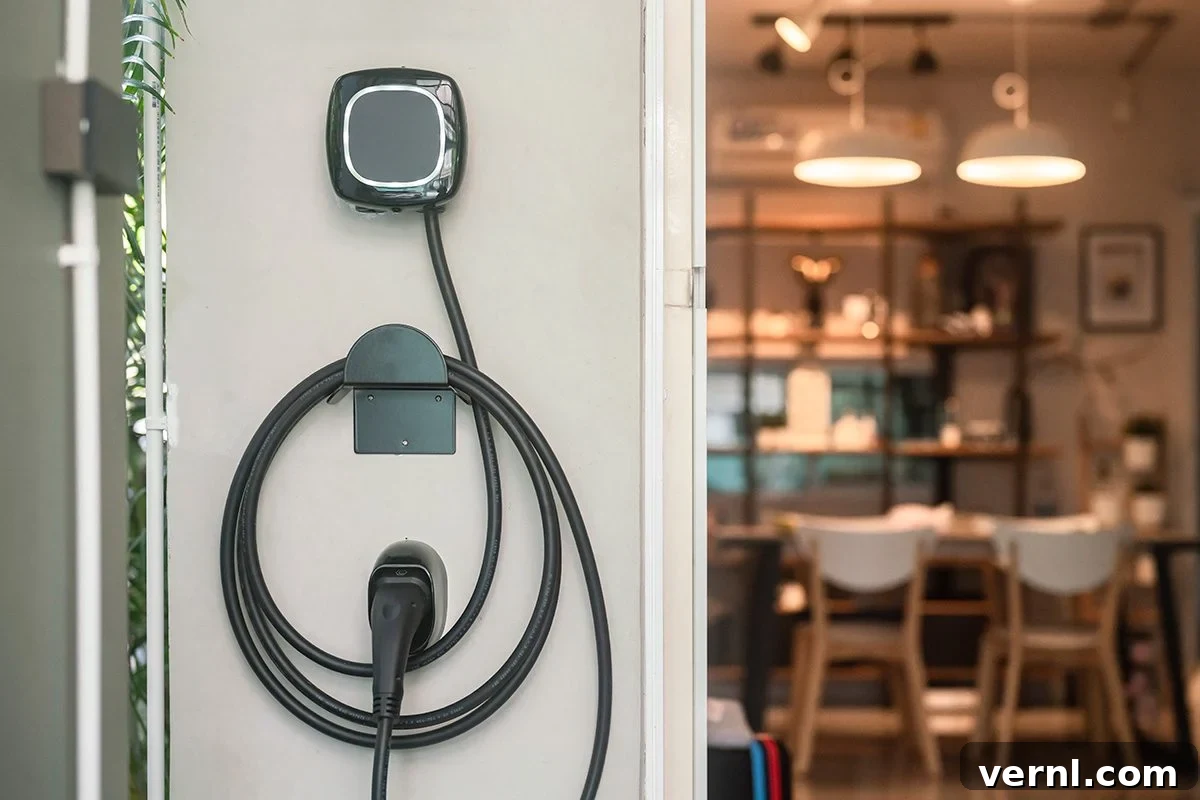
Living in a region prone to power outages can be incredibly disruptive, especially when modern life heavily relies on electricity. For many, a traditional fossil-fuel generator has been the go-to solution for emergency backup power. However, with the rapid adoption of electric vehicles (EVs), a new, innovative solution is emerging: using your EV battery to power your home during a blackout.
The idea might seem futuristic, but select EV models already possess the capability to transform into powerful, silent, and emission-free home energy sources. Imagine your electric car not just taking you places but also keeping your lights on, refrigerator running, and HVAC system functioning when the grid goes down. This comprehensive guide, informed by insights from ASE Master Technicians and leading experts in intelligent home energy solutions, delves into everything you need to know about safely and effectively leveraging your EV as a home power generator.
From understanding the intricacies of EV battery technology to navigating the essential hardware and installation requirements, we’ll explore how this groundbreaking technology works, which vehicles are compatible, and the critical safety precautions you must take. Prepare to unlock the full potential of your electric vehicle and discover how it can become a cornerstone of your home’s energy resilience.
Understanding How EV Battery Power Works
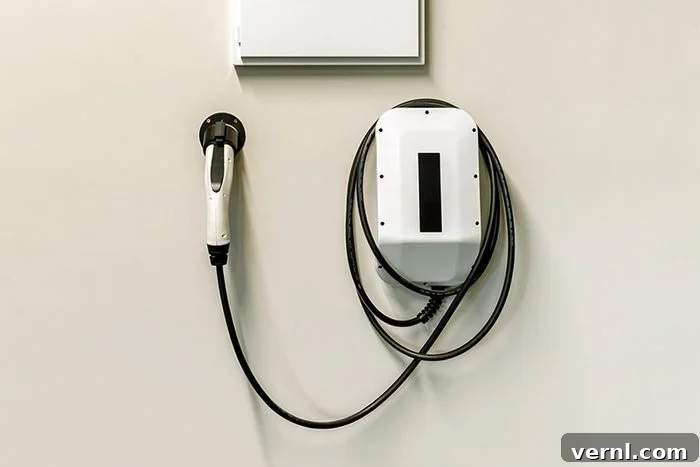
At its core, an electric vehicle’s ability to power a home during an outage relies on the sophisticated technology of its battery system. The vast majority of modern EVs utilize advanced lithium-ion batteries, which are not designed to produce electricity, but rather to store it efficiently. These batteries are essentially scaled-up versions of the ones found in your smartphone or laptop, containing hundreds to thousands of individual cells.
Each lithium-ion cell comprises a positive cathode and a negative anode, separated by an electrolytic solution. When your EV is charged from an external source, such as a charging station, an electrochemical reaction facilitates the flow of lithium-ion ions from the positive cathode to the negative anode through the electrolyte. This process stores electrical energy as direct current (DC) within the battery.
When the EV is in use, whether driving or powering a home, the exact opposite occurs: the stored DC energy flows out of the battery. However, most household appliances and the electrical grid operate on alternating current (AC). This is where a crucial component called an inverter comes into play. “An inverter converts the direct current (DC) stored in the EV battery into alternating current (AC) to power the EV’s electric motors, and similarly, to power a home,” explains Christopher Maiwald, Founder and CEO of Lectron, a prominent EV charging provider.
ASE Master Technician Tom Diamond emphasizes the often-overlooked role of the electrolyte in this entire process. “The electrolyte is vital for maintaining chemical stability within the battery, which significantly extends the lifespan of a lithium-ion battery and enhances its ability to hold a charge for longer periods,” Diamond notes. He adds that current EV batteries commonly employ three main types of electrolytes: liquid, solid-state, or a gel/polymer variant. Emerging battery technologies, particularly those utilizing advanced solid-state electrolytes, promise even greater advancements in battery life, driving range, and improved charge retention under diverse operating and weather conditions, often at a lower manufacturing cost. This continuous innovation makes EVs an increasingly reliable and efficient potential source of backup power.
The Significance of Bidirectional Charging
The key technological leap enabling an EV to power a home is known as bidirectional charging. Unlike conventional, or unidirectional, charging systems that only allow electricity to flow from the grid into the EV battery, bidirectional charging permits power to flow in both directions on the same circuit.
“Bidirectional charging serves multiple purposes,” states Christopher Maiwald. “It can, of course, charge your EV’s battery. But crucially, it can also send electricity back to power your home during an outage, feed excess energy back to the main power grid (Vehicle-to-Grid or V2G), or even provide power to other external devices like power tools, camping gear, or smartphones (Vehicle-to-Load or V2L). This versatility is achieved through the use of UL certified attachments, ensuring safety and compliance.”
Daniel Fletcher, co-founder of DCBEL, a company specializing in EV bidirectional charging systems, further clarifies: “A unidirectional EV charging system is designed solely for storing energy for driving. In contrast, bidirectional chargers have the unique capability to reverse the power flow, sending electricity from the EV battery back into your home’s electrical system, or even contributing power directly to the utility grid.” This dual functionality transforms an EV from just a mode of transport into a dynamic energy asset, offering significant benefits for home energy management and grid stability.
Which EV Models Can Power A Home?
While bidirectional charging is a rapidly developing field, not all EVs are currently equipped with full home-powering capabilities. The ability to utilize an EV battery for home backup depends on the specific type of bidirectional charging system integrated into the vehicle. Several leading automakers, including Ford, GM, Hyundai, Kia, Nissan, Tesla, Volkswagen, and Volvo, are at the forefront, offering some form of bidirectional charging in select models.
It is paramount for EV owners to consult their vehicle’s owner’s manual or the Original Equipment Manufacturer (OEM) specifications to determine the precise capabilities of their vehicle’s bidirectional charging system. These systems generally fall into three categories:
- Vehicle-to-Load (V2L): This capability allows the EV to power external devices and appliances directly from its battery, typically through standard household outlets integrated into the vehicle or via a specialized adapter. V2L is excellent for tailgating, camping, or powering tools at a job site, but it cannot power an entire home.
- Vehicle-to-Home (V2H): This is the capability that enables an EV to supply electricity directly to a home’s electrical system during service outages. A dedicated V2H system integrates with the home’s electrical panel, allowing the EV battery to act as a significant backup power source for the entire house.
- Vehicle-to-Grid (V2G): The most advanced form of bidirectional charging, V2G allows the EV to not only power a home but also to send surplus energy back to the main power grid. This capability offers potential financial benefits to EV owners through demand response programs and helps stabilize the grid during peak demand.
Christopher Maiwald expresses optimism for the future, believing that “these capabilities will become increasingly common across EV lineups as automakers adopt a unified EV charging standard, streamlining compatibility and simplifying implementation for consumers.”
Ford Intelligent Backup Power: A Leader in V2H
One of the most prominent examples of V2H technology in action is Ford’s Intelligent Backup Power system, exclusively available with the Ford F-150 Lightning electric pickup truck. This innovative system is designed to provide substantial emergency power to a home.
The F-150 Lightning, when equipped with Ford’s Intelligent Backup Power, can deliver up to an impressive 9.6 kilowatts (kW) of continuous power. Depending on a household’s typical energy consumption, this capacity can comfortably power an average home for an extended period, ranging from two to three days on a full charge. Maiwald elaborates that Ford’s system “enables the truck to automatically dispatch stored battery energy to a connected home during a power outage. This is achieved through a specialized bidirectional charger, which is sold separately, effectively transforming the F-150 Lightning into a powerful, integrated battery generator for the home.” The automatic nature of the system ensures a seamless transition to backup power when the grid fails, providing peace of mind and continuous comfort for homeowners.
Hyundai’s Vehicle-to-Load (V2L) System: Portable Power on Demand
Hyundai has also embraced the concept of leveraging EV batteries for external power with its innovative Vehicle-to-Load (V2L) system, available on models like the IONIQ 5 and IONIQ 6. While primarily focused on powering external devices rather than an entire home, Hyundai’s V2L offers remarkable utility and flexibility.
The V2L system allows drivers to power a wide array of small appliances, tools, or electronic devices directly from their EV’s high-capacity battery. This is typically achieved through an onboard outlet, usually found within the vehicle’s interior or as an external adapter that plugs into the charging port. “This functionality essentially turns the vehicle into a highly versatile, portable power source, ideal for various scenarios,” explains Maiwald. Whether it’s running a coffee maker at a campsite, powering tools at a remote worksite, or charging essential electronics during a localized power disruption, Hyundai’s V2L system provides convenient access to electricity. It’s important to note that “special V2L adapters, specifically designed for compatible bidirectional vehicles, are required to fully utilize this feature,” Maiwald adds, ensuring safe and efficient power delivery.
Essential Requirements to Power Your Home with an EV
Transitioning to using your EV as a home power source is a significant undertaking that demands careful planning and professional implementation. Before even considering powering your home with a V2H or V2G charger, it is absolutely critical to consult several key stakeholders: your vehicle’s OEM, a certified electrician, home power service professionals, and most importantly, your local utility company. Ignoring any of these steps can lead to serious safety hazards, legal issues, and potential damage to your home or vehicle.
A crucial piece of hardware required for safe home integration is a compatible integrated bidirectional inverter. Daniel Fletcher explains, “An integrated bidirectional inverter is essential for safely isolating any bidirectional EV from the main power grid (V2G) when it is powering your home.” This isolation is not merely a convenience; it’s a fundamental safety measure. Furthermore, the installation of an Automatic Transfer Switch (ATS) is absolutely indispensable. An ATS performs several critical functions: it automatically disconnects your home from the utility grid when grid power fails and seamlessly connects your EV’s power output to your home’s electrical system. More importantly, it can sense when grid power has been restored, “automatically switching” your home’s power source back from the EV to the grid, preventing any dangerous backfeeding into the utility lines.
Fletcher also highlights an important consideration for grid stability: “Some utility companies and local municipalities mandate that an ATS modulates, or waits for a specified period, typically up to 15 seconds, before switching back to grid power once it’s restored. This brief delay allows the grid to stabilize, preventing sudden power surges or fluctuations that could harm your home’s electronics or the grid itself.”
It cannot be stressed enough: **this is not a DIY installation.** Attempting to install a bidirectional inverter or ATS yourself poses severe safety risks, including fire hazards, lack of GFCI (Ground Fault Circuit Interrupter) protection, inadequate surge protection, and, most critically, the potential for hard failsafe isolation failures. Such failures can result in dangerous current feeding back into the grid, which can electrocute utility workers performing repairs. To eliminate these safety concerns and ensure compliance, always engage a certified electrician who is knowledgeable in V2G systems and adheres to all local code requirements. They will expertly install the bidirectional inverter to your home’s electrical service panel. The installation cost can vary significantly, potentially running into thousands of dollars, depending on factors such as your home’s existing wiring, its electrical service capacity, the specific inverter model chosen, and the complexity of the installation location.
Performance, Limitations, and Challenges of EV Home Power
While the prospect of using an EV to power a home is exciting, it’s crucial to understand the practical performance, inherent limitations, and challenges associated with this technology.
A typical EV battery, with capacities ranging from 60 to 100 kilowatt-hours (kWh), can provide substantial backup power. For an average home consuming approximately 30 kWh per day, such a battery could theoretically sustain power for one to three days. This estimate, however, assumes that your EV battery was fully charged before the power outage occurred and that household energy consumption is carefully managed during the blackout. Running high-demand appliances continuously will significantly reduce the available runtime. Factors like the efficiency of the bidirectional inverter and the overall energy efficiency of your home also play a role.
For enhanced resilience and potential cost savings, many V2G inverter system manufacturers are now incorporating options for integrating solar panels and stationary home backup batteries alongside the EV system. This synergistic approach offers numerous advantages: it can lower your overall energy costs by utilizing solar power, produce clean, renewable energy, extend the duration of backup power during prolonged blackouts, and even allow you to sell excess energy generated by your solar panels and stored in your EV or home battery back to your utility company, creating a more dynamic and economically beneficial home energy ecosystem.
When an EV is connected to the grid, precise technical synchronization is paramount. “The [inverter] system must meticulously match the grid’s waveform and voltage output,” explains Daniel Fletcher. This precision prevents disruptions to the grid and damage to connected appliances. Fletcher further emphasizes the critical importance of international standards: “It is absolutely vital — regardless of which inverter or system you choose to install — that it fully complies with the International Organization for Standardization (ISO) Standard 15118. This standard specifically ensures that any V2G system accurately matches and effectively manages the flow of electrons to and from the grid, guaranteeing safe, reliable, and effective charging and discharging operations.”
Beyond technical specifications, other limitations and challenges include:
- Battery Degradation: While EV batteries are robust, frequently cycling them for home power could accelerate degradation over the long term, potentially impacting the battery’s lifespan and the vehicle’s warranty. This is an important consideration for prospective users.
- Vehicle Availability: During a power outage, the EV might be needed for transportation, creating a conflict between its role as a power source and its primary function.
- High Initial Investment: The cost of the bidirectional inverter, ATS, professional installation, and potential home electrical upgrades represents a significant upfront expense.
- Regulatory Complexity: As V2G technology is relatively new, regulations and utility policies vary widely by region. Navigating these can be a hurdle for homeowners.
Frequently Asked Questions (FAQ)
Can I just plug my EV into a wall outlet to power my house?
NO, absolutely NOT! This practice, known as “backfeeding,” involves plugging an extension cord directly from an EV (or a portable generator) into a receptacle in your home. This is incredibly dangerous and illegal. It bypasses critical safety mechanisms, risks overloading circuits, damaging appliances, causing electrical fires, and most importantly, it can send electricity back onto the utility grid, potentially electrocuting unsuspecting utility workers who may be trying to restore power. Always use approved, professionally installed hardware for connecting any external power source to your home.
Is it safe to use an EV as a generator?
Yes, it is safe to use an EV as a home power source, provided your EV explicitly has bidirectional capability (V2H or V2G) and you have the appropriate, professionally installed hardware and software that are fully compatible with your EV’s electronics and your home’s electrical system. However, it’s important to clarify terminology: an EV does not technically “generate” or produce electricity. It functions as a large, mobile battery that simply stores power until it’s needed, converting it from DC to AC for home use.
Can I charge my EV from a gasoline or propane-powered generator?
Yes, but this should only be considered in desperate situations due to several factors. First, you must carefully check your generator’s specifications. Electric vehicles contain highly sensitive electronic components. Generators that produce more than six percent Total Harmonic Distortion (THD) can quickly damage these expensive and delicate EV electronics. A Level 1 EV charger typically requires 1000 to 2000 watts to operate effectively. A Level 2 charger, for faster charging, requires a much more substantial 9600 watts, in addition to a stable 240-volt, 40-amp output to function properly. Furthermore, you must account for the ongoing cost and availability of fuel (gasoline or propane) required to run the generator, which can be significant for charging a large EV battery.
What is the difference between V2H and V2G?
Both Vehicle-to-Home (V2H) and Vehicle-to-Grid (V2G) are forms of bidirectional charging, but they differ in their scope. V2H specifically refers to the capability of an EV to provide stored electrical energy directly to a connected home, typically during a power outage, acting as a backup power source. V2G is a broader capability that encompasses V2H but also allows the EV to send electricity back to the main utility grid. This enables grid services like demand response, peak shaving, and renewable energy integration, potentially offering financial incentives to the EV owner.
Does using my EV battery for home power void my warranty?
This is a critical question. The answer depends entirely on your specific EV manufacturer and your vehicle’s warranty terms. Some manufacturers explicitly support and warrant V2H/V2G capabilities when utilizing approved, factory-certified systems. Others may have limitations or exclusions for such use, especially if non-approved aftermarket equipment is installed, or if the battery is cycled excessively for home power. Always consult your EV manufacturer and review your warranty documentation thoroughly before installing any V2H/V2G system to avoid inadvertently voiding your warranty.
About the Experts
- Christopher Maiwald is the Founder and CEO of Lectron, a company at the forefront of EV charging solutions.
- Daniel Fletcher is Co-Founder and Head of Ecosystems at DCBEL Energy. A seasoned leader in software and energy technology, Dan possesses deep expertise across renewable energy and electric vehicles. His work at DCBEL focuses on making distributed energy accessible and effective for everyone through strategic partnerships.
- Tom Diamond brings over 35 years of experience in the automotive repair industry, serving as both a technician and a certified Mazda trainer. He has maintained his ASE Master Technician certification for over 25 years, is a PennDOT certified state safety inspector, and currently imparts his extensive knowledge as the Automotive Technology instructor at Father Judge High School in Philadelphia, PA. (Interviewed on Oct 29, 2025).
Resources and Further Reading
- ANSI: “ISO 15118-1:2019 Road vehicles – Vehicle to grid communication interface – Part 1: General information and use-case definition”
- ANSI: “UL 1741 Ed. 3-202, Standard for Inverters, Converters, Controllers and Interconnection System Equipment for Use With Distributed Energy Resources”
- Camille Cater, Sunrun Team at Antenna Group
- Edmunds: “What Is Bidirectional Charging and How Does It Work?”
- Ethan Heine, President and CEO of Suntrek Solar
- EVBattery: “Electrolytes and EV Range”
- Greg Field, Owner and Senior Energy Consultant with PGT Home Energy Solutions
- Joseph Vellone, CEO ofChargeScape
- Large Custom Battery: “Why Electrolytes Are Essential for Lithium Battery Function”
- Mark Halberg, Service Generator Estimator with Prairie Electric
- MIT Review: “How does an EV battery actually work?”
- U.S. News and Report: “NACS vs. CCS: What EV Shoppers Need to Know in 2025”
Related Articles
- Do You Know What That Little Button on Your Seat Belt Is For?
- What Those Lines on Your Backup Camera Really Tell You
- Here’s What The Small Panel On Your Car’s Front Bumper Is For