
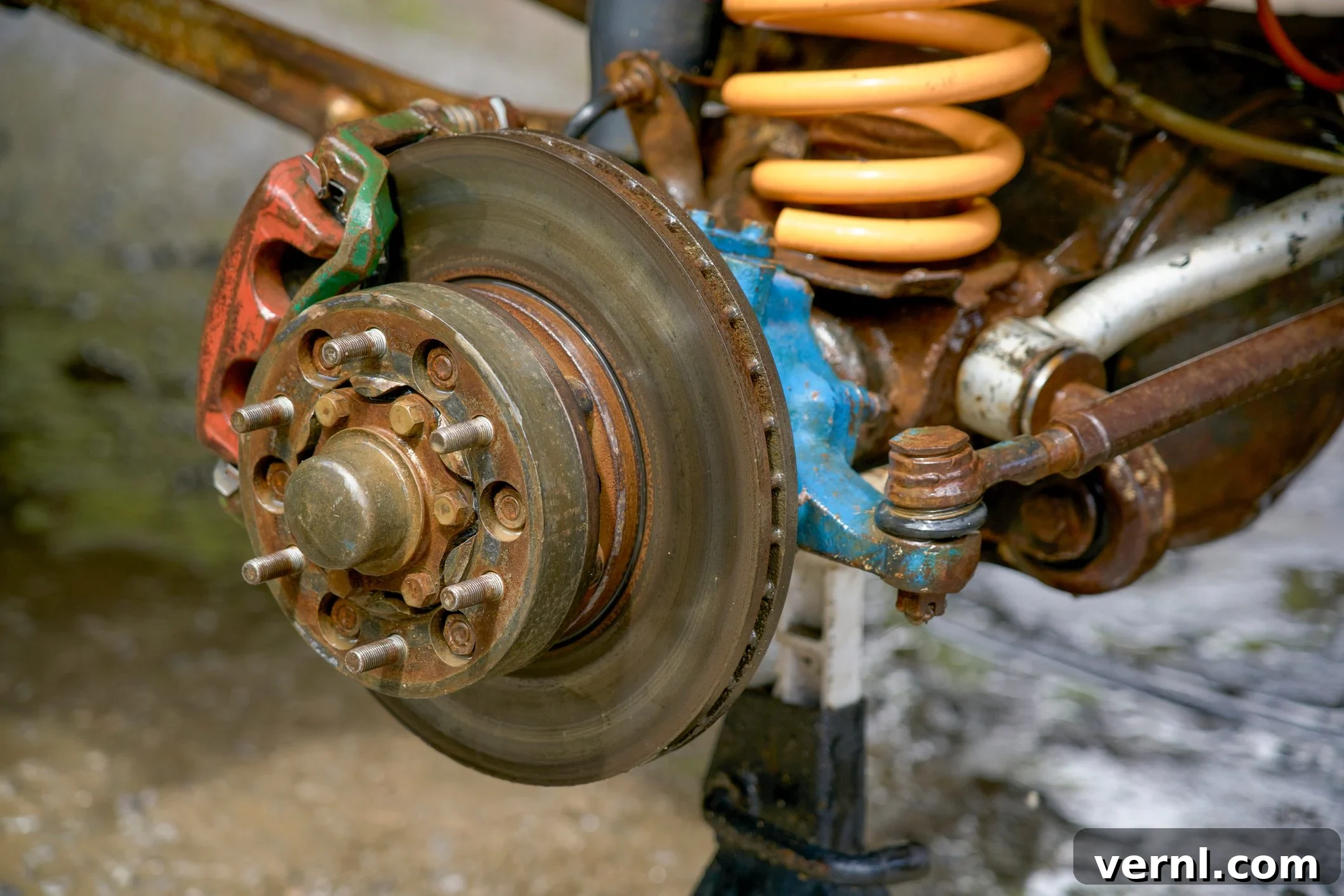
Wheel bearings are fundamental components in any vehicle’s suspension system, playing a critical role in facilitating smooth, efficient wheel rotation while supporting the vehicle’s entire weight. They significantly reduce friction, allowing your car or truck to glide effortlessly down the road. However, like all mechanical parts, wheel bearings can wear out over time, leading to noticeable symptoms that demand immediate attention. Recognizing these early signs of failure is paramount for both your safety and your vehicle’s longevity.
This comprehensive guide, informed by decades of industry experience and the expert insights of Joe Simes, an ASE certified and Toyota master technician, will walk you through the most common bad wheel bearing symptoms. We’ll delve into what these vital components do, why they fail, and the serious implications of neglecting their repair. Understanding these warning signs will empower you to act swiftly, preventing potential catastrophic failures and costly secondary damage.
What Are Wheel Bearings and Their Essential Function?
At their core, wheel bearings are precision-engineered mechanical assemblies designed to allow the wheels to spin with minimal friction while handling immense loads. On most modern front-wheel drive (FWD) and four-wheel drive (4WD) vehicles, wheel bearings are typically found as permanently sealed, self-contained units known as hub assemblies. These assemblies house a set of meticulously machined steel balls or straight rollers, encapsulated within a “cage” that ensures even spacing and allows them to rotate freely.
These balls or rollers are held in place between hardened metal rings called “races.” The entire unit is sealed, protecting the internal lubricating grease from contaminants like water, dirt, and road debris, which can quickly degrade performance and lead to premature failure. Wheel bearings are securely integrated into the vehicle’s suspension system, either through a tight press fit, bolts, or a snap-ring mechanism. Once installed, the wheel bearing supports the wheel as it rides on the axle shaft, enabling the tire and wheel assembly to spin effortlessly and precisely.
It’s worth noting that older vehicle models, particularly those equipped with drum brakes, and many trailer setups utilize a different design: a set of two tapered roller bearings that face each other. These bearings require periodic inspection, cleaning, and repacking with fresh grease, a maintenance task distinct from the sealed units found in contemporary vehicles.
The Subtle First Signs of Wheel Bearing Failure
According to Joe Simes, the initial indicators of a failing wheel bearing are often subtle and can easily be overlooked by an unaware driver. The very first sign you might experience is a soft, faint vibration. This vibration is typically felt through the steering wheel, the floorboard, or even the seat, often before any audible noises become apparent. It’s a precursor to more pronounced issues, signaling that the internal components of the bearing are beginning to degrade or lose their smooth operation.
Concurrently, or shortly thereafter, a vague rhythmic humming or droning sound may emerge. This sound is often faint at first, making it difficult to pinpoint its exact origin. Crucially, this humming or droning will typically increase in intensity and frequency as your vehicle gains speed, and it might also change pitch slightly during turns. These early auditory and tactile cues are critical warning signs that the wheel bearing’s internal components are no longer moving freely, creating friction and generating heat.
It is imperative that these initial warning signs are not ignored. While seemingly minor, they are reliable indicators of a developing problem. Neglecting them will only allow the condition to worsen, leading to louder, more noticeable symptoms and significantly increasing the risk of more serious mechanical failures down the line.
Other Distinctive Symptoms Indicating Bad Wheel Bearings
As a wheel bearing continues to deteriorate, the symptoms become more pronounced and can significantly impact your driving experience and safety. Prompt identification of these indicators is key to preventing further damage and ensuring your vehicle remains safe on the road.
Unusual Noises Emanating From the Wheels
One of the most common and easily identifiable symptoms of a failing wheel bearing is the presence of abnormal noises coming directly from the affected wheel or tire area. These sounds can vary depending on the severity and nature of the bearing’s degradation. You might hear:
- Clicking or Snapping: Often heard when initially accelerating or making sharp turns, this could indicate excessive play within the bearing.
- Grinding: A rough, metal-on-metal sound, similar to a stone grinding, typically suggests severe wear, corrosion, or contamination of the bearing’s internal components. This sound usually intensifies with vehicle speed and can be particularly alarming.
- Humming, Growling, or Roaring: These persistent, low-frequency sounds are very common. They often increase in volume and pitch as the vehicle speed increases, and may change characteristics when turning, as the load shifts onto or off the affected bearing. A “whirring” sound can also fall into this category.
- Whining: A higher-pitched, continuous sound that can also vary with speed and steering input.
These noises are a direct result of increased friction and play within the worn bearing. They generally become louder and more insistent when accelerating, turning, or applying the brakes, as these actions place additional stress on the wheel bearings.
Compromised Handling and Loose Steering Feel
A failing wheel bearing can dramatically impact your vehicle’s steering and overall handling dynamics. You might notice that the steering feels unresponsive, vague, or excessively sloppy, particularly when navigating turns, braking, or maintaining speed on highways. This sensation stems from the bearing’s inability to precisely hold the wheel in its proper alignment. The increased play within the bearing allows the wheel to move slightly, leading to a disconnected feeling between the steering wheel and the actual direction of the tires. This lack of precision can make it challenging to maintain a straight line and significantly reduces your control over the vehicle, especially at higher speeds or during emergency maneuvers.
Vehicle Pulling to One Side While Driving or Braking
A severely worn wheel bearing can introduce uneven resistance or erratic movement in one of the wheels. This can manifest as your vehicle consistently pulling or drifting to one side while you are driving straight, or an intensified pull when you apply the brakes. The affected tire/wheel may not glide smoothly or consistently, creating an imbalance that forces the vehicle to veer. In some cases, a bad wheel bearing can also cause your brakes to drag on that specific wheel, further exacerbating the pulling sensation during deceleration. This symptom can be dangerous, as it compromises directional stability and increases stopping distances.
Shaking or Vibrations While Driving
Beyond the initial faint vibration, a deteriorating wheel bearing can cause more pronounced shaking or shuddering sensations that are distinctly different from those caused by unbalanced tires. Unlike tire imbalance, which often affects the steering wheel directly and feels more generalized, shaking caused by a bad wheel bearing tends to be localized and more obvious from the side of the car where the bearing is failing. The vibration might be felt through the entire vehicle, but its source can often be traced to a specific corner. This shaking intensifies with speed and can become quite alarming, indicating significant internal damage or play within the bearing assembly.
Uneven Tire Wear Patterns
Any component in the suspension or steering system that is loose, worn, or vibrating can directly contribute to abnormal tire wear. A bad wheel bearing, by allowing the wheel to wobble or move out of its ideal alignment, prevents the tire from making consistent, even contact with the road surface. This can lead to various patterns of uneven tire wear, such as feathering (a sawtooth pattern across the tread), cupping or scalloping (scooped out areas), or excessive wear on one side of the tread. While uneven tire wear can stem from multiple issues (alignment, suspension, tire pressure), when combined with other wheel bearing symptoms, it serves as another strong indicator of a problem.
Anti-lock Braking System (ABS) Light Illuminated
On many modern vehicles, the ABS sensor, which monitors wheel speed for the anti-lock braking and traction control systems, is either integrated directly into the wheel bearing assembly or mounted externally adjacent to the spinning part of the bearing. When a wheel bearing begins to fail and develops excessive play, it can cause the wheel to wobble. This wobbling can damage the ABS sensor, or alter its distance from the tone ring, causing it to send erratic or incorrect wheel speed readings to the vehicle’s computer. In response to these inconsistent signals, the vehicle’s onboard diagnostic system will illuminate the ABS warning light on your dashboard. This not only signals a potential wheel bearing issue but also indicates that your ABS and possibly your traction control system may be compromised, increasing safety risks.
Excessive Heat Emitting from the Tires and Wheels
Friction is a primary byproduct of mechanical components rubbing against each other inefficiently. A failing wheel bearing, with its worn-out parts and lack of proper lubrication, generates significantly more friction than a healthy one. This increased friction translates directly into excessive heat. After driving, particularly on longer journeys or at highway speeds, a bad wheel bearing will cause the affected wheel hub and potentially the tire to become noticeably hotter than the others. While exercising extreme caution and without directly touching the hot surfaces, you can safely use a non-contact infrared thermometer to measure the temperature of each wheel hub. A significant temperature differential among the wheels is a strong indication of a failing bearing.
Visible Play or Looseness in the Wheel
In more severe cases of wheel bearing failure, you might even be able to detect physical play or looseness in the wheel assembly itself. To check for this, safely jack up the vehicle so the wheel is off the ground. With both hands, grasp the tire at the 12 o’clock and 6 o’clock positions, then try to rock the wheel back and forth along its vertical axis. Repeat this at the 3 o’clock and 9 o’clock positions. Any noticeable movement or “clunking” sound indicates excessive play in the wheel bearing or other suspension components. While this test requires caution and a stable jack, it can confirm a severely worn bearing.
Common Reasons Why Wheel Bearings Fail
While wheel bearings are designed to be durable, typically lasting between 85,000 to 100,000 miles under normal conditions, several factors can contribute to their premature failure. Understanding these causes can help in preventing future issues:
- Impact Damage: One of the most common culprits. Hitting a large pothole, bouncing off a curb, or being involved in an accident can impart sudden, extreme stress on the wheel bearing. This can deform the races, damage the balls/rollers, or compromise the seals, leading to rapid deterioration.
- Environmental Exposure and Seal Failure: The protective seals on wheel bearings are crucial for keeping internal grease in and damaging contaminants out. Over time, or due to impact, these seals can fail. Once compromised, water, road salt, dirt, and debris can enter the bearing, washing away the lubricant and causing corrosion and accelerated wear. Harsh climates with significant exposure to moisture and road salt are particularly taxing on bearing seals.
- Improper Installation: Incorrect installation, such as under- or over-tightening a hub nut, can significantly reduce a bearing’s lifespan. An under-tightened nut allows for excessive play, causing premature wear, while an over-tightened nut can create too much preload on the bearing, leading to overheating and rapid failure. Proper torque specifications are critical.
- Lack of Proper Maintenance: For older vehicles or trailers with serviceable tapered roller bearings, neglecting periodic inspection, cleaning, and repacking with fresh grease will inevitably lead to failure.
- Suspension and Tire Issues: Driving on unbalanced tires or with an out-of-alignment suspension system places uneven and excessive stress on wheel bearings. Similarly, persistently low tire pressure can alter the vehicle’s ride dynamics, indirectly contributing to bearing stress.
- Vehicle Modifications: Installing oversized wheels and tires, or making aggressive suspension modifications, can increase the unsprung weight and leverage on the wheel bearings, leading to higher stress and accelerated wear.
- Manufacturing Defects: While rare, a manufacturing defect in the bearing material or assembly can lead to premature failure, regardless of proper installation or driving conditions.
Can You Safely Drive a Car With Bad Wheel Bearings?
The unequivocal answer is absolutely not. Driving a vehicle with failing wheel bearings is not only ill-advised but profoundly dangerous. It’s a critical safety hazard that carries the risk of severe mechanical failure and potentially life-threatening accidents. A bad wheel bearing, particularly if it’s severely worn, can lead to the complete seizure of the wheel, or in the worst-case scenario, the wheel separating entirely from the vehicle while in motion. Imagine losing a wheel at highway speeds—the consequences could be catastrophic, resulting in a loss of control, severe injury, or even fatalities for you, your passengers, and other road users.
Beyond the immediate safety risks, ignoring a bad wheel bearing can lead to significant and expensive secondary damage. The excessive play and vibration from a failing bearing can quickly destroy other critical components, including the axle shaft, steering knuckle, brake rotor, and even the constant velocity (CV) joints. What might have been a relatively straightforward and contained repair can quickly escalate into a much more complex and costly overhaul if neglected. Therefore, it is crucial to have bad wheel bearings diagnosed and replaced as soon as any symptoms become apparent.
Understanding the Cost to Fix or Replace Bad Wheel Bearings
The cost to repair or replace a bad wheel bearing can vary significantly, influenced by several factors. For a sealed wheel hub bearing assembly, which is common in many modern vehicles, the average replacement cost typically ranges around $350 per wheel. However, this figure is merely an average, and your actual expense could differ substantially. Several elements contribute to the final price:
- Vehicle Make and Model: Luxury vehicles, high-performance cars, or those with more complex suspension designs often have more expensive parts and labor rates.
- Type of Bearing: A simple tapered roller bearing on an older vehicle might be cheaper in terms of parts than an integrated hub assembly, though labor might be higher if extensive disassembly and repacking are required.
- Shop Labor Rate: Labor costs vary significantly by geographic location and the type of repair shop (independent vs. dealership).
- Cost of the Bearing Itself: OEM (Original Equipment Manufacturer) parts are generally more expensive but often offer better quality and longevity compared to aftermarket alternatives.
- Additional Damage: If the failing wheel bearing has caused secondary damage to the axle, steering knuckle, brake components, or ABS sensor, these additional repairs will significantly increase the total cost. Early detection and repair can often prevent these more expensive cascading failures.
Considering all these variables, the total cost for a single wheel bearing replacement, especially if other components are affected, could realistically exceed $1,000 in some cases. This underscores the financial benefit of addressing wheel bearing issues promptly.
Can You Fix or Replace Wheel Bearings Yourself?
Whether you can successfully tackle a wheel bearing replacement yourself largely depends on the type of bearing, your mechanical skill level, and the tools at your disposal.
For vehicles equipped with older-style, serviceable tapered wheel bearings, DIY maintenance is often feasible. This typically involves removing the wheel, brake caliper, and rotor, then carefully disassembling, cleaning, inspecting, repacking the bearings with fresh grease, and reinstalling them with proper torque. It’s crucial to never reuse any tapered wheel bearing that appears loose, worn, noisy, discolored, or shows any signs of pitting or damage; they should always be replaced in such cases.
However, for the more common modern sealed wheel bearing hub assemblies, the situation is different. These units are designed to be non-serviceable. They cannot be disassembled, lubricated, or repaired; they must only be replaced as an entire unit. Even if a professional were to suggest repairing a sealed bearing, strongly resist the notion—it’s not a viable or safe option. Attempting to reuse or repair a damaged sealed wheel bearing can result in its catastrophic failure, leading to a serious accident and severe injury.
If your vehicle uses sealed hub assemblies, replacing them yourself can still be an option, but it requires a higher level of mechanical proficiency and specialized tools. Depending on the vehicle, you might need a press, specialized pullers, an accurate torque wrench, and various other automotive tools. Most auto parts stores offer a loaner tool program, which can provide access to some of the specific equipment needed to replace a wheel bearing. By doing it yourself, you can save hundreds of dollars in labor costs. However, it’s vital to assess your comfort level and ensure you have the right tools and knowledge to perform the job safely and correctly. Improper installation can lead to immediate failure or a drastically shortened lifespan for the new bearing.
IMPORTANT NOTE: Whether you choose the DIY route or have a mechanic replace the bearing, always install a new axle hub nut. Most hub nuts are prevailing torque fasteners, meaning they are designed to maintain a specific tension and resist loosening only for a single use. They are used on critical components, like securing axle shafts to hub bearings, where a loose nut could have disastrous and dangerous consequences.
About the Expert
Joe Simes is an accomplished ASE and Toyota master technician. With over two decades of hands-on experience in the automotive industry, Joe recently transitioned into an educational role, becoming a Pennsylvania Department of Education certified automotive technology instructor at the North Montco Technical Career Center in Lansdale, Pennsylvania. His extensive practical knowledge and commitment to automotive excellence make him a trusted authority on vehicle diagnostics and repair.