CPVC Pipe: Your Ultimate Guide to Chlorinated Polyvinyl Chloride Plumbing
Choosing the right plumbing materials is crucial for the longevity and efficiency of your home’s water systems. Among the various options available, Chlorinated Polyvinyl Chloride (CPVC) pipe stands out as a popular and reliable choice. This comprehensive guide will delve into everything you need to know about CPVC pipe, from its composition and uses to its advantages and how it compares to other plumbing materials. This article will cover everything you need to know about CPVC pipe, answering your questions and helping you make informed decisions for your home improvement projects.
CPVC pipe is a favorite in modern homes. Its durability and versatility make it a compelling option for many plumbing applications. Let’s explore its characteristics in detail. I recently chose CPVC for a home project instead of copper, and found it exceptionally useful in tight spaces. It also helped me save on project costs.
To provide you with the most accurate and insightful information, we’ve consulted with three licensed plumbers: Mitch Smedley from Smedley Plumbing, Claude Taylor from YouTube’s “How to Plumbing,” and David Carey from Worcester Technical High School. Their expertise will guide us through the intricacies of CPVC piping.
What is CPVC Pipe?
CPVC pipe is a rigid, thermoplastic plumbing material. It’s a cousin of PVC, but it goes through an extra chlorination step. This process makes it more flexible and able to handle higher temperatures. “CPVC piping is similar to PVC piping but also very different,” says Mitch Smedley.
What is CPVC Pipe Used For? Applications & Best Uses
CPVC pipe excels in water supply lines. It is particularly well-suited for hot water applications, but it is also suitable for some drain lines. Taylor emphasizes that CPVC is best “specifically for hot water applications.”
CPVC Pipe: Pros and Cons
Like any material, CPVC pipe has both advantages and disadvantages. Understanding these factors is key to determining if it’s the right choice for your project.
Advantages of CPVC Pipe
- Easy Installation: CPVC’s ease of use is a major selling point. It cuts and connects effortlessly using a special glue, which makes installation straightforward, saving both time and effort. You won’t have to solder like you would with copper. As David Carey notes, “You do not need a flame, so it is safer.”
- Durability: CPVC stands up well to harsh water conditions. Unlike copper, which can erode from acidic water, CPVC resists corrosion and rust. This makes it an excellent choice for homes in areas with aggressive water. Carey states, “[It] will not rust out.”
- Heat and Pressure Resistance: CPVC can handle significant heat and pressure. It’s designed to transport water as hot as 200 degrees Fahrenheit at 100 psi, which far exceeds the typical home water temperature and pressure.
- Cost-Effective: CPVC is a budget-friendly option, with a typical cost range of $0.50 to $1 per square foot, making it one of the most affordable plumbing pipe choices available.
Disadvantages of CPVC Pipe
- Requires More Support: CPVC’s flexibility, while sometimes beneficial, means it needs more frequent support than rigid materials like copper or galvanized steel. Supports are typically needed every 32 to 36 inches.
- Less Durable Than Metal Pipes: CPVC is less impact-resistant than metal alternatives. Care should be taken to avoid striking it with heavy objects. Reinforcement with steel nail plates is recommended in wall framing where nails or screws might potentially puncture the pipe.
- Expansion and Contraction: CPVC expands and contracts more than copper, especially in hot water systems. A 10-foot section can change in length by up to 1/2 inch.
- Glue Drying Time: The adhesive used with CPVC can take a while to fully cure. “It takes eight hours for the glue to dry in some situations,” says Carey, which can impact project timelines.
CPVC vs. PVC: What are the Differences?
CPVC and PVC pipes share some similarities but also have significant differences that dictate their suitability for different applications. Understanding these distinctions is crucial for selecting the right material.
Applications
A key difference lies in their approved uses. “PVC is only allowed to be used in drain, waste and vent plumbing applications,” says Smedley. PVC isn’t approved for water supply lines. CPVC, on the other hand, is primarily used for delivering water.
Heat Tolerance
Heat resistance is another critical difference. PVC softens and begins to melt at 140 degrees Fahrenheit, while CPVC can withstand much higher temperatures, up to 200 degrees Fahrenheit, making it suitable for hot water systems.
Sizing
PVC and CPVC have distinct sizing standards. “PVC will follow iron pipe sizing (IPS) whereas CPVC will follow Copper Tube Sizing (CTS),” explains Smedley. This difference affects the fittings and connections used for each type of pipe.
CPVC or PVC: Which is Better?
The best choice depends on your specific needs. “They both are great but for their own purposes,” according to Smedley. PVC is often preferred for drain lines because it’s less sensitive to certain chemicals. CPVC is ideal for water supply lines, especially for hot water.
How To Identify CPVC Pipe
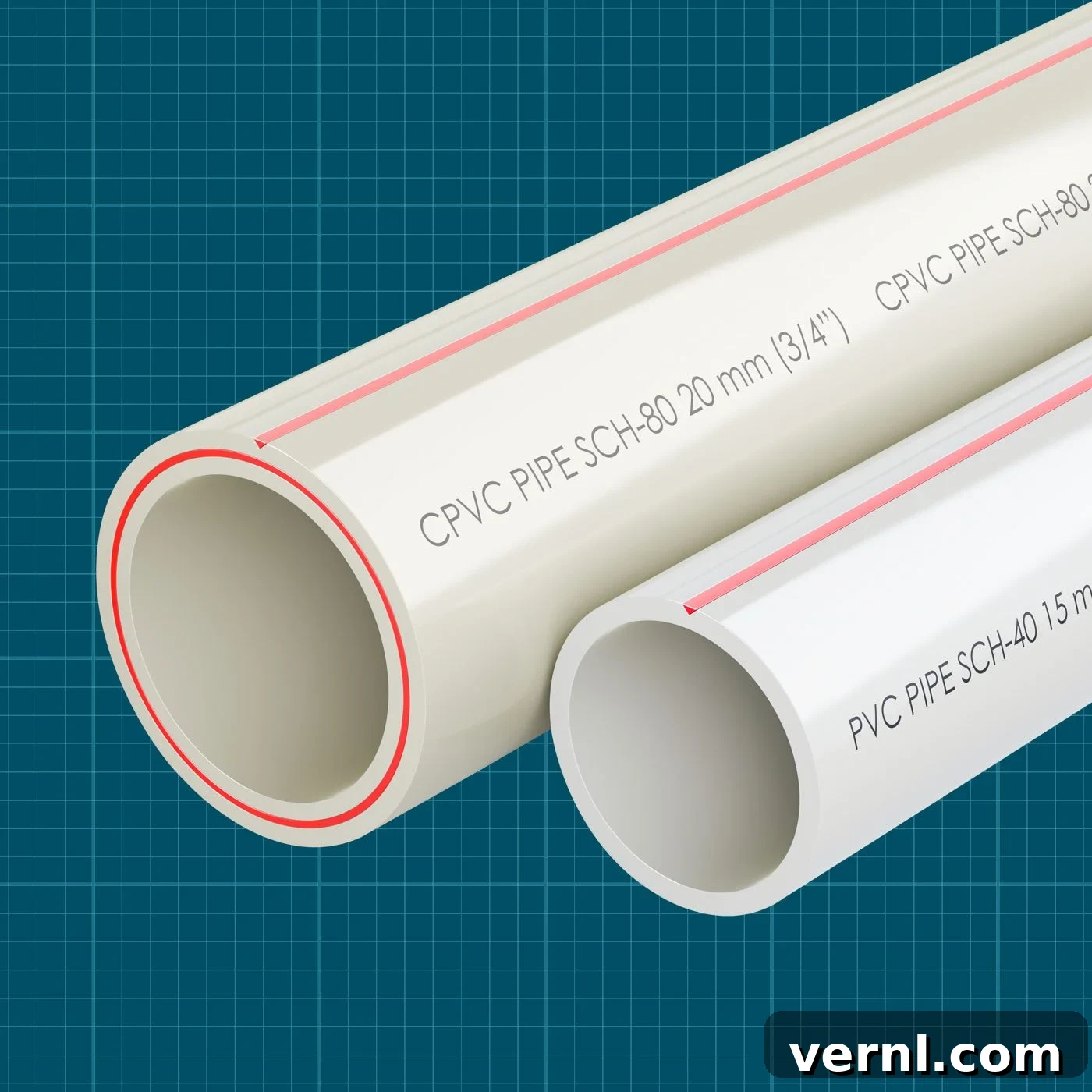
Identifying CPVC is usually straightforward. It is typically a light beige color, distinctly different from the bright white of PVC. If you’re unsure, check the printing on the pipe itself for confirmation.
Other Types of Plumbing Pipes Available Today
Besides CPVC and PVC, several other plumbing pipe options are widely used. Understanding these alternatives allows you to make a more informed decision.
PEX (Cross-linked Polyethylene)
PEX is a flexible plastic piping system for both hot and cold water supply lines. Its benefits include being inexpensive, long-lasting, and easy to install, with fewer joints that reduce the risk of leaks. However, PEX is not UV resistant, and it may need more support at fixtures due to its flexibility.
Copper
Copper pipes are a classic choice known for their longevity and ability to handle high temperatures. Copper can be used for both supply and drain lines. However, it’s more expensive and requires soldering for installation. Carey notes a significant downside: “And if a copper water pipe freezes, the pipe will split.”
PE (Polyethylene)
PE is a flexible and durable plastic tubing typically used in cold-water applications like supply lines, wells, and irrigation. Its advantages include chemical resistance and ease of installation. However, it cannot handle high water temperatures.
Frequently Asked Questions About CPVC Pipe
Can You Connect PVC and CPVC Pipe?
It’s generally not recommended to mix PVC and CPVC, particularly with glue. Each material requires its own specific adhesive for a proper bond. If you must connect them, use adapters. “Glue a male adapter on one and a female adapter on the other,” recommends Smedley. “Then thread them together using Teflon tape or pipe joint compound.”
Which Pipe is Best for Plumbing?
The best pipe for your plumbing depends on several factors. Copper is a top choice if money isn’t a concern, and long-lasting durability is a priority. For those on a budget who want to avoid soldering, CPVC is a great option. Carey prefers PEX, because it won’t rust or corrode. “If PEX freezes, it will just expand and not split.” Consider the pros and cons of each type in your specific situation.
What Kind of Pipe is the Cheapest?
“PEX and CPVC are the cheapest,” according to Carey, with CPVC often being slightly more affordable than PEX.
How Long Do PVC and CPVC Pipes Last?
Both PVC and CPVC pipes typically have lifespans of 50 to 70 years. “They each should last a very long time as long as they aren’t damaged from freezing or UV rays,” says Smedley.
About the Experts
- Claude Taylor is a Master Plumber in Texas with over 30 years of residential and commercial experience. He hosts the popular YouTube channel “How to Plumbing,” with over 50K subscribers.
- David Carey is a Master Plumber in Massachusetts with over 30 years of plumbing experience. He is also the Department Head of the plumbing program at Worcester Technical School in Worcester, Massachusetts.
- Mitch Smedley is a Master Plumber and owner of Smedley Plumbing in Kansas City, Missouri. He has 15 years of industry experience and runs a YouTube channel sharing plumbing information and how-to guides.