
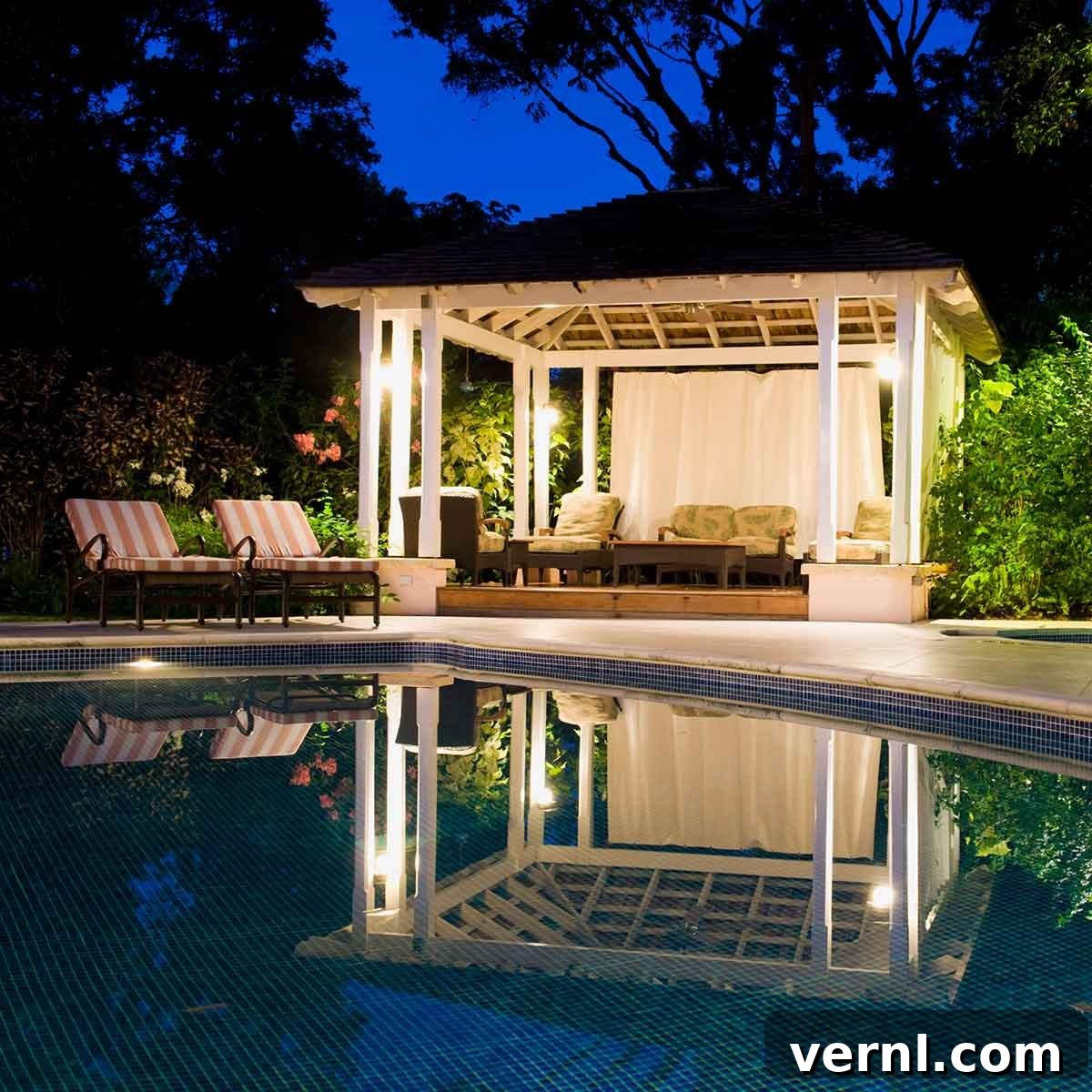
The vision of a backyard swimming pool often conjures images of endless summer days, refreshing dips, and vibrant outdoor gatherings. But once you’ve realized this dream, the natural next step is to elevate your poolside experience. How do you transform a simple swimming area into a true outdoor sanctuary? The answer often lies in adding a pool cabana – a structure that promises to amp up enjoyment, maximize your outdoor time, and redefine backyard luxury.
While the term “cabana” might initially bring to mind opulent, private retreats at exclusive Las Vegas resorts or exotic destinations, the truth is, poolside cabanas are far from being an indulgence reserved solely for the rich and famous. They represent an accessible and incredibly effective way to enhance any backyard pool experience, turning it into a more functional, comfortable, and stylish oasis. The beauty of a cabana lies in its remarkable versatility. Depending on your personal taste, specific needs, and of course, your budget, a pool cabana can range from an incredibly simple, temporary structure that you can effortlessly assemble in mere minutes, to an elaborate, custom-built installation. Imagine a fixed cabana complete with cutting-edge outdoor TVs, a fully equipped wet bar, comfortable seating, and a host of other luxurious perks that cater to every whim.
Intriguingly, the utility of a cabana extends beyond the immediate vicinity of a pool. In fact, you don’t even need to have a pool to fully appreciate and enjoy the benefits a cabana offers. Much like a traditional gazebo, a well-placed cabana can serve as a much-needed shady retreat, creating an inviting and tranquil zone within any backyard oasis. It provides a dedicated space for relaxation, entertainment, or simply escaping the sun, making it a valuable addition to any outdoor living space, pool or no pool.
To assist you in navigating the myriad options and making an informed decision about what kind of cabana is perfectly suited for your unique private pool paradise or general backyard haven, let’s delve deeper. We will meticulously examine the various types of poolside and backyard cabanas available, explore their distinct features, and outline the crucial factors you should carefully consider when contemplating this valuable outdoor investment.
What Exactly Is a Cabana? Defining Your Outdoor Sanctuary
At its core, a cabana is best described as a covered shelter, typically designed to be situated adjacent to a swimming pool, though its placement can be more flexible. More than just a simple shade structure, a cabana is a multi-functional outdoor room, a dedicated place to escape the relentless sun, or an idyllic area to simply unwind. It serves as a convenient changing room, a spot to enjoy a refreshing snack or beverage, or a cozy nook to relax while soaking in the ambiance of your pool area.
For many, a cabana provides a coveted quiet space – perhaps a peaceful sanctuary slightly out of earshot of exuberant kids splashing and playing in the pool. It can also be the perfect gathering spot for friends to socialize, kick back, and enjoy drinks in a comfortable, shaded setting. Picture it as a thoughtful shady spot to park a baby stroller, offering protection and comfort for the little ones while parents enjoy a well-deserved dip in the pool. Regardless of its specific use, a pool cabana inherently delivers essential shade, a sense of profound relaxation, and a touch of much-appreciated privacy in your outdoor environment. It transforms an open space into a contained, intimate retreat, enhancing the overall functionality and comfort of your backyard.
Beyond the Pool: The Versatility of a Backyard Cabana
While the classic image of a cabana is firmly linked to swimming pools, its utility and appeal are by no means confined to the poolside. It’s a common misconception that a cabana is exclusively a pool accessory. In reality, a cabana stands as a distinctive and highly adaptable covered shelter that can enhance any backyard setting, offering a versatile space for entertaining guests, unwinding in the shade, or simply adding architectural interest to your landscape.
Technically, a cabana differs from other popular backyard structures like a gazebo, pergola, or pavilion. These distinctions, which we will elaborate on shortly, highlight why a cabana often offers unique advantages. Not every home owner has the space, budget, or desire for a swimming pool. Perhaps your yard lacks the necessary footprint, or you’re not prepared to commit to the significant time and financial investment required for pool care and maintenance. Even without a pool, a well-placed, sheltered spot to kick up your heels, read a book, or host a small gathering is an exceptionally welcome and value-adding addition to almost any outdoor space. A cabana can create this inviting retreat, making comfortable outdoor living achievable for everyone.
Unveiling the Different Types of Pool Cabanas: From Temporary Retreats to Permanent Havens
The terms “cabana,” “gazebo,” “pergola,” and “pavilion” are often used interchangeably, leading to some confusion. However, there are fundamental differences that define each structure and its ideal application. Understanding these distinctions is key to choosing the right solution for your backyard oasis.
- A gazebo is typically a freestanding, octagonal or circular structure with a solid roof and open sides, offering shade but minimal enclosure.
- A pergola is characterized by an open, slatted trellis roof supported by columns or beams. Its primary function is to provide partial shade and a framework for climbing plants, rather than full protection from the elements.
- Pavilions and pool houses are generally more substantial, permanent, and often fully enclosed structures, sometimes incorporating utilities like plumbing and electricity, functioning more like small outbuildings.
A true cabana, in its most traditional sense, is distinguished by being covered and enclosed on at least three sides, typically by solid or durable vinyl walls. These walls may feature windows or screens, offering varying degrees of privacy and airflow. Crucially, the main open side of a cabana is almost always oriented to face the pool, maximizing convenience and interaction with the water. While some modern variations might have fewer enclosures for a more open feel, the fundamental purpose of providing a private, shaded retreat remains.
Cabanas primarily come in two distinct versions, each with its own set of characteristics and benefits:
1. Temporary Cabanas: Flexible, Portable, and Budget-Friendly
A temporary cabana is typically a lightweight structure made from materials like canvas or vinyl fabric fitted over a sturdy metal or wood frame. These designs prioritize ease of assembly, portability, and seasonal use. They are designed to be erected for the pool season or specific outdoor events, and then conveniently dismantled, folded, and stored away during the off-season. This makes them an excellent choice for those seeking flexibility or a less permanent commitment.
2. Fixed Cabanas: Permanent, Customizable, and Integrated Solutions
A fixed cabana represents a more permanent and integrated addition to your backyard landscape. These are robust structures, often constructed from durable materials such as wood, masonry, or composite materials. Fixed cabanas are built to withstand the elements year-round and can be significantly customized. They are commonly wired for electricity, allowing for the installation of lights, outdoor televisions, efficient ceiling fans, mini-fridges, and even more elaborate setups. Plumbing can also be integrated to create convenient sinks or fully functional wet bars, transforming the cabana into an outdoor living extension of your home.
Pros and Cons of a Cabana: Weighing Your Options
Whether you lean towards a fixed, permanent structure or a versatile temporary one, each type of pool cabana offers a unique array of advantages and disadvantages. Understanding these can significantly inform your decision.
Advantages of a Temporary Cabana
- Inexpensive Entry Point: Temporary cabanas are remarkably budget-friendly, making them an accessible option for many homeowners. Simple pop-up cabanas can be purchased for as little as $150, offering immediate relief from the sun without a significant financial commitment.
- Effortless Assembly and Disassembly: Designed for convenience, most pop-up cabanas can be erected in mere minutes, often requiring just two people. Taking them down is equally straightforward, simplifying seasonal storage.
- Unmatched Flexibility and Portability: A temporary cabana offers the distinct advantage of mobility. It can be easily relocated to different spots in your yard as needed, adapting to various events or sunlight patterns. For parties, it can quickly transform into a practical food and drink serving area or an extra shaded seating zone.
- No Permits Required: Due to their temporary nature, these structures generally do not require building permits, simplifying the acquisition process.
Disadvantages of a Temporary Cabana
- Vulnerability to Damage: The lightweight construction of temporary cabanas, typically featuring vinyl or mesh walls, makes them susceptible to tearing, fraying, or general wear and tear from frequent use and exposure.
- Weather-Related Risks: Despite proper anchoring, temporary cabanas can be vulnerable to severe weather conditions. High winds, heavy rain, or sudden storms can easily damage or even destroy these structures, especially if not adequately secured or taken down in advance.
- Limited Comfort and Aesthetics: If equipped with solid vinyl walls and lacking proper ventilation or windows, a temporary cabana can quickly become a hot and stuffy sun shelter. Their aesthetic appeal is generally more utilitarian compared to permanent structures, potentially clashing with a sophisticated backyard design.
- Shorter Lifespan: Due to less durable materials and constant exposure, temporary cabanas typically have a shorter lifespan, often requiring replacement after a few seasons.
Advantages of a Fixed Cabana
- Enhanced Permanence and Durability: A fixed cabana becomes an integral, enduring part of your backyard landscape. Constructed from robust materials like wood or masonry, it’s built to last for many years and does not require seasonal takedown, folding, or storage, offering year-round utility.
- Extensive Customization Options: This is where fixed cabanas truly shine. You can seamlessly integrate electricity for amenities such as mini-fridges, sophisticated lighting fixtures, powerful fans, and state-of-the-art entertainment systems. Furthermore, plumbing can be added for a convenient sink or a full-service wet bar, transforming the cabana into a true outdoor extension of your home.
- Superior Aesthetic Appeal and Integration: Unlike the often-utilitarian look of temporary cabanas, a fixed cabana, particularly one made of high-quality wood or stone, can be an incredibly attractive and elegant addition to your backyard. It can be designed to perfectly complement your home’s architecture and existing landscaping, significantly enhancing your property’s curb appeal and overall value.
- Increased Property Value: A well-designed and constructed fixed cabana can contribute positively to your home’s market value, serving as a desirable feature for future buyers.
- Greater Comfort and Functionality: With proper ventilation, insulation, and the ability to add amenities, a fixed cabana offers a superior level of comfort and can serve a wider range of functions, from a guest lounge to a dedicated outdoor kitchen area.
Disadvantages of a Fixed Cabana
- Substantial Investment: Fixed cabanas represent a significant financial commitment. A DIY version, while saving on labor, can still run into thousands of dollars for materials. Professionally installed cabanas, especially those with advanced features, can easily cost $15,000 and upwards. Beyond the structure itself, you’ll also need to budget for quality outdoor furniture and other pool accessories to complete the space.
- Zoning and Building Permits: As a permanent structure, even if subtly integrated into your backyard, a fixed cabana almost invariably requires a building permit from your local municipality. This involves submitting plans, adhering to zoning regulations (like setbacks from property lines), and undergoing inspections, which can be a time-consuming and complex process.
- Ongoing Upkeep and Maintenance: Fixed cabanas, particularly those made of wood, necessitate periodic maintenance such as staining, sealing, and painting to protect against weathering and rot. Windows and screens may need replacement over time. Additionally, measures must be taken to prevent unwanted critters from nesting or overwintering inside the structure when the pool is not in use and the cabana is closed.
- Less Flexibility: Once constructed, a fixed cabana cannot be easily relocated or altered, making it a long-term commitment to its specific location and design.
How to Choose the Best Cabana for Your Backyard Paradise
Selecting the ideal cabana for your backyard is a significant decision that hinges on a careful evaluation of how you intend to use the space, your specific needs, and environmental factors. Here are key points to consider:
- Available Space and Layout: Begin by accurately assessing the amount of pool deck or level yard space you have. Not just the quantity, but also the quality of the space. How much of this valuable real estate are you willing to dedicate to a cabana? Consider sun patterns throughout the day, existing landscaping, and proximity to your home or other outdoor features.
- Traffic Flow and Accessibility: Plan the cabana’s location strategically to ensure it’s conveniently close to the pool for easy access, but simultaneously does not obstruct essential foot traffic. Think about pathways, entries, and how people will move around the structure, maintaining safety and ease of movement.
- Local Climate and Weather Patterns: Your geographical location and its typical climate will profoundly influence your choice of materials and whether a fixed or temporary cabana is more suitable. In areas with harsh winters, strong winds, or heavy rainfall, a durable, fixed structure with robust materials might be a better long-term investment. Conversely, in milder climates, a temporary option might suffice. Consider UV resistance for fabrics, wind ratings for frames, and snow load capacity for roofs.
- Budget and Value Proposition: Establish a realistic budget from the outset, encompassing not just the cabana itself, but also installation costs, furnishings, and any desired utilities (electricity, plumbing). Keep in mind that while an aesthetically pleasing and permanently installed structure can significantly add value and visual appeal to your property, it will undoubtedly require ongoing upkeep and maintenance, which should also be factored into your long-term financial planning.
- Intended Use and Lifestyle: How do you envision using your cabana most frequently? Is it primarily for quick changes and towel storage, or will it be a central hub for entertaining, complete with a bar and outdoor kitchen? Will it serve as a tranquil reading nook, a dedicated play zone for children, or a flexible space for all these activities? Your lifestyle and usage patterns will guide the design and feature requirements.
- Aesthetic Integration and Design: The cabana should complement the architectural style of your home and the existing aesthetic of your backyard. Consider material choices, color palettes, and overall design elements to ensure the cabana feels like a cohesive and intentional part of your outdoor living space, rather than an afterthought.
- Permits and Local Regulations: For any permanent or fixed structure, it is absolutely crucial to research and understand your local zoning laws, building codes, and any necessary permit requirements. Homeowners’ association (HOA) rules may also apply. Failing to secure the appropriate permits can lead to costly fines or the forced removal of your structure.
Designing Your Dream Cabana: Features and Enhancements
Once you’ve decided on the type of cabana, the real fun begins with customizing it to your exact specifications. Here are popular features and enhancements to consider:
- Outdoor Kitchens & Bars: Elevate your entertaining with a built-in outdoor kitchen or a stylish wet bar, perfect for mixing cocktails and preparing snacks without trekking back into the house.
- Comfortable Seating: From plush lounge chairs and daybeds for ultimate relaxation to casual dining sets for al fresco meals, comfortable and weather-resistant furniture is essential.
- Lighting Solutions: Create ambiance with strategically placed lighting. Options include overhead ceiling lights, task lighting for a bar area, subtle LED strip lights, or even decorative string lights for a festive mood.
- Entertainment Systems: Install an outdoor TV and a weather-resistant sound system to enjoy movies, sports, or music by the pool, transforming your cabana into an open-air media room.
- Climate Control: Combat the heat with ceiling fans or misting systems. For cooler evenings, consider outdoor heaters or a cozy fireplace feature to extend usability into the shoulder seasons.
- Privacy Curtains & Screens: Enhance privacy and offer additional protection from sun and wind with elegant outdoor curtains, retractable screens, or even permanent louvered panels.
- Storage Solutions: Incorporate built-in cabinets or discreet storage benches for towels, pool toys, and cushions, keeping the space tidy and organized.
- Smart Home Integration: For fixed cabanas, consider integrating smart technology for lighting, sound, and climate control, allowing you to manage your cabana’s environment with ease from your phone.
A pool cabana is more than just a shelter; it’s an investment in your outdoor lifestyle, an extension of your living space, and a dedicated zone for relaxation and entertainment. By carefully considering the various types, weighing their pros and cons, and thoughtfully designing the features that matter most to you, you can create a backyard retreat that not only meets your needs but exceeds your expectations, truly transforming your outdoor area into a dream oasis.