
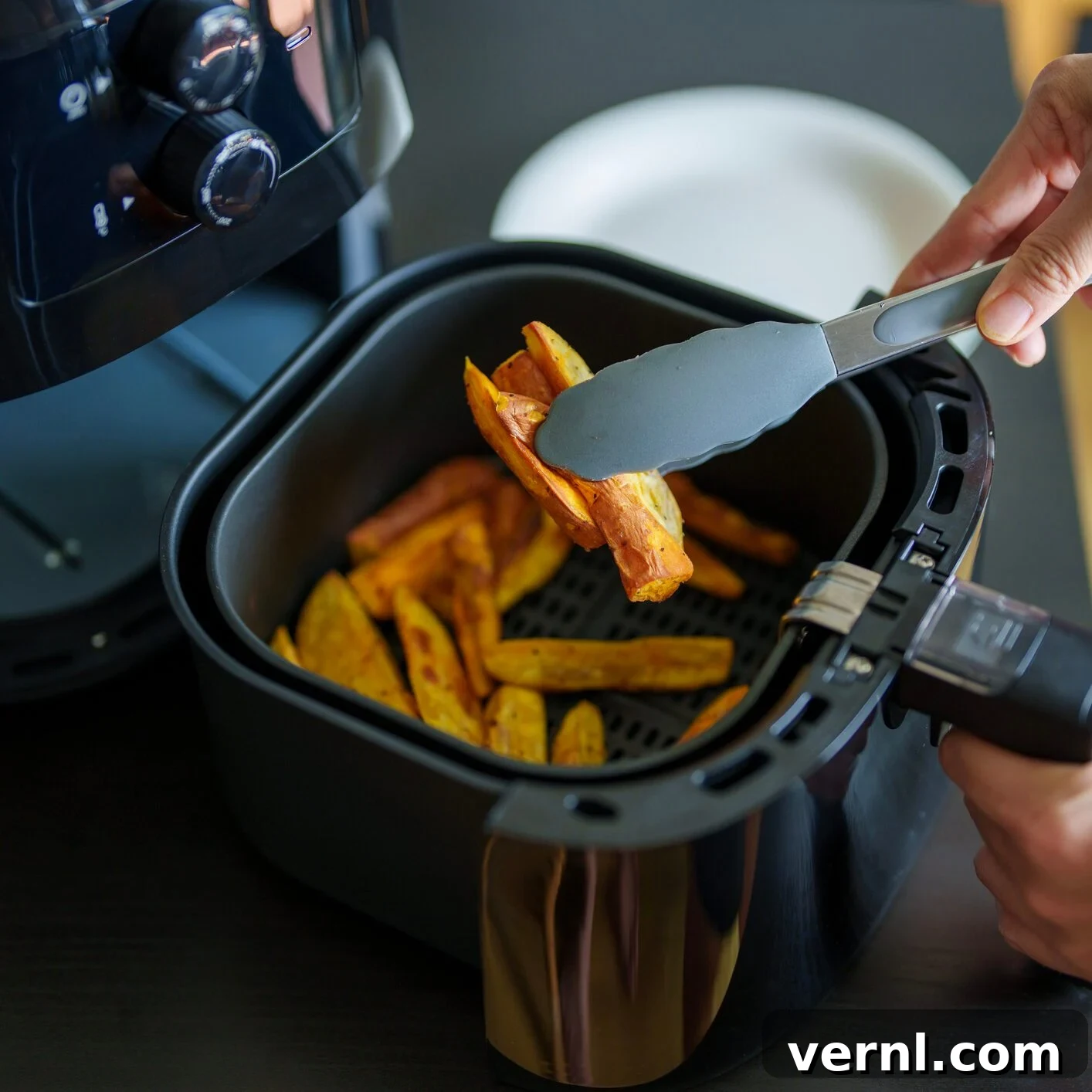
I still vividly recall the day my first air fryer entered my kitchen. The inaugural dish: sweet potato fries. To my delight, they turned out perfectly crispy and delicious, a far cry from their greasy, deep-fried counterparts. As I’ve increasingly prioritized a healthier lifestyle, my air fryer has transformed into an indispensable culinary ally. It allows me to achieve that coveted crispy texture for a variety of foods, all without the excess oil often associated with traditional frying methods.
However, to truly harness its capabilities and avoid common pitfalls, it’s essential to understand the science behind how an air fryer operates and, perhaps more importantly, what foods are best left out of this trendy appliance.
“While social media often portrays air fryers as miraculous ovens capable of anything, it’s wise to avoid cooking certain foods in them,” advises Chef Maricel Gentile, a renowned culinary expert.
Indeed, air fryers excel at specific tasks, like reviving leftover pizza to its former glory or giving vegetables a delightful char. Yet, they are not a universal replacement for other essential kitchen appliances such as microwaves, toaster ovens, or even larger convection ovens. This comprehensive guide will illuminate how an air fryer cooks your food, explore its unique advantages, differentiate it from other common kitchen tools, and provide a definitive list of foods you should think twice about air frying.
What Exactly Is an Air Fryer and How Does It Work?
An air fryer is a compact, countertop kitchen appliance designed to cook food by circulating extremely hot air at high speeds. Essentially, it functions as a highly efficient, scaled-down convection oven. This rapid air circulation creates a superheated environment that mimics the results of deep frying, producing a crispy, golden-brown exterior on foods without submerging them in oil.
“Despite its deceptive name, an air fryer doesn’t actually ‘fry’ food in the traditional sense,” explains Chef Gentile. “Instead, it’s a powerful convection oven that rapidly moves super-heated air around your food, effectively ‘air-frying’ it by dehydration and browning.” This process drastically reduces the need for oil, leading to dishes with significantly less fat and fewer calories compared to conventional deep frying.
The Science of Crispiness: What an Air Fryer Does to Your Food
The magic of an air fryer lies in its ability to transform food surfaces into a deliciously crispy texture. It achieves this by utilizing a powerful fan that circulates scorching hot air around the food at incredibly high velocities. This intense, circulating heat primarily works by rapidly dehydrating the surface of the food. As moisture is pulled from the exterior, it creates a dry, crispy crust.
“Bakers have intuitively applied a similar principle for centuries,” notes Chef Gentile. “By brushing a light layer of water onto their bread dough before baking, the water quickly evaporates in the hot oven, drawing out surface moisture from the dough and contributing to that desirable crispy crust.”
Scientifically, the browning and flavor development on the food’s surface are largely due to a chemical process known as the Maillard reaction. This complex reaction occurs between amino acids and reducing sugars when exposed to heat, resulting in the creation of hundreds of new flavor compounds and the appealing golden-brown color we associate with well-cooked food. The air fryer’s consistent high heat and rapid air movement accelerate this reaction, leading to quicker and more pronounced crisping and browning.
Air Fryer vs. Other Kitchen Appliances: A Head-to-Head Comparison
Air Fryer vs. Microwave: Understanding the Core Differences
While both are ubiquitous kitchen appliances, air fryers and microwaves operate on fundamentally different principles and excel at distinct tasks. Microwaves generate electromagnetic waves that cause water molecules within food to vibrate rapidly, heating the food from the inside out. This method is exceptionally quick for reheating and cooking foods with high water content, but it often leaves textures soft or even soggy.
In contrast, air fryers rely on convection heating, which cooks and crisps food from the outside in. “This fundamental difference means air fryers are adept at browning and crisping foods, whereas microwaves primarily excel at reheating and softening,” clarifies Sarah Hill, a popular food blogger and creator of Real Food With Sarah. “This is precisely why many foods, like pizza or spring rolls, become disappointingly soggy after microwaving, but regain their former glory in an air fryer.”
Consider the stark difference when cooking bacon. “Microwaving bacon typically results in a rubbery, grey texture,” says Chef Gentile, “whereas cooking it in a pan – or an air fryer – yields a wonderfully crispy and golden result. Microwaves are ideal for quickly heating liquids, soups, or soft foods, while an air fryer is unparalleled for achieving that perfect crispy finish on solid items.” Therefore, instead of one replacing the other, these appliances often complement each other, tackling different culinary needs efficiently.
Air Fryer vs. Convection Oven: Size, Speed, and Efficiency
At their core, air fryers are specialized, compact convection ovens. Both use circulating hot air to cook food. However, key differences lie in their size, speed, and heat distribution dynamics. Traditional convection ovens are significantly larger, capable of reaching high temperatures, but their internal air movement is generally slower and less concentrated. This makes them excellent for evenly heating larger quantities of food without overcooking delicate surfaces.
Air fryers, on the other hand, are designed for speed and intense heat application. Their smaller cooking chamber and powerful fan create a much more concentrated and rapid airflow, leading to significantly faster cooking times and more efficient crisping, especially for smaller batches. “Due to their sealed cooking environment and reduced volume, air fryers are remarkably energy-efficient for everyday meals,” explains Chef Gentile.
The market has also seen the emergence of “double-duty ovens,” which typically fall in size between a traditional convection oven and a small basket-style air fryer, often incorporating air frying functions within a larger toaster oven format. “While these multi-functional appliances aim to offer the best of both worlds, some, myself included, would argue that they often compromise on performance, not excelling truly at either primary function,” Gentile adds, suggesting dedicated appliances often yield superior results for their specific purpose.
Frequently Asked Questions About Air Fryers
Is Air-Fried Food Universally Healthier?
The health benefits of air frying largely depend on what you’re cooking. “Air-frying vegetables is an excellent, healthier alternative to roasting them in excessive oil or even steaming, as it can enhance their flavor and texture with minimal fat,” states Hill. “However, air-frying highly processed foods or high-fat meats won’t magically make them inherently healthy. The nutritional profile of the food itself remains the primary factor.”
Chef Gentile further elaborates, “Pre-made chicken nuggets, for instance, will remain an unhealthy choice regardless of whether you deep fry them or air fry them. The healthfulness often comes down to how you cook and your ingredient choices.” She points out a common pitfall in traditional frying: “Many people don’t preheat their oil sufficiently. Cold oil gets absorbed much more readily into the food, making it greasier. Hot oil, conversely, quickly crisps the surface, effectively locking out excess oil and locking in moisture.” From this perspective, she concludes, “I would argue that air fryers are indeed healthier for the average home cook because they minimize these common mistakes and provide a more foolproof method for reducing unhealthy fat intake.” The controlled environment and consistent heat make it easier to achieve crispy results with little to no added oil.
Can an Air Fryer Fully Replace a Microwave?
While an air fryer is a fantastic addition to any kitchen, it cannot entirely replace a microwave. “Air fryers are superb for reheating specific foods like pizza, French fries, roasted vegetables, and various proteins, restoring their desirable crispiness far more effectively than a microwave ever could,” says Hill. “However, they are simply not suited for certain microwave-centric tasks, such as making popcorn, quickly reheating a cup of coffee or tea, or warming up liquid-based foods like soups, stews, or sauces. These items would either dry out, make a mess, or simply not heat efficiently in an air fryer.” They serve different purposes, making them complementary tools rather than interchangeable ones.
Are There Any Foods You Absolutely Shouldn’t Cook in an Air Fryer?
Yes, absolutely. To maximize your air fryer’s performance and prevent disappointment (or a mess), certain foods are best avoided. “I would steer clear of heavily battered foods, most soft cheeses, plain rice, pasta, and other delicate grains, as well as whole roasts or very large cuts of meat,” advises Chef Gentile. “Air fryers, similar to oil frying, apply intense heat predominantly to the surface of the food. Large proteins, in particular, require more even, sustained heat to cook thoroughly without burning the exterior while leaving the inside raw or undercooked.”
Expanding on this list, Hill adds, “Leafy greens like fresh spinach, kale, or Swiss chard are problematic because the powerful fan within the air fryer will simply blow them around, resulting in uneven cooking, drying out, and potential clogging of the heating element.” Furthermore, she cautions against “whole meat roasts, braised meats, or any dish that typically benefits from slow, low-temperature cooking, as they simply won’t develop the desired tender texture and rich flavor in the rapid, high-heat environment of an air fryer.” Foods that are very wet or contain loose ingredients can also create a significant mess or fail to crisp properly. It’s always best to consider the food’s texture and cooking requirements before placing it in the air fryer.
Tips for Optimal Air Frying Results
- Preheat Your Air Fryer: Just like a conventional oven, preheating ensures even cooking and better crisping from the start. Give it 3-5 minutes at the desired temperature.
- Don’t Overcrowd the Basket: Air needs to circulate freely around the food for optimal crisping. Cook in batches if necessary, rather than stacking items.
- Shake or Flip Your Food: For uniform cooking and browning, shake the basket or flip larger items halfway through the cooking process.
- Use a Little Oil (Sometimes): While air frying significantly reduces oil, a light spray of oil on certain foods (like vegetables or potatoes) can enhance crispiness and flavor without adding much fat.
- Clean Regularly: A clean air fryer performs better. Clean the basket and drawer after each use to prevent food residue buildup.
About the Experts
- Sarah Hill is a prominent food blogger, recipe developer, and food photographer behind Real Food with Sarah. She specializes in making home cooking accessible and enjoyable, often featuring creative air-fryer recipes.
- Maricel Gentile is an accomplished chef, celebrated cookbook author, engaging TV personality, and the owner of Maricel’s Kitchen in New Jersey. She also dedicates her time to teaching cooking classes and serves as a respected chef ambassador for K-Seafood USA.