
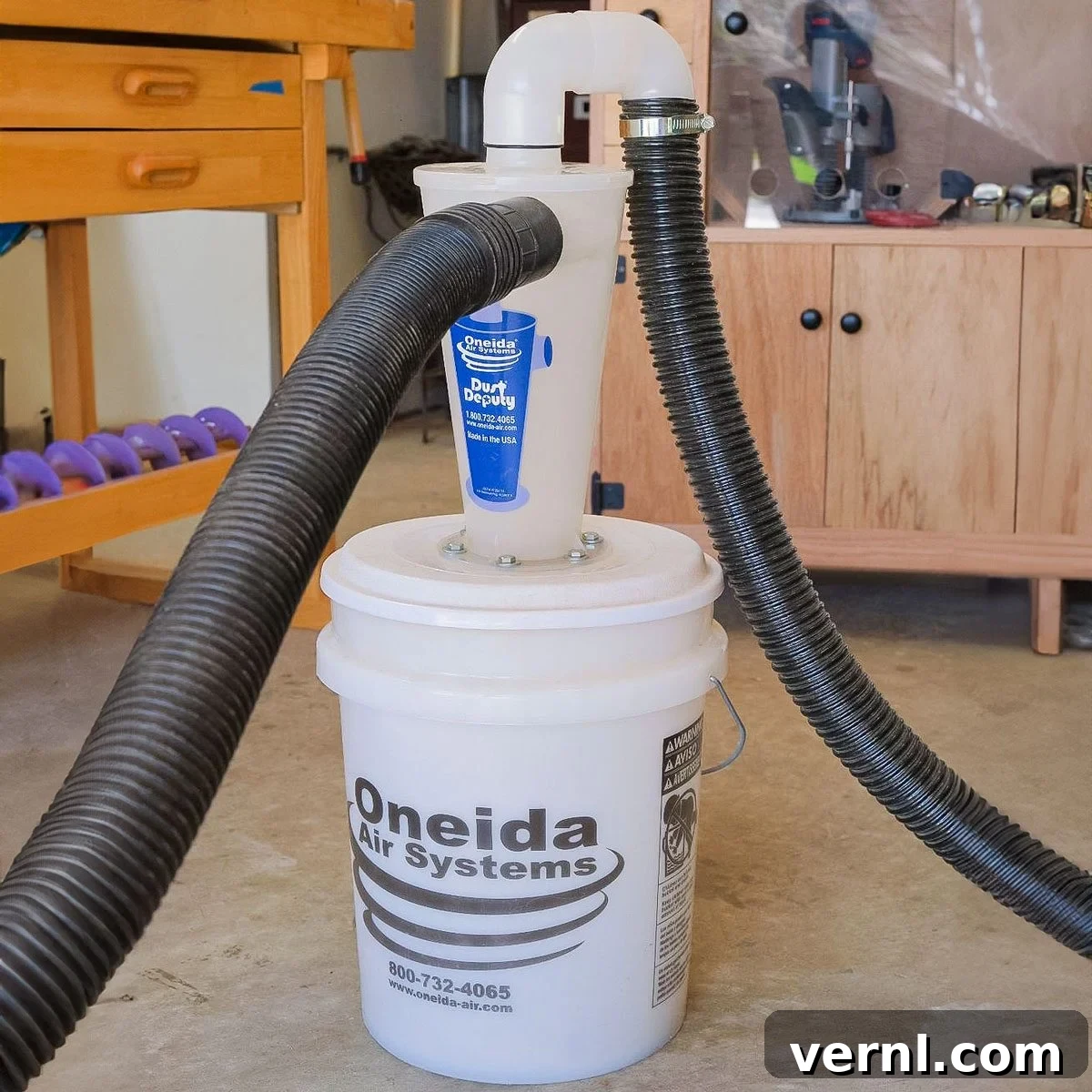
In the world of woodworking, few things are as crucial as effective dust collection. As a dedicated woodworker with a bustling small shop, I’ve amassed an array of dust management solutions: a robust wall-mounted 1HP dust collector, a versatile shop vac, a precision-focused Festool dust extractor, and an air scrubber tirelessly working to keep ambient dust out of my breathing space. While each machine plays a vital role, the constant battle with clogged filters and overflowing collection bags was a persistent source of frustration. The frequent stops to clean expensive HEPA filters, the inconvenient waits for replacement filters to arrive, and the inevitable drop in suction efficiency often disrupted my workflow and added unnecessary costs.
That all changed with the integration of an Oneida Dust Deputy into my system. This simple yet revolutionary cyclone separator has transformed my dust collection experience, virtually eliminating issues with suction loss and restricted airflow. Now, disposing of accumulated sawdust is as effortless as emptying a trash can. Adding this affordable upgrade not only streamlined my shop operations but also delivered significant savings on costly replacement filters and dust collection bags. In this comprehensive review, I’ll delve into why the Dust Deputy became an indispensable part of my workshop, explain the fundamental benefits of integrating a cyclone separator into your dust collection system, and offer insights into the various options available, including their pros and cons.
Understanding the Oneida Dust Deputy: A Game Changer for Dust Collection
At its core, the Oneida Dust Deputy is not a vacuum; it’s a pre-separator that significantly enhances the efficiency of your existing wet/dry vacuum or dust collector. It operates on a sophisticated principle of cyclonic separation. When dust-laden air from your woodworking tool enters the Dust Deputy, it’s forced into a high-speed旋转 vortex. This centrifugal force acts on the airborne particles, causing heavier wood chips and most of the fine dust to spiral downwards and fall out of the airstream into a collection bin strategically placed beneath the cyclone. Simultaneously, only the extremely fine dust particles, along with clean air, are drawn upwards towards your vacuum’s filter. This innovative process means that the vast majority of debris never even reaches your primary filter, allowing it to work more effectively and last considerably longer.
The primary advantage of adding a cyclonic separator like the Dust Deputy to your shop is its ability to convert a single-stage dust collection system into a highly efficient two-stage system. In a traditional single-stage setup, all dust and debris, regardless of size, pass directly through the impeller of your dust collector and then through the filter before settling in the collection bag. This constant onslaught of abrasive material can lead to significant wear and tear on the impeller, prematurely clogging the filter, and demanding frequent cleaning or replacement. The notorious loud “clunk” of a large wood chip striking an expensive impeller is a dreaded sound for any woodworker, signaling potential damage and costly repairs.
With a two-stage system, the Dust Deputy acts as the crucial first stage, separating the vast majority of debris before it ever reaches the main collector. Only the lightest, finest dust particles proceed to the impeller and filter of your shop vac or dust collector. This protection dramatically reduces wear on the impeller, extending its lifespan and maintaining peak performance. Moreover, by preventing larger debris and most fine dust from reaching the filter, the filter remains cleaner for much longer, preserving suction power, reducing maintenance frequency, and extending the filter’s overall operational life. This not only saves money on replacement filters but also improves the air quality in your workshop by maintaining optimal filtration.
I Tried It: Oneida Air Systems Dust Deputy Deluxe
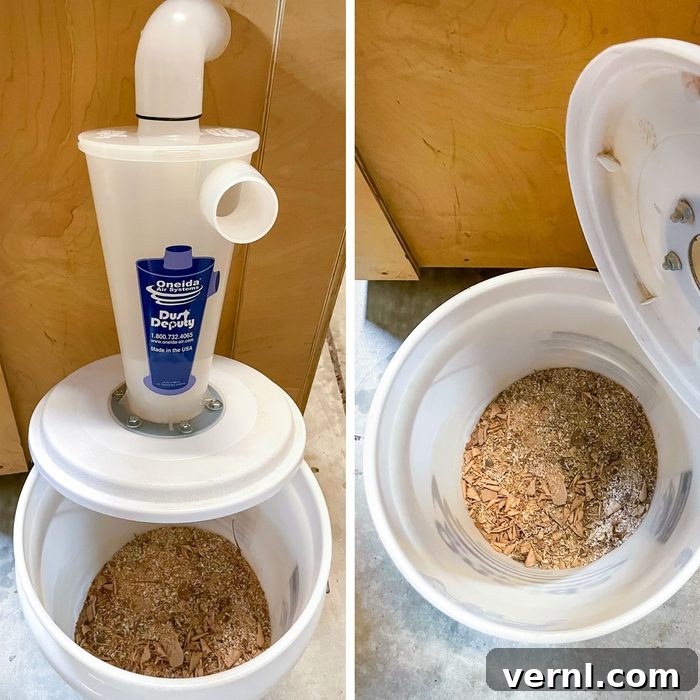
We tested the new Dust Deputy, and it’s now one of our favorite shop tools. A must-have for any woodworking enthusiast!
Shop on Walmart
Shop on Amazon
Key Features of the Oneida Dust Deputy
The Dust Deputy boasts several design innovations that contribute to its exceptional performance and widespread acclaim among woodworkers:
- Patented Cyclone Separator Technology: This core feature allows for a seamless upgrade of any standard wet/dry vacuum into a highly efficient two-stage dust control system, maximizing dust capture before it reaches your vacuum’s filter.
- Effortless Assembly: Designed for user convenience, the Dust Deputy is remarkably easy to assemble, allowing you to integrate it into your existing setup quickly and without hassle.
- Superior Dust & Debris Capture: Engineered to capture and remove an impressive 99.9% of dust and debris from the airstream before it can reach your vacuum filter. This drastically extends filter life and maintains consistent suction.
- Neutral Vane Inlet for Enhanced Performance: A unique rectangular inlet design, absent in many competitor cyclones, directs air downwards into the cyclone, preventing turbulence at the inlet. This proprietary feature significantly improves separation performance by over 20%.
- Anti-Static Components: Many Dust Deputy models include anti-static components, which are crucial for minimizing static electricity buildup. This reduces the risk of static shocks and prevents fine dust from clinging to the inside of the cyclone and collection bin, ensuring more efficient emptying.
- Transparent Collection Bin: Opting for models with a clear, see-through collection bin provides a real-time visual of how much dust and debris has been separated, allowing you to know exactly when it’s time to empty the bin without guesswork.
My Extensive Experience: How I Tested the Dust Deputy
Having integrated a Dust Deputy into my workshop for over a year now, I’ve had ample opportunity to put it through its paces across a wide range of woodworking tasks. Its consistent performance has proven invaluable, reliably extending the life of both my industrial dust collector and my everyday shop vac. Standard wet/dry vacs are notorious for their small filters, which quickly become saturated and clogged with fine dust. Each attempt to clean these filters, whether by tapping or washing, inevitably damages the delicate fiber construction, diminishing their effectiveness and shortening their lifespan. The Dust Deputy has largely mitigated these issues.
My initial deployment of the Dust Deputy was for heavy milling operations, specifically with my planer and jointer, which are notorious for generating immense volumes of sawdust and wood chips. Before the Dust Deputy, my shop vac’s filter would clog within minutes, leading to frequent interruptions. With the cyclone in place, I could process significantly more lumber without a noticeable drop in suction. The difference when working with a table saw, which produces a mix of fine dust and larger offcuts, was equally dramatic. The collection bin beneath the Dust Deputy would fill rapidly with all the heavy debris, leaving the shop vac’s filter remarkably clean.
I also extensively used the Dust Deputy to enhance the performance of my shop vac for general cleanup and for tasks like sanding, which generates incredibly fine dust. Eventually, I upgraded all my filters to HEPA standards for superior air quality, but these filters come with a higher price tag and are ultra-delicate. The thought of a stray screw or a rogue chunk of wood rattling around inside an expensive HEPA filter was always a concern. The Dust Deputy acts as a robust first line of defense, preventing such objects from ever reaching the sensitive filter, thus protecting my investment.
While I still need to perform occasional cleaning and replacement of filters and collection bags, the frequency has been drastically reduced thanks to the Dust Deputy. This translates directly into less downtime, lower operational costs, and a more productive workflow. Assembly of the unit was incredibly straightforward. A key piece of advice I learned: avoid using a power drill when attaching components, as the internal threads are often plastic and prone to stripping. Hand-tightening ensures a secure fit without damage. Connecting the Dust Deputy between my tools and the vacuum was equally simple; the inlet hose connects to the tool, and the top hose runs to the shop vac.
Oneida Air Systems offers various types of Dust Deputy cyclone separators, catering to different shop sizes and specific needs. I opted for a model under $100 that perfectly matched my workshop’s scale and requirements. To help determine the best version for your setup, Oneida Air Systems provides an excellent product selector tool on their website. This tool guides you through questions regarding your primary collection machine (shop vac or dedicated dust collector), the type of material you primarily collect (e.g., non-abrasive wood and drywall dust vs. abrasive sand and gravel), and any space constraints you might have (e.g., needing to fit under a workbench or having ample room).
A crucial operational tip I discovered, which wasn’t explicitly covered in the manual, is to ensure the sawdust level in the collection bin never exceeds the halfway mark. If the bin becomes too full, the efficiency of the cyclonic separation decreases, and you’ll start to notice larger wood chunks making their way into your shop vac or dust collector. Adequate space for air circulation within the bin is essential for optimal performance.
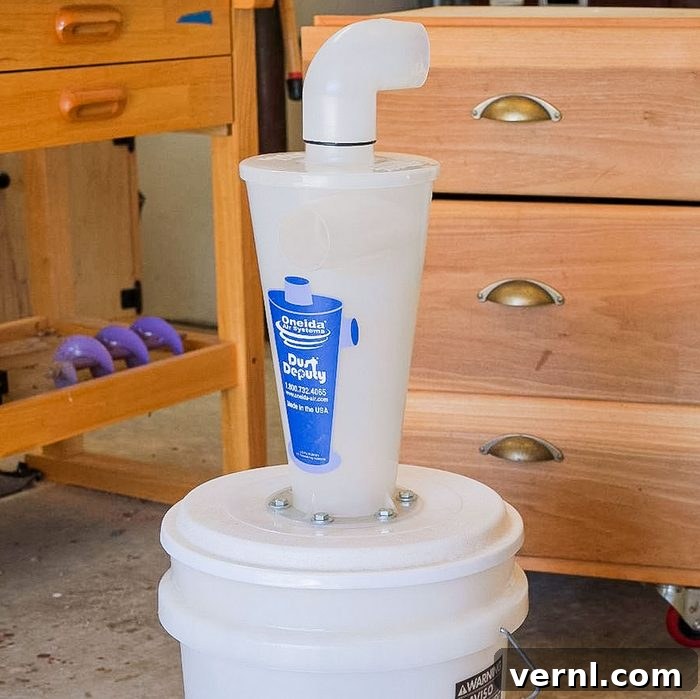
The lid of my Dust Deputy is a pop-on and off design, which means I quickly learned not to lift the entire unit by the cyclone itself. While I’d ideally like to create a mobile cart to move the Dust Deputy and shop vac together, for now, my unit resides conveniently under my miter saw station, with the hoses neatly clipped in place using specialized clamps. This static setup works well for my current shop layout.
I was particularly pleased to find that the Dust Deputy is universally compatible with virtually any make or model of machine in my shop. It comes equipped with tapered ports designed to fit standard 1.5-inch to 2.5-inch hose fittings, making integration effortless. Furthermore, its versatility extends to a wide array of materials: from fine wood dust and drywall dust to concrete dust, water, baking flour, grass, and even stubborn pet hair, the Dust Deputy handles it all with remarkable efficiency.
My decision to choose the Oneida Dust Deputy over attempting a DIY version was an easy one. While building a custom cyclone separator might seem appealing, the complexities involved in achieving optimal separation efficiency, ensuring collapse-proof integrity, and incorporating anti-static properties made the manufactured Oneida system a far more practical and reliable choice. The peace of mind offered by Oneida’s collapse-proof bucket, designed to withstand high vacuum pressure, and its anti-static components, which significantly reduce the likelihood of static shocks, truly sealed the deal. The clear, see-through plastic components also provide an invaluable real-time view of the dust separation process, allowing for timely emptying and continuous monitoring.
Pros
- Captures an impressive 99.9% of dust and debris from the air, preserving filter life and suction power.
- Effectively prevents metal scraps, wood chips, and other foreign objects from damaging the sensitive impeller of your main dust collector or shop vac.
- Significantly extends the life of your machine’s primary dust filter, leading to substantial cost savings on replacements.
- Available in a wide range of sizes and configurations to suit various vacuum setups, shop sizes, and dust collection needs.
- Includes anti-static components in many models, reducing static shocks and ensuring cleaner emptying of the collection bin.
- Consistently maintains powerful suction by preventing filter clogging, ensuring peak performance from your vacuum.
- Improves overall workshop air quality by separating a greater volume of airborne particulates.
Cons
- Can sometimes present a lack of portability, especially with larger setups, requiring careful planning for placement or the construction of a dedicated mobile cart.
- The pop-top lid design, while effective, can sometimes be a bit stiff to open, potentially requiring a bucket tool.
Frequently Asked Questions (FAQ)
How do I clean my Oneida Dust Deputy?
Cleaning the Dust Deputy is exceptionally simple and one of its greatest advantages. There’s no filter to clean within the cyclone itself. To empty it, you simply unclip or remove the lid from the collection bin that sits beneath the cyclone, and then dispose of the accumulated dust and debris. Periodically, you might want to wipe down the inside of the cyclone cone with a cloth to remove any fine dust static cling, but this is infrequent.
Can the Dust Deputy be used with wet materials?
Yes, many Dust Deputy models are designed to handle both dry dust and wet materials, effectively separating liquids before they reach your wet/dry vacuum’s motor or filter. This versatility makes it ideal for various cleanup tasks.
What’s the best way to connect the Dust Deputy to my tools and vacuum?
The Dust Deputy typically comes with tapered ports that fit standard hose sizes (e.g., 1.5-inch to 2.5-inch). For optimal performance, ensure all connections are as airtight as possible to prevent suction loss. You may need hose clamps or duct tape for a secure fit, especially when moving the system around.
What Other Experts and Reviewers Think
My positive experience with the Oneida Dust Deputy is echoed by numerous other woodworking professionals and everyday users. Ashley Pieper, a seasoned woodworker, artist, and owner of Shallow Creek Woodcraft, integrated the Super Dust Deputy 4/5 into her small studio furniture workshop. She explained, “I added it to save on bag changes and to capture large chips that were getting caught and causing clogs in the main collector. The separation was appealing to help save time dealing with both those issues.”
Ashley further praised its user-friendliness: “Setup and hook up is simple. Emptying the bin is easy and quick.” She also highlighted its transformative effect on her shop’s performance: “The Dust Deputy takes my collection system to a two-stage with better suction at my tools and better air quality in the shop. Overall, it’s a great product that works exactly as advertised, and that is always a plus!” When asked about any potential drawbacks, Ashley noted, “This is more of a conditional preference than an issue but a larger collection bin would work better for the amount of milling I do,” suggesting that for high-volume users, a larger collection capacity might be beneficial.
Verified Amazon purchaser, M.W., expressed profound appreciation for the easy installation and the dramatic improvement in shop cleanliness: “Setup is even easier than the instructions indicate. And everything fit perfectly into my old Rigid 5 gal wet/dry vac…Ultimately – I wanted this to save on cleanup. And it tackled this task amazingly well! But more so it keeps ALL the dust out of the air (and subsequently my lungs!). The whole area feels and smells cleaner. And cleanup is now a 1-minute job – instead of the 30+ mins it used to be (AND sawdust doesn’t get literally EVERYWHERE!!). Not to mention: the vacuum bin is spotless!”
Another five-star Amazon reviewer, R. Marks, concisely summarized the core benefits: “Good for dust control and keeping your vacuum working. It allows a lot of the dust to drop out before being sucked in the main vacuum. Saves time in the shop.”
The versatility of the Dust Deputy extends beyond woodworking, as confirmed by Oneida Air Systems verified buyer, Andre B., who shared his experience with foam insulation board: “It works for more than just sawdust. I bought this on a chance that it would work on something other than wood sawdust, and it did not disappoint! I do a lot of router work on foam insulation board for Halloween and Christmas yard decorations. Using just a shop vac would clog my filter in a short time. The Dust Deputy has eliminated my filter clogging. This device collects dust so fine that it statically sticks to the insides of bucket. I don’t quite know the physics behind the Dust Deputy, but it works like magic! I would definitely recommend the DD! No more foam insulation dust everywhere!” These testimonials collectively reinforce the Dust Deputy’s reputation as a highly effective and versatile dust collection solution.
Oneida Air Systems vs. DeWalt, Jet, and Mullet: A Comparative Look
When considering a cyclone separator, it’s natural to explore popular alternatives from other reputable brands. Competitors such as the DeWalt Separator, the Jet Cyclonic Separator, and the complete system Mullet Cyclone Separator are all strong contenders in the market. My decision to choose the Oneida Air Systems Dust Deputy was influenced by several factors, including its established reputation as a well-known brand within the woodworking community and its proud “Made in the USA” origin, which often signals a commitment to quality and support.
While the Jet Cyclonic Separator is another option, I encountered mixed reviews online, with some customers expressing concerns about potential clogging issues, which was a significant factor in my decision-making process given my frustration with clogged filters. I also had the opportunity to test the DeWalt Separator, and it certainly boasts some impressive features that the standard Dust Deputy models don’t possess. For instance, the DeWalt unit often includes robust locking clasps on its lid, providing a more secure seal and often making it easier to open compared to the Dust Deputy’s pop-top lid, which can sometimes be stiff or require a specialized bucket tool to open. Additionally, the DeWalt Separator frequently features excellent integrated hose storage, allowing all components to fit snugly and securely within the collection bin, and its base often includes convenient caster wheels for enhanced portability. These are definite advantages in terms of convenience and mobility.
However, despite these compelling features from DeWalt, my final assessment led me back to the Dust Deputy. I felt that the Dust Deputy was constructed from more robust and durable materials, which is a critical consideration for longevity in a demanding workshop environment. The availability of clear, see-through plastic components in many Dust Deputy kits was also a must-have for me, providing immediate visual feedback on the dust collection level without having to open the unit. Most importantly, in my direct comparison tests, the Dust Deputy consistently demonstrated superior separation efficiency, leaving noticeably more dust and wood chips in its collection bin compared to the other brands. This higher efficiency translates directly to better protection for my vacuum’s filter and motor, ultimately confirming the Dust Deputy as the optimal choice for my workshop needs.
Final Verdict: An Indispensable Workshop Upgrade
While the DeWalt Separator presented a compelling alternative with its integrated features and portability, my extensive testing and long-term experience firmly established the Oneida Dust Deputy as the superior choice for my workshop. Its robust construction, the availability of transparent components for real-time monitoring, and, most critically, its unmatched separation efficiency truly set it apart. In direct comparisons, the Dust Deputy consistently captured a greater volume of dust and wood chips, leaving my primary vacuum filters significantly cleaner.
The Dust Deputy stands as an affordable yet profoundly impactful upgrade to any dust collection system. It has undeniably saved me invaluable time and money by drastically reducing the need for expensive replacement filters and frequent dust bag changes. Its intelligently simple design allows for seamless adaptation to virtually any shop vac or dedicated dust collector, making it a versatile addition. Beyond the financial and time savings, it fundamentally simplifies waste disposal, capturing a far greater volume of dust and debris than would ever reach the vacuum’s main collection system. For any woodworker, DIY enthusiast, or professional dealing with airborne particulates, the Oneida Dust Deputy is not just a useful accessory; it’s an essential tool that enhances efficiency, protects equipment, and significantly improves workshop air quality, making it an investment that truly pays for itself.
Where to Buy the Oneida Dust Deputy
I Tried It: Oneida Air Systems Dust Deputy Deluxe
Our favorite wet/dry vac for all your shop cleaning needs.
Shop on Walmart
Shop on Amazon
You can purchase the Dust Deputy Deluxe from major retailers like Walmart and Amazon, typically for a list price of around $120, depending on current promotions. The versatility of the Dust Deputy line means that numerous kits are available in a wide array of sizes and configurations, designed to accommodate various vacuum setups and specific dust collection requirements. These options range in price from approximately $40 for basic cyclone components to specialized stainless steel models exceeding $1,500 for heavy-duty industrial applications.
For a comprehensive selection, explore the Oneida Air Systems store on Amazon, where you’ll find everything from standalone cyclones to complete kits with buckets and hoses. They even offer specialized cyclonic separators tailored specifically for Festool vacuums, ensuring seamless integration with premium tool systems.