
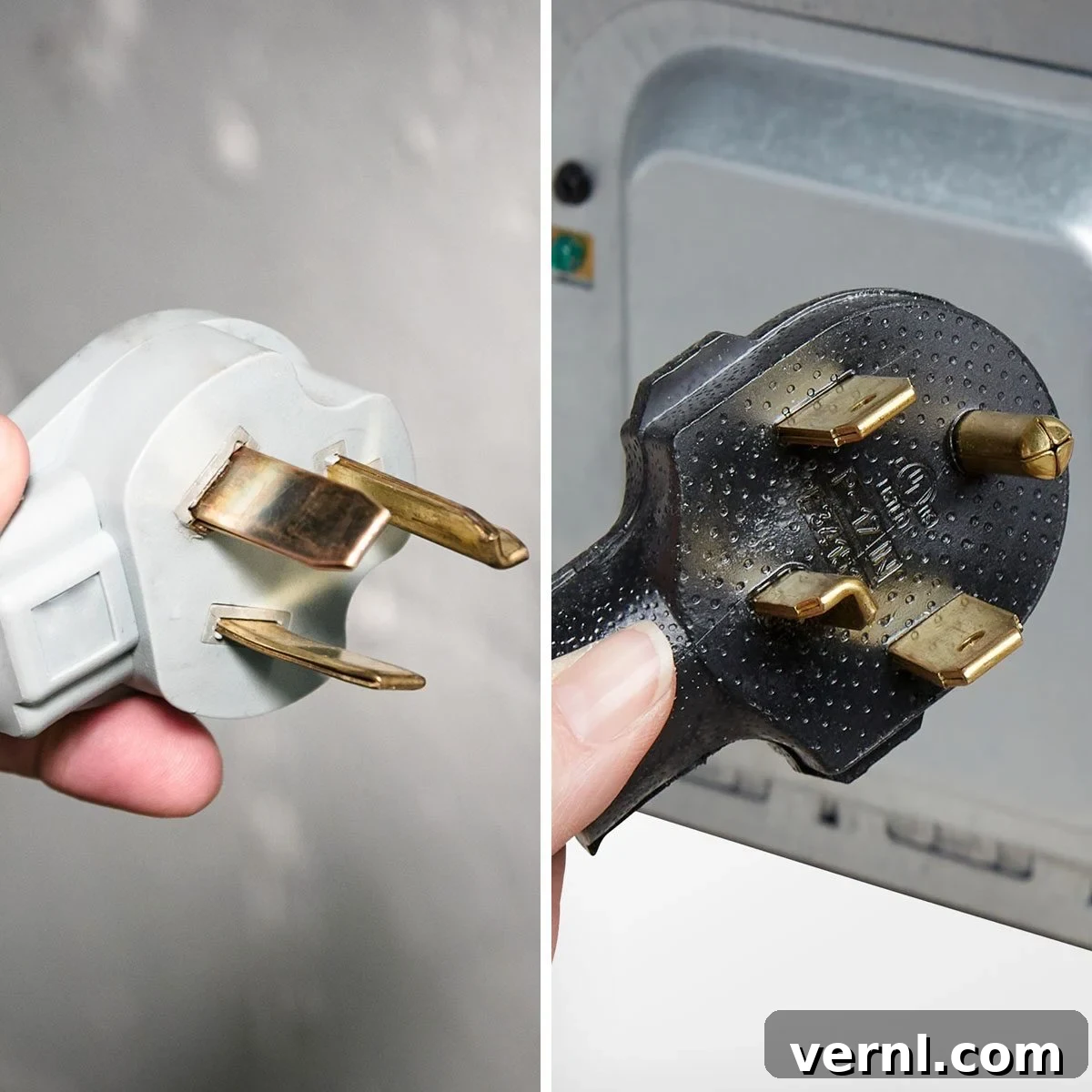
Dryer Plugs: Understanding the Difference Between 3-Prong and 4-Prong
Moving into a new home often means making decisions about appliances. One detail that frequently gets overlooked is the dryer plug. You might assume your new dryer will simply plug in, but that’s not always the case. In fact, understanding the difference between 3-prong and 4-prong dryer plugs is crucial for a safe and functional setup.
Most new dryers don’t come with a power cord, as the type you need depends on your home’s existing wiring. This guide will help you navigate the process of choosing the right plug and ensuring a secure connection for your electric dryer. Even if you’re not an electrician, this information empowers you to make informed decisions.
Dryer Plug Types Explained
The primary consideration when choosing a dryer plug is whether you have a 3-prong or 4-prong outlet (also called a receptacle) in your laundry area. These different configurations serve distinct purposes, and using the correct one is vital for both safety and appliance functionality. Let’s clarify the key differences:
It’s important to note this discussion focuses solely on electric dryers. Gas dryers utilize standard 120-volt, 15-amp grounded plugs, much like other small appliances in your home. The power requirements for gas dryers are significantly lower, as they only need electricity to operate their electronic components and not for generating heat.
Electric dryers, on the other hand, demand a 240-volt, 30-amp circuit to power the heating element and motor. This higher voltage and current necessitate larger, more robust plugs to handle the increased electrical load. These plugs are intentionally designed differently from standard outlets to prevent accidental misconnections.
3-Prong Dryer Plug: The Older Standard
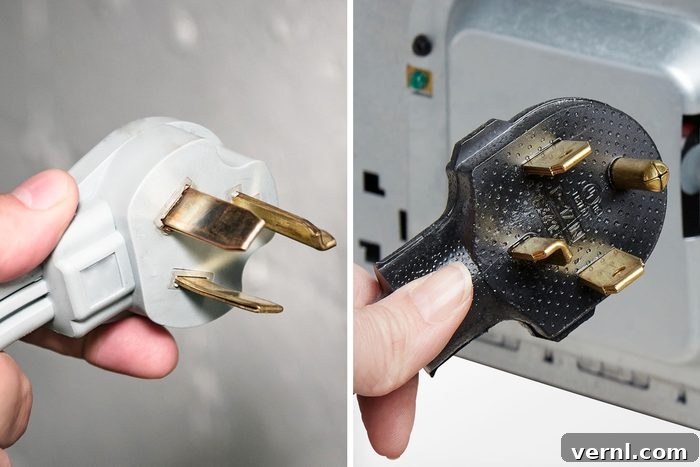
The 3-prong dryer plug was the standard for electric dryers for many years and is still found in many older homes. It consists of two “hot” prongs and one neutral prong.
The two hot prongs carry the 240 volts needed to power the dryer’s heating element and motor. The neutral prong serves primarily to carry the return current and supply the lower voltages required by the dryer’s electronics. Until 1996, the neutral wire also acted as the ground.
The grounding function protects against electrical shock by providing a path for stray current to flow back to the electrical panel in the event of a fault. (If you want to know more about electrical grounding check out our guide.)
4-Prong Dryer Plug: The Modern Safety Standard
The 4-prong dryer plug represents a more modern approach to electrical safety. It includes the same two hot and one neutral prongs as the 3-prong plug, but it adds a dedicated grounding prong.
This dedicated ground wire runs directly from the dryer to the electrical panel, offering a more direct and reliable grounding path, and further reducing the risk of electric shock. This is the current standard under the National Electrical Code (NEC).
The 1996 update to the NEC mandated the use of 4-prong outlets for all new construction and major renovations. However, the NEC recognizes that it’s impractical to require homeowners to rewire their homes every time they purchase a new dryer. Therefore, if you have a 3-prong outlet, you can still use a 3-prong dryer plug, provided the dryer is properly grounded, but you must not use a 3-prong plug in a new home.
Can You Use a Dryer Plug Adapter? Absolutely Not
One of the most important pieces of advice is to never use a dryer plug adapter. Adapters are dangerous and should be avoided at all costs.
Plug prongs are extensions of the wires leading back to your electrical panel. Adapters may change the number of holes, but they don’t change the underlying wiring that carries electricity. Using an adapter creates a false sense of security, and it can leave your appliance ungrounded.
Never use an adapter to make a plug fit. This advice applies to all electrical outlets, not just those for your dryer.
How to Connect Your Dryer Plug
Whether you have a 3-prong or a 4-prong outlet, it’s essential to understand the correct wiring procedures to ensure a safe and effective connection. Fortunately, the process is generally straightforward.
Using a 3-Prong Dryer Plug
If your home has a 3-prong receptacle, it is acceptable to use a 3-prong dryer plug. Always consult the instructions that came with your dryer for specific wiring details. Following the manufacturer’s instructions is critical for safe operation. In general, the steps are as follows:
- Attach the wires from the cord to the three screw terminals on the dryer according to the dryer manual.
- Connect the white (neutral) wire from the cord to the center screw terminal on the dryer.
Using a 4-Prong Dryer Plug
For newer homes with a 4-prong receptacle, you’ll need a 4-prong dryer plug. The wiring is slightly different from the 3-prong setup:
- Remove the screw that connects the neutral wire to the dryer frame.
- Combine the neutral wire from the cord with the neutral wire from the dryer and connect both under the center screw terminal.
- Connect the green wire from the cord to the dryer frame where you removed the neutral wire.
- Connect the black and red wires from the cord to the remaining screw terminals. It doesn’t matter which goes to which terminal.
Again, always follow the dryer’s instructions.
Upgrading Your Home Wiring for a 4-Prong Outlet
If you have a 3-prong outlet, but you want to upgrade to a 4-prong setup to bring your home up to modern standards, you’ll need to run a dedicated ground wire from the dryer to the electrical panel. This can be a more complex task.
Unless you have experience with electrical wiring, it’s highly recommended to hire a qualified and licensed electrician. Electrical work can be dangerous, and an improper installation can lead to fire or electric shock. Once the wiring and receptacle are updated, you can connect the 4-prong plug according to the instructions provided with your dryer.
Choosing the correct dryer plug might seem like a small detail, but it’s essential for both the function of your dryer and, more importantly, your safety. Understanding the differences between 3-prong and 4-prong configurations, and adhering to proper wiring practices, ensures that your laundry routine runs smoothly and without risk.