
Unlock Precision and Efficiency: The Ultimate Guide to Digital Tape Measures
Imagine embarking on a significant home improvement project, such as installing new hardwood flooring throughout your house. Traditionally, this involves a painstaking process: meticulously measuring along perpendicular walls in each room, navigating around obstacles, often with a helper holding the other end of a cumbersome tape measure. Then comes the tedious task of jotting down numbers, manually multiplying them to calculate the area of each space, and finally adding everything up. This method is not only time-consuming but also prone to human error, which can lead to costly mistakes in material estimation.
Now, envision a modern alternative: a sophisticated device that automatically captures these precise measurements as you simply stand in a corner of the room. This device instantly performs all necessary calculations, stores the data for each space, and seamlessly integrates all your measurements as you move from one room to the next. Such a tool dramatically streamlines your workflow, ensures unparalleled accuracy, and keeps your project organized from start to finish. This revolutionary instrument is the digital tape measure.
The leap from a traditional tape measure to a digital one is comparable to the technological evolution from a slide rule to a pocket calculator. Digital devices inherently offer superior accuracy and incorporate advanced functionalities that are impossible to achieve with manual tools. While your existing tape measure might suffice for occasional, simple tasks tucked away in your tool drawer, frequent measuring, especially over distances exceeding 16 feet, warrants an upgrade. Investing in a digital tape measure will undoubtedly save you significant time, reduce potential errors, and enhance the overall efficiency of your projects.
What Is a Digital Tape Measure?
At its core, a digital tape measure is a modern measuring instrument designed to display length measurements on an integrated LED screen. Unlike conventional tapes that rely on etched graduations, these tools provide clear, easy-to-read numeric readouts. Most models offer the flexibility to switch between decimal and fractional displays, as well as between imperial (inches, feet) and metric (centimeters, meters) units, catering to diverse project requirements. Typically, these devices boast an impressive accuracy, often within 1/16-inch (1.5-mm), significantly reducing the margin for human interpretation error inherent in analog readings.
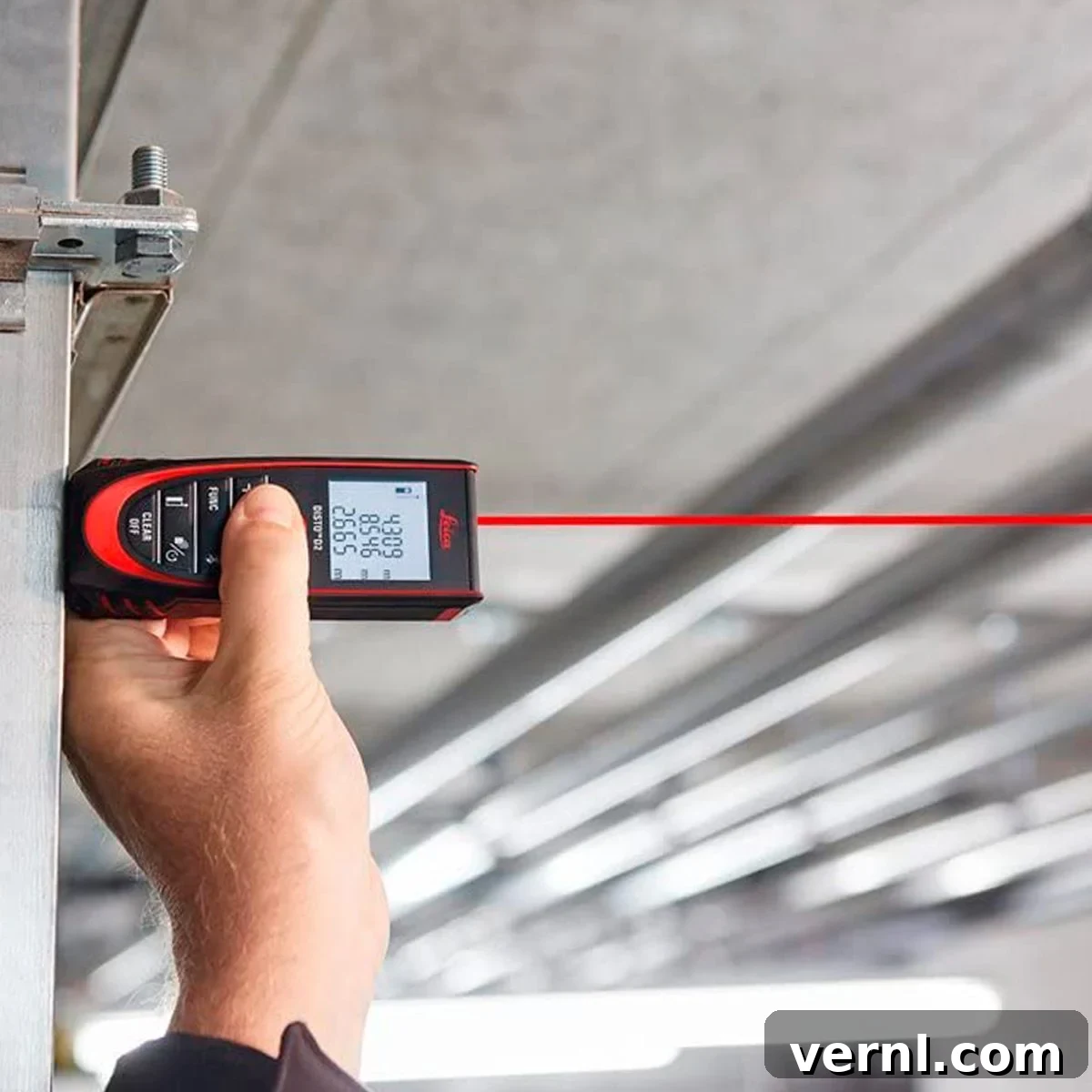
The evolution of digital tape measures has seen the rise of advanced models incorporating laser technology. These innovative tools emit a laser beam and precisely measure the time it takes for the beam to reflect off a solid surface and return to the device. This “time-of-flight” principle allows for incredibly efficient and accurate measurement of long distances, often extending to hundreds of feet. Beyond mere measurement, many laser-equipped digital tape measures can store multiple data points, perform complex calculations like area and volume on the fly, and even connect to other smart devices, transforming how professionals and DIY enthusiasts approach measuring tasks.
Types of Digital Tape Measures
The market for digital tape measures offers a range of options, each tailored to different needs and project complexities:
Basic Digital Tape Measures
These are the simplest form of digital measuring tools, essentially traditional metal tape measures enhanced with an LED screen. Instead of squinting to read tiny graduations on the tape, users get a clear, numerical display of the measurement. They often include convenient features such as unit conversion (imperial to metric, fractions to decimals), and sometimes a memory function to store a few recent measurements. These are ideal for everyday tasks, workshop use, or anyone looking for improved readability and basic digital convenience without the need for advanced laser functions.
Combo (Two-in-One) Digital Tape Measures
Combo tape measures represent a versatile hybrid, offering the best of both worlds. They feature a traditional metal tape with physical graduations for tactile, short-range measurements, alongside a built-in laser distance measuring unit. This dual functionality allows users to choose the most appropriate method for their task. You can use the physical tape for precise marking or measuring within arm’s reach, and then switch to the laser function for longer distances or when measuring alone. Laser capabilities on these devices typically include automatic calculation of area and volume, storage of multiple readings, and advanced features like determining height and width of structures via triangulation (Pythagorean theorem functions).
Laser-Only Distance Measures
Digital measuring instruments with lasers often forgo the traditional physical tape altogether. These compact devices are typically shaped like a small remote control or mobile device, featuring an LED screen for displaying measurements and a keypad for controls. With buttons for power, mode selection, and often a built-in calculator, these tools are designed for maximum efficiency over long distances and complex calculations. They are particularly favored by professionals in construction, real estate, and surveying for their speed, accuracy, and advanced data management capabilities, including Bluetooth connectivity for transferring measurements to apps or software.
How To Use a Digital Tape Measure
The operation of a digital tape measure varies slightly depending on its type:
Using a Basic Digital Tape with an LED Screen
If your digital tape measure includes a physical tape and an LED screen, its use is very similar to a conventional tape measure. Simply hook the end of the tape onto your starting point (e.g., a piece of wood, a countertop edge), extend the tape to the desired length, and then read the measurement clearly displayed on the screen. The main advantage here is the elimination of manual interpretation of graduations, leading to faster and more accurate readings.
Using a Laser Measurement Device
Laser measurement devices require a solid object for the laser beam to reflect off to obtain a reading. Here’s a detailed guide to their advanced functions:
- Power On and Unit Selection: First, turn on the device. Then, use the selector button to choose your preferred measurement units, such as feet and inches, purely decimal feet, or meters.
- Select the Reference Edge: This crucial step determines where the measurement begins. Depending on your device, you can typically choose to measure from the front, rear, top, or even a tripod mount point. Always ensure you select the correct reference point to avoid errors.
- Take a Single Reading: Point the device at your target surface, press the measurement button, and the reading will instantly appear on the screen. Many devices will automatically save this first measurement.
- Addition and Subtraction: Push the addition button to add a second length measurement to the first. Some devices also allow for subtraction, enabling you to calculate differences between two lengths instantly.
- Area Calculation: To compute area, activate the “area” function. The device will then prompt you to take two consecutive measurements (length and width). It will automatically calculate and display the area of the space.
- Volume Calculation: For volume, select the “volume” function. You will then take three sequential measurements: length, width, and height. The device instantly computes the volume.
- Indirect Measurement (Pythagorean Theorem): This function is invaluable for measuring heights or widths of structures like buildings, fences, or trees when direct measurement is impractical. Choose the “indirect” or “Pythagorean” function. You’ll take one measurement with the device pointed at the base of the structure and another pointed at the top or end. The device will use the principles of right-angle triangles to calculate the inaccessible dimension. Some advanced models might require three measurements for complex indirect calculations.
- Continuous Measurement (Tracking Mode): Use “continuous” mode to scan an irregular surface or to quickly find minimum and maximum distances. As you move the device, it will constantly update the measurement, recording and remembering the longest and shortest distances to the surface. This is particularly useful for tasks like aligning objects or checking clearances.
- Other Advanced Features: Many high-end laser measures offer additional functionalities like angle measurement (inclinometer), stake-out functions for marking specific distances, and timer functions for delayed measurements.
Why Buy a Digital Tape Measure?
While the accuracy offered by a basic LED-screen tape measure can be highly beneficial in a workshop environment, some professionals might initially find feature-loaded digital tape measures bulky or expensive. However, the advanced capabilities, particularly those offered by laser measures, provide a transformative advantage over conventional tools.
A tape measure equipped with laser technology provides functionalities that a traditional tape measure simply cannot match. Here are compelling reasons to invest in a digital tape measure, especially one with laser capabilities:
- Unparalleled Accuracy and Reduced Errors: Digital readouts eliminate guesswork and human error in reading graduations. Laser measures offer even greater precision over long distances, crucial for critical projects.
- Significant Time Savings: Measurements are taken almost instantly, and calculations like area and volume are performed automatically. This dramatically speeds up project planning and execution, especially for large areas or multiple measurements.
- Enhanced Efficiency for Solo Work: Many digital tape measures, especially laser models, allow for accurate single-person operation over long distances, eliminating the need for a helper.
- Advanced Calculation Capabilities: No more manual calculations. Area, volume, and indirect measurements are computed instantly, simplifying material estimation and complex layouts.
- Data Storage and Connectivity: Modern digital measures can store numerous readings, often organized by project. High-end models feature Bluetooth connectivity, allowing you to transfer data wirelessly to smartphones, tablets, or CAD software for further planning and reporting. This streamlines workflow and reduces paperwork.
- Improved Safety: Measure hard-to-reach or dangerous areas (e.g., high ceilings, hot machinery, active construction zones) from a safe distance, reducing risks.
- Versatility Across Projects: Digital tape measures are invaluable for a wide array of applications, simplifying tasks for any DIYer or professional engaged in:
- Outdoor Building Projects: Including precise tasks like setting fence posts, building decks, patios, or outbuildings. Accurate measurements ensure structural integrity and correct material quantities.
- Designing and Installing Landscapes: From planning garden beds and pathways to calculating mulch or soil volumes, digital measures provide quick, accurate dimensions.
- Interior Remodeling: Essential for tasks like installing new flooring, precisely fitting cabinets, hanging doors, and modifying walls, where exact measurements are paramount.
- Interior and Exterior Painting: A laser measurement tool easily calculates coverage area, helping you accurately estimate the amount of paint, wallpaper, or other finishing materials needed, minimizing waste.
- HVAC, Plumbing, and Electrical Work: For routing pipes, conduits, or ductwork in confined or overhead spaces, precise measurements taken from a distance are critical.
- Real Estate and Appraisal: Quickly generate accurate floor plans and room dimensions for property listings and valuations.
Choosing the Right Digital Tape Measure
Selecting the best digital tape measure depends largely on your specific needs, project types, and budget. Consider the following factors:
- Your Primary Use: Are you a casual DIYer needing better readability, or a professional requiring advanced features for complex construction sites?
- Required Accuracy: While most digital tapes are accurate to 1/16-inch, some high-end laser measures offer precision down to 1/32-inch or 1mm.
- Measuring Range: Basic digital tapes are limited to their physical tape length (e.g., 16-25 feet). Laser measures can range from 60 feet to over 600 feet.
- Features and Functions: Do you need area, volume, or indirect measurement capabilities? Is data storage, Bluetooth connectivity, an inclinometer, or a continuous measurement mode important for your work?
- Durability: For job site conditions, look for tools with rugged casings, water and dust resistance (IP ratings), and good drop protection.
- Battery Life and Type: Consider if you prefer replaceable AA/AAA batteries or a rechargeable internal battery.
- Screen Readability: A large, backlit display is crucial for working in various lighting conditions.
- Budget: Prices vary significantly from basic models to professional-grade laser devices.
Best Digital Tape Measures
Whether your projects demand the simplicity of a non-laser tool for workshop accuracy or the long-range capabilities of a laser measure for outdoor tasks, here are some top choices that stand out in the market:
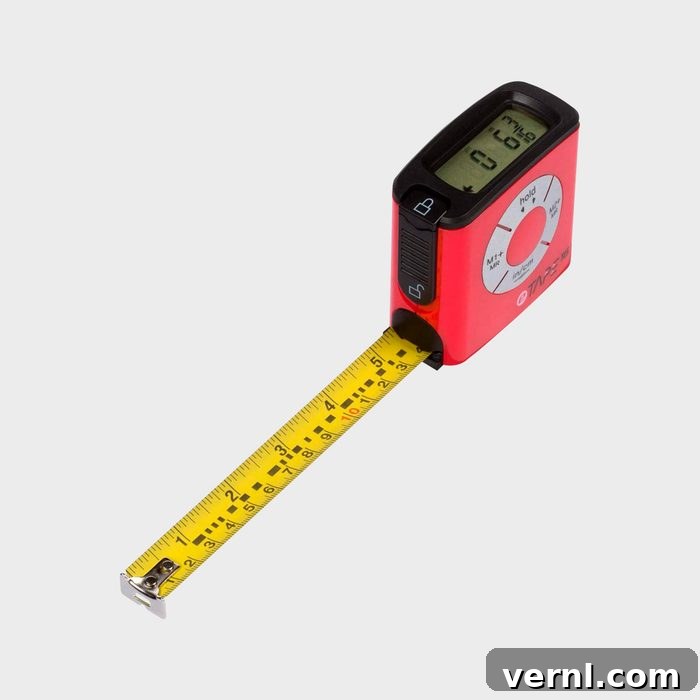
Best Non-Laser Digital Tape Measure
The eTape Digital Electronic Tape Measure is an excellent choice for those seeking the clarity of a digital display on a conventional tape. It’s lightweight, affordably priced, measures up to 16 feet, and easily converts between imperial and metric units. This model is particularly user-friendly, offering memory to store up to three measurements, making it perfect for quick, precise tasks in the shop or around the house.
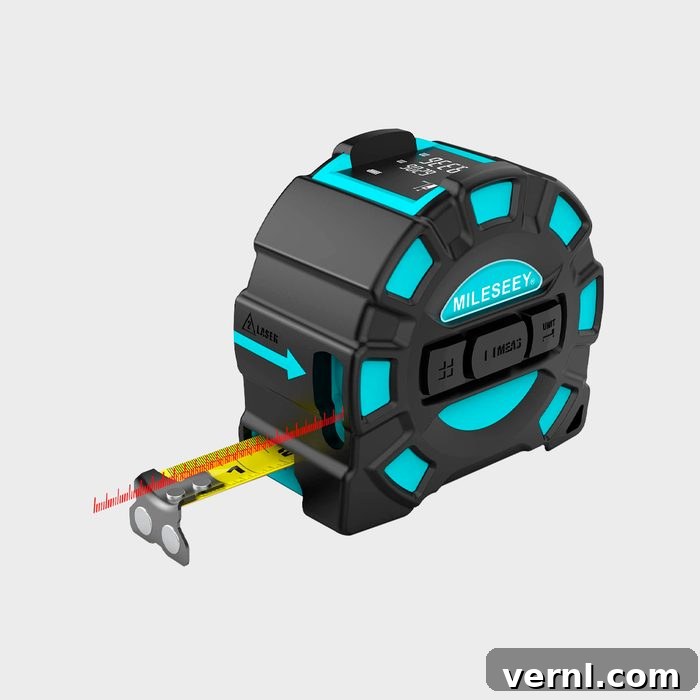
Best Combo Digital Tape Measure
For ultimate versatility, the Mileseey Measuring Tape is a standout. You can comfortably carry this rechargeable 2-in-1 tool on your tool belt and use its physical 16-foot tape like any conventional measure, or engage its powerful laser for distances up to 131 feet. Its integrated LED display, which operates with the laser function, provides clear readings and seamless conversion between meters, inches, and feet. This device also calculates area, volume, and performs Pythagorean measurements, making it a robust companion for varied tasks.
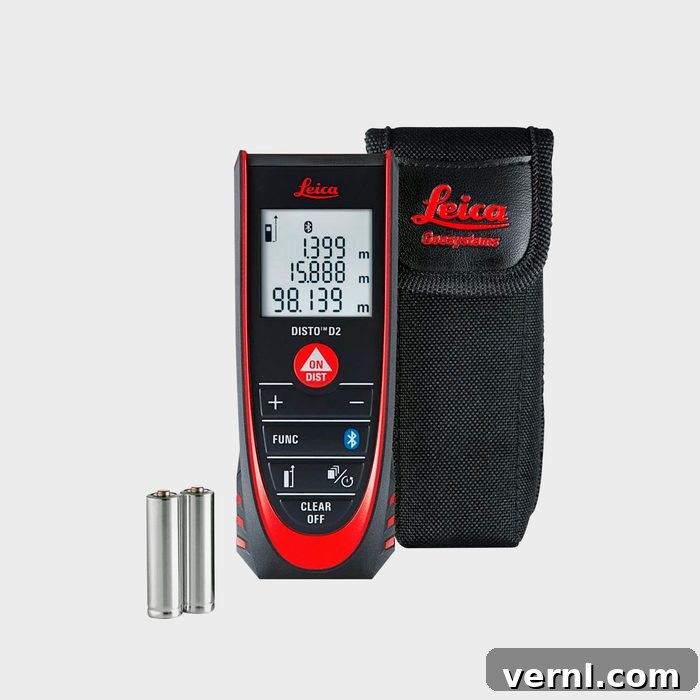
Best Laser Measure
When long-distance accuracy is your primary concern, the Leica Disto D2 Laser Measure is a highly popular and reliable choice among professionals. This compact device fits easily into your pocket, runs on two AA batteries, and boasts an impressive measuring range of up to 330 feet (100 meters) with an outstanding accuracy of 1/32-inch (approximately 1mm). It executes all the advanced calculations a laser measure can offer, with intuitive controls located conveniently on its front. While it represents a slightly higher investment, its precision and comprehensive feature set make it a top-tier option for demanding projects.
Additionally, don’t miss out on exploring other innovative options in the market, such as the advanced T1 Tomahawk digital tape measure, which continues to impress users with its cutting-edge features.
Conclusion
Digital tape measures represent a significant leap forward in measuring technology, offering a blend of precision, efficiency, and versatility that traditional tape measures simply cannot match. From basic models that enhance readability to sophisticated laser-equipped devices capable of complex calculations and data management, there’s a digital tape measure designed for every need and project. Whether you’re a dedicated DIY enthusiast tackling home renovations or a seasoned professional navigating intricate construction sites, upgrading to a digital tape measure can dramatically improve your accuracy, save valuable time, and streamline your entire workflow. Consider your specific requirements, explore the various types and features available, and invest in a tool that will empower you to achieve perfect measurements with confidence and ease.