
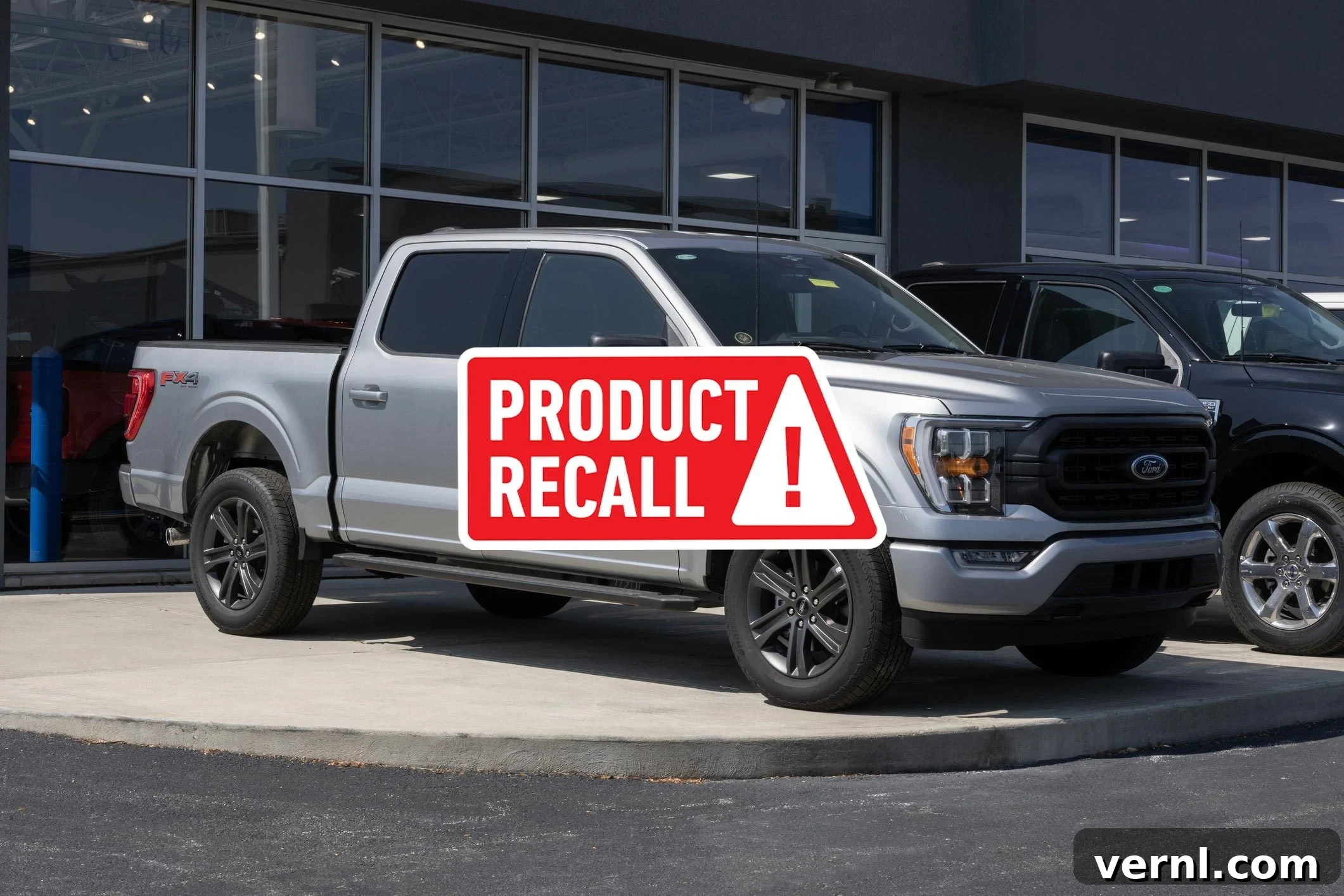
For many Ford owners, particularly those who have embraced the innovative spirit of electric vehicles, recent news from the National Highway Traffic Safety Administration (NHTSA) may come as a significant concern. A crucial safety recall has been issued for certain Ford F-150 Lightning trucks, specifically targeting a potentially dangerous battery issue. While this particular recall affects a relatively small number of vehicles at present, the implications of the identified defect are serious, posing risks of vehicle fires and sudden loss of drive power. It is paramount for owners to exercise due diligence, verify if their truck is among the affected models, and take immediate action to ensure the safety of themselves, their passengers, and everyone else on the road. Understanding the specifics of this recall, including why it’s happening, which vehicles are involved, and how Ford plans to address it, is the first step in mitigating potential hazards and maintaining peace of mind.
Understanding the Critical Battery Issue: Why Ford F-150 Lightning Trucks Are Under Recall
The core of the current recall, as detailed in the NHTSA brief, revolves around a critical manufacturing oversight within the high-voltage battery pack of the affected F-150 Lightning vehicles. Specifically, the fasteners designed to secure the junction box bus bars inside the battery pack may not have been adequately tightened during assembly. This seemingly minor issue has profound safety implications. When these crucial fasteners are loose, they can lead to an unstable connection, fostering a condition known as “electrical arcing at the busbars.”
Electrical arcing is a highly dangerous phenomenon where electricity jumps across an air gap between two conductors, generating intense heat. This heat can rapidly escalate, posing two distinct yet equally severe risks to vehicle occupants and others on the road. Firstly, and perhaps most alarmingly, uncontrolled electrical arcing significantly increases the risk of a fire. Lithium-ion batteries, which power electric vehicles, are known for their high energy density, and a thermal runaway event triggered by arcing can lead to a fast-spreading, difficult-to-extinguish fire, potentially resulting in catastrophic damage or serious injury.
Secondly, even in scenarios where a fire does not ignite, the unstable electrical connection caused by loose fasteners can lead to a sudden and unexpected “loss of drive power.” Imagine driving at highway speeds when your vehicle unexpectedly loses all power, making it impossible to accelerate or maintain speed. Such an occurrence dramatically increases the risk of a crash, particularly in heavy traffic or critical driving situations. Both potential outcomes—fire and loss of drive power—underscore the urgency and seriousness of this recall, compelling owners to minimize vehicle use until the necessary remedy has been successfully implemented.
Affected Models: Identifying If Your 2023 Ford F-150 Lightning Is at Risk
As of the initial announcement, Ford has specifically identified a small batch of 2023 F-150 Lightning vehicles that are currently subject to this battery fastener recall. While the initial count may seem small, it’s crucial for all owners of the 2023 F-150 Lightning to remain vigilant. Ford has committed to notifying affected owners directly, with owner letters scheduled to be mailed out in mid-May. Owners should keep a close watch on their mailboxes for any official correspondence from Ford regarding this safety measure.
For those familiar with previous Ford F-150 Lightning recalls, this particular issue might sound strikingly familiar – and for good reason. This is not the first instance of this specific battery problem affecting the 2023 F-150 Lightning. Last year, in February 2024, Ford initiated a recall impacting over 200 units of the 2023 F-150 Lightning for this precise same battery issue involving improperly secured busbar fasteners. The unfortunate reality is that, in some cases, the repairs conducted during that initial recall may not have been executed with the necessary precision or effectiveness, leading to this second, expanded recall. This highlights the importance of thoroughness in recall repairs and the potential for residual issues if the underlying problem isn’t completely resolved.
Therefore, even if your vehicle was part of the earlier recall, or if you believe it wasn’t, it is imperative to verify its status. The fact that a second recall has been issued for the same defect suggests that the initial remedy might not have been universally successful. While owners whose vehicles were not part of the original 200 or so recalled in February 2024 might assume they are in the clear, the evolving nature of such issues means that checking your vehicle’s status is always the safest course of action. Owners can easily check their vehicle’s VIN (Vehicle Identification Number) on the NHTSA website to determine if it is subject to any open recalls. This proactive step can provide immediate clarity and peace of mind, far sooner than waiting for a physical letter to arrive.
Ford’s Remedy: What to Expect for the Inspection and Repair Process
Ford has outlined a clear plan of action to address this critical safety defect, emphasizing that all repairs will be carried out at no cost to the owner. The official statement from Ford confirms that authorized dealerships will “inspect and repair the busbar fasteners and replace any damaged components as necessary, free of charge.” This commitment to free repairs is standard practice for safety-related recalls, ensuring that financial burden does not deter owners from addressing potentially life-threatening issues.
When an owner brings their F-150 Lightning to a Ford dealership for this recall, technicians will perform a meticulous inspection of the high-voltage battery pack’s junction box. This inspection will involve verifying the torque specifications of the busbar fasteners. If any fasteners are found to be loose, they will be securely tightened to the factory-specified levels. Furthermore, the inspection will extend to evaluating the integrity of the busbars and surrounding components. Electrical arcing, even if transient, can cause localized damage, such as pitting, scorching, or melting of the busbar material or degradation of nearby insulation. Should any such damage be identified, the affected components, whether it be the busbars themselves, their housing, or related parts, will be replaced with new, properly functioning ones.
Owners should anticipate the repair process to involve a dealership visit, where trained technicians will access the battery pack. The exact duration of the repair can vary depending on the dealership’s workload and whether component replacement is required, but Ford and its dealers will aim to complete these critical safety repairs as efficiently as possible. It is strongly advised that owners schedule their service appointment promptly upon receiving notification or confirming their vehicle’s recall status. Loose or compromised battery connections are not issues to be trifled with; addressing them quickly is paramount to preventing potential fires or sudden loss of vehicle control.
The Broader Landscape: EV Battery Safety and the Indispensable Role of Recalls
The Ford F-150 Lightning recall serves as a pertinent reminder of the complex engineering and the continuous evolution involved in electric vehicle technology. While EVs offer numerous advantages, their high-voltage battery systems demand rigorous safety standards and careful manufacturing processes. The incident highlights that even seemingly minor components, like fasteners, can have catastrophic consequences when compromised within such sophisticated systems.
Vehicle recalls, while often inconvenient for owners, are an indispensable component of automotive safety. They underscore the proactive role of regulatory bodies like the National Highway Traffic Safety Administration (NHTSA), which works tirelessly to monitor vehicle performance, investigate potential defects, and ensure manufacturers address safety concerns. NHTSA’s diligent oversight ensures that when issues like improperly secured battery components are discovered, they are brought to light and rectified, protecting the broader public.
For automotive manufacturers, particularly those at the forefront of the EV transition, recalls represent a commitment to ongoing product improvement and consumer safety. While a second recall for the same issue might initially erode consumer confidence, a swift and transparent response from Ford, ensuring all repairs are free and comprehensive, is crucial for rebuilding trust. This situation reinforces the understanding that new technologies, while promising, come with their own set of challenges that require continuous vigilance, robust testing, and responsive corrective actions throughout the product lifecycle. Ultimately, an effective recall system benefits everyone by making our roads safer and driving continuous innovation in vehicle safety.
Taking Action: Verifying Your Vehicle and Seeking Assistance
If you own a 2023 Ford F-150 Lightning, taking prompt action is crucial. The most definitive way to determine if your specific vehicle is affected by this battery recall is to check your Vehicle Identification Number (VIN). You can typically find your VIN on your vehicle’s dashboard (visible through the windshield) or on the driver’s side door jamb. Once you have your VIN, visit the official NHTSA recalls website and enter it into their lookup tool. This will provide immediate information on any open recalls associated with your truck.
For direct assistance and to schedule your recall service, you can contact Ford Customer Service. Be sure to clarify that you are calling about recall number 24S11. This specific recall number will help customer service representatives quickly identify the issue and guide you through the next steps. As a reminder, the NHTSA brief explicitly notes that “this recall expands previous recall number 24V-144,” indicating the broader scope of this current action.
Additionally, for any further questions or to report a safety concern, you can also reach out to the NHTSA Vehicle Safety Hotline. When contacting NHTSA regarding this issue, it’s helpful to reference their specific recall number for this particular incident, which is 25V272000. Do not delay in seeking clarification or scheduling your repair; ensuring your vehicle’s safety is a top priority.
Ford Customer Service: 1-866-436-7332 (Reference Recall Number: 24S11)
NHTSA Vehicle Safety Hotline: 888-327-4236 (Reference Recall Number: 25V272000)
Sources and Further Information
- Improperly Secured Battery May Cause Fire, National Highway Traffic Safety Administration, 2025.
- Improperly Secured Battery May Cause Fire, National Highway Traffic Safety Administration, 2024.
RELATED:
- Do You Know What That Little Button on Your Seat Belt Is For?
- What Those Lines on Your Backup Camera Really Tell You
- Here’s What The Small Panel On Your Car’s Front Bumper Is For