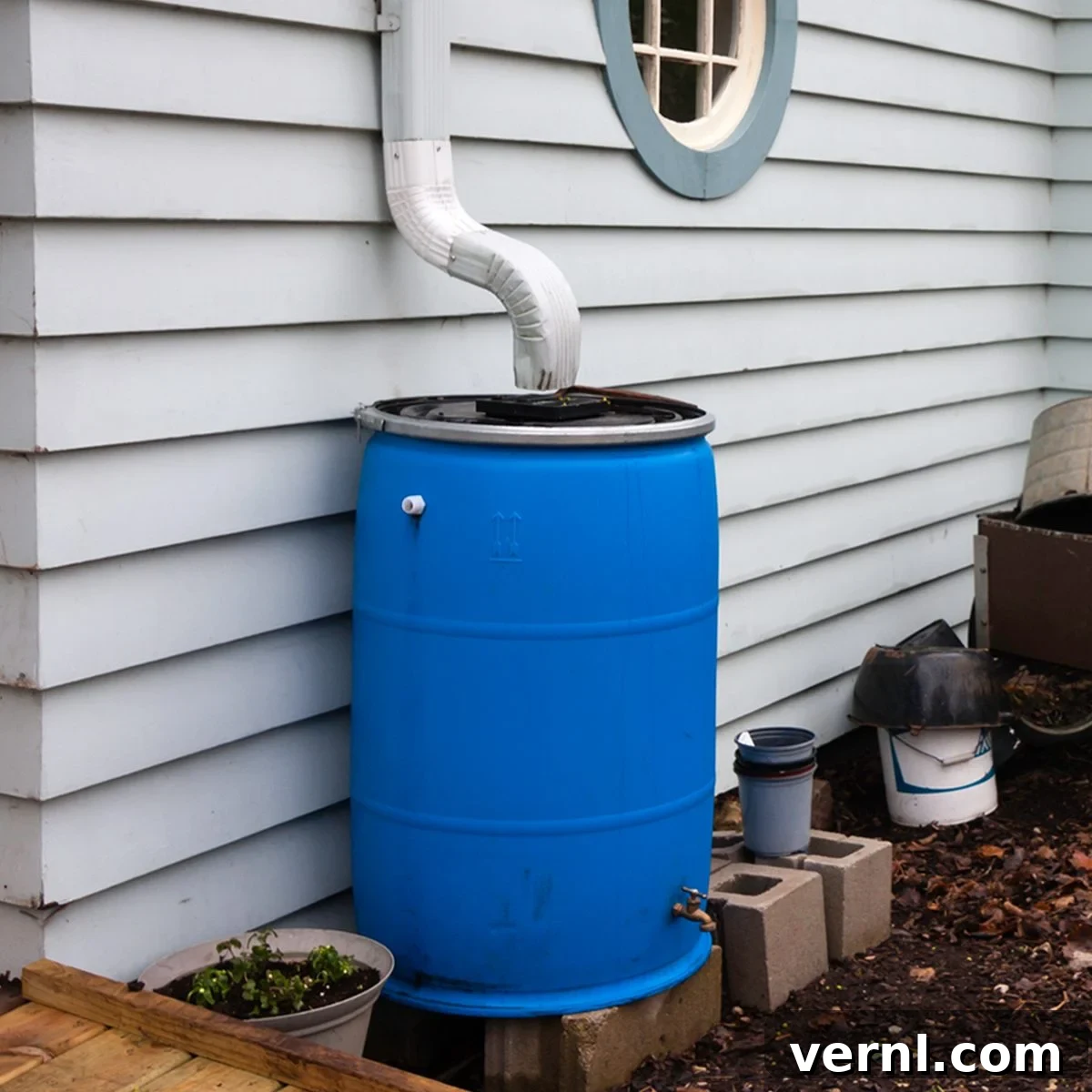
In many regions, especially those with private wells or a desire for water independence, a robust water storage system isn’t just a convenience—it’s the lifeblood of a household. On our California property, four strategic water storage tanks form the backbone of our daily existence, ensuring a consistent and reliable water supply for every need.
Our setup is meticulously designed: A 500-gallon steel tank reliably supplies our additional dwelling unit (ADU), nestled peacefully in a wooded area we affectionately call “the meadow.” The main residence benefits from a 500-gallon stainless steel tank, guaranteeing clean, pressurized water. For our expansive garden and critical emergency preparedness, a substantial 5,000-gallon plastic tank stands ready.
The stainless steel tank dedicated to the main house funnels into an 86-gallon pressure tank. This ingenious combination ensures that every faucet and fixture within the home delivers water with excellent, consistent pressure. The other two tanks—the ADU’s and the garden’s—operate efficiently through gravity feed, a testament to thoughtful site planning.
With a deep well, reaching over 200 feet into the earth, it would be highly inefficient and impractical for the well pump to directly supply water to our taps. Such a direct connection would force the pump to cycle on frequently, whenever water is used, leading to premature wear and inconsistent, low water pressure. Our solution bypasses these issues.
Instead, our well pump diligently fills our strategically placed storage tanks. Each tank is equipped with an essential float or pressure switch, an intelligent mechanism that monitors water levels. The pump activates only when the water level in the tanks drops below a predetermined minimum, ensuring optimal efficiency and longevity for the pumping system.
This sophisticated arrangement means our well pump operates only occasionally, minimizing energy consumption and reducing wear and tear. The dedicated 86-gallon pressure tank, coupled with a jet pump, is the secret behind the robust water pressure throughout our main house. Furthermore, the elevated positioning of the garden and ADU tanks, several hundred feet above their respective points of use, naturally utilizes gravity to deliver ample water pressure to those areas.
What Is a Water Storage Tank and Why Is It Essential?
A water storage tank is a fundamental component in managing an independent water supply, particularly for homes relying on private wells or seeking resilience against municipal water disruptions. Essentially, it’s any sizable container designed to hold water for future residential, agricultural, or industrial applications. These tanks come in a vast array of sizes, from a few gallons for small-scale needs to tens of thousands of gallons for substantial properties or critical emergency reserves.
Water storage tanks can be broadly categorized into two main types: pressurized and unpressurized (also known as atmospheric tanks). Some designs are even suitable for underground burial, blending seamlessly into the landscape. Atmospheric tanks, by definition, maintain water at ambient atmospheric pressure. They are often utilized as primary reservoirs, collecting water from wells or rainwater harvesting systems before it’s routed for use. In contrast, pressure tanks are hermetically sealed, meaning they are airtight. These tanks play a crucial role in maintaining consistent water pressure throughout a plumbing system, acting as a buffer between the water source and the end-user.
Not every well owner requires an atmospheric storage tank. For relatively shallow wells, typically less than 100 feet deep, a powerful well pump can often deliver pressurized water directly into a smaller pressure tank, which then feeds the household plumbing. However, deep wells—those extending significantly below 100 feet—almost invariably necessitate an atmospheric storage tank as an intermediate step. This larger tank collects water from the deep well pump, preventing it from constantly cycling. From the atmospheric tank, water is then often transferred to a pressure tank via a booster pump (like a jet pump), which subsequently distributes pressurized water directly into the home’s plumbing system. This two-stage approach optimizes pump life, energy efficiency, and ensures reliable water pressure.
Understanding How a Water Storage Tank Works
While an atmospheric tank might appear deceptively simple—often resembling a large cistern with a protective lid—its function as a primary water reservoir for well systems is indispensable. Pressure tanks, however, employ a more intricate design to achieve their goal of consistent water delivery. A key feature of a modern pressure tank is an internal air-filled chamber, ingeniously separated from the water supply by a flexible rubber membrane or bladder.
When water is pumped under pressure into one of these tanks, it enters the water-side of the bladder. As the volume of water increases, the bladder expands, compressing the air in the adjacent chamber. This compressed air acts as an energy store. When a faucet is opened or a toilet is flushed, causing a demand for water, the stored energy from the compressed air pushes the water out of the tank and into the plumbing system, maintaining consistent pressure without the well pump needing to run constantly.
Large atmospheric storage tanks, with capacities ranging from 500 to 5,000 gallons and even more, demand a stable and level foundation. They are typically mounted on a robust concrete pad to ensure structural integrity and longevity. Water is piped into these tanks directly from the well pump. Inside the tank, a critical component is the float switch or pressure switch. Similar in concept to the float in a toilet tank, this device constantly monitors the water level. When the tank is full, the switch signals the well pump to shut off, preventing overfilling and conserving energy. Some systems use a mechanical float, while others employ a more sophisticated pressure switch that uses a gravity-sensitive electrical device to control the pump’s on/off cycles based on water level. These tanks usually feature large valve outlets at their base, typically 1-1/4 to 2 inches in diameter, allowing for high-volume water flow, suitable for connecting to a main supply line or even a fire hose adapter for emergency use.
Pressure tanks, designed for direct integration into a home’s plumbing, typically have smaller inlet and outlet ports, often 1- or 1-1/4 inches, located at the bottom. Water enters the inlet from a pressure pump—which might be submerged in a shallow well or connected to a nearby atmospheric tank in a deep well system. The outlet then connects directly to the home’s plumbing. A visible gauge on the tank provides continuous monitoring of the internal pressure. The well pump (or booster pump) is controlled by a separate pressure switch that cycles it on when the tank pressure drops below a preset “cut-in” level (commonly 30 to 40 pounds per square inch, or psi) and cycles off when it reaches the “cut-out” pressure (typically 50 to 60 psi). This automated cycling ensures a steady supply of pressurized water throughout the home, extending the life of the well pump by reducing its operational frequency.
Determining the Right Water Storage Tank Size for Your Needs
Choosing the appropriate size for your outdoor water storage tank is a critical decision that profoundly impacts the efficiency, reliability, and security of your water supply. When considering a tank for your well water system, the primary factor is the daily water consumption of your household, coupled with your specific needs beyond basic use. According to the Federal Emergency Management Agency (FEMA), a bare minimum of one gallon per person per day should be considered for emergency preparedness. However, for practical daily living and comfort, this figure needs to be significantly higher.
Generally speaking, a 200-gallon tank can serve as a realistic minimum for an average family’s daily needs. However, a 500-gallon tank is often a superior choice. This increased capacity provides a crucial buffer, holding enough water to sustain your household through an extended power outage, pump failure, or other unexpected interruptions to your well system. If your primary objective is simply to collect rainwater for non-potable uses like watering a small garden or washing a car, a more modest 50-gallon drum might suffice, offering a cost-effective and space-saving solution.
However, if your property requires water for extensive irrigation, livestock, or combines personal use with significant outdoor needs, you will undoubtedly need a much larger tank. Our 5,000-gallon tank, for instance, serves a dual purpose: it generously feeds our garden and provides essential emergency water storage, particularly for fire protection—a constant and serious concern in the hot, arid climate of California. When planning for such substantial capacities, it is imperative to thoroughly research and comply with all local regulations regarding the proper installation of large water storage tanks and the acceptable materials. Building codes often dictate placement, foundation requirements, and even the type of tank material.
In our specific area, for example, local codes mandate the use of metal tanks for new installations, primarily because they exhibit superior resistance to fire damage compared to plastic or fiberglass alternatives. While our existing plastic tank is grandfathered in and continues to serve us well without immediate plans for replacement, any future tank installations would legally have to be metal. Always verify these crucial details with your local authorities to ensure compliance and safety, securing a reliable and legally sound water storage solution for your property.
Top Picks: Three Best Water Storage Tanks to Consider
When investing in a water storage solution, you’ll discover a variety of choices available, making it prudent to shop around and compare options. If you lean towards a plastic storage tank, you might notice that they predominantly come in dark colors, such as green or black. This isn’t merely an aesthetic choice; there’s a practical and vital reason behind it. Darker colors are highly effective at filtering out ultraviolet (UV) light, which is crucial for preventing the growth of algae and other undesirable pathogens within the stored water, thereby helping to maintain water quality.
Best 500-Gallon Plastic Water Storage Tank for Versatility
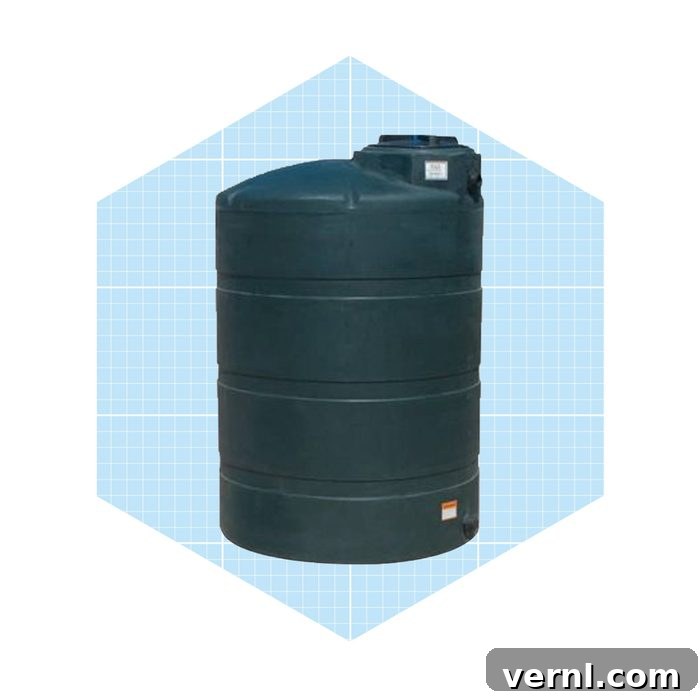
For those seeking a dependable and moderately sized solution, the Norwesco 500-Gallon Green Plastic Water Tank stands out. Standing six feet tall with a four-foot diameter, its relatively narrow base is a significant advantage, simplifying the process of mounting it securely on a concrete platform. The robust two-inch outlet is designed to provide ample flow, making it suitable not only for household use but also for critical applications like fire control, offering peace of mind in emergency situations.
This tank is intelligently designed with a removable cover for easy access and a pre-drilled one-half-inch inlet port located on the top, which greatly facilitates the connection of piping from your well pump. Norwesco is renowned for producing durable tanks, and this model is no exception, consistently earning strong positive reviews from satisfied buyers who praise its reliability and practical features. Its UV-resistant dark green color ensures your water remains clean and free from algae growth, making it an excellent choice for a variety of residential and agricultural needs.
Best Large Metal Water Storage Tank for Longevity and Purity
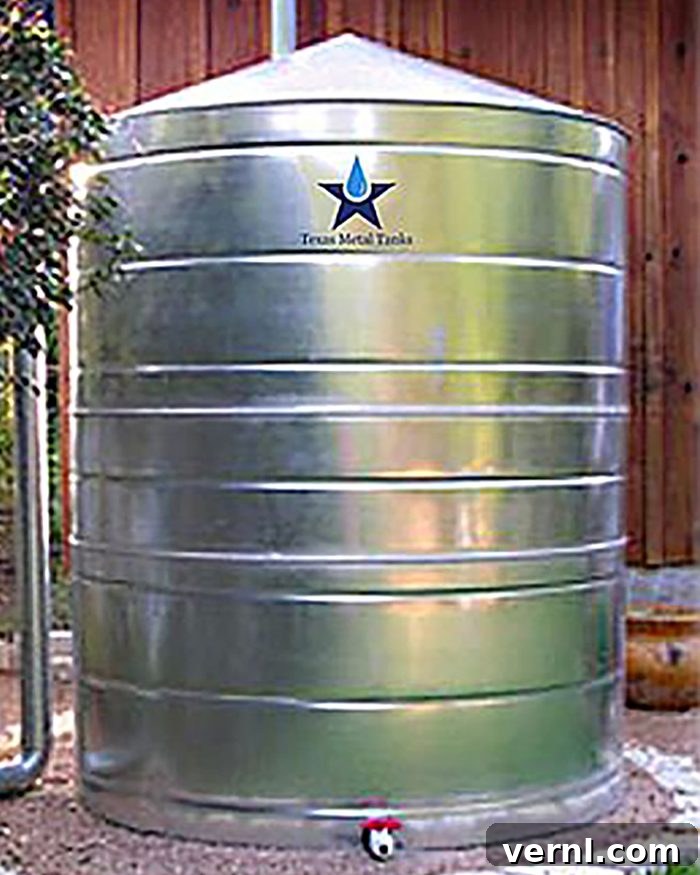
Our experience with both steel and stainless steel tanks of the same age has highlighted a crucial difference: the steel tank has begun to show signs of rust contamination, affecting water quality over time. If your requirements call for a large-capacity tank, and local regulations mandate a metal installation, then investing in a high-quality stainless steel option is undeniably your best course of action. A prime example is the impressive 3,750-gallon Stainless Steel Cistern Tank from Texas Metal Tanks.
While the initial investment for a stainless steel tank like this is certainly higher, its long-term benefits far outweigh the cost. Stainless steel tanks are celebrated for their unparalleled durability and resistance to corrosion, meaning they will significantly outlast traditional steel tanks, often by decades. More importantly, they guarantee a consistently clean and pure water supply, free from metallic contaminants that can leach from rusting steel. Every component, down to the rivets, is crafted from stainless steel, ensuring uniform integrity and maximum resistance to degradation. This makes it an ideal choice for properties where water purity and tank longevity are paramount, providing a maintenance-free and reliable solution for generations.
Best Well Pressure Water Storage Tank for Consistent Household Pressure
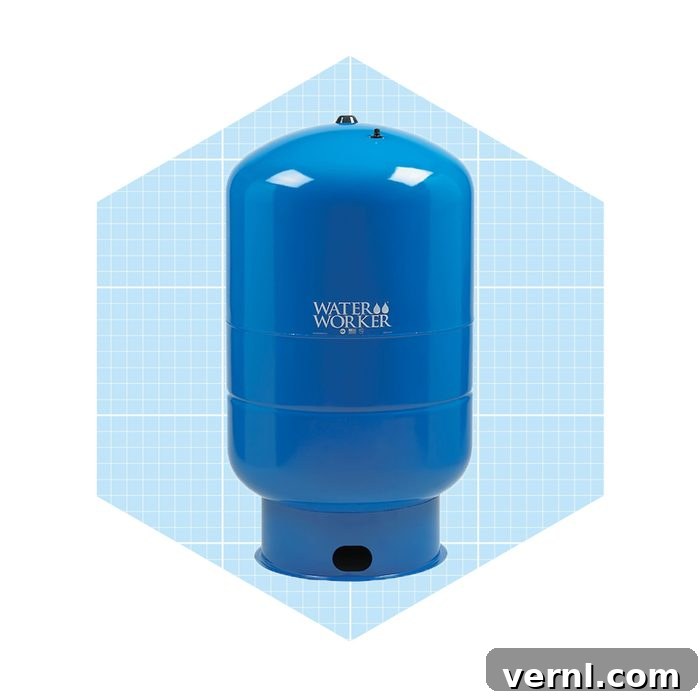
For larger households serviced by a private well, maintaining consistent water pressure and prolonging the life of your well pump are crucial. This requires a robust and sizable pressure water storage tank to prevent the pump from overworking. The Water Worker 86-Gallon Pressurized Well Tank is an excellent contender, standing as one of the largest and most reliable options on the market for residential applications. Its generous capacity means your well pump cycles less frequently, significantly extending its lifespan and reducing energy consumption.
A key feature of this tank is its innovative polypropylene liner, which ingeniously separates the stored water from the steel shell. This design is critical for preventing metallic odors, tastes, and contaminants from entering your drinking water, ensuring a fresh and clean supply every time. The Water Worker tank comes pre-charged to 38 psi and is rated for an impressive maximum pressure of 100 psi—far exceeding the pressure requirements of most residential homes, providing an ample safety margin. Its 1-1/4-inch outlet facilitates easy and direct connection to your home’s main plumbing system, making installation straightforward. This tank is a top choice for ensuring optimal water pressure and operational efficiency within your well water system, offering a long-lasting and effective solution for consistent household water delivery.