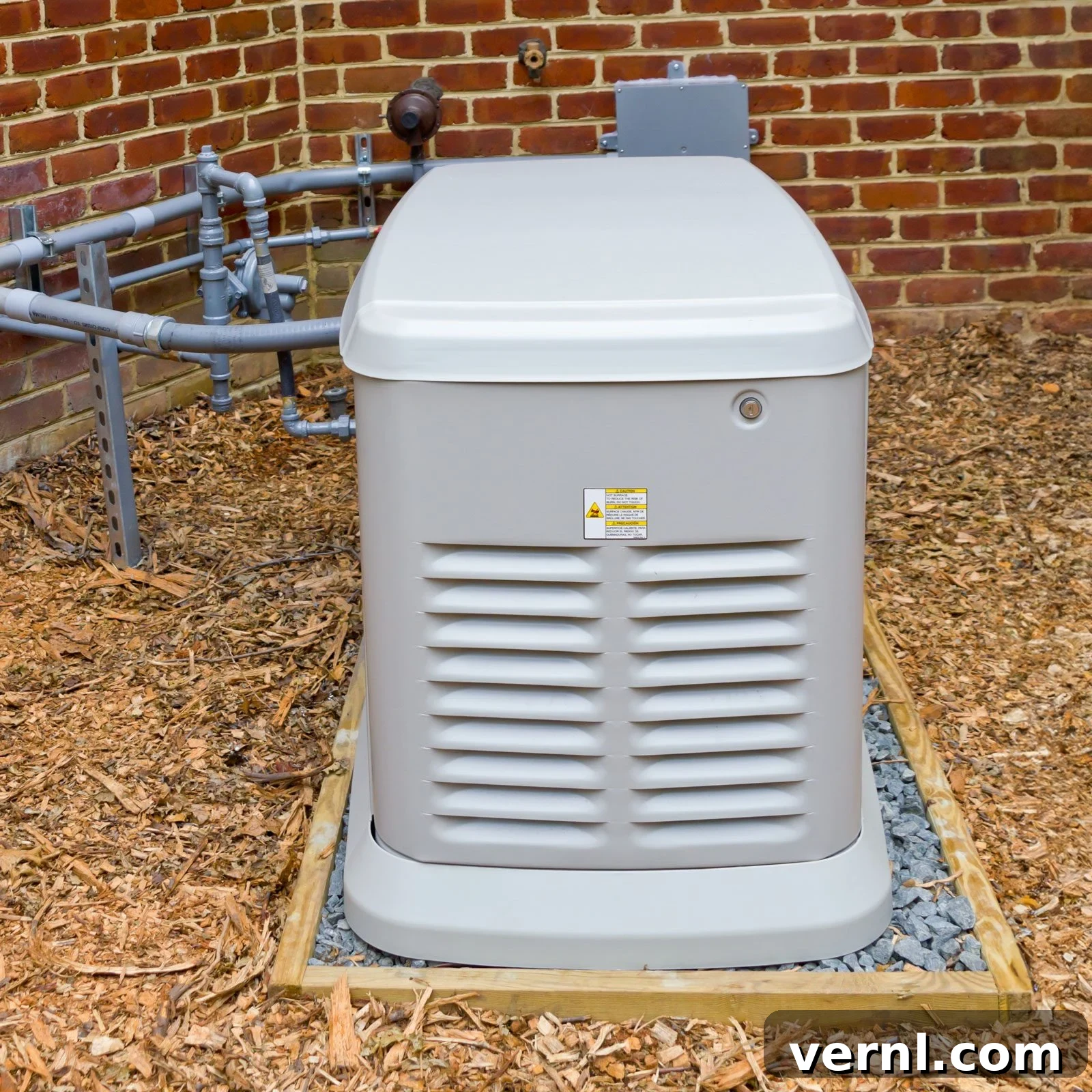
When my family and I made the significant transition to our off-grid homestead, the previous owners left us with a formidable 10-kilowatt (kW) diesel generator. Its purpose was to serve as a backup for an existing, albeit severely undersized, solar panel system. The reality of its inadequacy quickly became apparent; the generator roared to life almost daily. It wasn’t just loud; it sounded like an unmuffled 18-wheeler, belching thick black smoke from an exhaust pipe that pierced the roof of its enclosure. This behemoth was a constant, unwelcome presence, and its daily operation highlighted a fundamental flaw in our initial power setup.
We eventually decided to part ways with that archaic machine. Despite its raw power, no one was willing to purchase it, so we ultimately gave it away. Our subsequent investment was a new 22-kW Generac propane generator. This decision, while a step forward in many respects, has proven to be a mixed bag of experiences. The propane model undoubtedly runs cleaner, replacing the incessant chug-chug-chug with a more tolerable, though still noticeable, hum. However, the trade-off has been a dramatic increase in our propane consumption, leading to a substantial surge in our overall energy expenditure. The financial impact of this decision has been significant, prompting us to continuously re-evaluate our energy strategy.
The harsh winter of 2023 tested our new system to its limits. During prolonged storms, the generator operated almost non-stop, draining our propane supply at an alarming rate. We found ourselves in an urgent situation, requiring an emergency propane delivery to maintain essential power. We were fortunate that our propane company was able to squeeze us into their packed schedule, averting a potential crisis. This experience underscored the critical importance of reliable fuel supply and efficient generator operation in an off-grid environment. It also highlighted the vulnerabilities of relying heavily on a single backup power source.
The choice between propane and modern diesel generators, which are significantly quieter and more efficient than the outdated unit we once owned, involves a careful consideration of various pros and cons. While both offer distinct advantages, their suitability largely depends on specific needs and usage patterns. For instance, if your requirement is a small, portable generator for a weekend camping trip, an outdoor festival like Burning Man, or a remote job site, a compact diesel model might offer a more fuel-efficient and robust solution. However, for continuous home backup or in situations where emissions are a primary concern, propane might emerge as the preferred option. Understanding these nuanced differences is crucial for making an informed decision that aligns with your energy goals and environmental considerations.
Understanding Diesel Fuel and Engines
Diesel is a liquid hydrocarbon fuel, much like gasoline, both of which are refined from crude oil. However, the refining process for diesel is less intensive than that for gasoline. This difference in refinement results in diesel being denser, less volatile, and consequently, less combustible than gasoline. Its higher energy density means that a gallon of diesel typically contains more usable energy than a gallon of gasoline, offering greater fuel efficiency for many applications.
A key characteristic of diesel is its high density, which makes it unsuitable for ignition by a traditional spark plug. Therefore, diesel engines operate without spark plugs. Instead, the fuel is ignited through a process called compression ignition. Air is highly compressed within the piston chambers, raising its temperature significantly. When diesel fuel is injected into this superheated air, it self-ignites. This fundamental difference in ignition requires a much more robust and durable engine design compared to a gasoline engine, capable of withstanding the higher compression ratios and pressures involved.
The inherent robust design of diesel engines contributes significantly to their extended lifespan. A typical gasoline engine in a car might be expected to last for 200,000 to 300,000 miles before requiring major overhauls or replacement. In stark contrast, a well-maintained diesel engine can easily achieve 1,000,000 to 1,500,000 miles, demonstrating unparalleled longevity and reliability. The absence of spark plugs also simplifies routine maintenance, as there are fewer ignition system components to inspect and replace. Furthermore, diesel fuel is generally considered safer to store than gasoline because it has a higher flash point, meaning it requires a higher temperature to produce ignitable vapors, reducing the risk of accidental fires.
For many years, there was a widespread belief that diesel engines were inherently better for the environment than their gasoline counterparts, primarily due to their perceived fuel efficiency. However, a 2017 study conducted by the International Council on Clean Transportation (ICCT) in Europe challenged this assumption. The study meticulously compared the emissions from a Volkswagen Golf diesel engine to those of a Volkswagen Golf gas engine under identical conditions. The findings revealed that the diesel engine actually emitted 13% more carbon dioxide (CO2) than the gasoline engine. This increased CO2 output, a primary greenhouse gas, indicates a larger carbon footprint for diesel in certain applications.
Further compounding the environmental comparison, the U.S. Department of Energy reports that propane engines emit 13% fewer greenhouse gases than gasoline engines. By combining these findings, a clearer picture emerges: diesel engines are significantly “dirtier” in terms of greenhouse gas emissions when compared to propane engines. This insight is crucial for individuals and businesses prioritizing environmental impact and aiming to reduce their carbon footprint when selecting a generator or any other internal combustion engine.
Exploring Propane (LP Gas) and Its Characteristics
Propane, also widely known as liquid petroleum (LP) gas, holds a distinguished position as a clean fuel under the Energy Policy Act of 1992 in the United States. This classification highlights its environmental advantages compared to other fossil fuels. Propane is primarily derived from a combination of crude oil refining and natural gas processing, undergoing a more extensive refinement process than even gasoline. This high degree of refinement results in a fuel that burns exceptionally clean, with significantly fewer harmful emissions.
Propane exists as a gas at standard atmospheric pressure and temperature. To facilitate efficient storage and transport, it must be compressed and stored under pressure to maintain its liquid state. This is why propane is typically found in sturdy, pressurized tanks. Because of its highly refined nature, propane contains less usable energy per unit volume compared to denser fuels like diesel or even gasoline. This lower energy density has a direct implication for generator use: you will need a greater volume of propane to keep your generator running for a specific duration compared to a diesel or gasoline generator of equivalent power output. This factor is critical for calculating fuel requirements and storage capacity, especially for extended periods of use or in off-grid scenarios.
Beyond its clean-burning properties, propane offers additional benefits. It has a long shelf life and does not degrade over time, making it an excellent choice for backup power systems that might sit idle for long periods. Propane tanks can be stored outdoors, and the fuel itself poses a lower risk of spillage or soil contamination compared to liquid fuels. The widespread availability of propane delivery services also adds to its convenience for residential and commercial applications, particularly for large standby generators that require substantial fuel reserves.
Key Differences Between Diesel and Propane Generators
When evaluating the optimal generator for your needs, a detailed comparison between diesel and propane models is essential. Consider the following critical aspects:
- Noise Levels: Diesel generators often have a reputation for being louder due to the higher torque generated per piston stroke and the robust nature of their engines. However, modern diesel generators have significantly improved sound insulation and design. For context, a 3,200-watt Cummins Onan Diesel Generator typically operates at around 72 decibels (dB) at 10 feet. In comparison, a 3,600-watt Cummins Onan Propane Generator runs slightly quieter, at approximately 68 dB. While the difference may seem small, a few decibels can noticeably impact perceived noise, especially during extended operation in residential areas or quiet environments. Manufacturers are continually innovating to reduce noise output for both types, often through advanced enclosures and muffler designs.
- Fuel Consumption & Energy Density: This is a major differentiating factor impacting long-term operating costs. According to Santa Energy, an 8-kW diesel generator consumes roughly half a gallon of fuel per hour under typical load. In contrast, a 6-kW propane generator will burn between 1.5 to 2 gallons of propane per hour, translating to three to four times the volume of fuel. This disparity is primarily due to diesel’s higher energy density. A gallon of diesel contains more British Thermal Units (BTUs) than a gallon of propane. However, the operational cost equation is not solely determined by volume. Recent years have seen significant fluctuations in fuel prices; diesel has experienced substantial price increases, reaching around $6/gallon in California, while propane prices have remained relatively stable, hovering around $2.50/gallon in the same region. These fluctuating market prices can significantly equalize or even reverse the perceived cost advantage of diesel, making it crucial to monitor local fuel costs when calculating your total operating expenses.
- Fuel Storage and Delivery Logistics: Diesel generators typically come equipped with an onboard fuel tank, allowing for self-contained operation for a certain period. Diesel fuel is also relatively easy to store in approved, durable containers, making it convenient for small-scale reserves or refueling. Propane generators, however, lack an onboard fuel tank and require connection via a hose to an external, pressurized tank. These external tanks can range from small 5-gallon cylinders, which might only last a day or less depending on generator load, to large residential tanks holding several hundred gallons, capable of supplying power for weeks or even months of occasional use. The choice of tank size depends on anticipated usage and the convenience of regular deliveries. For large, permanent standby systems, professional installation of a substantial propane tank is usually required, along with scheduled delivery services.
- Emissions and Odors: This is an area where propane generators shine. They burn exceptionally cleanly, producing virtually no visible smoke and minimal, if any, discernible odors. This makes them ideal for residential areas or enclosed spaces where air quality is a concern. Diesel generators, especially older models, are notorious for producing thick, black exhaust smoke and strong, distinct odors. Even modern diesel generators, while improved, still produce particulate matter (soot) and nitrogen oxides (NOx). To comply with environmental regulations and reduce these harmful emissions, most contemporary diesel generators require the addition of Diesel Exhaust Fluid (DEF). DEF works by converting NOx into harmless nitrogen and water vapor, significantly reducing smoke and odors, but it adds another maintenance and cost factor.
- Maintenance Requirements: Propane generators, being more akin to gasoline engines in their ignition system, feature spark plugs and a more complex combustion system that requires regular maintenance, including spark plug replacement and ignition timing checks. Diesel generators, by virtue of their compression ignition system, do not have spark plugs, which simplifies one aspect of their maintenance schedule. Furthermore, diesel fuel itself acts as a lubricant for the engine’s moving parts, contributing to reduced wear and potentially less overall maintenance for critical engine components. However, diesel engines do require specialized fuel filtration systems to prevent contamination, and maintaining the DEF system (if applicable) adds another layer of complexity. Regular oil changes and air filter replacements are common to both types of generators.
- Initial Cost and Longevity: Generally, diesel generators tend to have a higher upfront purchase cost due to their more robust construction designed to withstand higher compression ratios. However, their superior longevity and durability, especially for heavy-duty or continuous use, often make them a more cost-effective investment over their extended operational lifespan. Propane generators typically have a lower initial purchase price, which can be appealing for intermittent home backup use, though their operational lifespan might be shorter than a comparable diesel unit.
- Portability: For small, portable applications like camping or tailgating, propane generators are often lighter and more compact, making them easier to transport. Small gasoline generators are also popular in this category. Diesel generators, due to their heavier engine components and often larger fuel tanks, tend to be less portable and are typically found in larger, more permanent installations or heavy-duty industrial mobile applications.
When is a Propane Generator the Best Choice?
The choice of a generator often boils down to balancing specific needs with the inherent advantages of each fuel type. For many homeowners, particularly those in areas like the mountain community where I reside, propane is already a primary fuel source for heating and other appliances. These homes often have a substantial 500-gallon propane tank on site. For such individuals, integrating a propane standby generator makes eminent sense. It eliminates the logistical challenge and cost of hauling extra fuel onto the property, as the existing infrastructure can readily support the generator. Furthermore, because standby generators are designed to operate only occasionally – typically during power outages – homeowners rarely have to worry about the large tank running empty unexpectedly, offering peace of mind and convenience.
Conversely, for applications demanding a full-time, heavy-duty power source, such as continuous off-grid living, commercial operations, or critical infrastructure, a modern diesel generator, especially when used in conjunction with Diesel Exhaust Fluid (DEF) to control emissions, often emerges as the more practical choice. Diesel fuel is generally easier to transport and store in bulk for long durations compared to the pressurized tanks required for propane, and its higher energy density translates to longer run times per gallon. Crucially, the renowned durability and extended lifespan of diesel engines make them highly reliable for prolonged, continuous operation, justifying their typically higher initial investment.
For recreational purposes, such as driving an RV to a remote campground or events like Burning Man, the decision can also be strategic. Many RVs already have onboard propane tanks for cooking, heating, and showering. In such cases, taking a small, portable diesel generator for electrical power can be a smart move, conserving your onboard propane supply for essential amenities. However, an even more environmentally friendly and often quieter alternative for camping and remote use is a solar generator paired with a portable battery bank. These systems offer silent operation, eliminate fuel costs and emissions, and provide a sustainable power source, making them increasingly popular among outdoor enthusiasts.
Choosing Your Ideal Generator: A Comprehensive Approach
Selecting the right generator for your specific needs requires a holistic view of several factors beyond just fuel type. Consider the generator’s primary purpose: Is it for emergency home backup, continuous off-grid power, portable recreational use, or heavy-duty commercial applications? The intended use will dictate the required power output (kilowatts), the desired run time, and whether a portable or stationary standby unit is more appropriate.
Power Requirements and Sizing
Accurately assessing your power needs is paramount. Create a list of all essential appliances and systems you wish to power simultaneously. Calculate their combined wattage, ensuring you account for surge wattage (the brief spike in power required by motors upon startup). Undersizing a generator can lead to frequent overloads and premature wear, while oversizing can result in unnecessary fuel consumption and higher upfront costs. For residential standby power, it’s often advisable to consult with an electrician to ensure proper sizing and installation.
Installation and Safety Considerations
Both diesel and propane generators require careful installation to ensure safe and efficient operation. Standby generators typically need a concrete pad, proper ventilation for exhaust, and a transfer switch to safely disconnect your home from the utility grid during operation. Fuel lines for propane must be installed by qualified professionals. Always adhere to local building codes and manufacturer guidelines. Never operate generators indoors or in partially enclosed spaces, as carbon monoxide poisoning is a serious risk. Proper grounding and electrical connections are also critical to prevent shocks and damage to appliances.
Environmental Impact and Regulations
As discussed, propane generators generally offer a cleaner burn with fewer emissions, which might be a deciding factor for environmentally conscious users or in areas with strict air quality regulations. Diesel generators, especially modern ones with DEF systems, have significantly reduced their environmental footprint but still produce more particulate matter and greenhouse gases than propane. Research local and state regulations regarding generator emissions, noise levels, and fuel storage, as these can vary widely and influence your choice.
Long-Term Cost Analysis
Beyond the initial purchase price, consider the total cost of ownership over the generator’s lifespan. This includes fuel costs (which can fluctuate dramatically), maintenance expenses (oil changes, filter replacements, spark plugs for propane, DEF for diesel), and potential repair costs. Diesel generators, while often more expensive upfront, can offer lower long-term operating costs if fuel prices are favorable and their superior durability leads to fewer major repairs. Propane generators might have a lower entry cost but could incur higher fuel expenses over time due to lower energy density.
In conclusion, the decision between a diesel and a propane generator is a multifaceted one, influenced by personal circumstances, environmental priorities, budget constraints, and specific power requirements. By thoroughly evaluating each of these factors, from noise and emissions to fuel consumption and maintenance, you can confidently select a generator that not only meets your immediate power needs but also provides reliable, efficient, and sustainable backup power for years to come. Whether you prioritize fuel efficiency and longevity or clean burning and ease of storage, understanding the nuances of each option is key to making the best investment for your home or business.