
Understanding Pressure-Treated Wood: The Essential Guide for Durable Outdoor Projects
Embarking on an outdoor construction project, whether it’s a new deck, a sturdy fence, or even a simple raised garden bed, requires careful consideration of materials. Among the most popular and vital choices is pressure-treated wood. Often recognized by its distinctive greenish hue, this lumber undergoes a specialized process designed to extend its lifespan and enhance its resistance against the elements and common pests. But what exactly is pressure-treated wood, and why is it so crucial for your outdoor endeavors?
What is Pressure-Treated Wood? Unpacking the “Green Treated” Mystery
“Green treated” is a common term referring to wood that has undergone a high-pressure treatment with chemical preservatives. This process forces protective compounds deep into the wood fibers, creating a barrier against decay-causing fungi, wood-boring insects, and other environmental threats. Without this treatment, untreated wood would rapidly deteriorate when exposed to moisture, soil, or pest infestations, significantly shortening the life of your outdoor structures.
Historically, various chemicals have been used for pressure treatment. Today, the most prevalent preservative in residential applications is ACQ (Alkaline Copper Quaternary). The copper within this solution is the primary agent responsible for the initial greenish tint you see in freshly treated lumber. Over time, as the wood dries out and is exposed to sunlight and weather, this vibrant green color naturally fades, often transitioning to a muted gray or silver patina. This color change is completely normal and does not indicate a loss of the wood’s protective qualities.
A Deep Dive into Preservatives: Beyond the Green
While ACQ is widely used, other preservatives and aesthetic treatments are available, leading to variations in color and performance. For instance, you might encounter brown or “cedar tone” treated lumber. This appearance can be achieved in a couple of ways: either the ACQ lumber has been treated with an additional brown stain during the manufacturing process, or it has been treated using an entirely different preservative, such as CA (Copper Azole). Copper Azole is another copper-based preservative offering similar protection against decay and insects, often preferred for its slightly different visual characteristics.
Furthermore, advancements in wood preservation have introduced MCA (Micronized Copper Azole). This innovative technology uses copper in a micronized form, allowing the particles to penetrate the wood more effectively and evenly. MCA-treated lumber often exhibits a more natural wood color with less of the initial green tint, and it can be less corrosive to fasteners, though specific fastener recommendations still apply.
It’s also worth noting the evolution of these treatments. Older forms of pressure treatment, particularly those using CCA (Chromated Copper Arsenate), were phased out for most residential applications in the early 2000s due to environmental and health concerns related to arsenic. Modern preservatives like ACQ, CA, and MCA are designed to be safer for both people and the environment, while still providing robust protection.
The Critical Importance of Retention Levels and Use Categories
One of the most crucial aspects to understand when purchasing any pressure-treated lumber is that it comes with varying degrees of chemical retention levels. These levels indicate the amount of preservative retained per cubic foot of wood and are directly correlated with the wood’s intended exposure and application. Lumber is typically categorized into different Use Categories (UC), which specify its suitability for various environments:
- UC1 & UC2 (Interior, Dry/Damp): For applications where wood is not exposed to weather or ground contact. Less common for pressure-treated wood as its primary benefit is for outdoor exposure.
- UC3A (Above Ground, Protected): For wood exposed to weather but not in ground contact, and easily replaced (e.g., deck framing that is covered by decking boards).
- UC3B (Above Ground, Exposed): For wood fully exposed to weather but not in ground contact, such as deck boards, railings, fence pickets, and siding. This is a very common category for general outdoor use.
- UC4A (Ground Contact, General Use): For applications where wood is in contact with the ground or fresh water, or is subject to severe conditions (e.g., deck posts, fence posts, landscape timbers, retaining walls up to certain heights). This category has a higher preservative retention than above-ground ratings.
- UC4B (Ground Contact, Severe Use): For situations requiring even greater protection than UC4A, such as critical structural components in ground contact or wood used in consistently wet or difficult-to-replace applications.
- UC4C (Ground Contact, Extreme Use): For very severe ground contact applications, particularly for wood in fresh water foundations or permanent wood foundations.
- UC5A, UC5B, UC5C (Marine Use): For wood exposed to saltwater, brackish water, or marine borers, requiring the highest levels of preservation.
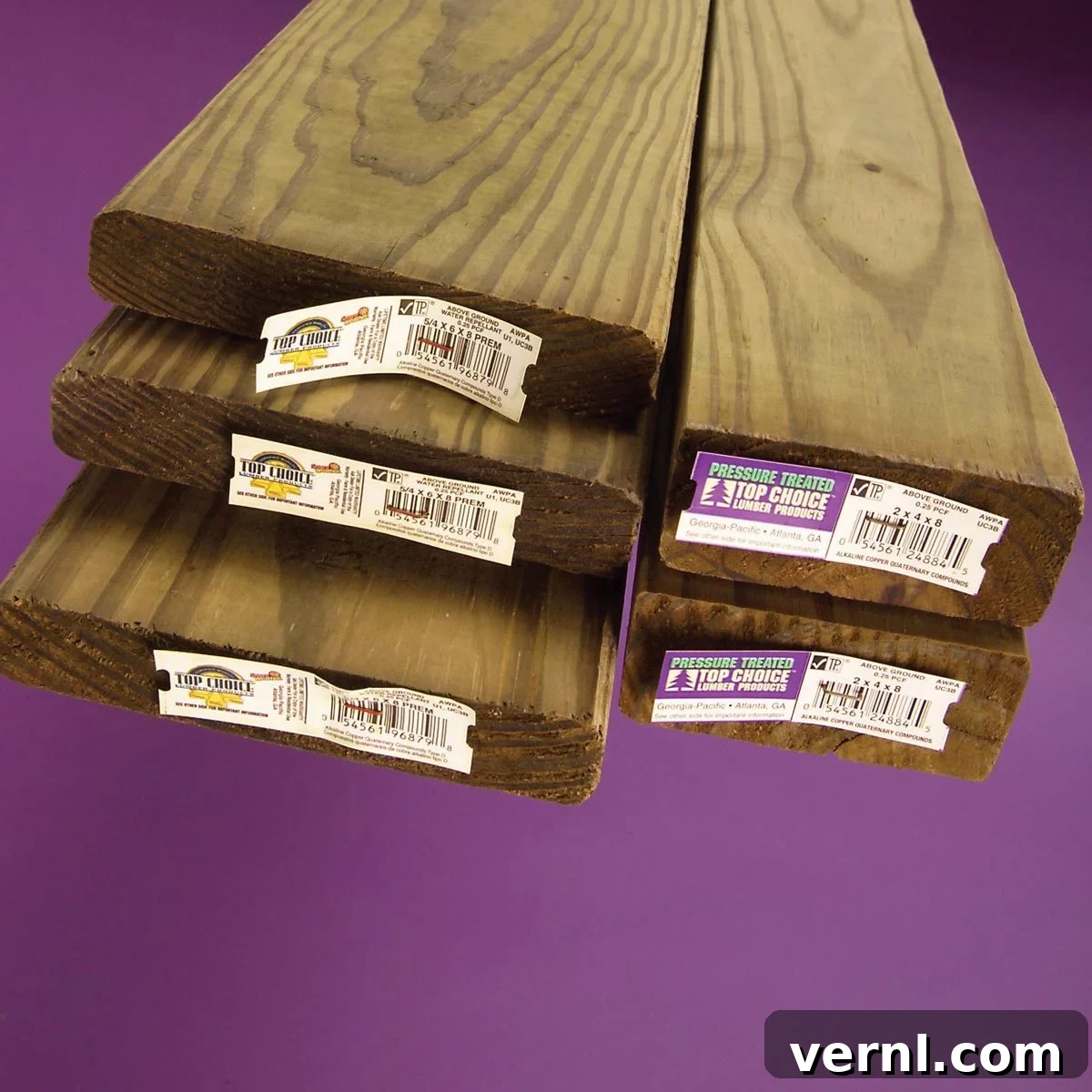
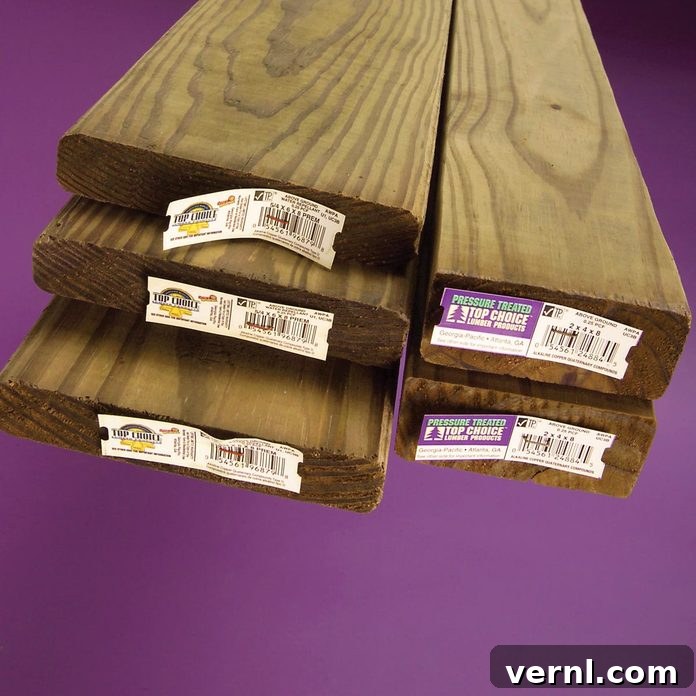
It is paramount to make sure you purchase the right material for the job. Using “above ground” rated lumber in ground contact will lead to premature failure, while over-specifying (e.g., using marine-grade for a simple fence) can be an unnecessary expense. Always check the lumber tags or stamps for the appropriate Use Category and retention level.
A crucial warning: steer clear of lumber and landscape timbers stamped or tagged with vague terms like “treated to refusal.” This terminology is ambiguous and offers no guarantee of a specific, measurable level of treatment. It simply means the wood was treated until it could absorb no more chemicals under the given conditions, which may or may not be adequate for your intended application. Always opt for lumber with clear Use Category and retention level designations.
Working with Pressure-Treated Wood: Best Practices for Longevity and Safety
While pressure-treated wood offers superior protection, working with it requires specific considerations to maximize its benefits and ensure safety:
Safety Precautions
When cutting or sanding pressure-treated wood, always wear appropriate personal protective equipment (PPE), including a dust mask or respirator, eye protection, and gloves. The sawdust can contain small amounts of the preserving chemicals. Avoid burning treated wood, as the fumes can be toxic. Dispose of scraps and sawdust according to local regulations, often by ordinary trash disposal, but always check guidelines in your area.
Fasteners and Hardware
Modern copper-based preservatives like ACQ, CA, and MCA can be more corrosive to certain metals than older treatments. To prevent premature deterioration of your fasteners and hardware, it is critical to use corrosion-resistant materials. Hot-dipped galvanized steel (meeting ASTM A153 standards) or stainless steel (Type 304 or 316) fasteners and connectors are highly recommended. Standard galvanized nails or screws are insufficient and will corrode over time, compromising the structural integrity of your project.
Cutting and Sealing Cut Ends
When you cut pressure-treated lumber, you expose the untreated interior of the wood. To maintain continuous protection, it’s essential to apply a brush-on wood preservative specifically designed for cut ends. These solutions typically contain a high concentration of copper naphthenate and help seal the exposed fibers against decay and insect attack, ensuring the entire structure benefits from the treatment.
Maintenance and Finishing
While pressure-treated wood is designed to resist rot and insects, it still benefits from regular maintenance. Allow freshly treated lumber to dry for a few weeks or months before applying any stain or sealer; this allows the internal moisture to equalize. Applying a high-quality water repellent sealer or stain every one to three years will help prevent surface checking, splitting, and weathering, keeping your project looking its best and further extending its life. Always ensure the product you choose is compatible with pressure-treated wood.
Benefits and Considerations of Pressure-Treated Wood
Benefits:
- Longevity: Significantly extends the life of outdoor wood projects by protecting against rot, decay, and insect infestation.
- Cost-Effectiveness: While initially more expensive than untreated lumber, its durability and reduced need for replacement make it a cost-effective choice in the long run.
- Versatility: Suitable for a wide range of outdoor applications, from structural elements to aesthetic finishes.
- Sustainability: By extending the life of wood, pressure treatment reduces the demand for harvesting new timber, contributing to sustainable forestry practices.
Considerations:
- Warping and Checking: Treated wood can sometimes be prone to warping, twisting, or developing surface cracks (checking) as it dries, especially if not stored properly or allowed to acclimate.
- Initial Moisture Content: Freshly treated lumber often contains a high moisture content, making it heavier and potentially harder to work with until it dries.
- Corrosion: The chemicals used can accelerate corrosion of incompatible fasteners, necessitating the use of specialized hardware.
- Disposal: As mentioned, proper disposal of treated wood scraps is important to avoid environmental contamination.
Making the Right Choice for Your Project
Choosing the correct pressure-treated lumber is an investment in the longevity and safety of your outdoor structures. By understanding the different preservatives, retention levels, and use categories, you can confidently select the material that precisely matches your project’s demands. Always consult local building codes and manufacturer specifications to ensure compliance and optimal performance. With the right knowledge and proper installation, your pressure-treated wood project will stand strong and beautiful for many years to come.