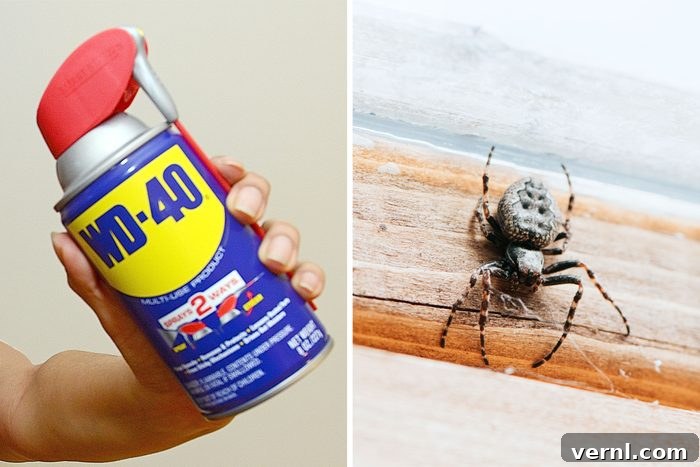
Every homeowner desires a welcoming and comfortable living space, free from uninvited guests. While we happily roll out the welcome mat for friends and family, the appearance of crawling intruders like ants and spiders can quickly shatter that peaceful domestic scene. These persistent pests often exploit the smallest vulnerabilities in our homes, from hairline cracks in the foundation to tiny gaps in door and window frames, turning our kitchens and family dens into their unexpected new habitats.
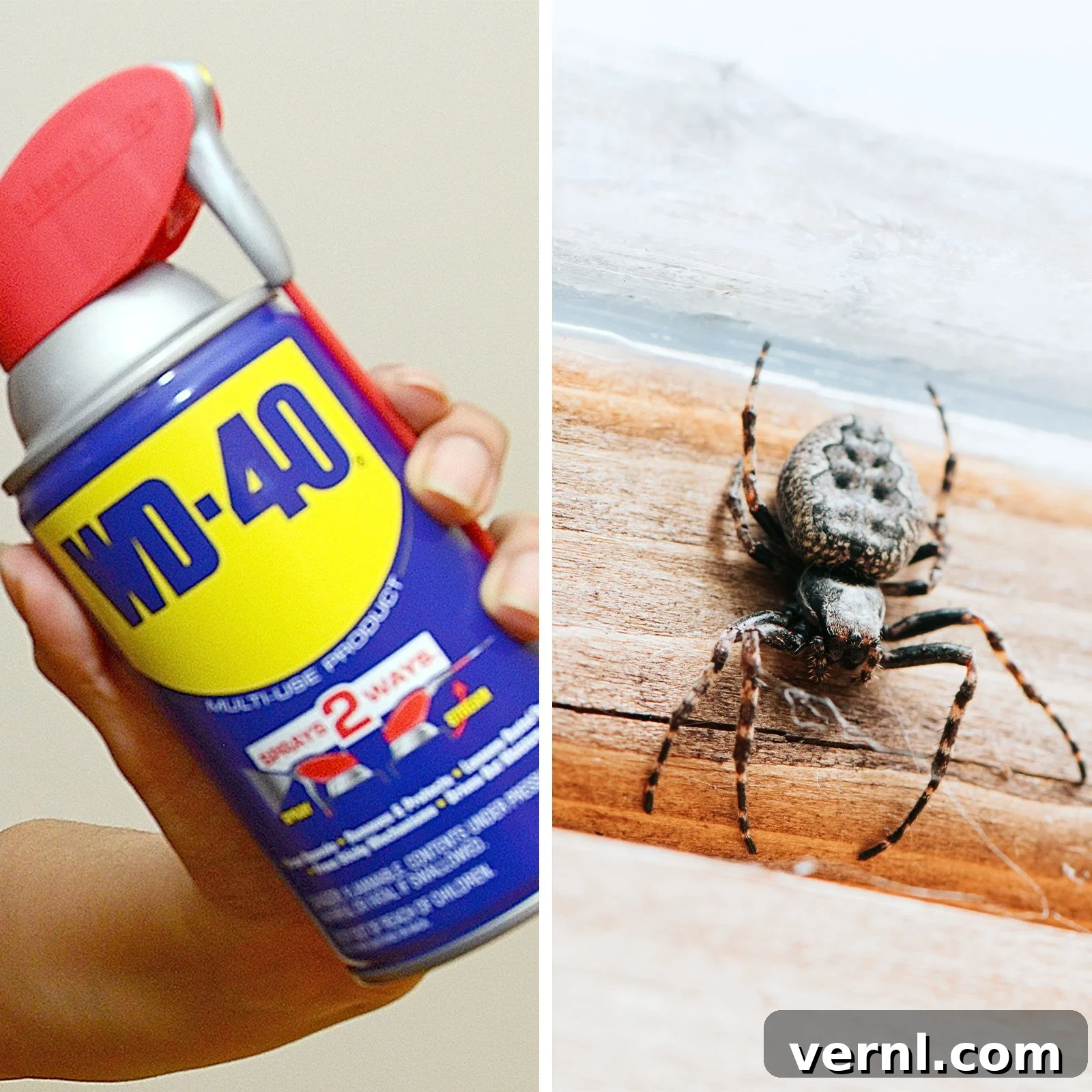
In the age of viral internet trends and DIY solutions, it’s common to stumble upon unconventional home improvement hacks. One such trend, popularized through a viral TikTok video, suggested a surprising method for pest deterrence: using WD-40. The video showcased an individual applying the multi-purpose lubricant around the exterior of a window, purporting to create an impenetrable barrier against ants and spiders seeking entry. This hack quickly captured attention, prompting many to wonder if this iconic blue and yellow can holds the secret to keeping unwanted critters at bay.
But does this familiar product, renowned for its lubricating and rust-prevention properties, truly offer a safe and effective solution for pest control? Or is it another well-intentioned but misguided internet tip?
Debunking the Myth: Does WD-40 Actually Repel Spiders and Insects?
@tik.tok.made.me.do.it #stitch @🐊💙GATOR💙🦌 for the win with this bug repellent hack. Thanks!! #fyp #bugs #wd40 #bees #wasps #bugrepellent #hackapproved #jmg8tor ♬ original sound – TikTok Made Me Do It
Almost every garage or utility closet likely houses a can of WD-40, a trusted ally for squeaky hinges, rusty bolts, and general lubrication. Its versatility is legendary, but extending its use to pest control is a leap many experts advise against. While social media videos enthusiastically promote applying WD-40 around window and door frames to create a supposed “invisible barrier” against ants and spiders, the scientific community remains skeptical, and for good reason.
Ian Williams, a highly respected board-certified entomologist and Technical Services Manager with Orkin, strongly cautions homeowners against employing products like WD-40 for pest management. “These products are simply not designed or intended for pest control,” Williams emphasizes. He notes the recent surge in social media posts advocating for WD-40 as a pest deterrent but highlights a critical flaw in these DIY recommendations: “I’ve seen some recent stories and social media posts about using WD-40, applied around windows and doors, to create ‘an invisible barrier’ that pests can’t penetrate. However, these recommendations rarely contain the answers to why and/or how a recommendation actually works, nor do they often address potential risks or long-term efficacy.”
The allure of a quick fix from a readily available product is understandable. However, WD-40’s primary function involves displacing water, lubricating, cleaning, and protecting metal. It is not formulated with active ingredients known to effectively repel or kill insects in a sustainable manner. While its strong odor or oily residue might temporarily deter some pests from crossing a treated line, this effect is often fleeting and does not address the root cause of an infestation. Pests may simply find an untreated path or return once the initial scent dissipates, rendering the “barrier” largely ineffective over time.
Williams further advises against relying on social media for pest control wisdom in general. “The DIY recommendations shared on social media often mean well, but they are rarely based on sound scientific principles or comprehensive understanding of pest biology,” he explains. Without a scientific basis, these hacks can be inefficient, potentially harmful, and can even exacerbate pest problems by delaying proper treatment.
Prioritizing Safety: Is It Safe to Use WD-40 as an Insect Repellent?
Beyond its questionable effectiveness, the safety implications of using WD-40 as an insect repellent are a major concern. WD-40 is not formulated for direct or indirect contact with people and pets as a pest control agent, and misusing it in this manner can pose significant health risks. “It is absolutely crucial to meticulously follow the instruction labels on all household products, regardless of their intended use around the home,” Williams stresses. Every product label serves as a vital guide, detailing proper application, potential hazards, and safety precautions.
WD-40 contains petroleum-based distillates and other chemicals that, if inhaled, ingested, or absorbed through the skin, can be harmful. In poorly ventilated areas, continuous exposure to its fumes can cause respiratory irritation. For pets, who often explore their environment by licking and sniffing, contact with treated surfaces could lead to internal distress or poisoning. The product is also flammable, presenting an additional hazard if applied near heat sources or open flames. Moreover, applying oily substances like WD-40 to surfaces like window frames or painted areas can potentially cause discoloration, damage, or degradation over time, creating more problems than it solves.
Using household products for purposes other than their intended design not only risks serious injuries to residents, including children and pets, but also fails to tackle the fundamental issue of pest infestations. As Williams aptly puts it, “Misusing household products can cause serious injuries to residents in the home, and they will likely not address the root of pest issues.” Attempting to solve a pest problem with an inappropriate product can lead to prolonged infestations, allowing pests to multiply and spread, ultimately making professional intervention more complex and costly.
Exploring Safer and More Effective DIY Pest Prevention Methods
While WD-40 isn’t the answer, the good news is that there are numerous homemade and proactive methods to help keep pests out of your home. For individual insects, simple solutions can be surprisingly effective. “Individual insects are actually easy to eliminate with all sorts of products,” says Williams. “Even soap and water if you contact them directly. The key to selecting the appropriate product is something that is toxic to insects, minimally toxic to non-targets (like people and pets), won’t damage surfaces or paint, and will last long enough on a surface to be effective between applications.”
Beyond direct elimination, several natural deterrents can make your home less appealing to common pests. These often leverage strong scents or irritating properties that pests dislike but are generally safe for humans and pets when used correctly:
- Peppermint Oil: Spiders and ants are often repelled by the strong scent of peppermint. Mix 10-15 drops of peppermint essential oil with water in a clean spray bottle and apply it around windows, doors, baseboards, and other entry points. You can also place peppermint oil-soaked cotton balls in problem areas.
- Vinegar: White vinegar, with its acidic properties, can disrupt ant trails and deter spiders. A 50/50 mixture of white vinegar and water can be sprayed directly onto ants or around entry points. It also acts as a natural cleaner.
- Citrus Peels: The limonene in citrus fruits (lemons, oranges, grapefruit) is a natural insect repellent. Rub citrus peels on windowsills, thresholds, or other areas where pests might enter. You can also create a spray by boiling citrus peels in water, letting it steep, and then straining the liquid into a spray bottle.
- Cayenne Pepper or Cinnamon: These spices act as irritants to many insects. A thin line of cayenne pepper or cinnamon powder can be sprinkled across known entry points like cracks and door thresholds. Be mindful of pets who might ingest these.
These natural mixtures can be used to create effective spray solutions, which can then be applied to window and door frames, hairline cracks, or any gaps where ant or spider activity has been observed. Remember to reapply these natural deterrents regularly, as their potency tends to diminish over time.
However, Williams notes that while homemade solutions can offer temporary relief, they are often not a definitive, long-term solution. “There are several DIY pest control methods that may help with pests for a short period of time. But to best understand where the pests are coming from and to have a proper treatment solution, it’s often best to contact a professional.” Effective pest management goes beyond simple repellents; it involves understanding pest habits, identifying nesting sites, and implementing comprehensive prevention strategies.
Foundational pest prevention also includes diligent home maintenance:
- Seal Entry Points: Regularly inspect your home’s exterior for cracks in the foundation, gaps around pipes, and torn window screens. Seal these vulnerabilities with caulk, weatherstripping, or screen repair kits.
- Maintain Cleanliness: Keep your home tidy, especially in the kitchen. Wipe up crumbs, clean spills immediately, store food in airtight containers, and regularly empty trash cans.
- Manage Moisture: Repair leaky faucets and pipes, and ensure proper ventilation in bathrooms and basements. Pests are attracted to moisture.
- Declutter: Reduce clutter in and around your home, as it provides hiding spots and breeding grounds for pests.
When to Call a Professional Pest Control Expert
While DIY methods and natural deterrents can play a role in minor pest management, there comes a point when the problem transcends simple home remedies. If you’re consistently observing large numbers of ants, spiders, or other pests making themselves at home near your entry points, or if you suspect a deeper infestation, it’s time to move beyond TikTok hacks and consult a professional.
Pest control experts possess specialized training and extensive knowledge to effectively identify, manage, and prevent infestations. They are adept at recognizing various species of ants and spiders, understanding their unique behaviors, and pinpointing their entry points and nesting sites. This expertise is crucial because different pests require different treatment approaches.
As Ian Williams advises, “The best way to prevent and treat pests like ants and spiders is to call professional pest experts. Our trained professionals can provide tailored solutions to effectively manage and prevent pest infestations.” A professional pest control service offers a comprehensive approach that includes:
- Thorough Inspection: Identifying the type of pest, the extent of the infestation, and all potential entry points.
- Targeted Treatment Plans: Developing a customized strategy that addresses your specific pest problem, location, and family needs.
- Safe and Effective Products: Using EPA-registered pesticides that are applied correctly and safely, minimizing risks to occupants and the environment.
- Long-Term Prevention: Providing advice and implementing measures to prevent future infestations, such as sealing cracks, removing harborage areas, and suggesting sanitation improvements.
- Peace of Mind: Offering guarantees for their services and follow-up treatments to ensure the problem is fully resolved.
The National Pest Management Association (NPMA) strongly advocates for engaging qualified pest control professionals. They emphasize that these experts have a deep understanding of specific pest habits and can accurately identify entry points and address infestations based on the homeowner’s unique location and requirements.
Regarding chemical treatments, Williams highlights the stringent standards that professionals adhere to: “Pesticides that are registered with the Environmental Protection Agency (EPA) have gone through rigorous testing. They have labels that describe exactly how to use them, legally, to be effective while minimizing any environmental impacts.” This adherence to regulated products and application protocols ensures that treatments are not only effective but also as safe as possible for your household and the surrounding environment, a level of assurance rarely achievable with unregulated DIY methods.
About the Expert
Ian Williams is a distinguished board-certified entomologist and serves as the technical services manager with Orkin, a leading name in pest control.
Sources
- Orkin
- WD-40: “Explore Myths, Legends & Fun Facts of the Blue and Yellow Can”
- Pest World