
In the vast world of home improvement and construction, selecting the appropriate fastener is paramount to the success, durability, and safety of any project. Among the most commonly encountered screws are drywall screws and wood screws, each designed with specific applications in mind. While it might be tempting to use whatever is at hand, especially when budgets are tight or a quick fix is needed, understanding the fundamental differences between these two types of screws is crucial. This detailed guide will delve into their unique characteristics, ideal uses, and the potential pitfalls of misapplication, ensuring you always choose the right tool for the job.
Experienced carpenters, like myself, sometimes find ourselves in a predicament. Drywall screws are undeniably inexpensive and come in generous quantities, often making them a convenient, readily available option for a quick fix around the house. However, this accessibility often leads to a common question: Can they be used interchangeably with wood screws, especially for minor woodworking tasks? The consensus among professionals is clear: for structural integrity and lasting results, always use fasteners designed for the material you’re working with.
Jay Sander, owner of Castle Dream Construction in Baltimore, Maryland, strongly advises against using drywall screws for significant woodworking projects. “Carpenters rarely use drywall screws for woodwork,” he emphasizes. “Think of them as the wrong tool for the job. You wouldn’t use a screwdriver to hammer a nail, right?” This analogy perfectly encapsulates the principle of using specialized tools for specialized tasks.
However, some professionals offer a more nuanced perspective for very specific, non-structural scenarios. Josh Kou of North Castle Hardwoods in Chicago has a slightly different take: “I would use them for fixing lightweight plyboards or making small, non-load-bearing repairs,” he notes. “They are thinner than traditional wood screws and made of a harder material, which can be ideal for gripping flat boards onto wall studs for temporary or very light-duty applications.” This highlights that while not ideal, there are marginal cases where their characteristics might seem advantageous, though always with caution.
The reverse scenario is also important to consider: “Using wood screws for drywall isn’t ideal either,” Sander adds, pointing out that both types of screws have distinct designs for distinct purposes.
What Are Drywall Screws?
Drywall screws are specialized fasteners engineered specifically for attaching gypsum wallboard (drywall) to framing, whether it’s wood or metal studs. Their design is a testament to precision engineering, ensuring secure, flush, and efficient installation of drywall panels. You’ll find these ubiquitous fasteners at any building supply outlet or hardware store, often available in bulk by the pound, making them a cost-effective choice for large-scale drywall installations.
Key Drywall Screw Features
Drywall screws are manufactured from tempered or stainless steel, a choice of material that makes them exceptionally hard. This hardness is crucial for penetrating drywall and often the framing beneath without bending or breaking. The common black phosphor coating found on most drywall screws serves a vital role, providing resistance against corrosion, which is important for the longevity of the fastener in various environmental conditions.
Their distinctive features are tailored for drywall application:
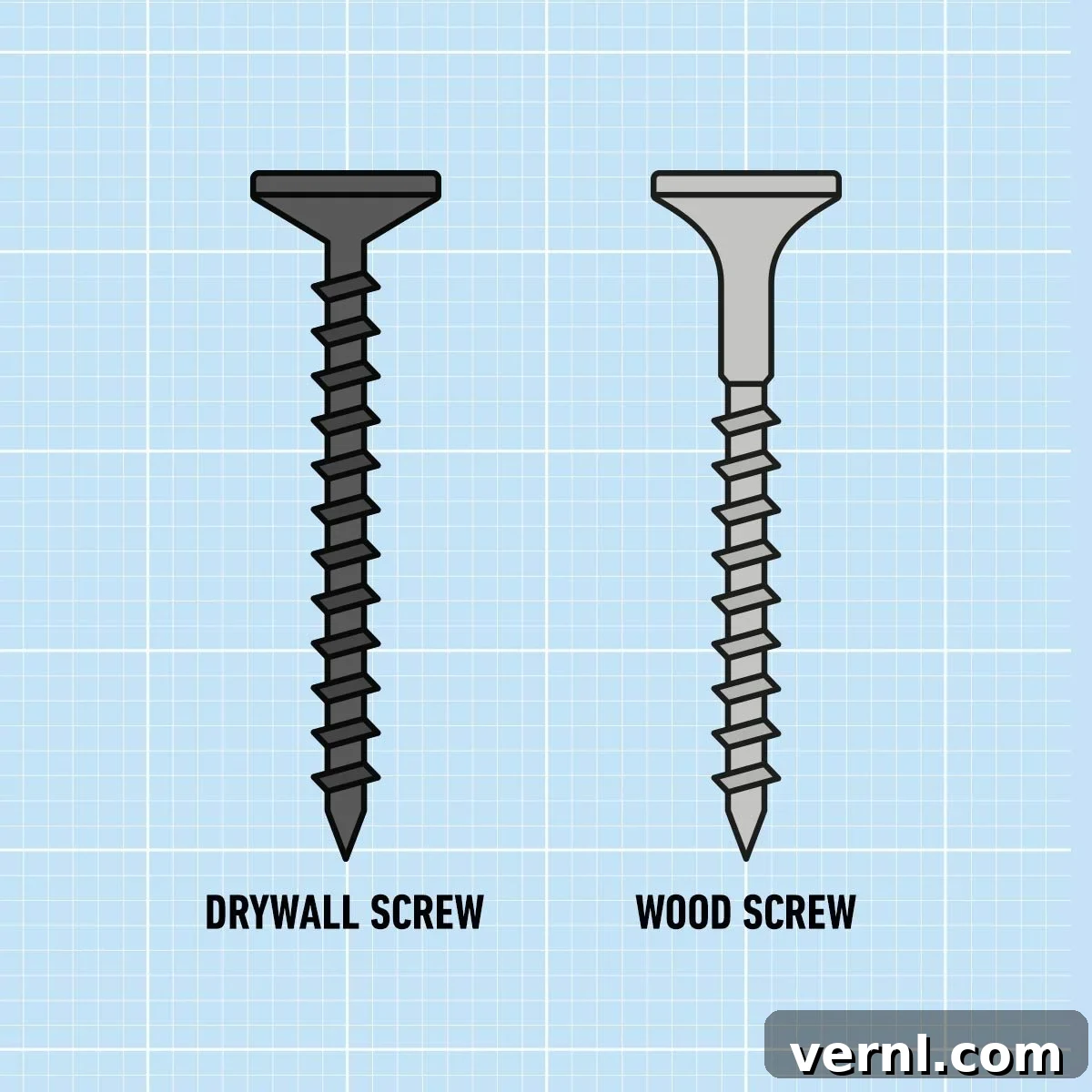
- Sharp Point: A very sharp point allows for quick and easy penetration into drywall paper and gypsum core, eliminating the need for pre-drilling in most cases.
- Narrow Shank: The slim shank design minimizes damage to the drywall paper, preventing unnecessary tearing during installation.
- Bugle Head: Perhaps the most recognizable feature, the bugle head is flat with a rounded underside. This design allows the screw to sink smoothly into the drywall surface, creating a subtle, self-countersunk depression. This depression is perfectly suited for concealing the screw head with joint compound, resulting in a smooth, paint-ready finish. They are typically driven with a #2 Phillips driver.
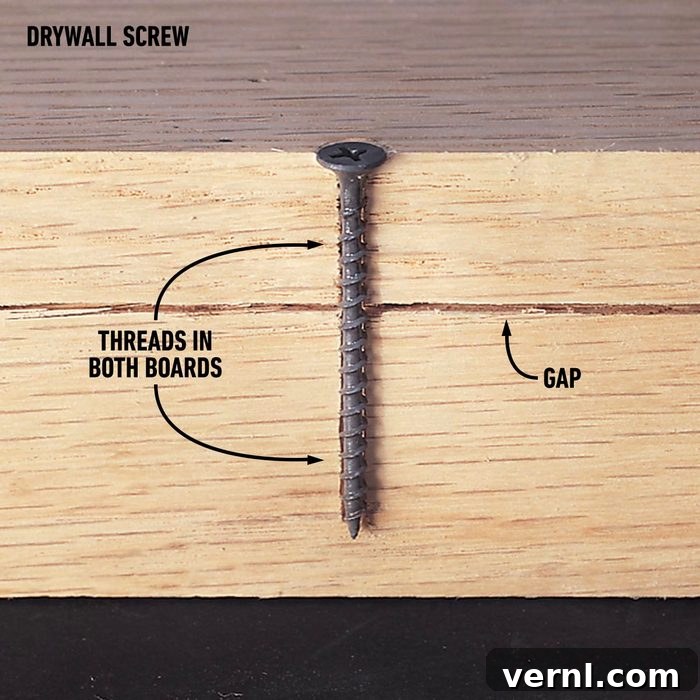
- Full Threading: Most, but not all, drywall screws feature threads that extend all the way to the head. While beneficial for gripping drywall tightly, this full threading can be problematic for woodworking projects. The continuous threads can sometimes push wood apart rather than drawing it together as the screw is tightened, creating an undesirable gap and compromising the joint’s strength.
How to Choose the Right Drywall Screws
Selecting the correct drywall screw involves considering several factors, primarily related to the framing material and the thickness of the drywall being installed:
- Length: Standard drywall screws are commonly available in lengths of 1 inch, 1-1/4 inches, 1-3/8 inches, 1-1/2 inches, 1-3/4 inches, and 2 inches. These lengths cover most residential and light commercial drywall applications. For thicker drywall panels or multiple layers, longer screws, up to four inches, are available but less common and may require special ordering.
- Screw Threads:
- W-Type: These drywall screws are specifically intended for attaching drywall to wood framing. They feature coarse threads that are designed to mesh effectively with the grain of wood, providing a secure and strong hold. The aggressive threads ensure quick engagement and maximum grip in lumber.
- S-Type: In contrast, S-type drywall screws have finer, sharper threads. These finer threads are optimized for gripping metal framing, such as steel studs, without stripping the material. S-type screws are often self-tapping, meaning their design allows them to create their own pilot hole as they are driven into metal studs, eliminating the need for pre-drilling.
- Gauge: Drywall screws typically come in two primary gauge sizes: #6 and #8. The gauge number refers to the diameter of the screw. A #8 screw has a larger diameter than a #6 screw, offering increased shear strength and holding power. The choice between #6 and #8 often depends on the specific requirements of the drywall installation and the desired level of robustness.
- Drywall Screws vs. Drywall Nails: While drywall nails were once a common fastening method, screws have largely replaced them due to superior performance. Although nails are easy to drive with a specialized drywall hammer and their heads naturally form a depression for joint compound, they have a tendency to “pop” out over time as the house settles or humidity changes. Screws, with their threaded design, provide a far more secure and permanent hold, virtually eliminating nail pops and ensuring a smoother, more stable finish for years to come.
How to Use Drywall Screws
For optimal results when driving drywall screws, especially in professional settings, a dedicated drywall screw gun is the preferred tool. This specialized power tool is designed to drive screws to the perfect depth consistently. It features a clutch and a depth-sensing nosepiece that prevents the screw from sinking deeper than necessary, ensuring the bugle head breaks the paper surface without tearing it or over-driving into the gypsum. However, for DIYers or smaller projects, a standard variable-speed drill equipped with a Phillips driver bit can work just as well, provided you operate it with a light, controlled touch to prevent over-driving or stripping the screw head.
Pros and Cons of Drywall Screws
Understanding the advantages and disadvantages is critical to making an informed choice:
Pros:
- Easy to Drive: Their sharp points and aggressive threads allow for quick penetration.
- Sink Quickly: Designed for rapid installation, speeding up project completion.
- Corrosion Resistant: The black phosphate coating helps prevent rust.
- Won’t Tear Drywall Paper: The bugle head design and narrow shank minimize paper damage.
- Cost-Effective: Very affordable, especially when purchased in bulk.
- Self-Tapping (S-type): Can be driven directly into metal studs without pre-drilling.
Cons:
- Can Snap Under Pressure: Made of hard, brittle steel, they lack the flexibility and shear strength for demanding woodworking applications, making them prone to snapping, particularly in hardwoods or when torqued excessively.
- Can Force Wood Apart: The full threading can hinder the clamping action required to pull two pieces of wood tightly together, potentially creating gaps in wood joints.
- Poor Shear Strength: Their narrow shank and brittle nature make them unsuitable for applications requiring resistance to lateral forces.
- Limited Gripping Power in Wood: Coarse threads are good for drywall, but not ideal for the denser, fibrous structure of wood compared to specialized wood screws.
What Are Wood Screws?
Wood screws are the workhorses of woodworking, furniture construction, and general carpentry. They are specifically engineered to create strong, secure joints in various types of wood, from softwoods like pine to dense hardwoods such as oak or maple. Unlike drywall screws, which prioritize quick drywall installation, wood screws are designed for superior holding power, resistance to shear forces, and the ability to draw wood components tightly together for a robust connection.
Wood screws are typically made from softer, more malleable metal alloys, which contributes to their greater flexibility and resistance to snapping compared to brittle drywall screws. They are available in a much wider selection of lengths, gauges, and head types, offering versatility for nearly any woodworking application. While traditional wood screws often featured Phillips heads, modern advancements have seen a rise in Torx (star-shaped) or square (Robertson) drive heads. These alternative drive types significantly reduce cam-out (where the driver slips out of the screw head), providing better torque transfer and a more secure drive, though it does mean keeping a wider assortment of driver bits on hand – a minor inconvenience for enhanced performance.
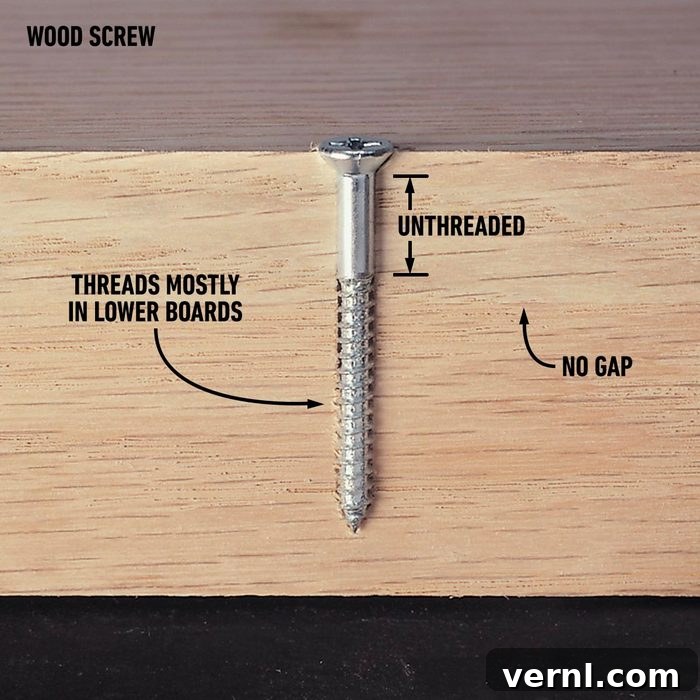
A crucial design difference lies in their threading. Wood screw threads are generally finer than the coarse W-type drywall screws and, critically, the threads typically do not extend all the way to the head. This partial threading is a key feature: the unthreaded shank near the head allows the top piece of wood to slide freely along it, while the threads in the bottom piece of wood pull the two components tightly together, creating a powerful clamping force and a robust joint. This design also makes them far less likely to snap when driven into hard wood, as their softer composition allows for more flex.
Regarding their use in drywall, Jay Sander reiterates, “Using wood screws for drywall isn’t ideal. While they are sturdy, their finer threads might not bite into the soft drywall paper effectively, leading to tearing or insufficient grip, and they won’t sit flush without specific countersinking that drywall screws achieve automatically.”
What Are Wood Screws Made Of?
The material composition of wood screws is diverse, reflecting the varied demands of woodworking projects:
- Steel Alloys: The most common material, offering a good balance of strength and cost-effectiveness. Often coated for corrosion resistance.
- Brass: Prized for its aesthetic appeal, brass screws are often used in fine woodworking or where a decorative finish is desired. They are softer than steel and not suitable for high-stress applications.
- Stainless Steel: Offers excellent corrosion resistance, making them ideal for outdoor projects, marine applications, or use in high-humidity environments. Available in various grades (e.g., 304, 316).
- Aluminum: Lightweight and corrosion-resistant, but generally less strong than steel.
- Titanium: Extremely strong and corrosion-resistant, but also very expensive, typically reserved for specialized applications where high performance is critical.
Exterior steel wood screws frequently feature advanced enamel or polymer coatings. These coatings provide an additional layer of protection against rust and environmental degradation, significantly extending the lifespan of the fastener in outdoor conditions.
What Size Wood Screw Should I Use?
Choosing the right size of wood screw involves considering both the gauge (diameter) and the length. Gauge sizes for wood screws typically range from #4 (quite thin, suitable for delicate work) up to #10 or even higher for heavy-duty applications. The gauge you select directly correlates with the amount of holding power and shear strength required for your joint. A larger gauge screw provides greater strength but also requires a larger pilot hole and can be more prone to splitting wood if not installed correctly.
As a general rule for length, you want a wood screw that is long enough to penetrate at least halfway into the thickness of the receiving piece of wood. For example, when joining two pieces of 3/4-inch thick lumber, a 1-1/4 inch or 1-1/2 inch screw would typically provide adequate penetration and holding power. The goal is to ensure sufficient thread engagement without the screw tip poking through the other side.
How to Use Wood Screws
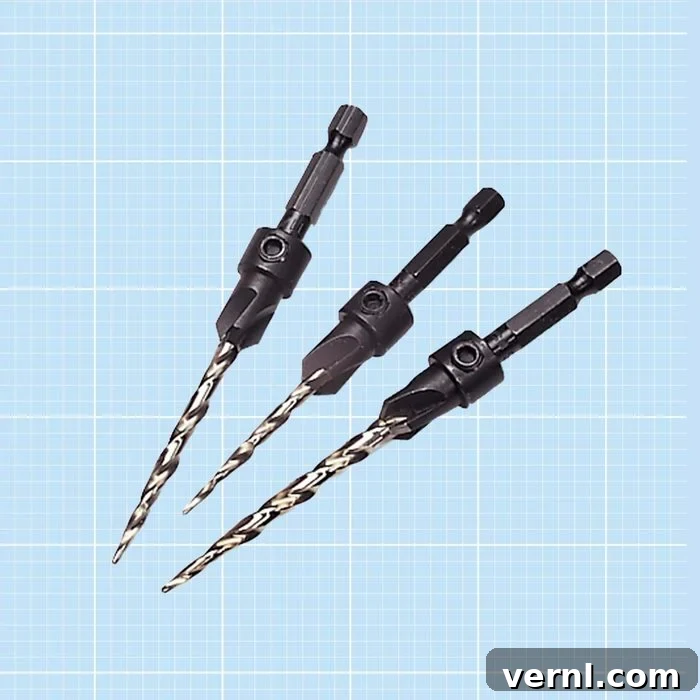
Proper installation of wood screws often involves a two-step process to ensure maximum effectiveness and prevent damage to the wood, especially when working with hardwoods or near the edges of lumber. “I usually pre-drill if I am using wood screws close to the end of a piece of lumber to prevent splitting, as it’s simply good practice,” advises Josh Kou.
- Pilot Hole: Drilling a pilot hole is a crucial step. A pilot hole is a small hole drilled into the wood before driving the screw. It serves several important functions:
- It guides the screw, making it easier to start straight.
- It reduces friction on the screw, requiring less driving force.
- Most importantly, it prevents the wood from splitting, which is particularly vital when working with dense hardwoods or positioning screws close to the ends or edges of a board.
The size of the pilot hole should match the diameter of the screw’s shank (the unthreaded part), ensuring the threads have plenty of material to bite into.
- Countersinking: After drilling the pilot hole, a countersink bit is often used. Some wood screws have ribs on the underside of the head (a self-countersinking feature) that help them sink flush. For screws that don’t, or when a perfectly flush finish is desired, a countersink bit creates a conical depression that allows the screw head to sit level with or slightly below the surface of the wood. This is essential for a clean aesthetic, especially if the screw heads are to be filled or painted over.
Pros and Cons of Wood Screws
Weighing the advantages and disadvantages helps in choosing the right fastener for woodworking:
Pros:
- Softer and Less Breakable: Made from more malleable alloys, they are more flexible and less prone to snapping under stress compared to brittle drywall screws.
- Wide Selection: Available in a vast array of gauges, lengths, materials, and head types to suit diverse woodworking applications.
- Superior Drive Heads: Torx and square heads significantly improve torque transfer and prevent cam-out, leading to easier, more secure driving.
- Won’t Force Wood Apart: The partial threading design pulls wood tightly together, creating strong, gap-free joints.
- High Shear Strength: Designed to withstand lateral forces, making them ideal for structural joints in wood.
- Excellent Holding Power: Specifically engineered threads provide superior grip in wood fibers.
Cons:
- Smaller Threads Won’t Grip in Drywall: Their finer threads are not designed for the soft, fibrous structure of drywall and will likely tear the paper or provide insufficient holding power.
- More Expensive: Generally cost more per screw than drywall screws.
- Come in Smaller Boxes: Typically sold in smaller quantities, reflecting their higher cost and specialized use.
- Require Pre-drilling: Often necessitate pilot holes and countersinking for optimal results, adding a step to the installation process.
Can You Use Wood Screws as Drywall Screws?
The answer is a definitive no. As Josh Kou succinctly puts it, “When I’m putting up [drywall], if I run out of drywall screws then it’s time to stop.” Using wood screws for drywall installation presents several significant problems. Their finer threads are ill-suited for gripping the soft drywall paper and gypsum core, often leading to tearing, insufficient hold, and screw heads that don’t sit flush. Furthermore, standard wood screws are not typically as corrosion-resistant as the phosphate-coated drywall screws, making them more susceptible to rust bleed-through, which can stain paint and ruin the aesthetic of your finished wall. The lack of a bugle head also means they won’t create the necessary depression for easy mudding, leading to an uneven and unsightly finish.
In conclusion, while the allure of using a readily available, inexpensive fastener like a drywall screw for a quick woodworking fix might be strong, the long-term integrity, safety, and aesthetic quality of your project depend on using the right tool for the job. Drywall screws are expertly designed for drywall, offering quick installation and easy concealment. Wood screws, on the other hand, are crafted for the unique demands of woodworking, providing superior holding power, resistance to splitting, and robust joints. Understanding and respecting these distinct designs will ensure your projects are built to last, reflecting craftsmanship and attention to detail that only proper fastening can provide.