
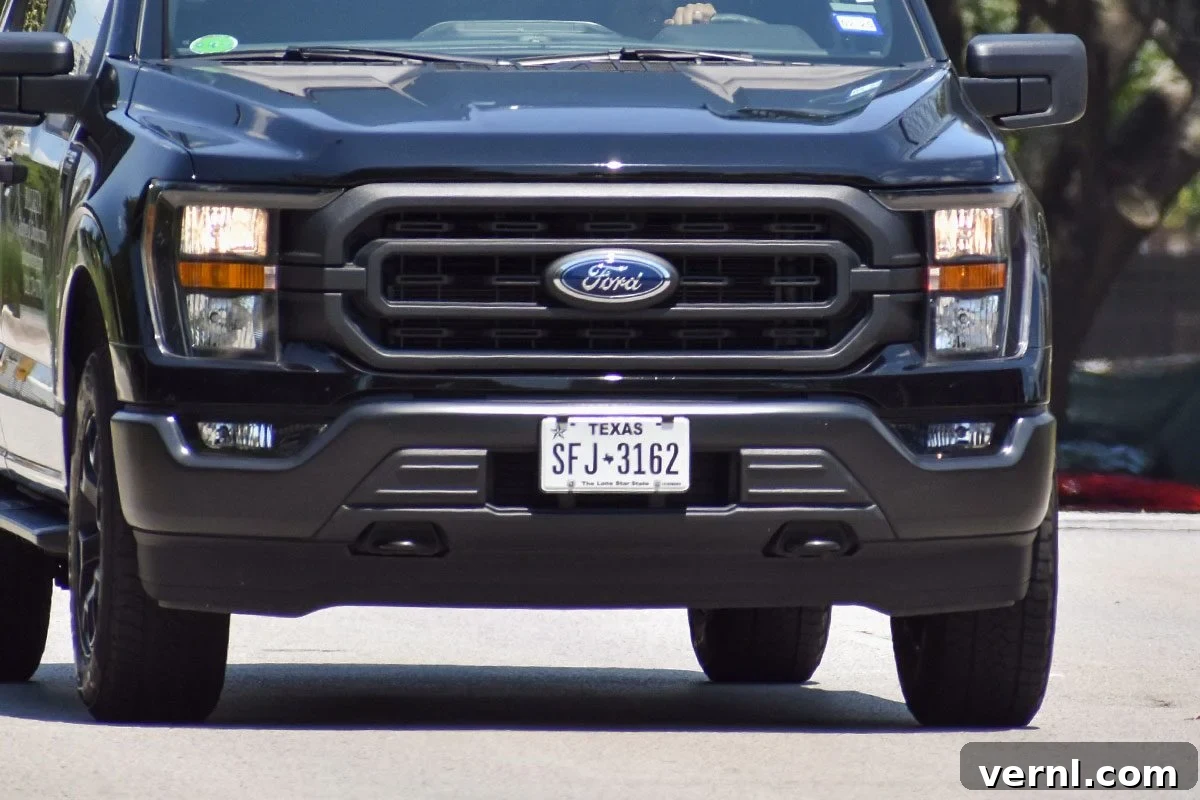
Driving across state lines in the United States often reveals subtle differences in local regulations, many of which go unnoticed. One such distinction that frequently sparks curiosity among motorists is the requirement for front license plates. You might observe some vehicles proudly displaying a plate on both the front and rear, while others maintain a sleek, unadorned front bumper. This seemingly minor variation is, in fact, a reflection of diverse state-level philosophies regarding vehicle identification, safety, aesthetics, and economic considerations. The rules governing the display of license plates are not merely based on tradition; they are a complex interplay of historical precedents, evolving technology, and legislative priorities that continue to shape the motoring landscape across the nation.
For many drivers, this divergence raises questions: Why does my state require two plates, while a neighboring state only mandates one? What are the underlying reasons for these contrasting approaches? This article delves into the intriguing history, practical implications, and ongoing debate surrounding front and rear license plate requirements, offering a comprehensive look at why states choose one system over the other and what it means for drivers and law enforcement alike.
The Evolution of Vehicle Identification: How Two Plates Became the Standard
The concept of vehicle registration and identification is nearly as old as the automobile itself. In the nascent days of motoring, around the turn of the 20th century, the proliferation of cars on public roads necessitated a standardized method for tracking them. Without sophisticated digital systems or advanced surveillance technology, the only reliable way to identify a vehicle was by its license plate. Consequently, almost every state in the early 1900s adopted a dual-plate system, requiring both a front and a rear plate. This made perfect sense: whether a vehicle was approaching or receding, its unique identifier was visible, crucial for law enforcement, accident reporting, and even rudimentary traffic management.
As the decades progressed, technology steadily advanced, prompting states to re-evaluate the necessity of two plates. The advent of computerized registration databases, more efficient vehicle tracking systems, and eventually, Automatic Number Plate Recognition (ANPR) cameras began to challenge the long-held assumption that dual plates were indispensable. These innovations allowed authorities to identify vehicles from various angles and through digital records, reducing the absolute reliance on a visible front plate. Moreover, the economic argument for single plates emerged: producing, distributing, and managing one plate per vehicle instead of two offered significant cost savings for state governments and reduced waste. This combination of technological progress and fiscal prudence led many states to consider a shift, viewing it as a modernizing step that wouldn’t compromise public safety.
States That Champion Dual Plates: The Case for Front and Rear Licensing
Despite technological advancements, a substantial number of states continue to uphold the dual-plate requirement, citing enhanced public safety and streamlined law enforcement operations as primary justifications. For these states, the front license plate is not an anachronism but a vital tool in maintaining order and security on their roads. A front plate provides an additional, often critical, means for officers and traffic cameras to identify a vehicle, particularly when it is approaching. This capability is invaluable in a multitude of scenarios, ranging from efficient toll collection to the urgent resolution of criminal investigations.
The states that currently mandate both front and rear plates include: California, Colorado, Hawaii, Idaho, Illinois, Iowa, Maine, Maryland, Massachusetts, Minnesota, Missouri, Montana, Nebraska, Nevada, New Hampshire, New Jersey, New York, North Dakota, Oregon, Rhode Island, South Dakota, Texas, Utah, Vermont, Virginia, Washington, Wisconsin, and Wyoming. In these jurisdictions, law enforcement agencies consistently advocate for the dual-plate system. They emphasize that a front plate significantly boosts their ability to quickly spot stolen vehicles, verify registrations, and identify cars involved in hit-and-run incidents where only the front of the vehicle may have been observed or captured on camera. This straightforward system, they argue, remains highly effective in ensuring road safety, deterring crime, and facilitating rapid response in emergencies.
Beyond immediate identification, the presence of a front plate supports the widespread deployment of advanced surveillance technologies. ANPR cameras, strategically placed on police cruisers, overpasses, and at key intersections, can scan thousands of plates per minute. A front plate doubles the chances of a successful read, especially in complex traffic environments or when vehicles are moving at high speeds. This augmented data collection aids in everything from monitoring suspicious vehicles to tracking down individuals involved in Amber Alerts, making the dual-plate system a cornerstone of modern, proactive policing in these states. The additional visibility offered by a front plate is seen not just as a convenience, but as a critical advantage in an increasingly complex traffic landscape.
The Single Plate Philosophy: Why Some States Opt for Rear-Only Licensing

Conversely, a substantial number of states have adopted a single-plate policy, requiring only a rear license plate. Their rationale often centers on a combination of financial savings, administrative simplification, and a keen eye on modern vehicle aesthetics. The economic argument is particularly compelling; producing just one plate per vehicle instead of two translates into millions of dollars in savings annually for state budgets. This reduction in manufacturing, distribution, and material costs can be redirected to other public services or contribute to lower registration fees for drivers. From an administrative perspective, managing a single-plate system is inherently less complex, reducing the logistical burden on state motor vehicle departments and simplifying the registration process for vehicle owners.
Beyond economics and logistics, a significant factor influencing the single-plate decision is vehicle design and aesthetics. Modern automobiles, particularly luxury cars, sports cars, and a growing number of electric vehicles, are meticulously designed with aerodynamic efficiency and sleek, uncluttered front fascias. Many of these designs simply do not incorporate a natural, unobtrusive space for a front license plate. Installing one often requires drilling unsightly holes into the bumper, potentially damaging sensitive sensors (such as those for parking assistance, adaptive cruise control, or pedestrian detection), or blocking integral design elements like grilles or vents. Car owners and manufacturers alike express a strong preference for the cleaner, uninterrupted look of a vehicle free from a front plate. This aesthetic appeal is not merely superficial; it can impact resale value and customer satisfaction, making it a powerful consideration for states sensitive to driver preferences and the automotive industry.
States that adhere to the rear-only policy, such as Arizona, Arkansas, Delaware, Florida, Georgia, Indiana, Kansas, Kentucky, Michigan, Mississippi, New Mexico, North Carolina, Ohio, Oklahoma, Pennsylvania, South Carolina, Tennessee, and West Virginia, contend that with the widespread adoption of advanced tracking systems, the absolute necessity for a front plate has diminished. They argue that sophisticated rear-facing cameras, radar technologies, and comprehensive digital records provide ample means for identifying vehicles, even when only the rear view is available. Modern policing leverages a diverse array of data points and surveillance methods, meaning that the absence of a front plate no longer creates a significant enforcement gap. For these states, the benefits of cost savings and improved vehicle aesthetics outweigh the perceived advantages of a dual-plate system, signaling a pragmatic adaptation to contemporary automotive and technological landscapes.
The Driver’s Perspective: Why This Difference Matters to Car Owners
The debate over front and rear license plates isn’t just a matter for legislators and law enforcement; it’s a topic that often elicits strong opinions among car owners. For many, the decision directly impacts their vehicle’s appearance and functionality. Drivers of newer, high-end, or sports cars often champion the single-plate system, appreciating the clean, uninterrupted lines of their vehicle’s front end. They invest significantly in their cars’ design and craftsmanship, and the prospect of drilling holes into a meticulously engineered bumper to accommodate a front plate can be a major deterrent. The aesthetic appeal of a front plate-free vehicle is a significant factor in their satisfaction and perception of their car.
On the other hand, some drivers appreciate the added visibility and perceived safety benefits of having two plates. They understand that a front plate can assist law enforcement in emergencies, aid in traffic stops, and potentially deter crime. This group often prioritizes the practical over the aesthetic, valuing the enhanced traceability and security that a dual-plate system offers. These contrasting viewpoints highlight the fundamental tension between design aesthetics and practical enforcement, demonstrating why state laws continue to differ. Indeed, the regulatory landscape is not static; a few states have historically switched back and forth between single and dual plate requirements, often in response to changing budget priorities, shifting public opinion, or evolving technological capabilities.
For individuals navigating this varied regulatory environment, understanding local license plate requirements is crucial. If you move to a new state or purchase a vehicle from a different jurisdiction, it is imperative to check the specific rules of your new state of residence before hitting the road. In states that mandate both front and rear license plates, failing to display both can lead to significant repercussions, including fines, warnings, or even more serious legal issues. Compliance isn’t just about avoiding penalties; it’s about contributing to the overall system of vehicle identification that supports public safety.
Even for those living in rear-only states, the single plate still carries immense importance. It is essential to ensure that this sole identifier is properly attached, impeccably clean, easily readable, and clearly visible at all times, especially at night. Any obstruction or damage to the plate can hinder identification efforts and potentially lead to legal consequences. Regardless of whether your vehicle sports one plate or two, this small metal rectangle serves a vital, quiet purpose in maintaining road safety, facilitating vehicle traceability, and ensuring an orderly traffic system. It’s a key component of how we manage millions of vehicles on our roads every single day.
Related Insights into Automotive Regulations and Features
- Do You Know What That Little Button on Your Seat Belt Is For?
- What Those Lines on Your Backup Camera Really Tell You
- Here’s What The Small Panel On Your Car’s Front Bumper Is For