Mastering Precision: The Hammertooth Hammer and Essential Framing Techniques for Superior Construction
The foundation of any robust and enduring structure lies in its proper frame. From residential homes to commercial buildings, the integrity of the frame dictates the overall strength, stability, and longevity of the entire construction. A well-executed frame ensures that a house can effortlessly withstand the rigors of inclement weather, the natural settling process over decades, and the daily wear and tear of occupancy. When undertaking the crucial task of constructing the frames for walls, floors, and roofs, an unwavering commitment to precision is paramount. Achieving sharp right angles and perfectly straight alignments is not merely an aesthetic choice; it’s a fundamental requirement for structural soundness. Accurate measurements and meticulous execution are the cornerstones that yield strong, plumb walls, level floors, and a secure roofline.
While traditional framing methods often relied on considerable brute force and iterative adjustments, modern advancements in tooling have revolutionized the process, making precision more accessible and efficient than ever before. Among these innovative tools, one particular hammer stands out for its specialized design and invaluable utility in framing projects: the hammertooth hammer. This ingenious tool, equipped with a distinctive “tooth,” simplifies the often challenging task of aligning lumber, transforming a painstaking process into a swift and precise operation.
What Is a Hammertooth Hammer? Unveiling a Specialized Framing Tool
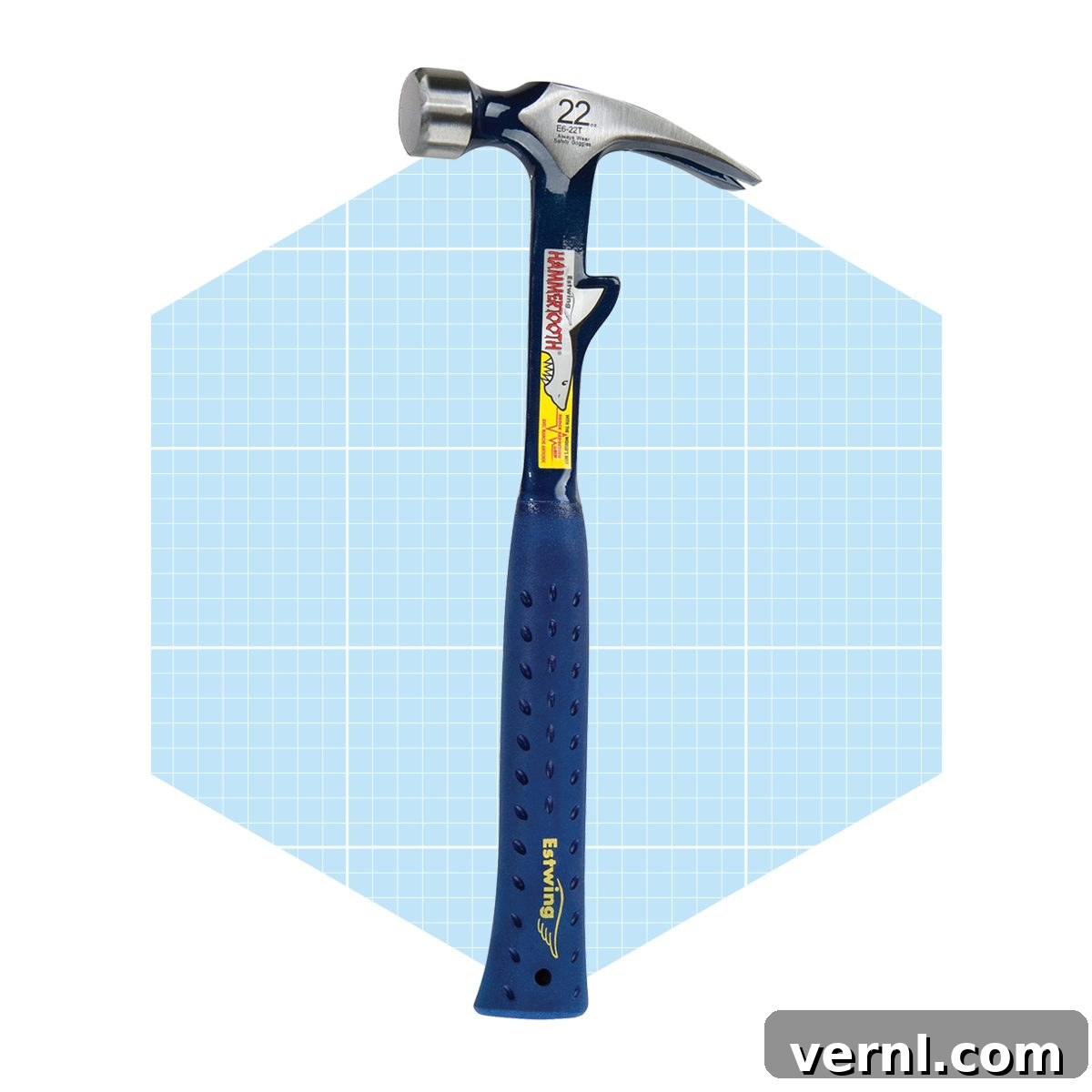
At first glance, a hammertooth hammer bears a striking resemblance to a conventional framing hammer, embodying the familiar heavy head, robust handle, and a claw for pulling nails. However, its defining characteristic, and indeed its namesake, is a small, strategically placed tooth that extends outward from the handle. This unique projection is typically positioned a couple of inches below the hammer’s claw, setting it apart from standard hammers. The design isn’t arbitrary; every aspect is engineered to enhance the efficiency and precision of framing work.
The primary innovator and leading manufacturer of hammertooth hammers is Estwing, a company renowned globally for its commitment to crafting high-quality, durable striking tools. Estwing’s hammertooth hammers are typically available in various weights, with popular options including 22-ounce and 24-ounce varieties. The choice of weight often depends on the framer’s preference, strength, and the specific demands of the job – a heavier hammer can deliver more force with less effort, ideal for driving larger nails, while a lighter one offers better control for finer adjustments. Furthermore, framers can select between milled (waffled) or smooth faces. A milled face provides a better grip on nail heads, reducing the chance of missed strikes and bent nails, especially when working quickly. Conversely, a smooth face is preferred for applications where avoiding marks on the wood surface is critical, such as during finish carpentry or when working with treated lumber that might be damaged by a milled face.
The innovation behind the hammertooth design showcases how subtle modifications can dramatically improve a tool’s functionality, making complex tasks more manageable for professionals and DIY enthusiasts alike. Its robust construction, typically forged from a single piece of steel, ensures exceptional durability and balance, hallmarks of a truly professional-grade framing hammer.
The Core Function: How a Hammertooth Hammer Revolutionizes Lumber Alignment
The ingenious design of the hammertooth hammer is best appreciated in its primary application: straightening 2x dimensional lumber during the framing process. Anyone who has ever worked with construction-grade lumber knows that wood is rarely perfectly straight. Warps, bows, and crowns are common, and meticulously aligning these imperfect pieces is crucial for creating true walls, level floors, and square openings. This is precisely where the hammertooth hammer proves indispensable.
The distance carefully engineered between the hammer’s claw and its distinctive tooth creates a perfect cradle designed to snugly grip the edge of a 2x stud, joist, or truss. By positioning the lumber within this cradle, contractors and carpenters can exert targeted leverage. With a simple, controlled movement, they can apply pressure to the bowed or warped section of the lumber, gently coaxing it into perfect alignment against its corresponding plates or rim joists. This mechanism allows framers to precisely square up studs, joists, and trusses, ensuring they sit flush and true, which is critical for the overall structural integrity and aesthetic finish of the project.
One of the most significant advantages of the hammertooth hammer is its capability for one-handed operation. In modern framing, efficiency is key, and the simultaneous use of a nail gun has become standard practice. The hammertooth hammer allows the framer to hold a nail gun in one hand, ready to fasten the straightened 2x lumber, while using the other hand to manipulate the hammertooth hammer. This seamless, two-tool approach significantly speeds up the framing process, reduces downtime, and minimizes the need for an extra set of hands or constant tool switching. To truly grasp the effectiveness and efficiency of this tool in action, it’s highly recommended to watch an official promotional video from Estwing, which vividly demonstrates its practical application on a job site.
Beyond simply making the job easier, the hammertooth hammer actively contributes to the structural integrity of the build. By ensuring that every piece of lumber is perfectly aligned and plumb, it prevents issues like bulging walls, uneven floor surfaces, and crooked door or window frames, all of which can lead to costly repairs and compromise the building’s long-term durability. It transforms a task that once required considerable effort and often resulted in less-than-perfect alignments into a streamlined, precision-driven operation.
Beyond Alignment: Versatility and Benefits of the Hammertooth Hammer
While its primary function is straightening lumber, the hammertooth hammer’s design offers a surprising degree of versatility on the job site. The robust tooth can also be utilized for minor prying tasks, such as separating stubborn pieces of lumber or gently adjusting components without needing to switch to a dedicated pry bar. Its heavy-duty construction means it can endure demanding tasks, making it a reliable all-in-one tool for various framing-related challenges.
The ergonomic design, typical of Estwing tools, also plays a crucial role in reducing framer fatigue. The balance and grip are optimized for repeated use, minimizing strain on the wrist and arm. This not only enhances productivity but also contributes to job site safety by reducing the likelihood of accidents caused by fatigue. Investing in a specialized tool like the hammertooth hammer is an investment in both the quality of the work and the well-being of the framer, streamlining the entire construction workflow and elevating the standard of workmanship.
Essential Framing Tips and Best Practices for Flawless Construction
Armed with the precision of a hammertooth hammer, you’re well-equipped to tackle framing challenges. However, even the best tools are only as effective as the hands wielding them. Before you don your safety goggles and begin framing, familiarizing yourself with crucial best practices and common pitfalls to avoid will significantly enhance the quality, safety, and efficiency of your project.
1. Prioritize Safety: Your First Line of Defense
Before any nail is driven or saw is cut, ensure you have the appropriate personal protective equipment (PPE). This includes safety goggles to protect against flying debris, sturdy work gloves for grip and protection, hearing protection, and suitable work boots. A safe worksite is a productive worksite, and preventing injuries should always be the top priority.
2. Opt for Square-Edged Lumber for Enhanced Accuracy
- Use square-edged lumber instead of round-edged: While visually a minor difference, the presence of sharp, square edges on your dimensional lumber leads to far more accurate lines and precise measurements during layout and assembly. Round-edged lumber can introduce slight inconsistencies that compound over the length of a wall, resulting in misalignments that are difficult to correct later. Square edges provide clear, consistent reference points for marking, cutting, and fastening.
3. Optimize Plate Layout for Clearer Alignment
- Mark the top-facing wide edge of the plates, not just the side-facing edge: A common mistake for framers is to only mark the stud locations on the narrow side-facing edge of the top and bottom plates. However, marking the wide, top-facing edge provides a direct, unambiguous line for aligning your studs. This eliminates the need to crane your head at an awkward angle or estimate alignment from a less direct perspective, ensuring greater accuracy and reducing the potential for error and rework.
4. Master Long Line Snapping for Unwavering Straightness
- Snap long lines in two steps: When laying out very long walls or sections, a single snap of a chalk line can often result in a slightly bowed or inaccurate line due to gravity’s pull and line sag. To counteract this, employ a two-step method: have a buddy hold the chalk line firmly in the middle of its span. Then, snap each half of the line separately. This technique ensures a consistently straight and true line over extended distances, which is critical for accurate wall placements and overall building footprint.
5. Strategic Nailing for Future Trades and Structural Integrity
- When framing walls, nail the tie plate to the top plate over the studs only: The tie plate (or cap plate) adds structural integrity to the wall by overlapping the top plate, especially at corners and intersections. By strategically nailing this plate only where it crosses a stud, you create clear, nail-free zones between the studs. This thoughtful practice is invaluable for electricians and plumbers who will later need to cut holes and run wires or pipes through the wall. It saves them considerable time and effort, preventing them from struggling with nails that obstruct their pathways and minimizing the risk of damage to their tools.
6. The 3-4-5 Rule: Your Best Friend for Squareness
Always verify the squareness of your wall sections and larger layouts using the 3-4-5 rule. Measure 3 units along one side from a corner, 4 units along the adjacent side, and the diagonal measurement between these two points should be exactly 5 units. This simple mathematical principle is an infallible way to ensure your corners are truly 90 degrees, preventing a host of problems down the line.
7. Consistent Plumb and Level Checks
Throughout the framing process, regularly check your walls for plumb (vertical straightness) and your floors and ceilings for level (horizontal straightness). Don’t wait until the entire frame is up to discover a section is off. Frequent checks with a good level and plumb bob or laser level can catch minor deviations before they become major structural headaches.
8. Temporary Bracing: Essential for Stability
Until sheathing is applied, framed walls can be unstable and prone to swaying or falling. Always install temporary bracing to hold walls plumb and prevent movement. Diagonal braces secured from the top plate to stakes in the ground are critical, especially in windy conditions or during breaks in construction.
9. Understanding Load Paths and Structural Design
A fundamental understanding of how loads (weight from the roof, upper floors, snow, etc.) are transferred through the frame to the foundation is crucial. While detailed engineering is left to professionals, framers should grasp basic concepts like bearing walls, headers, and point loads to ensure their work aligns with the structural design. This prevents overstressing components and ensures the building’s long-term safety.
10. Careful Material Handling and Storage
Lumber, especially dimensional lumber, can warp and twist if not stored properly. Keep it off the ground, covered from the elements, and stacked neatly to prevent moisture absorption and distortion. Handling lumber carefully also prevents damage that could compromise its strength or make it unsuitable for precise framing.
Choosing the Right Hammertooth Hammer: A Buyer’s Guide
When selecting a hammertooth hammer, consider factors beyond just the “tooth.” The weight (22oz for general framing, 24oz for heavier tasks), face type (milled for better nail grip, smooth for finish work), and handle material (steel, fiberglass, or wood) all play a role in comfort, effectiveness, and durability. Estwing’s solid steel construction is a popular choice for its unmatched strength and longevity. Test different models if possible to find one that feels balanced and comfortable in your hand, as this tool will be an extension of your arm on the job site.
Conclusion: The Synergy of Skill and Specialized Tools for Lasting Structures
The integrity of a building starts with its frame, and the quality of that frame is a direct reflection of the skill of the framer and the effectiveness of their tools. The hammertooth hammer stands as a testament to intelligent tool design, offering an unparalleled advantage in achieving the precise alignment and structural accuracy demanded by modern construction. Its ability to straighten lumber with efficiency and allow for one-handed operation significantly boosts productivity while simultaneously elevating the standard of workmanship.
By integrating this specialized tool with a deep understanding of essential framing best practices—from meticulous layout and accurate measurements to strategic nailing and consistent checks for plumb and level—builders can ensure that every structure they erect is not just aesthetically pleasing, but fundamentally strong, durable, and capable of enduring the tests of time and elements. Investing in the right tools, like the hammertooth hammer, and continually honing one’s craft are not just expenses; they are vital investments in construction excellence, guaranteeing long-lasting structures that provide safety and comfort for generations.