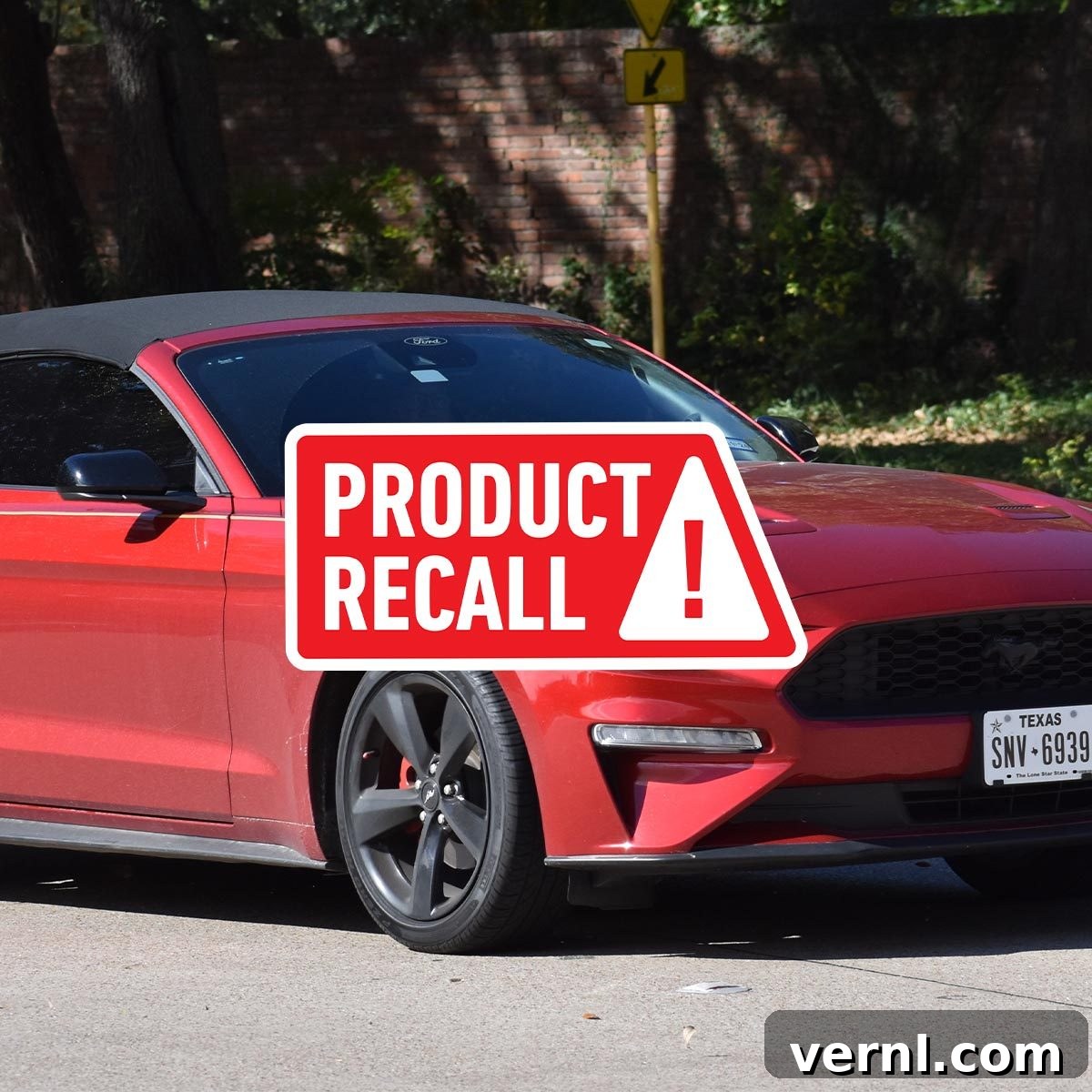
Ford Re-Recall Alert: Critical Steering Issue Affects Mustang Drivers
Automotive recalls are a familiar part of vehicle ownership, designed to address manufacturing defects or safety concerns. However, a “re-recall” signals a more persistent and often concerning issue: the initial fix for a previously identified problem was not entirely effective. If you own a Ford vehicle, particularly certain Mustang models, understanding the concept of a re-recall is more important now than ever, as your car may currently be part of such an action.
A re-recall is issued by automotive companies when a problem highlighted in a previous recall has not been adequately resolved across all affected vehicles. This doesn’t necessarily mean every vehicle from the original recall is affected again; sometimes, only a select number of vehicles continue to exhibit the issue. Regardless, staying informed about these updates is paramount for your safety and the longevity of your vehicle.
The National Highway Traffic Safety Administration (NHTSA), the authoritative body for vehicle safety in the United States, initially recalled over 30,000 Ford Mustangs in 2024 due to a significant steering problem. Recent developments have revealed that the original remedy did not sufficiently resolve the issue in all units. Consequently, Ford is now taking further action by re-recalling a subset of those vehicles to implement a more robust and permanent solution. This proactive step underscores the gravity of the defect and the commitment to ensuring driver and passenger safety.
Why Is Ford Issuing a Re-Recall for These Vehicles? Understanding the Steering Defect
At the heart of this re-recall is a critical safety concern related to the vehicle’s steering mechanism. According to the official NHTSA brief, the root cause lies in the “secondary steering torque sensor,” which “may not be calibrated properly.” To understand the implications, it’s essential to know that a torque sensor plays a vital role in your vehicle’s power steering system. It detects the force you apply to the steering wheel and signals the power steering system to assist, making it easier to turn the wheels.
When this sensor is improperly calibrated, the consequences can be alarming and potentially catastrophic. An incorrectly calibrated torque sensor “can cause the steering wheel to turn side to side against the driver’s intentions.” Imagine driving at highway speeds or navigating a sharp turn, and your steering wheel suddenly attempts to move on its own, fighting your control. This scenario is every driver’s nightmare. The NHTSA explicitly warns that “a steering wheel that turns unintentionally can cause a loss of vehicle control and increase the risk of a crash.” This isn’t just a minor inconvenience; it’s a direct threat to the safety of the driver, passengers, and everyone else on the road.
The severity of an unresponsive or autonomously moving steering wheel cannot be overstated. It compromises the most fundamental aspect of vehicle control, making it extremely difficult to maintain a stable course, avoid obstacles, or react to changing road conditions. This re-recall, therefore, is not merely a technical adjustment but a crucial intervention to prevent potentially life-threatening accidents.
Which Ford Mustang Models Are Included in This Critical Re-Recall?
If your Ford vehicle was part of the original 2024 recall for a steering wheel issue, it is highly probable that it might be included in this subsequent re-recall. Ford has announced that they will be mailing out official owner notification letters in late March 2025. It is imperative for potentially affected owners to keep a close watch on their mailboxes for this vital communication.
The positive aspect of a re-recall, from an owner’s perspective, is its focused nature. If your vehicle was not included in the initial recall related to this specific issue, it is almost certainly not part of the follow-up re-recall. This particular Ford re-recall specifically targets 2022-2023 Ford Mustang vehicles that were previously identified under Ford recall number 24V-493. For those who track recalls through federal agencies, the corresponding NHTSA recall number for the original action was 24V493000.
While the initial recall encompassed over 30,000 vehicles, this re-recall is much more targeted. Ford has identified a specific subset of vehicles where the initial remedy proved insufficient. Out of the original 30,000 recalled vehicles, precisely 332 units are now included in this critical re-recall. This refined scope suggests that Ford has meticulously analyzed the effectiveness of the initial fix and pinpointed the exact vehicles still exhibiting the defect, ensuring that resources are directed efficiently to those most at risk.
Identifying Your Vehicle: Proactive Steps for Ford Owners
Beyond waiting for a letter, there are proactive steps you can take to determine if your specific vehicle is affected. The most reliable method is to visit the NHTSA’s official website and use their VIN (Vehicle Identification Number) lookup tool. Every vehicle has a unique 17-character VIN, usually found on the driver’s side dashboard near the windshield or on the driver’s side door jamb. Entering your VIN on the NHTSA site will immediately tell you if your vehicle has any open recalls, including this re-recall.
Additionally, Ford’s official customer service channels can provide direct answers. Having your VIN handy when you call will expedite the process. Staying vigilant and not solely relying on postal mail, especially with potential delays, is a recommended best practice for all vehicle owners.
How Will Ford Repair These Affected Mustang Vehicles?
Ford has clearly outlined the repair procedure for affected vehicles, assuring owners that the solution will be provided at no cost. Owners of the identified 2022-2023 Mustang models are advised to take their vehicles to an authorized Ford dealer. The repair involves a power steering control module (PSCM) software update.
The PSCM is the electronic brain that controls your power steering system. In this case, the issue isn’t necessarily a mechanical failure but an instruction error within the software that governs the steering torque sensor. A software update means the dealer will reprogram the PSCM to correct the calibration of the secondary steering torque sensor, ensuring it functions as intended and prevents unintended steering wheel movements.
This type of repair is typically quick and straightforward, usually involving plugging a diagnostic tool into the vehicle’s onboard computer and uploading the new software. Despite its relative simplicity, the impact of this update is profound, directly addressing the safety hazard. Ford emphasizes that owners should make plans to take their vehicle in as soon as possible. Delaying this repair risks putting yourself and others in harm’s way, as a malfunctioning or “rogue” steering wheel is incredibly dangerous on the road.
What to Expect at the Dealership
When you take your vehicle to the dealership for a recall repair, the process is generally well-organized. It is advisable to schedule an appointment in advance to minimize waiting times. Upon arrival, inform the service advisor that you are there for the recall repair, specifically mentioning recall number 25S11, which is Ford’s internal identification for this re-recall. They will verify your vehicle’s VIN and confirm its eligibility. The software update should be performed efficiently, and you will be informed once the process is complete.
Important Contact Information and Recall Numbers
For any questions or to schedule your repair, Ford has provided dedicated channels for assistance. You can reach out to Ford Customer Service directly at 866-436-7332. When you call, it’s crucial to mention that you are inquiring about recall number 25S11. Providing this specific number will help the customer service representative quickly identify the correct information and assist you efficiently.
Alternatively, if you wish to gather more information or report concerns directly to the federal safety authority, you can call the National Highway Traffic Safety Administration (NHTSA) at 888-327-4236. When contacting the NHTSA, clarify that you are seeking more details about recall number 25V096000. Both Ford and NHTSA are prepared to assist owners with this critical safety action.
Beyond the Re-Recall: General Vehicle Safety and Awareness
This Ford Mustang re-recall serves as a powerful reminder for all vehicle owners about the importance of staying informed and proactive regarding automotive safety. While manufacturers strive for perfection, defects can occur, and recalls are the system in place to rectify them. Regularly checking for recalls, even if you haven’t received a direct notification, is a wise habit. The NHTSA website remains the authoritative source for all vehicle recall information.
Furthermore, paying attention to how your vehicle performs is crucial. Any unusual sounds, vibrations, or changes in steering feel should prompt an immediate inspection by a qualified mechanic. Early detection of potential issues can prevent minor problems from escalating into major safety hazards. Prioritizing recall repairs is not just about complying with manufacturer requests; it’s about safeguarding your life and the lives of those around you.
Source
Steering Wheel May Turn Unintentionally, National Highway Traffic Safety Administration, 2025.