The Ultimate Guide to Basement Wood Flooring: Engineered vs. Solid Hardwood & Practical Alternatives
When considering flooring options for your basement, the idea of incorporating the warmth and elegance of wood often comes to mind. However, navigating the world of basement wood flooring requires careful consideration, primarily due to the unique environmental challenges below grade. While traditional solid hardwood is almost universally advised against, modern innovations like engineered wood flooring offer a practical and aesthetically pleasing solution. This comprehensive guide will delve into the nuances of installing wood flooring in basements, comparing engineered and solid options, outlining their benefits and drawbacks, and exploring robust alternatives for specific basement conditions.
The conventional wisdom, echoed by flooring professionals and online resources alike, strongly cautions against installing solid hardwood flooring in basements. Having spent many years in the flooring industry, I can attest to this recommendation. The primary reason is moisture. Basements are inherently susceptible to humidity and potential water intrusion, which can wreak havoc on solid wood, leading to warping, cupping, bowing, and other irreversible damage. Furthermore, installing solid wood in a basement typically voids the product warranty, and most installers would be hesitant to offer a workmanship warranty due to the high risk of moisture-related failures.
Despite these stern warnings, there are very specific and rare scenarios where solid wood flooring might be considered. This includes basements that are exceptionally dry, have a pre-existing, well-maintained plywood subfloor, and where the installation is merely a replacement of an older, similar floor covering. However, even in these instances, extreme caution is paramount. If your basement features a concrete slab, solid wood flooring should be avoided entirely. Even with sealed concrete, moisture vapor can penetrate the slab, leading to significant damage to solid hardwood. Additionally, installing nail-down solid hardwood on concrete presents complex challenges, often requiring the construction of an elaborate subfloor system that further elevates risks.
Engineered Wood Flooring: The Superior Choice for Basements
For most homeowners aspiring to wood floors in their basement, engineered wood flooring emerges as a far more practical and reliable option. Engineered wood is specifically designed to handle environments with fluctuating humidity levels better than its solid counterpart. Its construction typically involves a stabilizing core made of multiple layers of plywood or high-density fiberboard, topped with a real wood veneer. This multi-layered structure resists warping and provides enhanced dimensional stability. Each plank is often coated on all sides with a durable, moisture-resistant finish, offering an additional layer of protection.
A significant advantage of engineered flooring is its availability in a snap-together, floating floor format. This installation method does not require direct attachment to the subfloor, allowing the floor to expand and contract as a single unit, which is ideal for concrete slabs. Once installed, high-quality engineered flooring is virtually indistinguishable from solid hardwood, offering the same luxurious aesthetic without the inherent risks. For optimal performance and warranty coverage, it is crucial to select an engineered wood product explicitly rated for “below-grade” installation, ensuring it meets stringent moisture resistance standards.
Key Benefits of Wood Flooring in Basements
Choosing wood flooring for your basement, particularly engineered wood, brings a multitude of advantages that can transform a utilitarian space into a comfortable and inviting extension of your home. The qualities that make hardwood popular throughout a house are amplified when applied to the often-drab basement environment.
- Luxurious and Inviting Appearance: Hardwood flooring instantly elevates the aesthetic of any room, and nowhere is this more evident than in a basement. The natural warmth, rich tones, and intricate grain patterns of real wood combat the inherent darkness and often sterile feel of basements, making the space visually more inviting and sophisticated. You can choose from a vast selection of wood species, stains, and finishes, allowing for complete design flexibility to match your home’s style. This luxurious appeal significantly enhances the overall ambiance, turning a basement from merely functional to truly livable.
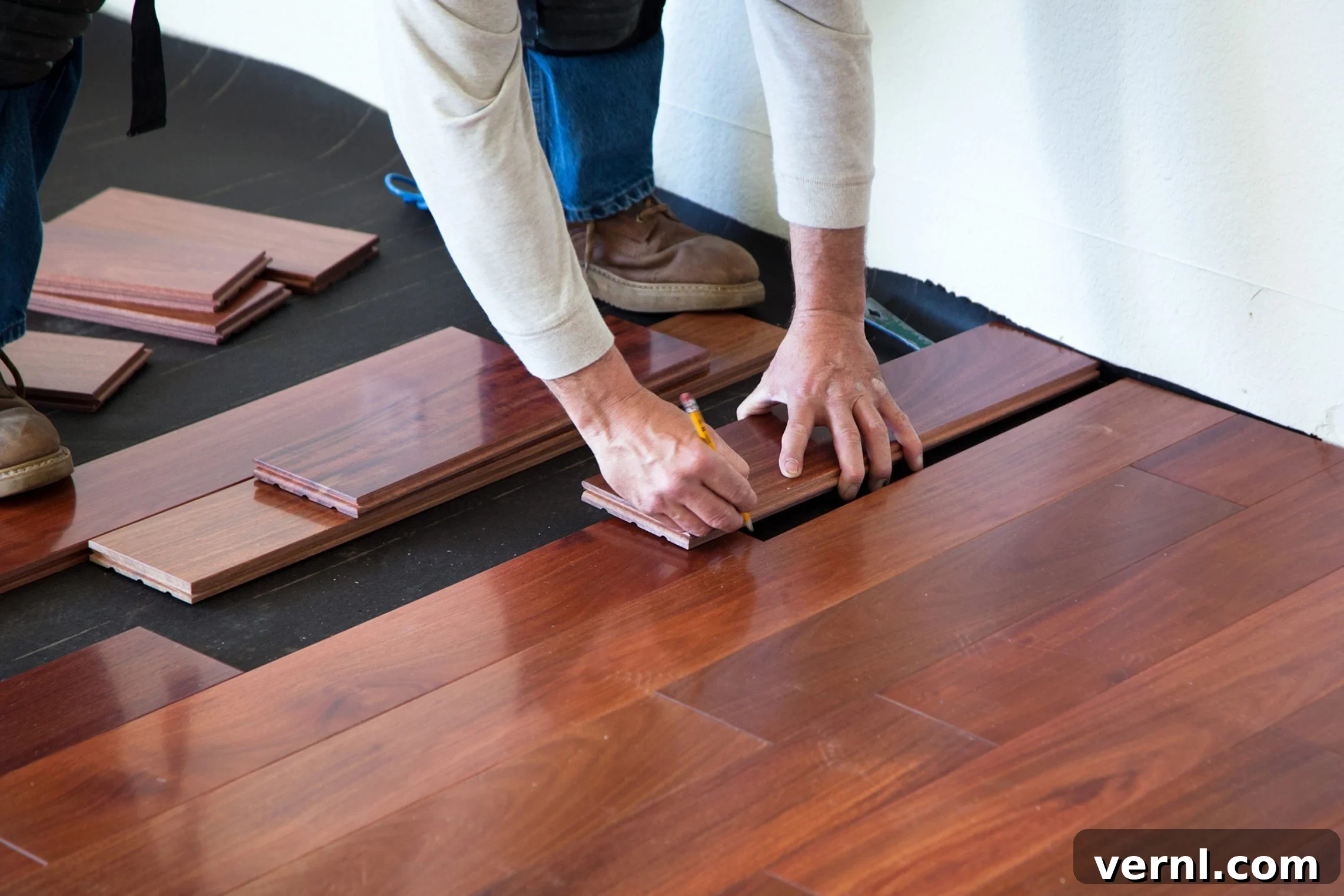
- Simplified Installation with Engineered Options: One of the most compelling benefits of engineered wood flooring, especially the floating variety, is its relative ease of installation. Many systems feature tongue-and-groove or click-lock mechanisms that allow planks to snap together seamlessly, much like a puzzle. This makes it a popular choice for DIY enthusiasts, requiring only basic carpentry skills and tools such as a circular saw for cutting planks to length. The floating installation method also avoids the complexities and risks associated with nail-down or glue-down applications directly onto concrete.
- Enhanced Home Value: It’s widely accepted that the addition of wood flooring is a significant selling point that can increase a home’s market value. This holds true even for basement installations. Prospective buyers often perceive wood floors as a premium feature, suggesting quality and durability. Investing in engineered wood flooring for your basement can provide a substantial return on investment, making your home more attractive and competitive in the real estate market.
- Superior Comfort Underfoot and Insulation: Unlike cold, hard concrete, wood flooring offers a noticeably more comfortable surface for walking and standing. When engineered flooring is installed over a cushioning underlayment, the comfort level is further amplified. This additional padding, combined with the natural insulating properties of wood, helps to reduce heat loss through the floor, contributing to a warmer basement and potentially lower energy bills. Moreover, underlayments can also offer sound dampening benefits, creating a quieter and more peaceful basement environment.
- Durability and Longevity (for Engineered): High-quality engineered wood flooring is designed for durability. Its multi-ply construction offers excellent stability, and many products feature a robust top wear layer that resists dents and scratches. With proper care and maintenance, engineered wood floors can last for decades, providing enduring beauty and functionality.
- Hypoallergenic Qualities: Unlike carpets that can trap dust, allergens, and pet dander, wood floors offer a smooth, non-porous surface that is easier to clean and maintain. This makes them a more hygienic choice, particularly beneficial for individuals with allergies or respiratory sensitivities, contributing to better indoor air quality in the basement.
Potential Drawbacks of Basement Wood Flooring
While engineered wood offers a robust solution for basements, it’s essential to be aware of the potential downsides and considerations before making a decision. Understanding these drawbacks will help you choose wisely and ensure long-term satisfaction.
- Varying Product Quality: Not all engineered wood flooring is created equal. The market offers a wide range of products, and lower-grade engineered planks often feature fiberboard cores that, despite surface sealants, may still be susceptible to moisture absorption. This can lead to issues like swelling, delamination, or mold growth. It’s crucial to invest in high-quality engineered flooring with a stable plywood core, a thicker wear layer, and reputable moisture-resistant treatments to ensure longevity and performance in a basement environment.
- Significant Investment: Engineered hardwood flooring, while often more affordable than solid hardwood, still represents a significant investment. On average, materials can range from $3 to $9 per square foot, with premium products exceeding this range. This cost doesn’t include installation, which can add an additional $3 to $5 per square foot if you hire professionals. Beyond the flooring itself, you may need to factor in costs for subfloor preparation, moisture testing, concrete sealants, and appropriate underlayment. While it adds value, the upfront expense can be a deterrent for some homeowners.
- Susceptibility to Scratching and Wear: Despite the durable factory finishes applied to engineered flooring, the real wood veneer remains vulnerable to scratches, dents, and scuffs from heavy furniture, pet claws, children’s activities, and dropped objects. While minor scratches can often be repaired with touch-up kits, severe damage that compromises the wear layer can be problematic. Most engineered floors can only be sanded and refinished once or twice (depending on the thickness of the wear layer) over their lifespan, unlike solid hardwood which can be refinished multiple times. Therefore, protective measures like furniture pads, area rugs, and regular cleaning are essential to preserve its appearance.
- Ongoing Moisture Vulnerability (Even for Engineered): Although engineered wood is more moisture-resistant than solid wood, it is not entirely waterproof. Prolonged exposure to standing water, high humidity, or significant moisture intrusion can still lead to damage. Proper basement waterproofing, effective drainage, and the installation of a high-quality vapor barrier or underlayment are critical pre-installation steps to mitigate these risks. Failure to adequately manage moisture will compromise even the best engineered wood flooring.
- Maintenance Requirements: While generally easy to clean, engineered wood flooring still requires regular maintenance to retain its beauty. This includes routine sweeping or vacuuming to remove abrasive dirt and grit, prompt cleaning of spills, and periodic damp mopping with approved wood floor cleaners. Harsh chemicals or excessive water can damage the finish and the wood itself.
Critical Steps for Installing Basement Wood Flooring
Proper installation is paramount to the success and longevity of any flooring in a basement. This section outlines the crucial steps, emphasizing the correct approach for engineered wood, and reiterating the risks associated with solid hardwood.
Pre-Installation Checklist: The Foundation of Success
Before laying down any wood flooring, comprehensive pre-installation checks are non-negotiable, especially in a basement. This includes:
- Moisture Testing: This is the single most critical step. Conduct multiple moisture tests on your concrete slab using calcium chloride tests or relative humidity (RH) probes. These tests measure the rate of moisture vapor emission or the internal humidity of the concrete. The results will determine if your concrete is dry enough for wood flooring and what type of vapor barrier is needed.
- Concrete Sealing: If moisture test results indicate elevated levels, applying a high-quality, penetrating concrete waterproofing sealer is essential. This helps to reduce moisture vapor transmission from the slab.
- Subfloor Preparation: The concrete slab must be clean, dry, and perfectly level. Any unevenness greater than 1/8 inch over 6-10 feet should be corrected using a self-leveling compound.
- Acclimation: Allow the engineered wood flooring planks to acclimate to the basement’s ambient temperature and humidity for at least 48-72 hours (or as per manufacturer guidelines) before installation. This helps the wood adjust to its new environment and minimizes post-installation movement.
Solid Wood Flooring Installation (Highly Discouraged & Complex)
Gluing solid hardwood flooring directly to concrete in a basement is highly risky and generally not recommended due to direct contact with potentially moisture-laden concrete. If, against professional advice, you decide to install nail-down solid flooring, it requires a complex and costly subfloor system:
- Sleeper System: 2×4 lumber sleepers must be laid directly on the concrete, typically perpendicular to the direction of the finished floor. These sleepers create an air gap between the concrete and the wood, but also raise the floor level significantly (by several inches), which has implications for door clearances, stair heights, and ceiling heights.
- Vapor Barrier: A robust 6-mil polyethylene vapor barrier must be installed over the concrete and under the sleepers to prevent moisture from rising into the subfloor system.
- Plywood Subfloor: Plywood sheets are then screwed into the sleepers, creating a stable surface to which the solid hardwood can be nailed.
- Ventilation: Even with this elaborate system, there’s a risk of creating a “moisture trap” beneath the subfloor if not properly ventilated or if the concrete isn’t adequately sealed. This method is labor-intensive, expensive, and still carries a high degree of risk for moisture-related damage.
Engineered Wood Floating Floor Installation (Recommended)
For basement-safe engineered wood flooring designed for floating installation, the process is far simpler and more secure:
- Concrete Sealing and Vapor Barrier: After preparing and sealing the concrete slab as outlined in the pre-installation steps, lay down a high-quality moisture-proof underlayment or vapor barrier. Many engineered flooring products come with an integrated underlayment or require a specific type. This layer provides crucial moisture protection, cushioning, and sound dampening.
- Snap-Together Installation: Engineered flooring planks typically feature click-lock or tongue-and-groove systems. Start by laying the first row along the longest wall, leaving an expansion gap (usually 1/4 to 1/2 inch, as per manufacturer instructions) around the perimeter of the room to allow for natural expansion and contraction of the floor.
- Connecting Planks: Subsequent rows are simply clicked or tapped into place. Use a tapping block and mallet if necessary to ensure tight seams. Stagger the end joints of planks in adjacent rows for a natural appearance and structural integrity.
- Finishing Touches: Once the flooring is laid, trim any excess underlayment and install baseboards or shoe molding to cover the expansion gaps.
Once installed, a properly laid engineered floating floor is virtually indistinguishable from a nail-down or glue-down solid hardwood floor, offering the desired aesthetic with significantly reduced risk in a basement environment.
Effective Basement Flooring Alternatives
While engineered wood is an excellent choice, wood and wood fibers are inherently vulnerable to excessive moisture. For basements with persistent moisture issues or where wood is simply not preferred, there are several robust and aesthetically pleasing alternatives:
SPC Luxury Vinyl Planks (Stone Plastic Composite)
SPC flooring stands for Stone Plastic Composite, referring to the rigid core of these vinyl planks, which is composed entirely of inorganic materials like crushed stone and resin. This unique construction makes SPC flooring exceptionally durable, dimensionally stable, and 100% waterproof, making it an ideal choice for any basement, even those with higher moisture levels. SPC planks are affordable, typically feature an easy snap-together installation like laminate, and often come with an attached underlayment for added cushioning and thermal insulation. While not real wood, SPC flooring is expertly designed to mimic the look and texture of various wood species, offering a realistic aesthetic without the inherent vulnerabilities of wood.
Ceramic and Porcelain Tiles
Ceramic and porcelain tiles are among the most durable and water-resistant flooring options available, making them an excellent choice for basement environments. A concrete subfloor provides an ideal, stable substrate for tile installation. Tiles are impervious to water, making them perfect for areas prone to spills or higher humidity. They offer an incredible array of design possibilities, from mimicking natural stone and wood to vibrant patterns and colors. Because some expansion and contraction of the concrete subfloor are expected, it is crucial to install a decoupling membrane (such as Schluter-Ditra) on the subfloor before laying the tiles. This membrane prevents stress cracks from transferring from the concrete to the tile, ensuring the longevity of your tiled floor.
Carpet (Synthetic Fibers)
While natural fiber carpets are generally unsuitable for basements due to their susceptibility to moisture and mold, synthetic fiber carpets can be a good option for providing warmth, softness, and sound absorption underfoot. Materials like polyester, nylon, olefin, and triexta are engineered to handle a limited amount of moisture and resist mold and mildew growth better than natural fibers. For optimal breathability and moisture resistance, opt for cut pile rather than loop pile carpets. Always choose a carpet and underlayment combination specifically rated for below-grade installation, and ensure proper subfloor preparation and moisture mitigation to prevent issues. Carpet can transform a cold basement into a cozy and inviting living space.
Epoxy Floor Coatings
For basements located on high water tables or those with persistent dampness where traditional flooring options might struggle, an epoxy floor coating can be the best solution. Epoxy, an impermeable plastic resin, forms a durable, seamless, and waterproof barrier over the concrete slab. It effectively helps control seepage from underneath and provides an exceptionally resilient surface. When applied to a well-prepared concrete floor, epoxy offers a sleek, modern aesthetic that is easy to clean, resistant to chemicals, and incredibly long-lasting. It’s an excellent choice for utility areas, workshops, garages, or even as a base for an industrial-chic living space. Proper surface preparation, including cleaning, degreasing, and etching, is critical for strong adhesion and a successful finish.
Choosing the right basement flooring depends heavily on your specific basement conditions, moisture levels, budget, and aesthetic preferences. While solid hardwood remains a risky proposition, engineered wood flooring provides a beautiful and viable option for many. For basements with persistent moisture challenges, the robust alternatives mentioned above offer peace of mind and enduring performance. Always prioritize thorough moisture testing and proper subfloor preparation, as these are the cornerstones of a successful and long-lasting basement floor installation.