Essential Deck Building Tips: Preventing Water Damage and Ensuring Deck Longevity
Creating an inviting outdoor living space with a new deck is a fantastic investment in your home and lifestyle. A well-designed and properly constructed deck extends your usable living area, providing a perfect spot for entertaining, relaxing, and enjoying the outdoors. However, the beauty and functionality of your deck depend heavily on careful planning and attention to detail during the construction phase. One of the most overlooked, yet critical, aspects of building a deck is ensuring proper water management, particularly around your home’s entry points. Ignoring this crucial detail can lead to significant water damage, costly repairs, and compromise the structural integrity of both your deck and your home.
While the allure of a seamlessly flush transition from your indoor flooring to your outdoor deck might seem appealing, it often presents a major risk, especially in climates prone to rain or snow. This comprehensive guide will walk you through vital considerations for preventing water infiltration, focusing on the critical relationship between your deck’s height and your home’s thresholds, as well as other best practices for a long-lasting and resilient deck.
Why Deck-to-Threshold Height Matters: A Crucial Detail for Deck Longevity
The aesthetic appeal of a deck installed at the same level as your interior flooring, creating a smooth and uninterrupted transition, is undeniable. It looks sleek and modern, blurring the lines between indoor and outdoor living. However, unless you reside in an arid desert climate where rain is a rarity, this design choice is fraught with potential hazards. The primary concern revolves around water infiltration – the insidious way moisture can find its way into your home’s structure.
Understanding the Dangers of Insufficient Clearance
When decking is installed too close to the bottom of a door threshold, that door and the adjacent house structure become highly susceptible to moisture damage. This isn’t just about direct rainfall hitting the door; a significant portion of the problem arises from rain that splashes off the decking surface. This splash-back can force water into tiny cracks, under the door, and into the framing.
Furthermore, if you live in a northern climate, the challenges are amplified. Even a modest snowfall can expose your door and its surrounding structure to the powerful and destructive forces of repeated melting and refreezing cycles. Melting snow and ice can pool against the door, and as it refreezes, it expands, exerting immense pressure that can degrade materials, lift flashing, and create pathways for water intrusion. This constant cycle of saturation and expansion accelerates decay.
As a former siding contractor, I frequently encountered the devastating consequences of flush decks. We often discovered severely rotten doorsills, buckled and damaged interior flooring (whether hardwood, laminate, or carpet), and alarming signs of serious structural damage to the rim joists and wall framing, often on houses that were only a few years old. These issues are not merely cosmetic; they compromise the very integrity of your home, leading to expensive and extensive repairs.
Recommended Clearances and Best Practices
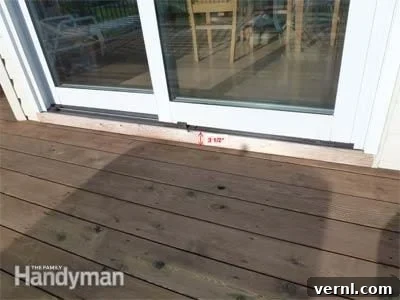
To mitigate these risks effectively, it is imperative to install your decking a few inches below patio and entry door thresholds. There’s no single “magic number” that applies to every situation, as specific building codes and local climate conditions can vary. However, a general rule of thumb and a widely accepted best practice is to maintain a minimum clearance. I would strongly recommend a minimum of 2 inches from the top of the decking to the bottom of the patio door threshold. For an even greater margin of safety and improved drainage, I personally opted for 3-1/2 inches when building my own deck.
This increased clearance allows for several benefits:
- Reduced Splash-Back: A larger gap means less opportunity for rain to splash directly onto the door sill and into the house.
- Improved Drainage: Water can drain freely off the deck and away from the house, rather than pooling against the threshold.
- Better Air Circulation: More space helps with air movement, allowing moisture to evaporate more quickly and reducing the chances of mold and mildew growth in hidden areas.
- Protection from Snow and Ice: A greater distance provides a buffer against accumulating snow and ice, minimizing direct contact with the door frame and sill during winter months.
Always consult your local building codes and consider your specific climate conditions when determining the optimal clearance for your deck.
Beyond the Deck: Securing Your Door with a Durable Kick Plate
While establishing the correct deck-to-threshold height is paramount for water management, another crucial element often comes into play, especially with many modern doors that feature a sill or threshold requiring additional support. This is where the installation of a kick plate becomes essential. A kick plate isn’t merely a decorative strip; it provides vital structural support beneath the door sill, preventing it from flexing or sagging over time, which could compromise the door’s weather seal and overall functionality.
Choosing the Right Material for Lasting Performance
Traditionally, kick plates might have been fashioned from a piece of ripped-down decking trim board, often painted to match the door or house trim. While this can be a functional solution initially, traditional wood kick plates, by their very nature, are subject to wear and tear. They do, as the name suggests, get “kicked,” scraped, and repeatedly exposed to the elements. This constant abuse means they require regular maintenance, typically annual staining or painting, to maintain their appearance and prevent rot or deterioration.
For a truly long-lasting and low-maintenance solution, consider upgrading your kick plate material. I eventually plan to replace my own painted wood kick plate with a PVC or composite board. These modern materials offer significant advantages:
- Exceptional Durability: PVC (polyvinyl chloride) and composite materials are incredibly resilient against impacts, abrasions, and general wear. They won’t splinter, crack, or rot like wood.
- Superior Weather Resistance: Unlike wood, these materials are impervious to moisture, insects, and fungal decay. They will not absorb water, eliminating concerns about rot, mold, or mildew.
- Low Maintenance: Perhaps their greatest advantage is their minimal maintenance requirements. They never need staining, painting, or sealing. A simple wash with soap and water is usually all that’s needed to keep them looking fresh.
- Color Stability: Many PVC and composite boards are UV-stabilized, meaning they resist fading and maintain their original color for years, even under direct sunlight.
- Aesthetic Versatility: Available in various colors and textures, these materials can complement your door and home’s exterior without the constant upkeep of painted wood.
Using a piece of cellular PVC trim board or even a leftover section of composite decking ripped to size makes for an ideal, robust, and virtually maintenance-free kick plate that will take a beating and continue to look great for decades.
Installation Tips for Kick Plates
When installing your kick plate, ensure it is securely fastened beneath the door threshold. Measure carefully, cut cleanly, and use weather-resistant fasteners. It should fit snugly, providing firm support across the entire span of the sill. Proper installation ensures that the kick plate effectively supports the threshold and contributes to the overall weather-tightness of your doorway.
Beyond Thresholds: Comprehensive Deck Building Best Practices
While the focus on door thresholds and kick plates is vital, a truly durable and long-lasting deck requires attention to several other fundamental principles of construction and water management. Incorporating these best practices from the outset will safeguard your investment and ensure years of enjoyment from your outdoor space.
Proper Drainage and Water Management
- Sloping the Deck: Ensure your deck surface is built with a slight slope, typically 1/4 inch per 10 feet, directing water away from the house. This prevents pooling and encourages efficient runoff.
- Gaps Between Deck Boards: Maintain consistent, small gaps (e.g., 1/8 to 1/4 inch) between deck boards. These gaps are crucial for allowing water to drain through the deck surface and for air circulation, preventing moisture buildup.
- Flashing Details: Where your deck’s ledger board attaches to the house, proper flashing is non-negotiable. Metal or self-adhering flashing should be installed over the ledger board and behind the siding to prevent water from penetrating the house’s rim joist and wall cavity. This creates a critical barrier against hidden water damage.
- Gutters and Downspouts: Ensure your home’s existing gutter system is functional and directs water far away from the deck foundation and perimeter. Overflowing gutters can saturate the ground around footings and splash onto the deck.
Selecting Durable Decking Materials
The choice of decking material significantly impacts the longevity and maintenance requirements of your deck. While traditional pressure-treated lumber remains a popular and economical choice, consider options that offer enhanced durability and reduced upkeep:
- Cedar and Redwood: Naturally resistant to rot and insects, these woods offer beautiful aesthetics but require regular sealing or staining to maintain their appearance.
- Composite Decking: Made from a blend of wood fibers and plastic, composites are highly resistant to rot, insects, and splintering. They come in various colors and textures and require minimal maintenance.
- PVC Decking: A fully synthetic option, PVC decking is virtually impervious to the elements, offering superior resistance to fading, staining, mold, and mildew. It’s often the most expensive but also the most durable and lowest maintenance.
Evaluate your budget, desired aesthetics, and willingness to perform ongoing maintenance when selecting the best material for your deck.
Foundation and Structural Integrity
A deck is only as strong as its foundation. Proper footings, robust framing, and secure attachment to the house are non-negotiable for safety and longevity. Always consult and adhere to local building codes for footing depth, beam and joist sizing, and ledger board attachment methods. Using appropriate fasteners and connectors designed for outdoor use and treated lumber where necessary ensures the entire structure can withstand environmental stresses and heavy loads.
Building a Deck for Lasting Enjoyment
Ultimately, How to Build the Deck of Your Dreams involves more than just assembling boards; it requires thoughtful planning, an understanding of potential environmental challenges, and a commitment to quality craftsmanship. By paying close attention to critical details like the clearance between your decking and door thresholds, installing durable kick plates, and implementing comprehensive water management strategies, you can significantly extend the life of your deck and protect your home from costly water damage.
Whether you’re undertaking a new construction project or looking to upgrade an existing structure, these principles will serve as your guide. A little extra effort and foresight during the planning and building stages will ensure your deck remains a beautiful, safe, and enjoyable extension of your home for many years to come.
— Mark Petersen, Contributing Editor
Need more advice about building a deck?
Explore these related resources for further guidance on your deck building journey:
- Rebuild an Old Deck With New Decking and Railings
- Attaching a New Deck to a House the Correct Method