
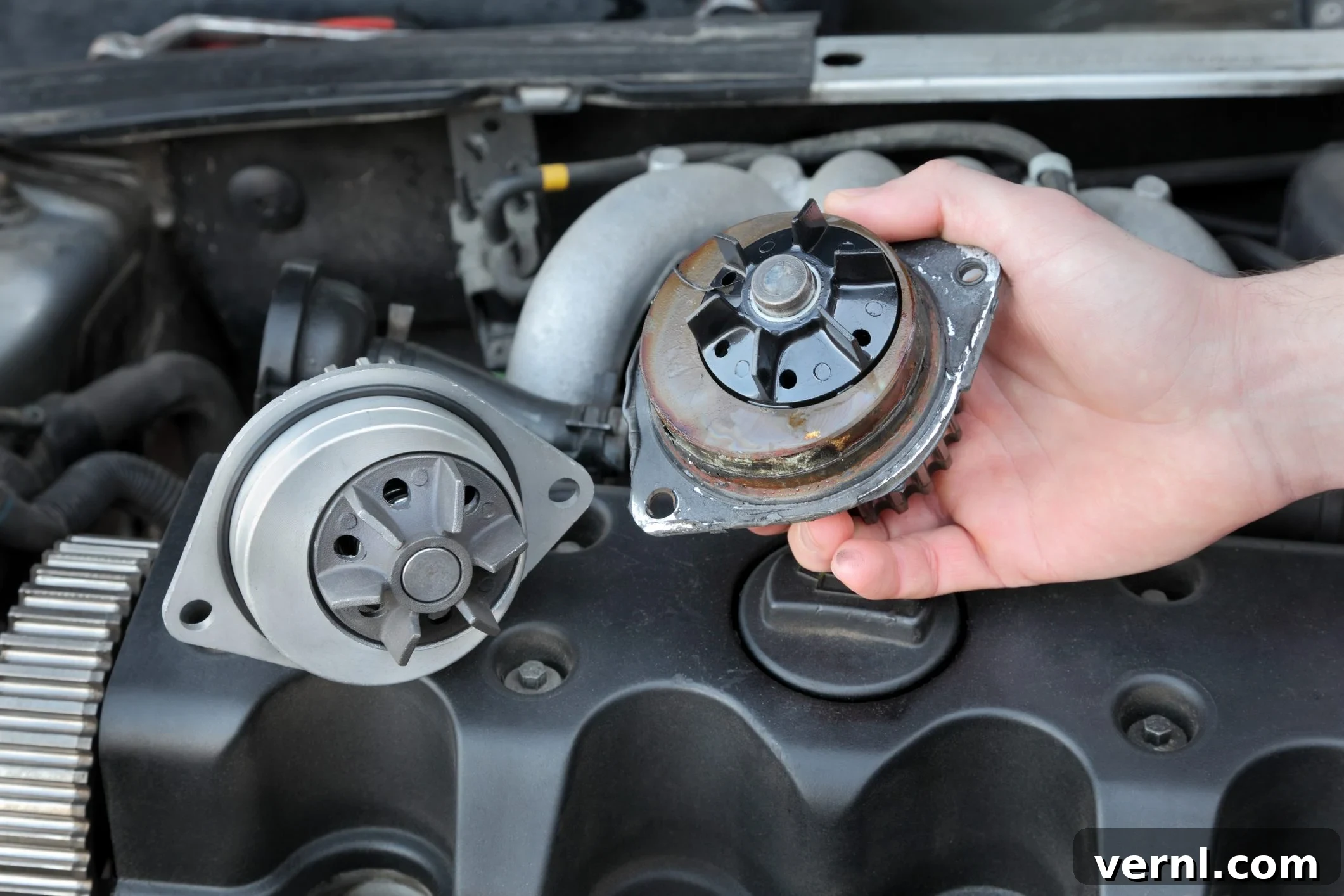
With 50 years of invaluable experience as an ASE and General Motors Master Technician, a vocational educator, and a seasoned homeowner, I’ve had the opportunity to tackle countless automotive repairs. Over the decades, I’ve personally rebuilt or reconditioned thousands of automotive parts and components – everything from alternators and starter motors to washing machine motors and dishwasher pumps. However, it’s crucial to distinguish these processes from true remanufacturing, which operates under highly controlled, pristine factory-like conditions, restoring a product to “as new” or even better-than-new specifications, a far cry from a workbench in a typical repair shop.
For many car owners, choosing between new, rebuilt, reconditioned, or remanufactured parts can be a complex decision. Installing professionally rebuilt parts for common repairs like alternators, starter motors, or water pumps can be an excellent DIY solution that significantly eases the financial burden on your wallet. These repairs are often straightforward enough for an experienced home mechanic. However, for major undertakings such as an entire engine or transmission replacement, the intricate nature of the work, the specialized tools required, and the precision involved usually mean these tasks are best entrusted to certified professionals.
This comprehensive guide aims to arm you with the knowledge needed to make the best choice for your vehicle. We’ve gathered insights from highly skilled engine machinists, leading engine remanufacturers, seasoned automotive technicians, and other industry experts. Their collective wisdom will help clarify the nuances of each option, guiding you toward a decision that balances cost-effectiveness, longevity, and peace of mind for your automotive repairs.
Why Do Car Parts Wear Out? Understanding the Lifecycle of Automotive Components
Automotive parts are subjected to immense stress and continuous operation, making wear and tear an inevitable part of their lifecycle. Several interconnected factors contribute to the degradation of car parts, leading to eventual failure. Normal wear and tear is primarily caused by constant friction, such as moving metal parts rubbing against each other, the natural aging process of materials like rubber and plastics, varying weather conditions ranging from extreme heat to freezing cold, and individual driving habits which can range from gentle commuting to aggressive stop-and-go city driving or heavy towing.
However, while natural wear is unavoidable, a significant number of premature part failures stem directly from a lack of basic maintenance and the common tendency to ignore early warning signs. Fluid leaks, unusual noises (squeaks, grinding, clunks), and vibrations are not merely minor annoyances; they are critical indicators that something is amiss within your vehicle’s systems. Neglecting these signals can accelerate wear on components and lead to catastrophic failures. Regularly performing essential DIY car maintenance tasks, such as fluid checks, tire rotations, and timely filter replacements, plays a crucial role in reducing stress and wear on your vehicle’s components, thereby substantially extending their operational lifespans and ensuring safer, more reliable transportation.
What Does Rebuilding Auto Parts Really Mean?
When an automotive part is “rebuilt,” it undergoes a specific process designed to restore its functionality without necessarily bringing it back to “as new” condition. The rebuilding process typically involves disassembling the part, thoroughly cleaning its individual components, and then measuring key parts for wear against manufacturer specifications. Any components found to be broken, excessively worn, or outside these specifications are replaced with either new parts or reconditioned ones. Critically, parts that are still within the manufacturer’s acceptable wear limits are often reused. This selective replacement of components is a key differentiator from remanufacturing.
While some specialized repair shops and smaller, local businesses still perform in-house rebuilding, the vast majority of rebuilt parts available on the market today come from large aftermarket rebuilders. Companies like Dorman Products and Cardone Industries are primary examples, serving as the main suppliers of these cost-effective alternatives. These major rebuilders often have more standardized processes and testing procedures compared to smaller operations.
How Much Does It Cost to Rebuild Auto Parts?
The cost associated with rebuilding auto parts can vary significantly, depending on several factors including the specific part in question, the make, model, and year of the vehicle, and the extent of damage or wear that needs addressing. For instance, rebuilding a simple four-cylinder engine will invariably be much less expensive than rebuilding a complex V-8 engine, due to differences in labor time, the number of components, and the cost of replacement parts. Core charges also play a role; many rebuilt parts require you to return your old, failed part (the “core”) to avoid an additional charge.
In some unique situations, particularly for classic or antique vehicles where new or even widely available rebuilt parts are scarce, certain rebuilders will offer custom rebuilding services for your specific part. This option is particularly valuable for classic car enthusiasts because it allows them to maintain “matching numbers” – a practice where all major stamped parts, such as the engine and transmission, match the vehicle’s Vehicle Identification Number (VIN). This originality can significantly increase the vehicle’s collector value and authenticity.
How Long Do Rebuilt Parts Last?
The lifespan of a rebuilt auto part is highly variable and depends on a combination of factors, including the quality of the rebuilding process, the specific part’s function, and crucially, the ongoing maintenance of the vehicle. It’s important to remember that a lack of basic vehicle maintenance, regardless of the part’s origin, will inevitably shorten its life and potentially lead to premature failure.
However, professionally rebuilt parts from a reputable, major rebuilder can often last as long as, or even longer than, a brand-new part. This is often due to improvements in materials or design made during the rebuilding process, or simply more rigorous testing than a new budget part might receive. For example, a rebuilt water pump purchased from a major parts supplier might come with a robust two-year warranty, which often includes both parts and labor. Interestingly, the identical water pump, when purchased new from the original equipment manufacturer (OEM), might only carry a one-year warranty and can cost twice as much upfront. This discrepancy highlights the potential value and confidence placed in quality rebuilt components.
Most commonly rebuilt parts – such as water pumps, alternators, starter motors, CV axles (also known as half-shafts or drive axles), and brake calipers – are typically outfitted with brand-new internal wear components. This usually includes new bearings, brushes, seals, gaskets, and O-rings. Furthermore, these rebuilt units undergo thorough testing to ensure they meet or even exceed the original equipment manufacturer’s specifications for performance and reliability, providing a dependable solution for vehicle owners.
Rebuilding Auto Parts: Pros & Cons
While choosing rebuilt auto parts can offer a balanced solution for many repairs, it’s important to weigh both the advantages and potential drawbacks.
Pros of Rebuilt Auto Parts
- Cost-Effectiveness: Rebuilt parts are almost always significantly less expensive than brand-new OEM parts, offering substantial savings on repair costs without necessarily sacrificing quality.
- Thorough Testing: Reputable rebuilders subject their products to extensive testing procedures. This includes checks for proper operation under various conditions, leak detection, noise analysis, vibration assessments, and verification of exact fitment, ensuring the part functions as intended before it reaches the consumer.
- Reliable Warranties: Many reputable rebuilders stand behind their products with competitive warranties. These can be as generous as two to three years and often cover both the replacement part itself and the labor required to install it if the part fails prematurely, offering a strong level of assurance.
- Environmental Benefit: Utilizing rebuilt parts contributes to sustainability by reducing waste and conserving raw materials that would otherwise be used to manufacture new components.
- Availability: For older or less common vehicles, rebuilt parts can sometimes be more readily available than new OEM parts, which may have been discontinued.
Cons of Rebuilt Auto Parts
- Variability in Quality: A primary concern is the potential for inconsistent quality. Standards among rebuilders can vary widely, and some may not adhere to the same rigorous processes as others, leading to parts that are less reliable.
- Mixing New and Old Components: Because some original components that meet “minimum” specifications are reused, there’s a risk that these older parts may wear out sooner than the newly installed ones, potentially affecting the overall performance and reducing the part’s longevity compared to an entirely new or remanufactured unit.
- Potential Fitment Issues: While rebuilders aim for direct fit, variations in the rebuilding process or minor manufacturing tolerances can sometimes lead to slight fitment challenges during installation, requiring minor adjustments.
- Limited In-Shop Warranties: If a part is rebuilt by a smaller, independent repair shop, warranties can be significantly shorter – sometimes as low as 30 days. Crucially, these warranties may only cover the part itself, meaning if the part fails, you, the vehicle owner, could be responsible for the labor costs associated with its removal and reinstallation.
What Does Reconditioning Auto Parts Mean?
Reconditioning an automotive part represents the most basic level of restoration among the three options. The primary goal of reconditioning is to repair a damaged or worn part just enough to improve its immediate operation and functionality, allowing it to get back on the road. Unlike rebuilding or remanufacturing, the process is not comprehensive. Only the components that are visibly damaged or clearly causing a problem are addressed or replaced.
Crucially, because not all damaged or worn components are replaced, and a full tear-down and inspection to OEM specifications are typically not performed, reconditioned parts may not meet the original equipment manufacturer’s specifications for performance, durability, or longevity. It’s often a targeted repair of a specific fault rather than a holistic overhaul.
How Much Does It Cost to Recondition Auto Parts?
Of the three options – rebuilding, reconditioning, and remanufacturing – reconditioning is consistently the least pricey. This lower cost is a direct reflection of the less extensive labor involved and the minimal number of new parts utilized. The focus is on fixing the immediate issue rather than a complete overhaul.
For example, reconditioning an alternator typically involves replacing only the specific internal components that are known to fail or cause issues, such as the commutator brushes, internal diodes, and the voltage regulator. Other crucial electrical parts, like the stator and rotor windings, are usually checked for continuity, open circuits, and resistance. However, essential mechanical components like the bearings, armature, and stator are often simply cleaned and reinstalled, rather than being replaced or meticulously inspected for hidden wear or imperfections. This selective approach keeps costs down but also limits the scope of restoration.
How Long Do Reconditioned Parts Last?
Due to their limited scope of repair, reconditioned parts generally have the shortest lifespan among the three options. As Kelly Petry, an expert from Jasper Engines and Transmissions, succinctly puts it, reconditioning simply “fixes what is needed to get back on the road.” This highlights the temporary nature often associated with reconditioned parts. They are designed to provide an immediate solution to a specific problem, but without a full assessment and replacement of all wear components, other parts within the unit may fail relatively soon after the reconditioning, leading to another repair.
The longevity of a reconditioned part is highly dependent on the initial condition of the non-replaced components and the stress they are subjected to post-repair. While they offer a quick and inexpensive fix, they typically do not provide the long-term reliability and durability that rebuilt or remanufactured parts do. They are best considered for situations where budget is extremely tight and the immediate goal is simply to get the vehicle operational.
Reconditioning Auto Parts: Pros & Cons
Reconditioning offers the most budget-friendly path to getting a vehicle back on the road, but it comes with a distinct set of compromises.
Pros of Reconditioning Auto Parts
- Most Cost-Effective: Without a doubt, reconditioning is the least expensive option, making it an attractive choice for vehicle owners facing severe budget constraints or for those needing a very short-term fix.
- Quickest Solution: The limited scope of repair means that reconditioning can often be completed much faster than rebuilding or remanufacturing, allowing you to get your vehicle back in service with minimal downtime. This can be critical in urgent situations.
Cons of Reconditioning Auto Parts
- Significant Quality Issues: When reconditioning is performed inside a general repair shop, the quality can be highly inconsistent. Without specialized equipment, controlled environments, and rigorous testing protocols, the results can vary dramatically, leading to unreliable repairs.
- Reduced Overall Performance and Durability: The practice of mixing new components with significantly worn or partially repaired original parts inherently reduces the overall performance, functionality, and long-term durability of the unit. The “weakest link” syndrome often applies, as other unaddressed worn components can quickly fail.
- Minimal Warranties: Warranties for reconditioned parts are typically very limited, often as low as 30 days, and frequently cover only the part itself. This means labor costs for subsequent failures are usually borne by the vehicle owner, underscoring the risk associated with this option.
- Shortest Lifespan: As noted, reconditioned parts are likely to have the shortest operational life, making them a temporary solution rather than a long-term investment in your vehicle’s reliability.
What Does Remanufacturing Auto Parts Mean? The Gold Standard
Remanufacturing represents the pinnacle of restoring an automotive part. Unlike rebuilding or reconditioning, remanufactured parts are meticulously restored to meet or, more commonly, exceed original new OEM part specifications. This process is far more exhaustive and precise, aiming for a product that performs comparably to, or even better than, a brand-new component.
The remanufacturing process is characterized by a complete and thorough overhaul. Assemblies are entirely stripped down to their individual components, which are then meticulously cleaned, precisely measured, and rigorously inspected. Crucially, all wear components are either replaced with new ones (often upgraded) or repaired to factory-new tolerances. For example, in remanufactured starter motors or alternators, the original armatures are not simply cleaned; they are meticulously checked for runout (straightness), rewound with new, insulated wire coils and field windings, and then precisely rebalanced to ensure optimal, vibration-free operation.
For engine remanufacturing, the attention to detail is paramount. To achieve a reliable, long-lasting seal and prevent future failures, engine remanufacturers expertly refinish (mill) all engine gasket and mating surfaces, such as cylinder block decks and cylinder head surfaces, to eliminate even the slightest imperfections or warpage. Marco D’Amore, a senior engine machinist at Lorenzo’s Fast Flow Cylinder Head, emphasizes this point: “Cylinder blocks and heads are ‘decked’ (machined) with extreme precision, especially if an engine shows signs of a blown head gasket, to ensure perfect flatness and sealing.”
Kelly Petry from Jasper Engines and Transmissions further elaborates on the comprehensive nature of remanufacturing. He states that remanufactured engines utilize “reground and rebalanced crankshafts and fully reconditioned cylinder heads that meet or exceed new specifications.” He adds that to guarantee exceptional reliability and enduring durability, remanufactured parts “endure rigorous, multi-stage testing protocols and extensive quality control checks throughout every step of the process.” This commitment to precision and quality enables remanufacturers to confidently offer warranties that are equivalent to, or often significantly longer than, those provided with a new OEM part, offering unparalleled peace of mind to the consumer.
How Much Does It Cost to Remanufacture Auto Parts?
As the most comprehensive and meticulous restoration process, remanufacturing is invariably the most costly option. The price depends heavily on the specific part and the remanufacturer’s brand and reputation, reflecting the significant investment in specialized equipment, skilled labor, upgraded components, and rigorous testing.
For example, a fully remanufactured 350 cubic inch small block Chevrolet gasoline engine, a popular choice for replacements, can range anywhere from $3,000 to $6,000 or more, not including installation labor. Additionally, these prices typically involve a “core” charge. This core charge is a deposit you pay upfront, which is then refunded to you upon the return of your old, failed engine (the core). The core must be deemed rebuildable or usable by the remanufacturer, otherwise, a portion or all of the core charge may be forfeited. This core return system ensures a continuous supply of units for future remanufacturing.
How Long Do Remanufactured Parts Last?
With proper and consistent vehicle maintenance, remanufactured parts are engineered to last as long as, or often significantly longer than, the original OEM part. This exceptional longevity applies not only to smaller components but also to big-ticket items such as complete engines, automatic and manual transmissions, transfer cases, and differentials. The reason for this extended lifespan lies in the remanufacturing process itself: components are not just restored but often improved using updated designs, stronger materials, and tighter tolerances than the original factory part, addressing known weak points.
Furthermore, the extensive testing and quality control measures implemented during remanufacturing ensure that each part performs optimally from day one. Choosing warranted remanufactured parts, especially for major components, can also positively impact the value of your vehicle. A vehicle with a recently installed, high-quality remanufactured engine or transmission, backed by a strong warranty, can be more appealing and command a higher price than a similar vehicle with an unaddressed major component issue or one with a lesser-quality repair.
Remanufacturing Auto Parts: Pros & Cons
Opting for remanufactured auto parts generally means choosing the highest standard of quality and reliability among restored components, though it comes with its own set of considerations.
Pros of Remanufactured Auto Parts
- Direct Fit and Performance: Remanufactured parts are engineered to be a direct, precise fit for your vehicle. They are restored to exacting specifications, ensuring seamless integration and optimal performance comparable to a brand-new OEM part, often without the need for modifications.
- Meets or Exceeds OEM Specifications: A key advantage is that replacement parts used in the remanufacturing process often meet or even exceed the original OEM specifications. This can result in improved durability, efficiency, and overall performance, as known design flaws from the original part may have been engineered out.
- Exceptional Warranties: Remanufacturers stand by the quality of their products, offering some of the best warranties in the industry. These typically range from two to three years, and often extend up to 100,000 miles, frequently covering both parts and labor. This provides significant protection and peace of mind for the consumer.
- Peace of Mind: Knowing that you are installing a quality part that has undergone an extensive, factory-level restoration process, rigorous testing, and comprehensive quality control provides a high degree of confidence in its reliability and longevity.
- Environmental Responsibility: Like rebuilding, remanufacturing is an environmentally friendly option. It reduces waste, conserves raw materials, and lowers energy consumption compared to manufacturing entirely new components.
Cons of Remanufactured Auto Parts
- Most Expensive Option: The comprehensive nature of the remanufacturing process, including extensive labor, new or upgraded components, and advanced testing, makes it the most costly choice upfront.
- Upfront Core Deposits: While refundable, core deposits can be substantial, especially for major components like engines or transmissions. These deposits are non-refundable if your old part (the core) is severely damaged, missing components, or otherwise deemed unusable by the remanufacturer, which can add an unexpected cost.
- Includes Reconditioned or Repaired Parts: While all wear components are replaced or restored to “as new” condition, it’s worth noting that some non-wearing, structural components from the original part are reconditioned or repaired rather than replaced with brand new ones. While these parts meet or exceed specs, they are not always entirely new.
- Availability: While generally good, highly specialized or very rare components may not always have a remanufactured option available.
Essential Tips for Rebuilding, Reconditioning, and Remanufacturing Auto Parts
Based on my extensive experience in the automotive industry, I’ve found that maximizing the lifespan and reliability of any repaired or replaced auto part goes beyond simply installing the component. It involves addressing related systems and performing preventative maintenance to ensure the new part doesn’t fail prematurely due to an issue with an interconnected component. This holistic approach significantly increases your vehicle’s overall life expectancy.
For example, when you replace a water pump, it’s highly recommended to go a step further: check all coolant hoses for signs of cracking or bulging, thoroughly flush the entire coolant system to remove old, degraded coolant and sediment, replace the thermostat (which is often inexpensive and easily accessible during a water pump job), and refill with fresh, appropriate coolant. This ensures the new pump operates in a clean, efficient system.
Additionally, consider these crucial tips:
- When replacing any belt-driven component such as an engine, alternator, water pump, or power steering pump, always make it a practice to also replace the serpentine belt and inspect/replace the belt tensioner. An old, worn belt or a failing tensioner can quickly damage a new component or lead to catastrophic system failure.
- When replacing any electrical part to eliminate potential voltage drops or spikes that can harm sensitive electronics, ensure all ground straps and cables are secure, tightened, and clean. Install new ones if corroded or damaged. Also, clean and service the battery and battery terminals, ensuring they are free of corrosion and provide optimal conductivity.
- During any automatic transmission repair, it is highly advisable to flush or replace the automatic transmission fluid cooler. Contaminants from a failing transmission can clog the cooler, leading to overheating and premature failure of the newly repaired or replaced transmission.
- During a major engine repair or replacement, follow a comprehensive checklist: flush or replace the engine oil cooler, install a new water pump and thermostat, change all engine filters (oil, air, fuel if applicable) and fluids, and thoroughly check all hoses for wear and integrity.
- When replacing parts in the power steering or brake systems, always remember to flush the power steering and brake fluids. Old, contaminated fluid can compromise the performance and lifespan of new components in these critical safety systems.
Frequently Asked Questions (FAQs) About Auto Part Restoration
Does installing rebuilt or remanufactured parts affect insurance costs?
Generally, no, installing rebuilt or remanufactured parts does not negatively impact your insurance costs. In fact, according to Greg Englebreth of State Farm Gregg Englebreth Insurance Agency Inc., using these types of parts can actually help keep insurance costs down, particularly if they are installed as part of an insurance claim. Insurance companies often aim for the “Most Cost Effective” part for a repair, which isn’t always the cheapest but balances cost with quality and availability. State Farm, for instance, often warranties the parts they direct a repair shop to use – even if the part is a used component from a salvage yard – for the entire life of the vehicle, demonstrating their confidence in such options.
What is the difference between salvage and reconstructed/rebuilt titles?
A salvage title (or certificate of title) is issued by an insurance company when a vehicle has been declared a “total loss.” This typically means the estimated cost of repairs exceeds a certain percentage (often 70-90%) of the vehicle’s market value. Vehicles with a salvage title are generally not permitted on public roads due to safety concerns and are considered uninsurable for collision/comprehensive coverage until repaired and inspected. A reconstructed/rebuilt title, on the other hand, is issued after a salvaged vehicle has been thoroughly repaired and subsequently received a comprehensive inspection by state authorities. This inspection verifies that the vehicle is roadworthy and meets all safety standards. Once it passes, depending on your specific state’s laws and regulations, it becomes eligible for a reconstructed or rebuilt title, allowing it to be legally registered and driven on public roads.
Are reconstructed/rebuilt titles bad?
The answer to whether reconstructed or rebuilt titles are “bad” is nuanced, encompassing both yes and no aspects. From a market value perspective, yes, they typically diminish a vehicle’s worth. According to Kelly Blue Book, a vehicle with a rebuilt or reconstructed title can see its value decrease by 20 to 40 percent compared to an identical vehicle with a clean title. This is due to potential buyer apprehension regarding the vehicle’s past damage and perceived reliability.
However, from a financial savings standpoint, they can be a smart choice. If you plan to keep the vehicle for several years and are comfortable with the history, a DIY restoration of a “total” loss vehicle can easily save you several thousands of dollars compared to purchasing a new vehicle. For skilled mechanics or DIY enthusiasts, a rebuilt title car can represent incredible value, offering a dependable vehicle at a significantly reduced price, provided the repairs were done correctly and safely.
Can you turn a reconstructed/rebuilt title into a clean title?
In most jurisdictions, including my home state of Pennsylvania, converting a reconstructed or rebuilt title back into a “clean” title is illegal and generally not possible. Once a vehicle has been deemed a total loss and issued a salvage or reconstructed title, that designation typically remains permanently with the vehicle’s history. This is intended to protect consumers by ensuring full transparency about a vehicle’s past. Always check with your specific state’s Department of Motor Vehicles (DMV) or equivalent agency to verify their exact laws and regulations concerning salvaged, reconstructed, and rebuilt titles, as laws can vary significantly by state.
Does a reconstructed/rebuilt title affect insurance?
Yes, a reconstructed or rebuilt title can definitely affect your insurance, primarily in terms of the vehicle’s insured value and potential payout during a future claim. Because the market value of a vehicle with a reconstructed/rebuilt title is significantly less after repairs are complete (this reduction in value is often referred to as “diminished value”), any future collision or comprehensive claim would likely result in a much lower insurance payment. Insurance companies will base their payout on the vehicle’s diminished market value rather than its original pre-salvage value. This means you might receive less money for a total loss claim on a rebuilt title car compared to a similar car with a clean title, which is a crucial factor to consider when purchasing such a vehicle.
About the Experts
Kelly Petry brings over 20 years of experience in the demanding automotive repair industry. He currently serves in a vital role, handling engine and transmission technical support for Jasper Engines and Transmissions, one of the nation’s leading remanufacturers.
Marco D’Amore is highly respected as an expert engine rebuilder, with over 25 years of hands-on experience as an engine machinist. He is the lead cylinder head reconditioner at Lorenzo’s Fast Flow Cylinder Head in Langhorne, PA, a facility renowned for its precision work.
Greg Englebreth, ChFC, CLU, boasts well over 25 years of extensive experience in the insurance industry. He is the principal of Gregg Englebreth Insurance Agency Inc., located in Philadelphia, PA, providing expert advice on automotive and other insurance matters.
Sources and Expert Contributions
Interviewed Sources:
John Stella has dedicated over 30 years to the auto service industry, initially as an ASE and Oldsmobile certified technician. He transitioned from hands-on wrenching to become a senior body shop estimator at Faulkner Collision, located in Philadelphia, PA, where he assesses vehicle damage and repair costs.
Joe Simes is an accomplished ASE and Toyota Master Technician, holding certifications as a PA emissions and safety inspection instructor and inspector. He also serves as a Pennsylvania Department of Education certified automotive technology instructor at North Montco Technical Career Center in Lansdale, PA, shaping the next generation of automotive professionals.
Other Valuable Sources:
- Kelly Blue Book: “My car has a salvage title. How does that affect the value?” (2024) – Provides insights into the impact of salvage titles on vehicle valuation.
- Pennsylvania Department of Transportation: Fact Sheet “Application for Certificate of Title” and Fact Sheet “Reconstructed Vehicle Titling Procedure.” (2024) – Official state resources detailing title application processes and reconstructed vehicle regulations.
- Forbes: “Diminished Value Claims Explained” (2023) – Explains the concept of diminished value in car insurance claims.
- Hemmings Motor News: Car Culture, Matching Numbers? (2018) – An article exploring the significance of “matching numbers” in classic car culture.