
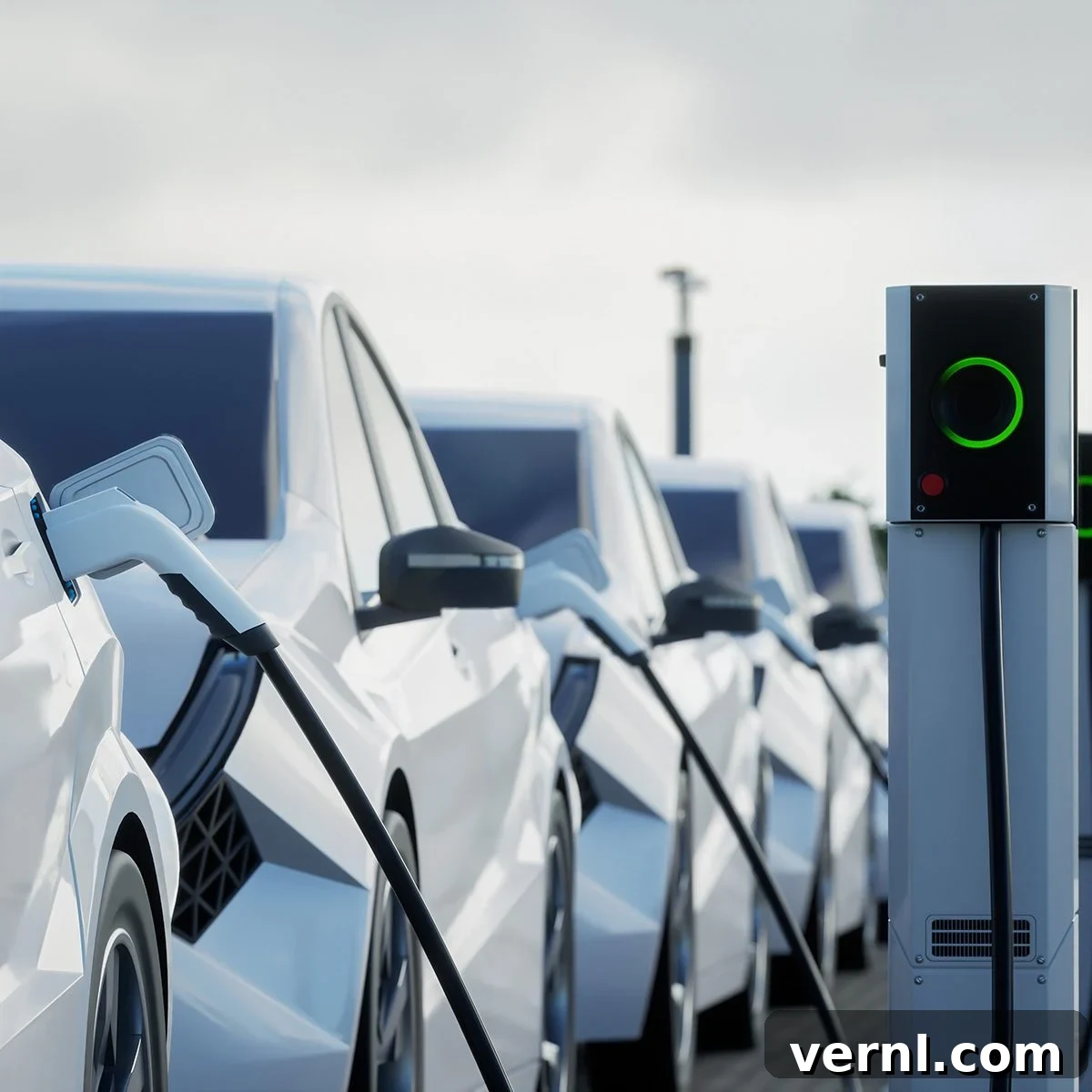
Driving an electric vehicle (EV) is increasingly becoming a mainstream choice for modern drivers. The appeal is immediately obvious: exhilarating acceleration due to instant torque, significantly lower fuel costs, and reduced maintenance expenses thanks to fewer moving parts. Beyond the personal economic benefits, EVs represent a pivotal shift towards environmental sustainability, producing zero tailpipe emissions and contributing to cleaner air in our communities. Yet, beneath these well-known advantages lie a host of additional, often overlooked perks that further sweeten the deal for prospective EV owners. Recognizing the transformative potential of electric mobility, governments in the United States, at both federal and local levels, have rolled out a comprehensive suite of incentives. These initiatives are strategically designed to lower the barrier to entry and encourage a wider adoption of EVs, paving the way for a greener, more efficient transportation future.
In this article, we’ll delve deeper into some of the lesser-known, yet incredibly impactful, benefits that come with embracing a modern electric vehicle. These advantages range from practical daily conveniences to substantial financial relief and forward-thinking sustainable living.
Unlock the HOV Lane Advantage: Time-Saving Commutes
Imagine cruising past traffic jams during your daily commute, enjoying a stress-free drive while others inch along. This dream becomes a reality for many EV owners thanks to the High Occupancy Vehicle (HOV) lane privilege. While traditionally reserved for vehicles with multiple passengers, a growing number of states across the U.S. now grant solo-occupant electric vehicles access to these coveted carpool lanes. This isn’t just a random perk; it’s a deliberate policy aimed at incentivizing EV adoption, recognizing their contribution to reducing overall emissions and improving air quality. If you spot a single driver in an EV smoothly navigating the HOV lane, they’re likely not breaking any rules, but rather enjoying one of the clever benefits of their electric ride.
For individuals with a regular solo commute, gaining access to HOV or carpool lanes can dramatically transform their daily routine. It translates to significantly reduced travel times, more predictable journeys, and a notable decrease in daily driving stress. Imagine reclaiming precious minutes, or even hours, each week that would otherwise be spent idling in traffic. These newfound moments can be reinvested into personal time, family, hobbies, or simply arriving at your destination feeling more refreshed. Eligibility for this benefit typically involves applying for a specific carpool sticker or permit from your state’s Department of Motor Vehicles (DMV) or environmental agency, so be sure to research the specific requirements in your area to start enjoying this remarkable convenience.
Navigate the Financial Landscape: Federal Tax Credits
One of the initial hurdles for many considering an electric vehicle is the upfront cost, which can sometimes be higher than comparable gasoline-powered models. However, this perspective often overlooks the substantial financial incentives designed to offset this very challenge. The U.S. Department of Energy, in collaboration with the IRS, offers significant federal income tax credits that can make purchasing an EV much more financially accessible. For new electric vehicles purchased in 2023 or after, eligible buyers can qualify for a federal income tax credit of up to $7,500. This is not a small rebate; it’s a direct reduction in your tax liability, effectively lowering the overall cost of ownership right from the start.
Navigating the federal tax credit requires understanding specific eligibility criteria, which can include the vehicle’s manufacturing location, the sourcing of its battery components, the vehicle’s Manufacturer’s Suggested Retail Price (MSRP), and even the buyer’s adjusted gross income. These regulations are subject to change, so prospective buyers are strongly advised to consult the official IRS and Department of Energy websites or a tax professional to ensure their chosen vehicle and personal financial situation qualify. This significant incentive underscores the government’s commitment to accelerating the transition to electric vehicles, making a sustainable choice not only environmentally responsible but also economically astute.
Beyond Federal: Tapping into Local and State Incentives
While federal tax credits provide a substantial national-level benefit, the financial advantages of EV ownership extend even further through a rich tapestry of state and local rebate programs. These localized incentives are crucial in making EV adoption more affordable and practical, often targeting specific aspects of EV ownership, such as charging infrastructure. Before you make your EV purchase, or even after, a bit of research into what your state, county, or even local utility company offers could yield considerable savings.
For instance, many local governments and utility providers offer rebates for the installation of home EV charging stations. These can range from hundreds to thousands of dollars, significantly reducing the cost of setting up convenient Level 2 charging at your residence. Beyond charging, some states and cities provide direct rebates on the purchase or lease of new or used EVs, stackable with federal incentives. Other benefits might include reduced vehicle registration fees, special parking privileges, or even access to preferred electricity rates for EV charging during off-peak hours. These diverse programs highlight a collective effort to support EV owners throughout their entire journey, from purchase to daily operation. Always check resources like your state’s energy office, local government websites, and your electric utility provider to uncover these valuable, region-specific opportunities.
Reduced Maintenance Costs: More Than Just Fuel Savings
One of the most compelling, yet often underestimated, long-term financial benefits of owning an electric vehicle is the drastically reduced maintenance schedule. Unlike conventional internal combustion engine (ICE) vehicles that rely on hundreds of intricate moving parts, an EV powertrain is remarkably simpler. This fundamental difference translates into significant savings and fewer trips to the mechanic. You can bid farewell to routine oil changes, spark plug replacements, fuel filter changes, and complex transmission services. The absence of an exhaust system, starter motor, and multiple belts also eliminates common failure points and associated repair costs.
EVs primarily require maintenance for components common to all vehicles, such as tires, brakes (which last significantly longer due to regenerative braking), cabin air filters, and windshield wiper fluid. Regenerative braking, a technology that captures kinetic energy to recharge the battery when slowing down, substantially reduces wear and tear on traditional friction brakes. Over the lifespan of an EV, these reduced maintenance demands can lead to thousands of dollars in savings, further solidifying the economic advantage of electric mobility. This simplicity doesn’t just save money; it also means more reliable operation and greater peace of mind for the owner.
A Quieter, Smoother Driving Experience: Enhanced Comfort
Beyond the economic and environmental considerations, driving an electric vehicle offers a unique and profoundly satisfying sensory experience. The most immediate and striking difference is the near-silent operation of the electric motor. Gone are the vibrations, rumbles, and engine noise associated with gasoline cars, replaced by a serene quietness that transforms the cabin into a tranquil sanctuary. This enhanced quietude not only reduces driver fatigue on long journeys but also allows for more enjoyable conversations, clearer audio from your sound system, and a generally more relaxed atmosphere for all occupants.
Complementing the silence is the incredibly smooth and responsive acceleration inherent to EVs. Electric motors deliver instant torque, meaning there’s no lag as you press the accelerator. This translates into seamless, linear power delivery without the jolts or gear changes of a traditional automatic transmission. The result is a remarkably fluid and effortless driving experience, whether you’re navigating city streets or cruising on the highway. This combination of quiet operation and smooth power delivery fundamentally redefines the act of driving, making every journey more comfortable, refined, and enjoyable.
Future-Proofing Your Commute: Staying Ahead of the Curve
Investing in an electric vehicle isn’t just about current benefits; it’s a strategic move that future-proofs your personal transportation. The automotive industry is rapidly transitioning towards electrification, with major manufacturers committing to all-electric lineups in the coming decades. As this shift accelerates, owning an EV positions you at the forefront of automotive innovation and sustainability. You’re not just buying a car; you’re adopting technology that is central to the future of mobility.
This forward-looking perspective brings several advantages. EVs are often equipped with advanced software and connectivity features, many of which can be updated over-the-air (OTA), similar to a smartphone. These updates can enhance performance, add new features, and improve efficiency throughout the vehicle’s lifespan, ensuring your EV remains cutting-edge. Furthermore, as environmental regulations tighten and urban areas increasingly look to restrict or even ban ICE vehicles, EV owners will face fewer limitations. The growing charging infrastructure and the increasing popularity of EVs also contribute to potentially stronger resale values in the long term, as the demand for sustainable transportation continues to surge. Embracing an EV today means you’re not just keeping up with the times, you’re actively shaping a more sustainable and efficient future.
Environmental Impact Revisited: A Deeper Dive
While the initial mention of environmental benefits often focuses on zero tailpipe emissions, the positive ecological impact of electric vehicles extends far beyond what immediately comes out of the “exhaust.” By eliminating direct emissions, EVs significantly improve urban air quality, reducing smog-forming pollutants and microscopic particulate matter that can lead to respiratory illnesses. This immediate local benefit is crucial for public health in densely populated areas.
From a broader “well-to-wheel” perspective, which considers emissions from electricity generation as well as vehicle operation, EVs still offer a substantial environmental advantage. As national grids increasingly incorporate renewable energy sources like solar and wind power, the carbon footprint of charging an EV continues to shrink. This means that as our electricity supply becomes cleaner, so too does the operation of every electric vehicle on the road. Furthermore, the shift to EVs reduces our collective reliance on finite fossil fuels, enhancing energy independence and mitigating the geopolitical and environmental risks associated with oil extraction and consumption. EVs are not just a cleaner way to drive; they are a vital component of a comprehensive strategy for a sustainable energy future, playing a role in grid stability and potentially even returning power to the grid (Vehicle-to-Grid technology).
Conclusion: The Undeniable Appeal of Electric Vehicles
The journey towards an electric vehicle future is not merely about technological advancement; it’s about embracing a lifestyle that is smarter, more efficient, and inherently more sustainable. While the obvious benefits of rapid acceleration, lower running costs, and reduced environmental impact are powerful motivators, it’s the less apparent perks that truly complete the picture of EV ownership. From the invaluable time-saving advantage of HOV lane access and the substantial financial relief offered by federal tax credits and diverse local rebates, to the serene comfort of a whisper-quiet ride and the long-term savings on maintenance, EVs present a compelling proposition.
Moreover, the decision to go electric is a forward-thinking one, future-proofing your commute and aligning with a global movement towards cleaner energy and sustainable practices. The evolving landscape of incentives and infrastructure continues to make EV adoption more accessible and attractive than ever before. If you’ve been on the fence about making the switch, consider these comprehensive benefits. An electric vehicle isn’t just a mode of transport; it’s an investment in a more convenient, cost-effective, and environmentally responsible future. It’s time to explore the full spectrum of advantages and discover how an EV can transform your driving experience for the better.
Sources
- California Air Resources Board, “Carpool Stickers” (2025)
- U.S. Department of Energy, “Federal Tax Credits for New Plug-in Electric and Fuel Cell Electric Vehicles” (2o25)
RELATED:
- Do You Know What That Little Button on Your Seat Belt Is For?
- What Those Lines on Your Backup Camera Really Tell You
- Here’s What The Small Panel On Your Car’s Front Bumper Is For