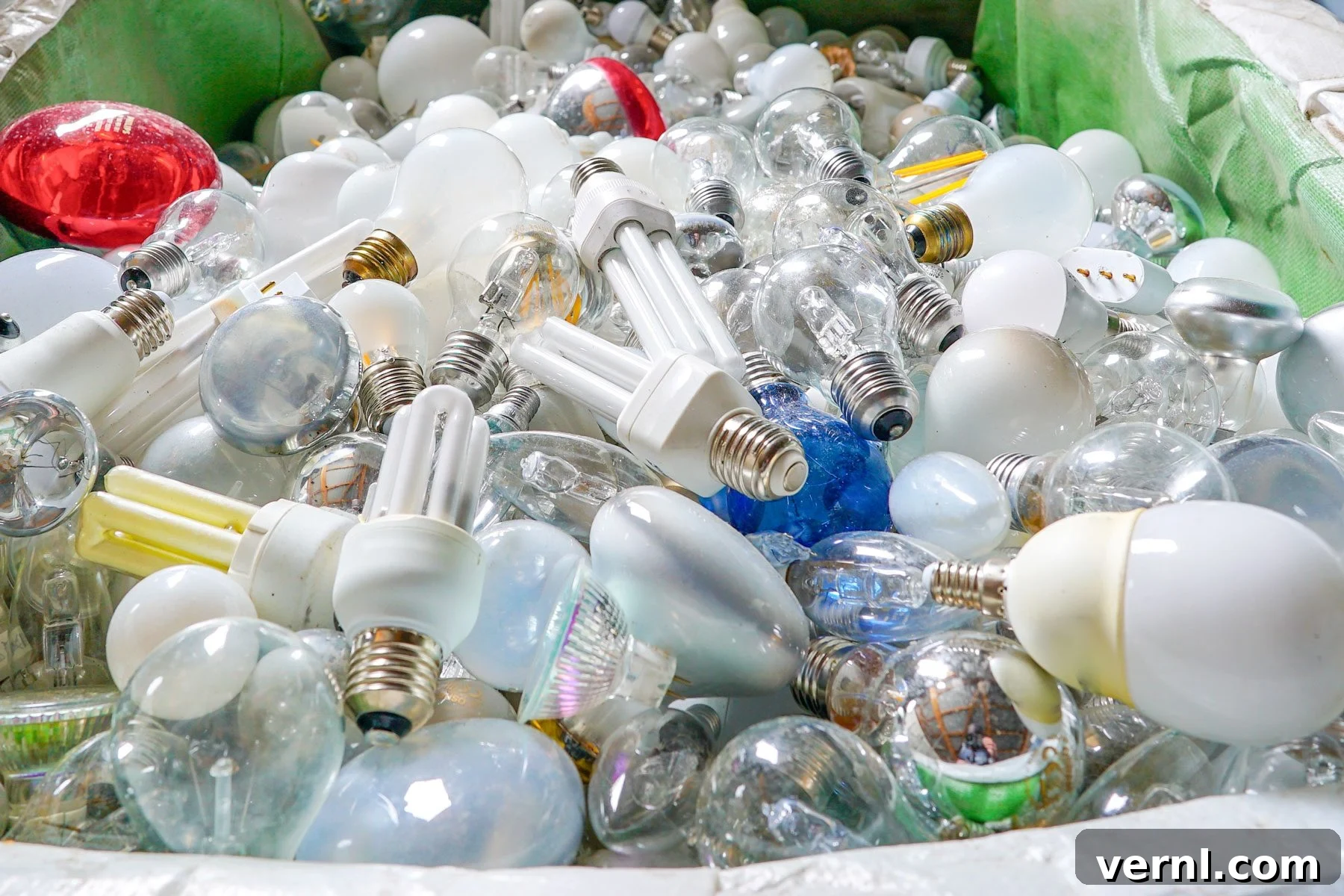
Ultimate Guide to Light Bulb Disposal and Recycling: What You Need to Know
The journey of home lighting has seen remarkable transformations, from the basic glow of early incandescent bulbs to the sophisticated, energy-efficient LED technology we rely on today. For decades, the primary concern was simply illumination. However, with advancements in technology, the conversation has shifted to efficiency, longevity, and critically, what happens when these bulbs reach the end of their lifespan.
The 1980s heralded a new era with the introduction of compact fluorescent (CFL) bulbs, offering a significant leap in energy efficiency and durability compared to their incandescent predecessors. This trend accelerated in the mid-2000s when LED (Light Emitting Diode) bulbs entered the consumer market, revolutionizing home lighting with unparalleled efficiency and an incredibly long lifespan. These modern alternatives have largely replaced traditional incandescent bulbs, which are now rarely found due to their inability to meet contemporary energy efficiency standards.
Despite their extended lifespans, no light bulb lasts forever. Eventually, every bulb will burn out, leaving homeowners with a common but often perplexing question: what is the correct way to dispose of it? This isn’t just about clearing clutter; it’s a crucial step towards environmental responsibility and personal safety.
“Think of your light bulbs as batteries,” advises home energy efficiency expert Andrei Marveaux. “Some can be recycled, while others need to go to a specialized facility for appropriate disposal.” The distinction is vital because improper disposal can have serious consequences. Beyond merely reclaiming materials for new products, many bulbs contain toxic chemicals that must be prevented from contaminating landfills and, by extension, our soil and water.
“It’s a small step that makes a big difference,” emphasizes professional home buyer Erwin Miciano, whose work frequently involves replacing countless bulbs. “Proper disposal helps keep our homes safe and protects the environment for future generations.”
If you’ve accumulated a collection of old, non-functional light bulbs and are unsure how to proceed, this comprehensive guide is designed to provide you with all the necessary information for responsible and safe disposal.
Understanding Light Bulb Types and Their Disposal Needs
The rapid evolution of lighting technology means that many homes still utilize a mix of older and newer bulb types. Each category presents unique challenges and requirements when it comes to disposal.
Incandescent Bulbs: The Classic Glow
Incandescent bulbs, famously popularized by Thomas Edison, represent the earliest form of electric lighting widely adopted for homes. They produce light through a simple yet ingenious process: electricity passes through a thin filament, typically made of tungsten, causing it to heat up and glow intensely. To prevent the filament from oxidizing and burning out instantly, it’s sealed within a pressurized glass bulb, often filled with an inert gas. While incandescent bulbs are no longer readily available on store shelves due to their low energy efficiency, many households still possess a reserve of unused bulbs, and some individuals continue to appreciate the warm, inviting light they cast.
From a disposal standpoint, incandescents are generally considered non-hazardous. However, their pressurized glass enclosure poses a safety risk if simply tossed unwrapped into the trash. The internal pressure can cause the bulb to shatter unexpectedly, potentially injuring waste management workers. Therefore, it’s crucial to wrap them securely before disposal.
Halogen Bulbs: Brighter, Hotter, and Different
Halogen bulbs are a refined version of incandescents, operating on a similar principle of a glowing filament. However, they feature a much thicker glass enclosure and contain a halogen gas, which enables them to burn at higher temperatures, producing a brighter and whiter light than standard incandescents. This design also contributes to a slightly longer lifespan. The glass in halogen bulbs typically contains quartz, making it more robust and capable of withstanding the intense heat.
Due to the quartz content, halogen bulb glass has a different melting point than regular glass. This means they cannot be processed alongside typical glass recycling. While some local waste management agencies may permit them in general trash if properly wrapped, others might require them to be taken to a specialized recycling facility. Always check your local regulations for the most accurate guidance.
Compact Fluorescent (CFL) & Fluorescent Tube Lights: The Mercury Dilemma
Fluorescent technology, whether in the form of long tubes or the more consumer-friendly, coiled compact fluorescent (CFL) bulbs with screw bases, operates by exciting a gas inside the bulb. This process illuminates a phosphor coating on the inside of the glass. The primary concern for disposal with both CFLs and fluorescent tubes is their mercury content. Mercury is a potent neurotoxin and a significant environmental hazard, posing serious risks if released into the environment.
When mercury-containing bulbs are broken or end up in landfills, the mercury can leach into soil and water, contaminating ecosystems and potentially entering the food chain. For this reason, these bulbs absolutely must be recycled through designated programs to ensure the mercury is safely captured and prevented from causing harm. They should never be placed in regular trash or recycling bins.
LED Lights: The Future of Illumination
LEDs, an acronym for Light Emitting Diodes, are fundamentally different from traditional bulbs. They don’t rely on a filament or gas to produce light. Instead, semiconductor diodes emit light when an electrical current passes through them. While manufacturers enclose them in traditional bulb shapes for consumer familiarity and protection, the diodes themselves don’t require pressurization or a glass enclosure. Modern LED “bulbs” are often made of plastic, not glass, and contain a small circuit board with microchips.
While LEDs generally do not contain mercury, some might contain other harmful chemicals, particularly those with specialized coatings to alter light color. However, the primary reason for recycling LEDs isn’t just potential toxicity but resource recovery. The microchips, metals, and plastics within LEDs are valuable materials that can be salvaged and reused to produce new bulbs or other electronic components, reducing the demand for virgin resources and minimizing electronic waste.
The Critical Decision: Recycle, Dispose, or Hazardous Waste?
Making the right choice for your used light bulbs doesn’t have to be complicated. According to Andrei Marveaux, the decision is quite straightforward: “LEDs, CFLs, and fluorescents? Absolutely recycle them. Incandescents? Wrap ’em up and toss ’em in the trash.” This simple guideline, however, comes with important nuances and safety considerations.
Incandescent and Halogen Bulb Disposal: Safety First
For incandescent bulbs, the main concern isn’t toxic chemicals, but the pressurized gas inside the glass enclosure. If unwrapped and carelessly discarded, they can explode or shatter when subjected to pressure in a trash compactor, potentially injuring waste management personnel. To prevent this, always wrap incandescent bulbs securely in newspaper, a paper bag, or even place them in their original packaging before putting them in your household trash. As an extra precaution, some individuals prefer to gently break the bulb within a sturdy bag using a hammer before sealing the bag and disposing of it, further mitigating any risk of unexpected shattering.
Halogen bulbs, due to their quartz glass content, fall into a similar category. While some local trash management agencies may allow them in general waste if properly wrapped, others might require them to be taken to a specialized recycling facility. The quartz glass has a different melting point than standard glass, making it unsuitable for regular glass recycling streams. Always verify with your local waste collection service for specific instructions on halogen bulb disposal.
CFLs and Fluorescent Tubes: Mandatory Recycling
There is no question about these: CFLs and fluorescent tubes must be recycled. Their mercury content makes landfill disposal an unacceptable environmental and health risk. When these bulbs break in a landfill, the mercury can leach into groundwater, vaporize into the air, or contaminate soil, leading to serious public health and ecological consequences. Recycling facilities are equipped to safely extract and reclaim this mercury, preventing its release into the environment. Never place CFLs or fluorescent tubes in your regular curbside recycling bin, as they require specialized processing separate from glass, plastic, or paper.
LEDs: Recycling for Resource Recovery
While LEDs are generally safer in terms of immediate toxicity compared to CFLs, their recycling is still highly encouraged and often mandated. The value in recycling LEDs lies in recovering their precious and rare earth metals, circuit boards, and plastics. These components can be given a new life, reducing the need for new raw materials and minimizing electronic waste. Disposing of LEDs in regular trash means these valuable resources are lost forever in landfills, contributing to a growing e-waste problem. Always seek out designated recycling programs for LEDs.
Your Guide to Responsible Light Bulb Recycling
Navigating the various recycling options for light bulbs can seem daunting, but thankfully, many accessible solutions exist. Professional home buyer Erwin Miciano highlights common avenues: “Many large home improvement stores, such as The Home Depot or Lowe’s, offer convenient recycling programs where you can drop off CFLs. You can often recycle LEDs at these same locations, but it’s always a good idea to call ahead and confirm their current policies.”
It’s crucial to reiterate: “Just don’t throw them in your regular recycling bin, because they need to be processed separately,” Miciano advises. “Always check local regulations. Some cities or waste disposal centers have specific programs for recycling or disposing of bulbs properly. For comprehensive guidance, it’s also highly recommended to visit websites like Earth911, where you can search for local recycling options by item and zip code.” Earth911 is an invaluable resource that connects consumers with local recycling centers and specialized disposal sites for a wide array of items, including various types of light bulbs.
The same specialized care applies to fluorescent tubes. Due to their length and inherent fragility, waste collectors typically have stringent rules for their recycling and disposal. These might include designated drop-off points, specific collection days, or requirements for protective packaging. Always contact your local waste management service or municipal recycling authority to ascertain these specific rules and locate the nearest authorized facility for fluorescent tube recycling.
Disposing of Holiday Lights: A Festive Challenge
When the festive season ends, many find themselves with strands of holiday lights that are either burnt out, tangled beyond repair, or simply unwanted. Holiday lights present a unique recycling challenge because they are composed of multiple materials: wires (copper), plastic insulation, and the actual bulbs, which can be either incandescent or LED. The type of bulb within the string will influence how to recycle them, but generally, they require specialized electronic waste (e-waste) recycling due to their complex composition.
- Tip: You can generally identify incandescent holiday bulbs by their larger size and often a screw-in base, while LED bulbs are typically smaller and more integrated into the wiring.
Several options exist for responsibly disposing of old or broken holiday lights. Your local waste collection service might offer a specific recycling program during certain times of the year, particularly after the holidays. Specialty electronics recycling services are also excellent places to take unwanted holiday lights. Additionally, large home centers like The Home Depot or Lowe’s sometimes participate in seasonal collection drives for holiday lights. Furthermore, some companies that sell holiday lights online, such as Christmas Light Source or Holiday LEDs, offer mail-in recycling services, providing a convenient option for consumers across various regions.
The Broader Impact: Why Proper Disposal Matters
The seemingly small act of properly disposing of a light bulb extends far beyond individual convenience; it plays a critical role in environmental protection and public health. Ignoring proper disposal guidelines can lead to significant ecological damage and poses risks to communities.
For example, the mercury found in CFLs and fluorescent tubes is a potent neurotoxin. When these bulbs are thrown into regular trash and end up in landfills, the mercury can leak into the ground and contaminate soil and groundwater. It can also vaporize into the air, contributing to air pollution. Once mercury enters the environment, it can be converted into methylmercury, a highly toxic form that bioaccumulates in the food chain, posing serious health risks to humans and wildlife, including developmental issues in children and neurological damage in adults.
Beyond toxic elements, proper recycling of LED bulbs ensures the recovery of valuable materials. LEDs contain rare earth metals, various other metals, and plastics that are finite resources. Extracting these materials from new sources is energy-intensive and environmentally disruptive. By recycling, we reduce the demand for virgin materials, conserve energy, minimize mining impacts, and divert waste from overflowing landfills. This cyclical approach supports a more sustainable economy and lessens our collective environmental footprint.
Ultimately, responsible light bulb disposal is a tangible way for every individual to contribute to a healthier planet. It’s an investment in sustainable resource management, pollution prevention, and the well-being of future generations.
About the Experts
- Erwin Miciano is a seasoned professional who buys homes in the bustling Los Angeles area and meticulously prepares them for re-sale. He is the dedicated owner of Semi Homes, where he continually encounters and addresses common household challenges like light bulb disposal.
- Andrei Marveaux serves as the Managing Director of SolarTech Solutions/The Home Upgrade. With a strong background and a degree in engineering, Andrei is deeply passionate about advancing sustainable energy solutions and promoting critical environmental conservation practices in modern homes.