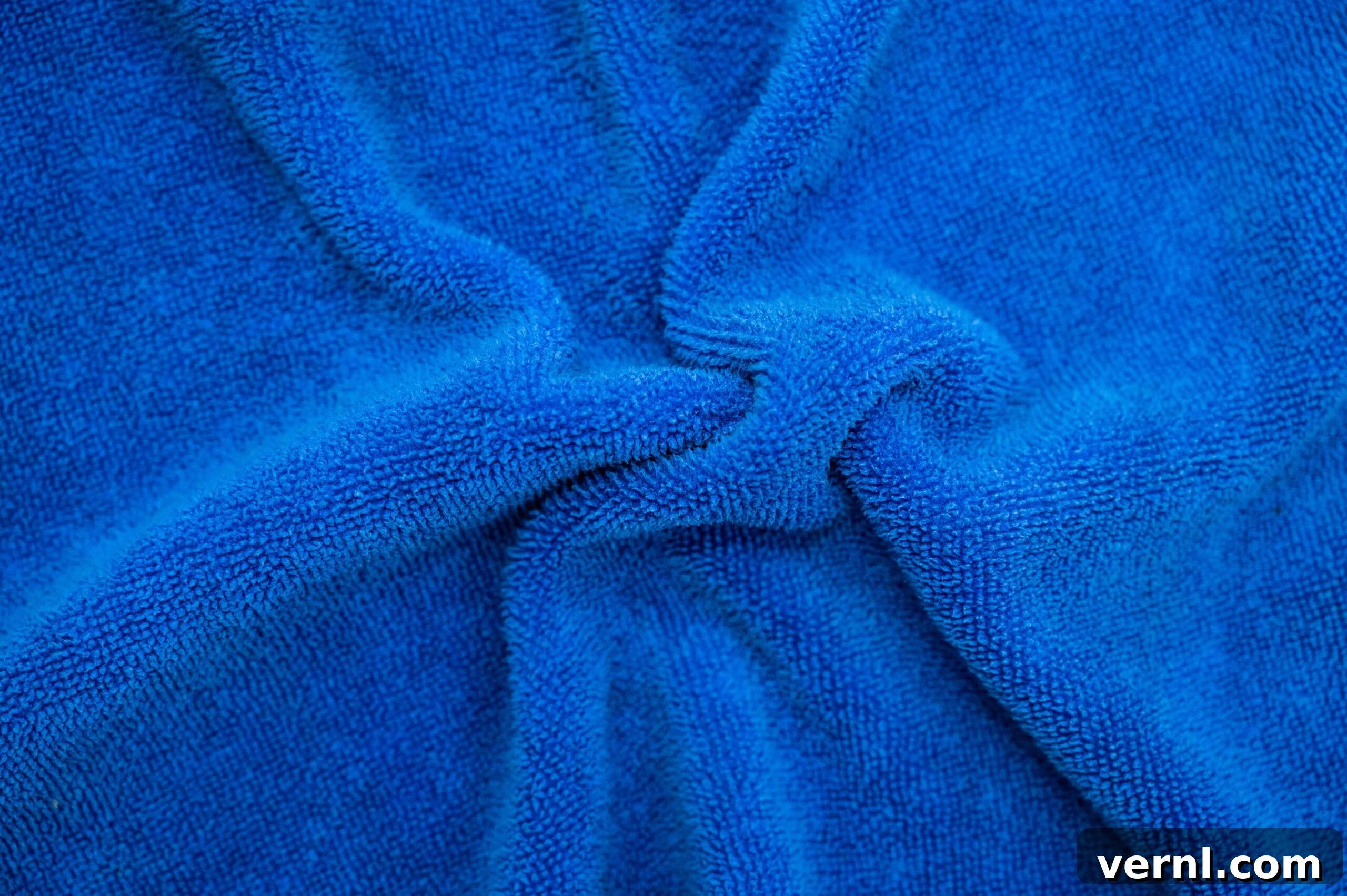
Every year, my mom’s tradition of giving us microfiber cloths as stocking stuffers might not sound like the most thrilling holiday gift, but these seemingly simple items invariably become some of the most utilized tools in my household throughout the year. They are a remarkably affordable, exceptionally effective, and significantly greener alternative to traditional paper towels, proving indispensable for cleaning just about everything. This sentiment is widely shared, and for good reason.
“Microfiber cloths are an absolutely integral part of our daily operations at Tidy Casa,” enthusiastically states owner Ryan Knoll. “We’re talking about buying these by the truckload because their performance is simply unmatched in the cleaning industry!”
However, my personal journey with microfiber hasn’t always been seamless. I frequently encountered the frustration of pulling my microfiber cloths from the dryer only to find them fiercely stuck to my clothing, and their pristine cleaning efficiency seemed to wane over time. Puzzled by this persistent issue, I decided to seek authoritative advice. I turned to the very experts quoted above: Ryan Knoll, owner of Tidy Casa, and Alicia Sokolowski, President of AspenClean. They graciously shared their invaluable insights, shedding light on what I was doing wrong and how to unlock the true potential of these cleaning powerhouses. Their comprehensive advice forms the foundation of this guide, ensuring you can maximize the effectiveness and lifespan of your microfiber cloths.
What Exactly is a Microfiber Cloth and Why is it So Effective?
Microfiber cloths have revolutionized cleaning practices globally, becoming a staple in homes and professional services alike. Their widespread adoption is due to their unparalleled ability to clean thoroughly and efficiently. But what precisely constitutes a microfiber cloth, and what intrinsic properties grant it such superior cleaning capabilities?
At its core, a microfiber cloth is meticulously engineered from ultra-fine synthetic fibers, most commonly a synergistic blend of polyester and polyamide (nylon). “The true brilliance of microfiber lies in the microscopic scale of its fibers,” explains Sokolowski. “These incredibly fine strands are specifically designed to create a highly absorbent and remarkably effective cleaning material that effortlessly lifts, traps, and holds dirt, grease, and dust without the consistent need for harsh chemical agents. This inherent design not only cleans surfaces more effectively but also promotes a healthier, chemical-free environment.”
The Unique Mechanism: What Makes Microfiber Different from Other Cloths?
The defining characteristic that truly distinguishes microfiber cloths from conventional cleaning materials, such as cotton towels, is their extraordinary ability to trap and meticulously hold dirt and dust particles. This unique feature directly translates into the streak-free, spotless cleaning results for which microfiber is celebrated.
“Imagine the individual fibers of a microfiber cloth as being split to create millions of tiny, almost microscopic hooks,” illustrates Knoll, offering a powerful analogy. “This structure functions very much like Velcro, where these minuscule hooks actively grab onto grime, dust, and even microscopic particles, firmly holding them within the cloth’s weave rather than merely pushing them around the surface. This mechanical action makes them dramatically superior to traditional cotton towels, which primarily tend to push dirt and liquids around, offering minimal true cleaning power. The split fibers also create an immense surface area and an electrostatic charge, which acts like a magnet, attracting and holding dust and pet hair with remarkable efficiency.” This combination of physical trapping and electrostatic attraction is what makes microfiber an exceptionally efficient cleaning tool.
The Purpose Behind Different Microfiber Cloth Colors and Types
A common observation about microfiber cloths is their availability in a diverse palette of colors. This is far from arbitrary; it serves a critically important practical function: preventing cross-contamination and promoting stringent hygiene standards across various cleaning tasks. By implementing a systematic color-coding strategy, users can designate specific colors for particular areas or types of cleaning, significantly mitigating the risk of spreading germs, bacteria, and grime from one surface to another.
For example, within his professional cleaning operations, Ryan Knoll employs a rigorous color-coding system: vibrant blue cloths are exclusively designated for polishing glass, mirrors, and delicate surfaces to ensure a streak-free finish; bright yellow cloths are reserved for general dusting and light surface wiping; and bold red cloths are strictly used for high-risk areas such as bathrooms and toilets, where hygiene is paramount. “While this system is invaluable for maintaining high standards, it can occasionally lead to humorous misunderstandings,” Knoll shares with a smile. “I recall an instance where a customer became quite concerned after we inadvertently left a red microfiber cloth at her residence. She genuinely believed we were attempting to convey some sort of cryptic, secret message to her!”
Beyond the critical aspect of color-coding for hygiene, it’s also important to recognize that some microfiber products vary significantly in their composition, weave, and density, making them specialized for different applications. For instance, cloths specifically designed for streak-free glass cleaning often feature a smoother, tighter, flat weave and are frequently colored blue. In contrast, more absorbent general-purpose cleaning towels, often referred to as ‘bar towels,’ typically have a thicker, loop-pile or terry weave and are frequently white, sometimes with a distinguishing colored stripe, indicating their suitability for heavier-duty liquid absorption and general wiping tasks. Understanding these subtle differences allows for the selection of the most effective tool for each specific cleaning challenge, optimizing results and efficiency.
The Art of Caring for Microfiber Cloths: Essential Washing Techniques
To ensure your microfiber cloths retain their superior cleaning power, exceptional absorbency, and maintain their long-term effectiveness, they demand specific and deliberate care. Improper washing techniques can quickly diminish their performance, leading to frustrating streaks and reduced cleaning efficiency. Ryan Knoll and Alicia Sokolowski, our cleaning experts, unanimously emphasize several crucial recommendations for the optimal maintenance of these valuable tools:
- Isolate for Washing: It is absolutely paramount to wash microfiber cloths either entirely by themselves or exclusively with other microfiber items. The reason for this strict separation is crucial: washing them alongside lint-producing fabrics, such as cotton towels, fleece blankets, or even certain types of clothing, will inevitably cause lint particles to shed and adhere stubbornly to the split fibers of the microfiber. This accumulation of lint significantly obstructs the microscopic hooks that are responsible for trapping dirt, thus dramatically reducing their cleaning effectiveness and absorption capacity.
- Choose a Gentle, Residue-Free Detergent: Select a mild, fragrance-free, and dye-free laundry detergent. Conventional detergents often contain harsh chemicals, strong perfumes, and artificial dyes that can clog the intricate microscopic pores of the microfiber, coat the delicate fibers, or even cause gradual damage to their unique structure over time. This impairment directly hinders their ability to clean effectively and absorb liquids efficiently.
- Absolutely No Fabric Softener or Bleach: This is arguably the most critical directive for microfiber care. Fabric softeners are engineered to deposit a waxy, lubricating coating onto fabric fibers to make them feel softer and reduce static. While beneficial for natural fibers, this waxy residue will irreversibly clog the unique split fibers of microfiber. This dramatically diminishes their electrostatic charge, severely reduces their absorption capacity, and fundamentally compromises their ability to grab and hold dirt. Similarly, bleach is an aggressive oxidizer that is far too harsh for synthetic fibers; it can chemically break down their delicate structure, leading to weakened cloths, reduced effectiveness, and a significantly shortened lifespan.
- Utilize Cold or Warm Water: High-heat washing is a primary enemy of microfiber. The synthetic polymers (polyester and polyamide) that form microfiber are highly susceptible to damage, distortion, or even melting when exposed to excessively elevated temperatures. Such heat exposure irrevocably compromises their unique structure, leading to a permanent loss of effectiveness. Cold or warm water is perfectly adequate for thoroughly cleaning and sanitizing microfiber cloths, preserving the integrity and longevity of their fibers.
- Pre-rinse Heavily Soiled Cloths: For cloths that are heavily soiled with mud, excessive grime, or caked-on dirt, an initial pre-rinse is highly recommended. A quick rinse under running water in a utility sink or a brief soak can help dislodge and remove the bulk of the debris before the cloths are introduced to the washing machine. This preventative step not only ensures a more thorough primary wash but also prevents the washing machine water from becoming overly saturated with dirt, protecting other items if washing a mixed load of microfiber.
“The single most important rule when it comes to washing microfiber is isolation,” Sokolowski reiterates with emphasis. “Washing them exclusively with other microfiber items is absolutely essential to prevent lint contamination, which is by far the most common cause of reduced effectiveness and poor cleaning performance.”
Drying Microfiber Cloths for Longevity and Optimal Performance
Improper drying practices represent another significant pitfall in microfiber care, often resulting in diminished performance, annoying static cling, and premature degradation of the cloth. The encouraging news is that microfiber cloths can indeed be safely dried in a machine, but this comes with a crucial stipulation: precise temperature control is paramount.
High heat is the undisputed arch-nemesis of microfiber. The delicate synthetic fibers responsible for microfiber’s extraordinary properties are highly susceptible to melting, warping, or suffering irreversible damage when exposed to excessive temperatures. Such exposure irrevocably compromises their unique structure, rendering them significantly less effective at their primary functions of cleaning and absorbing. Therefore, if you choose to machine dry your microfiber cloths, it is absolutely essential to always select the lowest possible heat setting or, even better, opt for a “no heat,” “air fluff,” or “tumble dry low” cycle. This gentle approach safeguards the integrity of the fibers.
Equally critical is to completely forego the use of dryer sheets. Much like fabric softeners, dryer sheets are formulated to deposit a waxy, chemical residue onto fabrics. This residue will inevitably coat the fine, split fibers of your microfiber cloths, effectively clogging their microscopic hooks and pores. This direct interference drastically reduces the cloth’s absorbency and severely impairs its ability to attract and trap dirt effectively. You will observe a noticeable and frustrating decline in cleaning performance if dryer sheets are regularly used.
“While machine drying on a low or no-heat setting is an acceptable practice, air drying consistently remains the safest and most highly recommended method if your ultimate goal is to significantly prolong the lifespan and rigorously maintain the peak performance of your cherished microfiber cloths,” advises Knoll. “They will certainly perform adequately when dried in a machine following the aforementioned low-heat guidelines, but air drying offers the absolute maximum preservation of their delicate structure and effectiveness. Furthermore, air drying inherently eliminates the issue of static cling, which is a common byproduct of machine-drying synthetic fabrics at higher temperatures.” To air dry, simply hang your cloths on a drying rack, a clothesline, or even drape them over a shower rod, ensuring adequate air circulation around them until they are completely dry.
Maximizing Microfiber Effectiveness: Pro-Tips from the Experts
Beyond the crucial aspects of proper washing and drying, how you actually utilize your microfiber cloths during cleaning can profoundly impact their performance, efficiency, and the quality of your results. Here are some invaluable pro-tips and practical advice directly from our seasoned cleaning experts, Ryan Knoll and Alicia Sokolowski, designed to help you extract the absolute maximum potential from these powerful cleaning tools:
Ryan Knoll’s Strategic Usage Recommendations:
- Precision in Selection: Match the Cloth to the Task: Microfiber is not a monolithic solution; different types are engineered for different purposes. Knoll emphatically stresses the importance of choosing the correct type of microfiber towel for your specific cleaning task. For example, specialized blue glass towels are meticulously engineered with a smoother, tighter, flat weave that makes them inherently lint-free and exceptionally effective for achieving brilliant, streak-free windows, mirrors, chrome fixtures, and other highly polished surfaces. Conversely, absorbent bar towels, frequently identifiable by a distinguishing colored stripe, are purposefully designed with a thicker, more textured loop-pile or terry weave. This makes them significantly more absorbent, rendering them ideal for general cleaning, wiping up spills, and tackling heavier liquid absorption tasks. Understanding these nuanced distinctions ensures optimal results and efficiency for every cleaning job.
- Master the Efficient Fold-and-Flip Technique: “A widespread and common novice mistake is to instinctively use only the center portion of the towel for cleaning,” Knoll points out. “However, by deliberately folding the towel into quarters, you ingeniously create eight distinct, pristine cleaning sections. This simple yet incredibly effective technique ensures that you consistently have a fresh, uncontaminated cleaning surface available at all times. Not only does this clever method dramatically maximize the utility and lifespan of a single cloth by allowing you to use more of its surface area, but it also means you can accomplish significantly more cleaning between washes, thereby enhancing overall efficiency and critically preventing the premature spread of grime and dirt.”
- Damp is Optimal, Soaked is Detrimental: While microfiber boasts exceptional absorbency, over-saturating it with water can paradoxically hinder its effectiveness. “Too much water on a microfiber cloth actually diminishes its inherent electrostatic charge and reduces the crucial friction needed for the split fibers to optimally grab, lift, and trap dirt particles,” Knoll meticulously explains. “A slightly damp cloth performs best for attracting and securing dust, efficiently lifting grime, and consistently achieving flawless, streak-free results on the vast majority of surfaces. Always ensure you thoroughly wring out any excess water until the cloth is merely damp, not dripping wet, before commencing your cleaning.”
Alicia Sokolowski’s Essential Practical Tips:
- Pre-Wash Shake-Out: Before you toss your used cloths into the laundry hamper or washing machine, take a moment to give them a vigorous shake outdoors. This deceptively simple step is highly effective in dislodging loose debris, crumbs, pet hair, and excess dried dirt, preventing these particles from clogging your washing machine’s filter or, worse, redepositing onto other cloths during the wash cycle.
- Designate Specific Cloths for Oily/Greasy Substances: While microfiber possesses the capability to tackle grease, it is a wise practice to dedicate specific cloths exclusively for highly oily or greasy substances. Oils and heavy greases can deeply penetrate and stubbornly clog the intricate fibers, making these cloths significantly harder to clean completely and potentially reducing their overall effectiveness and absorbency over time. By reserving certain cloths for these challenging tasks, you effectively protect your general-purpose cloths and streamline your cleaning routine.
- Immediate Post-Use Rinsing: Do not allow dirt, grime, or cleaning product residues to dry and set into your microfiber cloths after use. Rinsing them thoroughly under running water immediately after each cleaning session is a critical step. This practice helps to remove accumulated debris and prevent the buildup of residues, which can otherwise diminish the cloth’s performance. Prompt rinsing is crucial for maintaining the integrity of the fibers and significantly extending the functional lifespan of your cloths.
- Proper Storage Matters: Once your microfiber cloths are thoroughly clean and completely dry, it’s essential to store them properly. Keep them in a clean, dry, and dust-free environment, such as a dedicated drawer, a clean bin, or neatly folded on a shelf. This prevents them from inadvertently picking up new dirt, dust, or unwanted odors before their next use, ensuring they are always pristine and ready for action.
- Recognize When to Replace: Even with the most meticulous care, microfiber cloths have a finite lifespan. Over time and with repeated use, their effectiveness will gradually diminish. Key signs that your microfiber cloths are ready for replacement include a noticeable loss of absorbency, persistent fraying around the edges, a stiff or rigid texture even after washing, or a diminished ability to effectively pick up and hold dirt. Replacing them when they show these signs ensures you consistently have the most efficient and effective cleaning tools at your disposal.
About the Expert Contributors
- Ryan Knoll is the visionary owner of Tidy Casa, a highly successful professional cleaning company he meticulously established in 2015. Under his dynamic leadership, the company proficiently cleans well over 600 homes each month across the bustling Phoenix and Tucson metropolitan areas, having earned a stellar reputation for its exceptional quality and customer service.
- Alicia Sokolowski holds the prestigious positions of President and CEO of AspenClean, a pioneering green cleaning company and products manufacturer strategically based in the beautiful city of Vancouver, British Columbia. Her unwavering dedication to promoting sustainable practices and developing highly effective, eco-friendly cleaning solutions has firmly positioned AspenClean as a true innovator and leader within the industry.