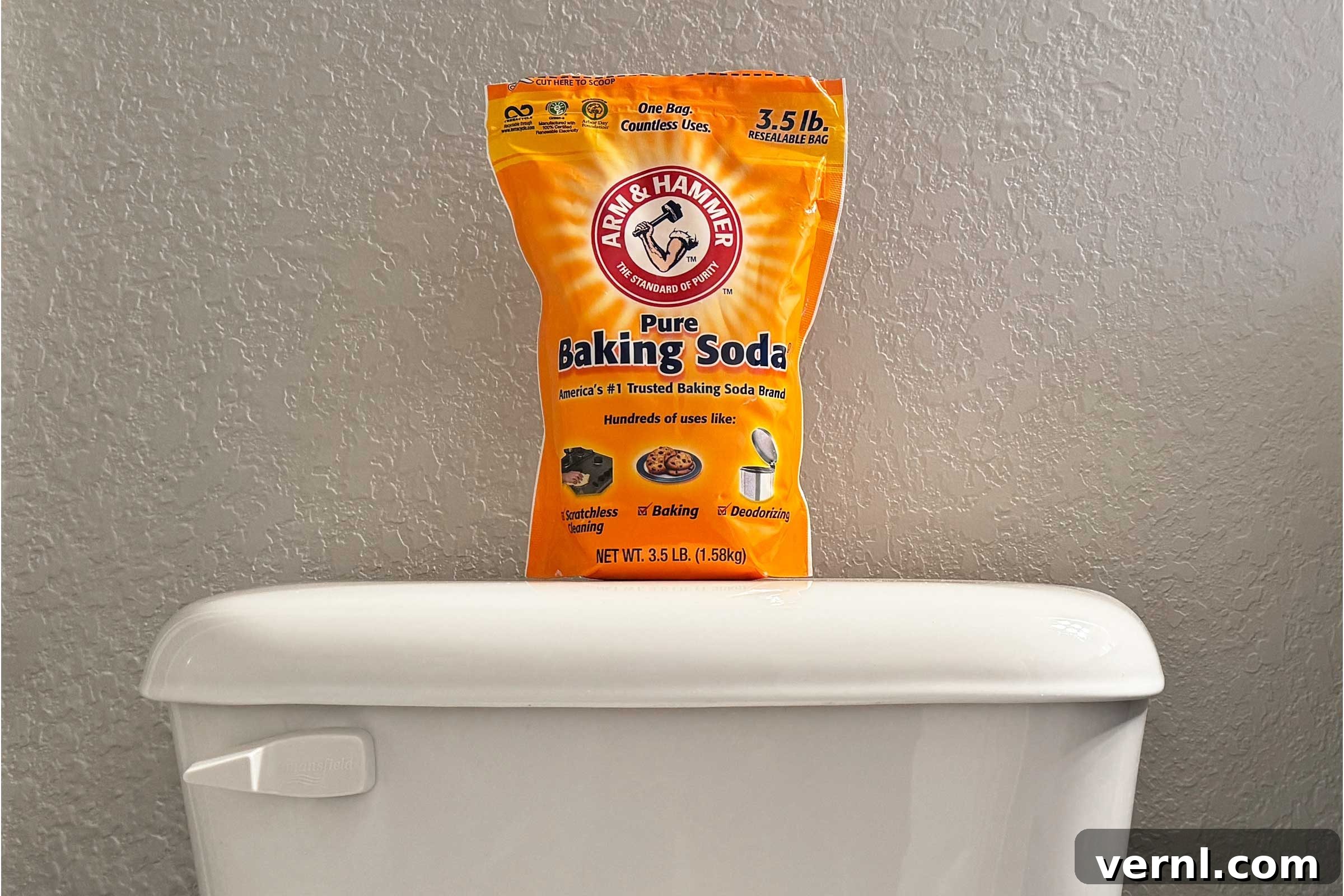
Baking soda stands as a powerhouse in the realm of cleaning agents, boasting a versatility that few other products can match. Beyond its well-known uses for oral hygiene and neutralizing shoe odors, this humble pantry staple is a formidable ally in keeping your home pristine. It can effortlessly refresh laundry, sanitize kitchen counters, and rejuvenate bathroom fixtures like tubs, toilets, and drains. What’s more, it’s an exceptional choice for tackling the often-overlooked task of cleaning ovens, restoring them to their former glory with minimal effort.
In recent years, the eco-conscious shift in household practices has propelled baking soda to the forefront of sustainable cleaning solutions. Its non-toxic and environmentally friendly nature makes it a preferred choice for a multitude of cleaning challenges, including what is increasingly becoming a standard practice in bathroom maintenance: cleaning toilet tanks. This seemingly simple act can significantly impact your toilet’s longevity and overall bathroom hygiene.
To provide a comprehensive understanding of the benefits and proper techniques for using baking soda in your toilet tank, we’ve gathered insights from industry-leading experts. We consulted with Justin Carpenter from Modern Maids, Roger Wakefield from The Trades Academy, and Alexander Siv from Amherst Plumbing and Heating. Their collective expertise offers invaluable perspectives on the transformative effects of incorporating baking soda into your toilet tank cleaning routine, turning a mundane chore into an effective preventative measure.
Meet Our Plumbing and Cleaning Experts
Our detailed guide on harnessing the power of baking soda for toilet tank cleaning is enriched by the knowledge and extensive experience of these distinguished professionals:
- Justin Carpenter serves as the CEO of Modern Maids, a nationally recognized and rapidly expanding house cleaning service established in 2017. His insights into household cleaning trends and effective strategies are invaluable.
- Roger Wakefield, representing Roger Wakefield, LLC, is a highly respected master plumber with an impressive career spanning over four decades. He is also the visionary founder of The Trades Academy and the insightful host of the popular Trade Talks Podcast. Widely celebrated as “The Expert Plumber” on YouTube, Roger consistently shares his vast knowledge with a massive audience exceeding 1,000,000 followers, making him a trusted authority in plumbing matters.
- Alexander Siv is the proud owner of Amherst Heating and Plumbing, based in Amherst, Massachusetts. Holding a master plumber’s license in Massachusetts, Alexander brings over 10 years of hands-on plumbing experience to the table, offering practical and reliable advice.
The Overlooked Necessity: Why Clean Your Toilet Tank with Baking Soda?
While the lid of your toilet tank offers a degree of protection against external dust and debris, it’s far from an impenetrable seal. Over time, the environment inside the tank becomes a prime breeding ground for various unsightly and potentially damaging issues. These often include stubborn stains and significant buildup resulting from rust, hard water minerals, and the insidious growth of mold and mildew. This accumulated gunk isn’t just an aesthetic problem; it poses a serious threat to the intricate flushing mechanisms within your toilet, potentially accelerating their wear and breakdown.
Perhaps even more concerning is the direct link between a neglected toilet tank and a perpetually dirty toilet bowl. Since the toilet refills with water directly from the tank after each flush, any contaminants present in the tank are consequently introduced into the bowl. If this includes organic matter like mold or mildew spores, these can rapidly multiply when exposed to light and air, leading to persistent stains and grime that make keeping your toilet bowl clean an uphill battle. Furthermore, these mineral deposits and organic growths can emit unpleasant odors, transforming your bathroom into a less inviting space. Nobody wants a bathroom that consistently smells musty or metallic.
Baking soda emerges as an incredibly effective, yet remarkably simple and affordable, solution to address all these challenges. Its unique properties allow it to neutralize odors, gently abrade surfaces to remove buildup, and balance the water’s pH. “Baking soda in your toilet tank can actually help eliminate odors in your toilet,” confirms Roger Wakefield, underscoring its immediate deodorizing benefits. Justin Carpenter adds that it’s also highly effective in preventing the accumulation of stubborn limescale and other mineral deposits, which are common culprits behind tank and bowl discoloration.
Understanding the Impact: What Happens When You Put Baking Soda In Your Toilet Tank?
The immediate effects of pouring baking soda into your toilet tank might not be as dramatic as a vigorous fizz, but its actions are profound and highly beneficial. Sodium bicarbonate, the chemical name for baking soda, is a natural amphoteric compound, meaning it can react as both a mild acid and a mild base. This unique property allows it to naturally lower acidity and neutralize alkaline substances in the water, effectively balancing the pH.
“Baking soda neutralizes acids,” explains Roger Wakefield. “What it is really doing is balancing the pH in your toilet tank.” This pH balancing act is crucial. Water that is either too acidic or too alkaline can be corrosive to the delicate working parts inside your toilet tank, such as rubber gaskets, plastic flappers, and metal components. By maintaining a more neutral pH, baking soda can significantly extend the lifespan of these critical mechanisms, preventing premature wear and tear and saving you money on costly repairs.
Beyond pH regulation, baking soda acts as a gentle yet effective abrasive cleaner. Its fine granular structure helps to scrub away stains and minor buildup without scratching the porcelain surfaces. When dissolved, it also works to lift and loosen dirt and grime, making subsequent scrubbing much easier. Here’s a step-by-step guide to effectively clean and deodorize your toilet tank using baking soda:
- Prepare the Tank: Begin by locating and shutting off the water supply valve, typically found on the wall near the base of your toilet. Once the water supply is off, flush the toilet to empty the tank completely. This ensures you’re working with minimal water and allows the baking soda to directly interact with the tank surfaces.
- Apply Baking Soda: Carefully pour one-quarter to one-half cup of baking soda into the empty tank. Distribute it as evenly as possible, avoiding direct contact with the flapper or fill valve mechanism to prevent any potential interference with their operation.
- Scrub the Surfaces: Arm yourself with a clean long-handled scrub brush. Use it to thoroughly scrub the bottom and sides of the tank, paying close attention to any areas with visible stains, rust, or mineral deposits. The abrasive nature of the baking soda will assist in lifting and removing the grime.
- Rinse and Refill: Once you’ve scrubbed all reachable surfaces, turn the water supply valve back on. Allow the tank to refill completely. The fresh water will help rinse away any loosened residue. Flush the toilet a couple of times to ensure all traces of the baking soda and dislodged grime are completely cleared from the tank and bowl.
Regular maintenance using this simple baking soda method—perhaps once a month or every few months—can keep your toilet tank sparkling clean, extend the life of its components, and ensure your toilet bowl remains cleaner for longer. Its natural abrasive quality truly makes it an excellent choice for cleaning the porous surfaces often found within toilet tanks.
The Dynamic Duo: Is It Safe to Combine Vinegar and Baking Soda in a Toilet Tank?
The combination of baking soda and vinegar is a classic cleaning hack, and for good reason. When used correctly in a toilet tank, it can create a powerful cleaning synergy. Generally, our experts agree on its safety. “Generally yes,” states Justin Carpenter. Alexander Siv concurs, with a crucial caveat: “as long as it’s not in there for long.” He notes that most owner’s manuals recommend only water in the tank, suggesting that chemical cleaners, even natural ones, should be temporary. The key is to use the mixture for cleaning purposes and then flush it away promptly, ensuring it doesn’t sit in the tank indefinitely. This minimizes potential risks to internal components.
The magic of combining vinegar and baking soda lies in their chemical reaction. “It creates a fizzy reaction, which can help break down stains and mineral deposits,” explains Carpenter. When acetic acid (vinegar) meets sodium bicarbonate (baking soda), they react to produce carbon dioxide gas, which creates that familiar fizzing action. This effervescence provides a gentle mechanical scrubbing action, helping to lift and loosen stubborn grime, limescale, and other mineral deposits that alone might be difficult to remove. Vinegar, being acidic, is particularly effective at dissolving hard water stains and calcium buildup, while baking soda, as a mild alkali and abrasive, excels at neutralizing odors and scouring surfaces. Together, they tackle a broader spectrum of cleaning challenges.
To safely and effectively clean your toilet tank with this powerful combination, follow these steps:
- Initial Preparation: As with the baking soda-only method, begin by shutting off the water supply valve to your toilet. Flush the toilet to completely empty the tank of water. This ensures maximum concentration and effectiveness of your cleaning solution.
- Add Vinegar: Pour two cups of white distilled vinegar directly into the empty toilet tank. Ensure it reaches all parts of the tank walls and bottom.
- Introduce Baking Soda: Immediately after the vinegar, add one cup of baking soda. You’ll observe the characteristic fizzing reaction as the two compounds interact.
- Allow to Work: Let the mixture sit and work its magic for approximately 10 to 15 minutes. During this time, the fizzing action will actively break down stains and loosen mineral deposits.
- Scrub Thoroughly: After the initial reaction, use a long-handled scrub brush to thoroughly clean the inside of the tank. The pre-treatment will have significantly loosened the grime, making scrubbing much easier and more effective. Pay attention to water lines, corners, and areas with heavy buildup.
- Rinse and Refill: Once scrubbing is complete, turn the water supply valve back on and allow the toilet tank to refill completely.
- Final Soaking and Flush: Let the water, vinegar, and baking soda mixture sit in the tank for an additional 30 minutes. This extended soak allows the cleaning agents to continue dissolving any remaining grime. After 30 minutes, flush the toilet several times until the water runs clear and all cleaning agents are thoroughly rinsed from the tank and bowl.
This method offers a robust, natural, and environmentally friendly way to deep clean your toilet tank, tackling stubborn stains and buildup more effectively than either ingredient used alone. Always ensure good ventilation in your bathroom when cleaning, and consider wearing gloves for personal protection.
Beyond Baking Soda: Alternative Solutions for a Pristine Toilet Tank
While baking soda and vinegar offer potent and eco-friendly cleaning solutions, there are other products and methods available to maintain a clean toilet tank. “You can use products specifically designed for this purpose, such as in-tank cleaning tablets or solutions,” advises Justin Carpenter. Regular use of household vinegar also remains a simple and effective preventative measure.
In-Tank Cleaning Tablets: Convenience vs. Caution
In-tank cleaning tablets, often resembling hockey pucks, are designed for convenience. Simply drop one into your toilet tank, and it slowly dissolves over several weeks, continuously releasing cleaning agents with each flush. However, they are not universally recommended, especially those containing harsh chemicals like bleach. “Bleach shouldn’t always be in your toilet tank,” warns Alexander Siv. He explains, “It can wear out plastic parts and gaskets over time.” The constant exposure to bleach can degrade rubber seals, plastic components, and even the chrome plating on metal parts, leading to leaks, malfunctions, and costly repairs.
If you prefer the convenience of in-tank tablets, it is crucial to seek out bleach-free alternatives. Look for tablets that use gentler cleaning agents to prevent damage to your toilet’s internal mechanisms. Products like Bowl Fresh Bleach Alternative Automatic Toilet Bowl Cleaner offer a safer option, providing continuous cleaning without the corrosive effects of bleach. Always read product labels carefully to ensure they are safe for all toilet components and septic systems if applicable.
Vinegar: A Monthly Maintenance Marvel
White distilled vinegar is a fantastic, natural option for monthly toilet tank maintenance. Its acidic nature is highly effective at dissolving hard water stains, limescale, and mineral buildup before they become deeply ingrained. It also helps to disinfect and deodorize the tank naturally.
To use vinegar for regular upkeep, simply pour one cup of white distilled vinegar directly into the toilet tank before bed. Allow it to sit overnight, giving it ample time to break down any accumulating deposits. In the morning, flush the toilet several times until the tank is completely rinsed and the vinegar scent is gone. Because the vinegar does not remain in the toilet tank permanently and is diluted with water before flushing, there is minimal to no risk of corrosion to your toilet’s internal parts. This simple overnight treatment can keep your tank significantly cleaner and fresher.
Specialized Toilet Tank Cleaners: Targeted Power
For more stubborn hard water stains and mineral buildup, or for those seeking a dedicated cleaning product, specialized toilet tank cleaners are available. Many of these products, such as citric-acid based Instant Power Toilet Tank Cleaner, are formulated to be tough on grime while being safe for the delicate working mechanisms within the tank and your plumbing pipes.
These cleaners often utilize powerful, yet toilet-safe, acids (like citric acid) or enzymatic blends to break down deposits without resorting to harsh bleaches or strong corrosives. Similar to the vinegar method, you typically pour the product into the toilet tank, let it sit overnight to work its magic, and then flush it away in the morning. The primary advantage of these specialized cleaners is that they often require no scrubbing, making them ideal for those seeking a hands-off, deep-cleaning solution for persistent issues.
General Toilet Tank Maintenance Tips for Longevity
Beyond specific cleaning agents, adopting a routine of general maintenance can significantly extend the life of your toilet and keep it running efficiently:
- Regular Inspection: Periodically lift the tank lid and visually inspect the internal components for any signs of wear, corrosion, or leaks. Early detection of issues like a continuously running toilet can save water and prevent larger problems.
- Check Components: Ensure that the flapper and fill valve are functioning correctly. A worn flapper can cause a slow leak into the bowl, while a faulty fill valve might cause the tank to overfill or not fill at all.
- Flush Infrequently Used Toilets: In guest bathrooms or seldom-used toilets, flush them at least once a week. Stagnant water can lead to mold and mildew growth and mineral deposits.
- Use Soft Scrub Brushes: When scrubbing the tank, always opt for brushes with soft bristles to avoid scratching the porcelain or damaging any plastic components.
- Avoid Drop-in Chemical Cleaners (unless bleach-free): As discussed, steer clear of tablets containing bleach, as they can cause long-term damage to rubber and plastic parts.
By incorporating baking soda, vinegar, or specialized cleaners into your regular cleaning schedule, and by adhering to sound maintenance practices, you can ensure your toilet tank remains clean, odor-free, and functions optimally for years to come. A clean tank not only contributes to a sparkling toilet bowl but also safeguards your plumbing system and enhances overall bathroom hygiene. Embrace these simple yet powerful strategies for a healthier, more efficient home environment.