Vinegar Weed Killer: A Comprehensive Guide to Effective Weed Control
Dealing with weeds in your garden or on your property can be a constant battle. The market is flooded with weed killers, and homemade solutions are increasingly popular. Among these, vinegar-based weed killers have gained significant attention. However, simply grabbing the vinegar from your kitchen cupboard won’t always do the trick. This guide will provide you with all the necessary information about using vinegar as a weed killer, including its effectiveness, how to make your own, and some alternative natural weed control methods.
Understanding Vinegar as a Weed Killer
Before you start spraying, it’s essential to understand how vinegar works as a weed killer and its limitations. The effectiveness of vinegar in weed control depends primarily on its acetic acid concentration.
Household Vinegar vs. Horticultural Vinegar: The white vinegar typically found in your home for cleaning purposes contains around 5% acetic acid. This concentration is generally insufficient to kill established weeds. For effective weed control, you need a stronger solution, typically horticultural vinegar, which contains about 20% acetic acid. This higher concentration is what makes it a viable option for tackling weeds.
Key Considerations When Using Vinegar Weed Killer
While vinegar can be an effective weed control method, you must approach it with caution. Here’s what you need to keep in mind:
- Vinegar Doesn’t Kill Roots: Vinegar-based herbicides are primarily contact herbicides. This means they kill the parts of the plant they touch. They are most effective on annual weeds, which have shallow root systems. Perennial weeds, which have deep, established root systems, often regrow after treatment. Therefore, vinegar might offer temporary relief for weeds like poison ivy or ragweed but won’t provide a permanent solution.
- Safety Precautions: Horticultural vinegar with a 20% acetic acid concentration is a potent chemical and requires appropriate safety measures. Always wear protective gear, including gloves and eye protection, to prevent skin and eye irritation.
- Targeted Application: Vinegar can harm any plant it comes into contact with, including desirable plants. Apply it carefully, targeting only the weeds you want to eliminate. Avoid spraying on windy days to prevent the solution from drifting and affecting other plants.
- Surface Sensitivity: Vinegar can potentially discolor or damage certain surfaces. Exercise caution when using it around patios, decks, or other sensitive materials.
How to Make Your Own Vinegar Weed Killer
If you’re looking to create your own effective weed-killing solution, here’s a simple recipe:
Ingredients:
- 1 gallon of horticultural vinegar (20% acetic acid)
- 1 ounce of dish soap
- 1 cup of salt
- Plastic spray bottle
Instructions:
- Mix the vinegar, salt, and dish soap in a container.
- Pour the mixture into a spray bottle.
- Spray the solution directly onto the weeds, ensuring good coverage.
Application Tips: Apply the solution on a sunny, windless day. The sun helps to accelerate the drying-out process of the weeds, and the lack of wind ensures the solution stays where it’s intended.
Alternative Natural Methods for Weed Control
While vinegar can be a helpful tool, there are other natural methods for controlling weeds that may be better suited for your situation or offer longer-lasting results.
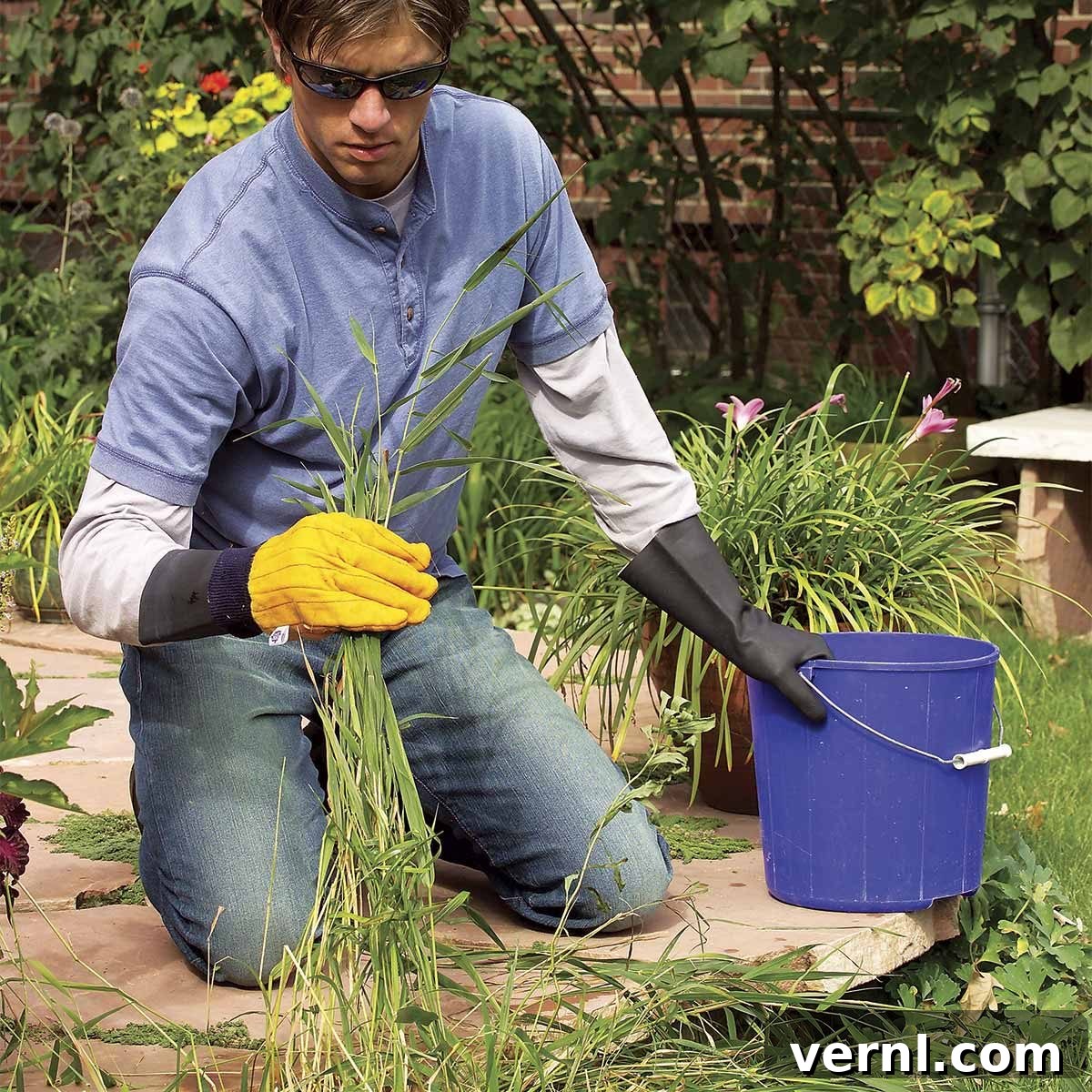
- Hand-Pulling: This is often the most effective method, especially for small infestations. Pulling weeds by hand, including the roots, is a surefire way to remove them completely. It’s often easier after it rains when the soil is softer.
- Weeding Tools: Various tools can assist in weed removal, such as patio knives, garden hoes, and long-handled weed pullers. These tools make it easier to dig out weeds, including their roots, without excessive bending or straining.
- String Trimmers: String trimmers can be used to cut weeds down to the ground, offering a quick solution. While they won’t eliminate the roots, they can keep weeds in check.
- Prevention is Key: Preventing weeds from taking hold is the best approach. Maintaining healthy soil and planting strategically can significantly reduce weed growth. Using mulch around your plants, such as wood chips, can also help to suppress weed growth.
Choosing the Right Weed Control Method
The best weed control method depends on several factors, including the type of weeds, the size of the infestation, and your personal preferences. Consider the following when deciding:
- Weed Type: Annual weeds are generally easier to control than perennial weeds. Vinegar can be effective on annuals, while hand-pulling or more comprehensive methods may be necessary for perennials.
- Infestation Size: For small patches of weeds, hand-pulling or spot-treating with vinegar may be sufficient. Larger infestations might require a combination of methods or a different approach.
- Environmental Impact: Consider the environmental impact of any method you choose. Natural methods like hand-pulling or mulch are generally considered more environmentally friendly than chemical herbicides.
- Personal Preference: Ultimately, choose the method that you find most practical and manageable for your situation.
Conclusion: Achieving a Weed-Free Garden
Controlling weeds is an ongoing process. Understanding your options and choosing the right method is essential for a beautiful and healthy garden or landscape. While vinegar can be a helpful tool in your weed control arsenal, remember its limitations and prioritize safety. Combining various methods, including hand-pulling, using preventative measures, and choosing the appropriate tools, will provide the best and most sustainable results in your fight against weeds.