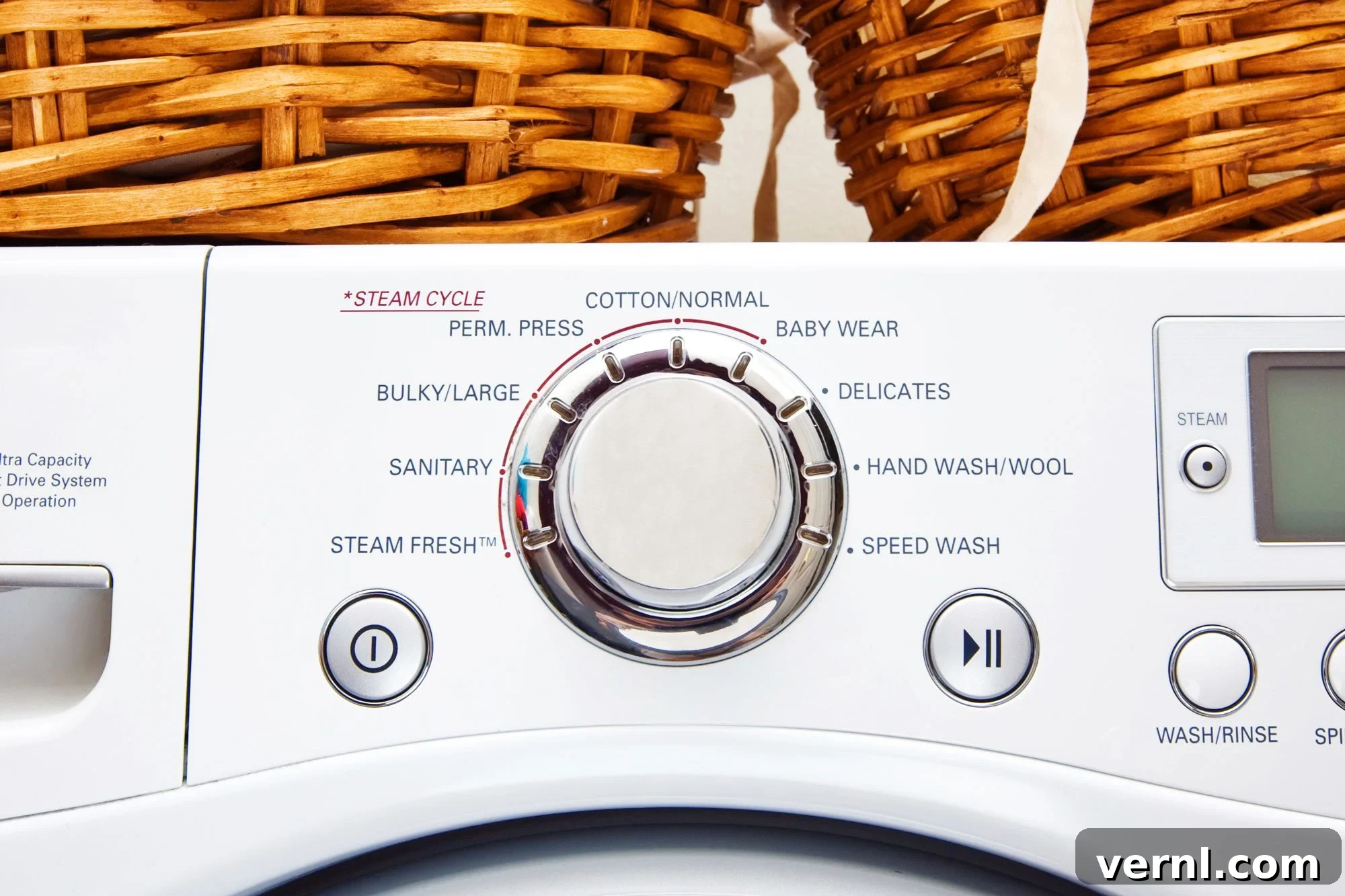
Navigating the various settings on a modern washing machine can often feel like deciphering an ancient code. From “Delicates” to “Heavy Duty,” and the sometimes perplexing “Bedding” and “Towels” options, the choices are abundant. But perhaps no two cycles cause more common confusion than the seemingly straightforward “Normal” and the somewhat enigmatic “Permanent Press.” Do your clothes really need different treatment? And what exactly is “Perm Press” anyway?
For many, the default “Normal” cycle has become the unconscious go-to for almost every laundry load. Yet, the dedicated buttons for other settings exist for a powerful reason – they are meticulously designed to optimize care for specific fabric types and garment needs, ultimately extending the life of your clothes and saving you precious time on post-wash chores like ironing. Understanding these essential cycles can transform your laundry routine from a guessing game into a precise, garment-preserving science.
To shed light on these common laundry dilemmas and unravel the mysteries of proper fabric care, we consulted Haven Polich, a seasoned product manager at Asko, a renowned manufacturer known for its Scandinavian-inspired laundry and kitchen appliances. Polich emphasizes that selecting the correct wash cycle is not just a preference but a crucial step for proper garment care, preserving the quality, appearance, and longevity of your entire wardrobe. Let’s delve deeper into the distinctions between Permanent Press and Normal cycles, and discover precisely when to use each for the best, most efficient results.
Demystifying the Permanent Press Cycle: Gentle Care for Wrinkle-Prone Fabrics
The term “Perm Press” often sparks immediate curiosity. As you might infer, “Perm” is indeed an abbreviation for “permanent.” But what does this translate to in terms of practical laundry care for your garments?
“The permanent press cycle on a washing machine is specifically engineered for a gentler approach to washing and rinsing,” Polich meticulously explains. “It utilizes a strategic combination of warm water during the primary wash phase and then transitions to cold water for rinsing. This controlled temperature contrast, coupled with a slower spin speed compared to the Normal cycle, is precisely designed to relax fabric fibers and minimize wrinkling in susceptible materials.”
The Historical Roots and Evolution of Permanent Press
The origins of the Permanent Press cycle trace back to a fascinating period of textile innovation in the mid-20th century. During the 1950s, groundbreaking chemical treatments were developed that allowed certain fabrics, particularly synthetic blends and specially treated natural fibers, to resist wrinkles effectively. This gave rise to the popular concept of “permanently pressed” clothes. These revolutionary “wash-and-wear” garments became incredibly popular because they significantly reduced or even eliminated the laborious need for ironing, offering unprecedented convenience to consumers. As these innovative, low-maintenance fabrics gained widespread traction, washing machine and dryer manufacturers responded by introducing specialized cycles designed to care for them properly, thus giving birth to the Permanent Press setting.
Today, while the specific chemical treatments and fabric compositions might have evolved considerably, the fundamental principle behind the Permanent Press cycle remains: it is still the ideal choice for fabrics that are inherently prone to wrinkling or that simply benefit from gentler handling during the wash process. Many appliance brands use alternative, more descriptive names for this cycle, such as “Casual,” “Wrinkle Control,” or “Easy Care,” but their underlying function and objective are universally the same.
Identifying Ideal Fabric Types and Garments for Permanent Press
So, exactly what kind of clothes should you confidently place into the Permanent Press cycle? Polich advises, “It is best utilized for clothing primarily made of synthetic fibers, as well as natural fibers that are known to wrinkle easily and benefit from a gentler touch.”
- Synthetic Fibers: Materials such as polyester, nylon, rayon, acrylic, and various blends incorporating these synthetics are prime candidates. Think of items like activewear, delicate blouses, most dress shirts, synthetic casual wear, and even some types of curtains.
- Blended Fabrics: A significant portion of modern apparel combines both natural and synthetic fibers, such as popular cotton-polyester blends. These fabrics almost always benefit significantly from the wrinkle-reducing action and gentle care provided by the Perm Press cycle.
- Lighter Natural Fibers: Certain lighter-weight cottons, finer linens, or silk blends (it is absolutely crucial to always check the garment’s care label!) that are particularly prone to creasing and require special handling can also thrive in this cycle.
Ultimately, if your garment’s care label explicitly states “permanent press,” “easy care,” “no-iron,” or “wrinkle-resistant,” the Permanent Press cycle is unequivocally your best choice. Using this cycle correctly can significantly help you avoid the often tedious and time-consuming task of ironing, which Polich rightly notes, “can gradually damage the fabric fibers over time, shortening the garment’s lifespan.”
Key Benefits of Incorporating the Permanent Press Cycle into Your Routine
- Significant Wrinkle Reduction: The foremost advantage of this cycle is its exceptional ability to minimize wrinkles, saving you considerable time and effort spent on post-wash ironing.
- Enhanced Fabric Protection: The inherently gentler agitation and slower spin speed reduce overall stress and strain on delicate fabric fibers, directly contributing to your clothes lasting longer and maintaining their original quality.
- Superior Color Preservation: The warm wash helps to clean effectively, while the critical cold rinse phase helps to “set” colors, significantly preventing premature fading and keeping your garments looking vibrant.
- Potential Energy Efficiency: While the wash phase uses warm water, the overall gentler action and often shorter duration of the cycle can contribute to slightly lower energy consumption compared to a heavier-duty wash using hot water.
A typical Permanent Press cycle usually takes approximately 30 minutes to complete, making it a relatively quick and efficient option for garments that do not demand aggressive cleaning but require wrinkle prevention.
The Workhorse: Understanding the Robust Normal Cycle
The “Normal” cycle earns its name as the default setting for a very good reason – it’s designed to be the everyday workhorse for the majority of household laundry loads. This cycle provides a more vigorous and thorough cleaning action, making it perfectly suitable for durable fabrics and items that can confidently withstand higher agitation and faster spin speeds.
What Defines the Powerful Normal Cycle?
In stark contrast to the gentler Permanent Press cycle, the Normal cycle deliberately employs faster, more intense agitation and a robust, high-speed spin. This powerful combination is exceptionally effective at dislodging deeply embedded dirt, grime, and common stains from sturdy fabrics. While the default water temperature for the Normal cycle is often warm, most modern washing machines empower users to customize the water temperature to hot, warm, or cold, offering vital flexibility based on the garment’s specific soil level, fabric type, and color. Furthermore, you can typically adjust settings for heavier soil levels, deeper water amounts for bulky items, or extended rinse times to effectively tackle even the toughest cleaning challenges.
Ideal Fabric Types and Garments for the Normal Cycle
The Normal cycle is unequivocally best suited for items that are inherently durable and can tolerate a more aggressive wash environment. This comprehensive category includes:
- Sturdy Cottons: Untreated, resilient cotton garments like everyday jeans, sturdy t-shirts, cotton blend casual wear, and most durable everyday cotton apparel.
- Towels and Bedding: The vast majority of towels and sheets, particularly those crafted from durable cotton and cotton blends, greatly benefit from the thorough and deep cleaning power of the Normal cycle. (A crucial note: delicate bedding or specialty fabrics like silk sheets might necessitate a specific “Bedding” or “Delicates” cycle if available on your machine, or even specialized hand washing.)
- Heavily Soiled Items: Work clothes, children’s play clothes, gardening attire, or any garment with significant dirt, mud, or tough stains will undoubtedly benefit from the Normal cycle’s powerful and effective cleaning action.
It’s important to make a clear differentiation between general, untreated cotton items and those specifically treated for “permanent press” or “no-iron” properties. While a robust, everyday cotton t-shirt is perfectly suited for the Normal cycle, a cotton-polyester dress shirt explicitly labeled “easy care” would almost certainly benefit far more from the gentle, wrinkle-preventing action of the Permanent Press cycle.
Historical Context and Technological Evolution
The earliest washing machines were, by today’s sophisticated standards, incredibly basic. Often, they featured only one fundamental “normal” wash cycle. These rudimentary machines, initially hand-powered agitators, gradually underwent significant evolution with the advent of electricity and continuous mechanical advancements throughout the 20th century. As fabric technology progressed and consumers increasingly demanded more specialized care for their diverse and growing wardrobes, manufacturers began diligently adding more nuanced cycles and expanded options. Today’s highly advanced machines, such as the premium appliances from Asko, can offer upwards of 25 intuitively named programs, including the enduring and indispensable Normal cycle, brilliantly showcasing just how far laundry technology has advanced.
A Normal cycle typically takes approximately an hour to complete, though this duration can vary significantly between different machine models and manufacturers. It also depends on chosen customizations like extra rinses, higher water levels, or specific settings for heavily soiled items. This longer duration, combined with its vigorous action, ensures a deep and comprehensive clean for your most resilient and frequently used items.
Permanent Press vs. Normal: Making the Right Laundry Decision Every Time
The ultimate choice between the Permanent Press and Normal cycles fundamentally boils down to thoroughly understanding your garments’ fabric composition, their current soil level, and your desired outcome for the laundered items (e.g., paramount wrinkle prevention versus robust deep cleaning). While both cycles are absolutely fundamental to modern laundry, their distinct approaches to agitation, water temperature, and spin speed make them uniquely suitable for different laundry needs and garment types.
Key Differences and When to Choose Each Cycle
- Agitation and Spin Speed: The Normal cycle employs higher, more vigorous agitation and a faster spin speed to efficiently remove more water, making it ideal for sturdy fabrics and items with heavy soil. Permanent Press, conversely, utilizes gentler agitation and a significantly slower spin speed to minimize fabric stress, prevent excessive tangling, and crucially, to prevent wrinkles.
- Water Temperature: The Permanent Press cycle typically uses warm water for the primary wash and transitions to cold water for rinsing – a critical step for effectively relaxing fibers and promoting wrinkle release. The Normal cycle offers greater flexibility with water temperature, allowing you to choose from hot for sanitizing and heavy soil, warm for general cleaning, or cold for delicate colors and energy conservation.
- Wrinkle Prevention: Permanent Press is expertly designed to reduce and prevent wrinkles, making it the preferred choice for clothes you wish to wear straight from the dryer with minimal or no need for ironing. The Normal cycle, due to its more vigorous action, is inherently more likely to create wrinkles in fabrics susceptible to creasing.
- Cleaning Power: For heavily soiled items, robust everyday wear, or durable fabrics that require a thorough and deep clean, the Normal cycle’s powerful action is unequivocally superior. Permanent Press, while effective, provides a good clean for moderately soiled, wrinkle-prone items.
- Fabric Longevity: Consistently using the appropriate wash cycle is paramount to extending the overall life and maintaining the quality of your clothing. Over-washing delicate items on the Normal cycle can lead to premature wear, stretching, or damage, while repeatedly under-cleaning heavily soiled items on the gentler Perm Press might not achieve the desired cleanliness.
Always make it an unwavering habit to meticulously check the care labels sewn into your clothing. These labels are the ultimate guide provided directly by the garment manufacturer and offer specific, tailored instructions for washing, drying, and ironing. They often clearly indicate “permanent press,” “easy care,” or other precise cycle recommendations. As Polich wisely advises, “Consistently reading the labels of your clothing, and subsequently using the appropriate cycles, can significantly help to increase the longevity, preserve the appearance, and maintain the quality of your cherished pieces.”
Beyond the Basics: Other Essential Washing Machine Cycles to Know
While Permanent Press and Normal are indeed frequently used, modern washing machines boast a comprehensive suite of other specialized cycles, each meticulously tailored for unique laundry demands. Familiarizing yourself with these additional cycles can further optimize your fabric care routine and enhance your overall laundry results.
- Delicates/Hand Wash: Specifically designed for fragile items like lace, silk, lingerie, or delicate blends, this cycle uses very gentle agitation and extremely low spin speeds to prevent stretching, snagging, or irreversible damage.
- Heavy Duty: This robust cycle is reserved for extremely soiled, durable items such as work uniforms, heavily stained children’s play clothes, muddy outdoor gear, or sturdy bath mats. It typically uses higher water levels, longer wash times, and strong, prolonged agitation for maximum cleaning power.
- Express/Quick Wash: If your primary goal is to save time and energy for lightly soiled garments, this cycle is ideal for items that simply need a quick refresh rather than a deep clean. Laundry expert Patric Richardson, acclaimed author of Laundry Love, is a strong advocate for the express wash. He eloquently shares on his popular YouTube channel, “If your clothes aren’t clean in 30 minutes, they’re simply not going to come clean.” Richardson further elaborates, “That’s the fundamental magic of the Express cycle. If you smartly bring the water temperature up to warm and you don’t use too much detergent, the 30-minute cycle is perfectly fine no matter how dirty your clothes are.” It’s crucially important to note that while the Express cycle might have a similar duration to Permanent Press (around 30 minutes), it typically utilizes a faster spin speed, making it generally less suitable for highly wrinkle-prone items.
- Towels/Bedding: Many advanced machines offer dedicated cycles specifically designed for towels and bedding. These cycles often employ specific water levels, targeted agitation patterns, and specialized rinse cycles to ensure bulky items are thoroughly saturated, effectively cleaned, completely rinsed of detergent residue, and to maintain their desired fluffiness and softness.
Practical Tips for Optimal Laundry Care and Enhanced Efficiency
Beyond simply choosing the correct wash cycle, incorporating a few best practices into your laundry routine can significantly enhance your results, prolong the life of your garments, and even make the process more efficient:
- Sort Your Laundry Mindfully: Always separate clothes not just by color, but also by fabric type (e.g., delicates, sturdy cottons, synthetics) and their respective soil levels. This vital step prevents damage to fragile items and ensures effective, targeted cleaning for all garments.
- Avoid Overloading the Machine: A packed, overloaded washing machine prevents proper agitation, restricts water circulation, and hinders effective rinsing. This leads to less clean clothes, potential damage to garments from friction, and increased wear and tear on your washing machine’s internal components.
- Use the Right Amount of Detergent: As laundry expert Patric Richardson consistently highlights, using too much detergent is a common mistake. It can leave unsightly residue on clothes, trap dirt, potentially lead to dullness, and even cause skin irritation. In most cases, less detergent is indeed more effective.
- Promptly Remove Clothes from the Washer: Leaving wet clothes to sit in the washing machine for extended periods can quickly lead to unpleasant mildew, bacterial growth, and even more stubborn wrinkles. Always transfer them to the dryer or hang them to air dry as soon as the cycle concludes.
- Consider Your Dryer Settings: Just as with your washer, your dryer likely features a Permanent Press setting. This corresponding dryer cycle typically uses lower heat levels and incorporates a crucial cool-down period to gently relax fibers and further prevent wrinkles from setting in, complementing your wash cycle choice.
Conclusion: Empowering Your Laundry Routine for Impeccable Results
What initially seemed like a confusing and overwhelming array of buttons on your washing machine is, in fact, a thoughtfully engineered and meticulously designed system created to help you care for your clothes with optimal effectiveness and precision. By truly understanding the distinct purposes and mechanisms of the Permanent Press and Normal cycles – and indeed, all the other specialized settings – you gain the invaluable power to make informed, intelligent decisions for every single load of laundry.
Choosing the correct wash cycle not only ensures your clothes emerge cleaner, fresher, and significantly less wrinkled, but it also plays an absolutely vital role in extending their lifespan, preserving their original colors, and maintaining their desired texture and feel. This mindful, informed approach to laundry is not merely about achieving efficiency; it’s profoundly about sustainability, about making the most of your treasured wardrobe, and about treating your garments with the respect they deserve. So, the next time you approach your washing machine, remember: a little knowledge and a deliberate choice go a very long way in achieving perfectly clean, beautifully well-cared-for garments, load after exquisite load.