In the expansive and ever-evolving world of home improvement and interior design, the quest for innovative, cost-effective, and aesthetically pleasing solutions is constant. While Medium-Density Fiberboard (MDF) is a widely recognized and utilized material in furniture construction, cabinetry, and various millwork applications, its potential as a primary flooring solution often remains unexplored or dismissed. Yet, for those daring to think outside the traditional box, MDF presents a unique and compelling option for creating stunning, budget-friendly floors that can surprisingly stand the test of time.
This article delves into our firsthand, five-year experience with MDF as a finished floor. What began as a provisional measure has remarkably evolved into a durable, attractive, and much-admired surface. Join us as we explore the practicalities, benefits, and drawbacks of choosing MDF for your floors, offering an honest assessment of its performance in a real-world setting. Prepare to challenge your preconceived notions about this versatile material and discover if MDF flooring could be the unexpected solution you’ve been searching for.
The Unexpected Journey: A Five-Year Experiment with MDF Flooring
Our story began approximately half a decade ago, amidst the extensive renovation of our home, specifically the addition of a sprawling 1,200-square-foot upstairs area. This significant expansion brought with it a cascade of expenses, from structural framing and intricate electrical work to plumbing and insulation. As the budget for these essential components grew, the need for an affordable flooring alternative became not just a preference, but a critical necessity. Traditional choices like solid hardwood, high-end engineered wood, or premium laminate were simply beyond our financial scope at that stage of the project.
It was in this context of fiscal pragmatism and creative problem-solving that Medium-Density Fiberboard emerged as a surprising, albeit unconventional, candidate. Our initial vision for the MDF was purely utilitarian: a robust, low-cost ‘placeholder’ floor that would serve its purpose until we could replenish our savings and invest in a more expensive, “permanent” upgrade. At the time of our installation, the cost of a standard 4×8-foot sheet of MDF had seen a modest increase from its historical lows, now averaging around $30 per sheet. Despite this rise, it remained significantly more economical than almost any other readily available flooring material, offering unparalleled value per square foot.
To our astonishment, this “temporary” solution defied all expectations. Five years later, our MDF floor has not only endured the rigors of daily life but has done so with remarkable resilience and aesthetic appeal. This extended experiment has not only saved us a substantial amount of money but has also provided invaluable insights into the true potential and limitations of MDF as a viable, long-term flooring option, proving that ingenuity and careful execution can transform humble materials into lasting elements of home design.
The Blueprint for Durability: Installing MDF as a Finished Floor
The decision to opt for budget-friendly materials often necessitates a greater investment of personal labor and meticulous attention to detail. Our journey into installing MDF flooring was a testament to this principle. While the process itself is not overly complex, it demands precision, patience, and a hands-on approach to ensure a durable and aesthetically pleasing outcome. This section details the comprehensive steps we undertook to transform raw MDF sheets into a functional and stylish floor.
Essential Pre-Installation Steps and Subfloor Preparation
A successful flooring installation, regardless of material, begins with a thoroughly prepared subfloor. For our MDF project, this meant ensuring our existing plywood subfloor was immaculately clean, perfectly level, and completely free of any debris, protruding nail heads, or errant screws. Even minor imperfections in the subfloor can translate into visible irregularities or create unstable areas in the finished MDF surface. We meticulously addressed any uneven spots by sanding down high points and filling low spots with appropriate leveling compounds. Given the presence of our radiant in-floor heating system, we also paid close attention to moisture levels and ensured the subfloor was completely dry before proceeding. MDF’s inherent density makes it an efficient conductor and retainer of heat, which was a significant advantage in maximizing the efficiency of our heating system.
Precision Laying and Robust Securing of MDF Sheets
With the subfloor perfectly prepped, we embarked on laying the substantial 4×8-foot sheets of MDF. The large format of these sheets was a deliberate choice, as it minimized the number of seams and contributed to a more expansive, monolithic aesthetic, echoing the sophisticated look of large-format concrete or stone tiles. Accurate cutting of the MDF sheets was paramount, particularly around room perimeters, doorways, and any floor registers. It’s worth noting that cutting MDF generates a significant amount of fine dust, so adequate ventilation and a robust dust collection system were indispensable for maintaining a healthy working environment.
To ensure maximum stability and longevity, we employed a dual-fastening method: construction adhesive and screws. A high-quality construction adhesive was generously applied to the subfloor in a serpentine pattern before each MDF sheet was carefully positioned. This adhesive provides a strong, permanent bond and helps to mitigate any potential squeaking that might arise from movement between the MDF and the subfloor. Following the adhesive application, we systematically screwed the MDF sheets into the subfloor, using screws spaced approximately every 12 inches along the edges and every 16 inches in the field. While many DIYers might choose to countersink screw heads and fill them for a completely seamless finish, we deliberately opted to leave the screw heads exposed. This decision contributed to an industrial, subtly textured aesthetic that perfectly complemented the raw, honest character we aimed for. For those preferring a perfectly smooth surface, readily available wood fillers specifically designed for MDF can be used to conceal screw heads before the final sanding process.
Integrating Aesthetics and Functionality: Aluminum Channels
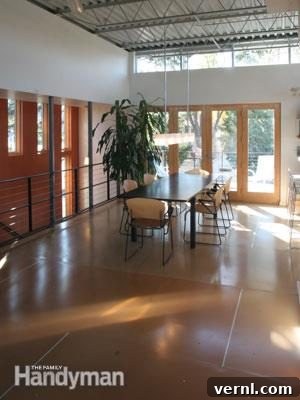
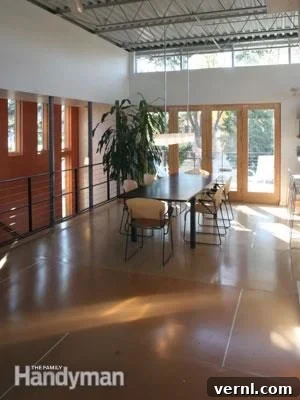
A crucial design element that transformed our MDF floor from a basic surface into a statement piece was the strategic integration of ½-inch aluminum channels between the sheets. These channels served a dual purpose, offering both significant functional benefits and a sophisticated aesthetic upgrade. Visually, they created distinct, clean lines that broke up the expansive surface of the MDF, imparting a modern, architectural feel reminiscent of polished concrete floors with precise expansion joints. This design choice elevated the entire look, moving it beyond mere utility to intentional design.
Functionally, the aluminum channels were invaluable for accommodating the natural expansion and contraction of the MDF sheets. While MDF is known for its dimensional stability compared to solid wood, it can still experience slight movement in response to fluctuations in temperature and humidity, especially in conjunction with our radiant in-floor heating system. The channels provided the necessary allowance for this subtle movement, preventing buckling, warping, and ensuring the long-term integrity and flatness of the floor. Installation involved carefully cutting and securing these channels precisely along the seams, ensuring they were perfectly flush with the MDF surface for a sleek, integrated finish.
The Art of Finishing: Sanding and Multi-Layer Polyurethane Sealing
Once all MDF sheets were securely laid and the aluminum channels were in place, the entire floor underwent a meticulous sanding process. This was a critical step for achieving a uniformly smooth surface, eliminating any minor imperfections, pencil marks, or slight height discrepancies between adjacent sheets. We initiated the sanding with a medium-grit sandpaper (typically 80-100 grit) to level the surface and remove any minor irregularities. This was followed by progressively finer grits (120-150 grit) to achieve a silky-smooth finish, ready for sealing. Thorough dust removal after sanding was paramount; any residual dust would become trapped under the sealant, compromising the finish’s clarity and smoothness. We used a powerful shop vac and then wiped the surface with a tack cloth.
The final, and arguably most vital, stage of the installation was the application of multiple layers of polyurethane. We opted for three to four coats, allowing ample drying time between each application as per manufacturer instructions. Polyurethane serves several crucial functions: it creates a durable, protective barrier against daily wear and tear, significantly enhances the aesthetic by enriching the natural tones of the MDF, and, most importantly, acts as a robust sealant against moisture – addressing one of MDF’s primary vulnerabilities. For optimal durability and a richer, amber hue, an oil-based polyurethane is often preferred, though water-based variants offer quicker drying times and lower volatile organic compound (VOC) emissions.
A Consideration for Consistency: MDF Color Variability
Prospective installers of MDF flooring should be aware of a subtle yet significant characteristic: inherent color variability. Since MDF is manufactured from processed wood fibers, the specific wood species, resin type, and manufacturing batch can result in noticeable differences in hue. You might encounter sheets ranging from light yellows to various shades of brown or tan. This can present either a challenge if absolute uniformity is desired, or an opportunity for a more organic, variegated floor. To ensure the highest degree of color consistency across your entire floor, it is strongly recommended to purchase all the MDF sheets required for your project simultaneously, from the same supplier, and ideally from a single production batch. This minimizes the likelihood of noticeable color discrepancies once the floor is installed and finished.
Beyond the Basics: Weighing the Advantages and Disadvantages of MDF Flooring
Our five years of living with MDF flooring have provided us with invaluable practical insights, allowing us to present a comprehensive overview of its strengths and weaknesses. Like any construction material, MDF flooring comes with its own unique set of pros and cons that any DIY enthusiast or homeowner should carefully consider before committing to installation.
The Distinct Advantages (Pros):
- Unmatched Economical Choice: This is arguably the most compelling advantage of MDF flooring. When compared against the per-square-foot cost of traditional flooring options such as solid hardwood ($5-$15+), quality laminate ($2-$7), engineered wood ($4-$10+), or even some luxury vinyl planks ($3-$8), MDF presents an extraordinarily cost-effective solution. This significant cost saving was the primary impetus for our initial decision and continues to be its strongest selling point, particularly for large areas or projects with strict budget constraints.
- Exceptional User-Friendliness and Workability: MDF is remarkably easy to work with for the average DIYer. Its consistent density and uniform composition mean it cuts cleanly with standard woodworking tools, without the splintering often associated with plywood or natural wood. There is no grain to contend with, allowing for cuts in any direction. While the large sheets are heavy, the actual installation process of gluing, screwing, sanding, and sealing is straightforward, requiring readily available tools and moderate DIY skills. This ease of installation contributes significantly to overall savings by minimizing the need for professional labor.
- Impressive Stability and Solid Feel Underfoot: In stark contrast to some thinner floating floors that can feel hollow, plasticky, or prone to movement, a properly installed MDF floor delivers a surprisingly solid, dense, and stable feel underfoot. When meticulously glued and screwed to the subfloor, it creates a robust and unyielding surface that feels premium and contributes positively to the structural integrity of the room. Its inherent density also provides excellent sound dampening properties, effectively reducing impact noise and sound transfer between floors, a distinct benefit in our upstairs addition.
- Unique, Modern, and Commendable Aesthetic: Perhaps one of the most delightful and unexpected benefits was the striking aesthetic achieved. The finished surface, especially with the geometric lines created by the aluminum channels, frequently elicits compliments and draws comparisons to sophisticated polished concrete or even large format natural stone. However, unlike cold concrete, MDF retains a subtle warmth that polyurethane enhances. The natural, subtle variations in MDF’s tones, amplified by the protective finish, create a clean, minimalist, and contemporary look that can seamlessly integrate with a wide array of interior design styles, from industrial to modern farmhouse. It offers a sophisticated blank canvas for diverse decor choices.
- High Compatibility with Radiant In-Floor Heating: As demonstrated in our own home, MDF’s dense composition makes it an ideal companion for radiant in-floor heating systems. It conducts and retains heat efficiently and evenly, contributing to a consistently comfortable and well-heated living space. Its dimensional stability means it is less prone to the significant expansion and contraction issues that can sometimes plague solid wood floors when exposed to radiant heat, making it a reliable choice for heated environments.
The Inherent Disadvantages (Cons):
- Potential for Harmful Fumes (VOCs): A significant concern associated with standard MDF is the potential release of formaldehyde, a volatile organic compound (VOC), both during and after installation. While contemporary MDF formulations typically utilize lower-emission resins, adequate ventilation during installation and the curing period of sealants is absolutely vital. Thorough sealing with high-quality polyurethane significantly mitigates the release of these fumes by encapsulating the material. For environmentally conscious or health-sensitive individuals, actively seeking out ultra-low formaldehyde (ULF) or no-added formaldehyde (NAF) MDF options is a highly recommended, albeit potentially more expensive, alternative.
- Extreme Vulnerability to Water and Moisture: This is unequivocally MDF’s most significant Achilles’ heel. Despite the protective barrier provided by polyurethane, prolonged or extensive exposure to water will cause MDF to swell, delaminate, and irretrievably lose its structural integrity. Spills, no matter how minor, must be cleaned up immediately and thoroughly. Consequently, MDF flooring is categorically unsuitable for high-moisture environments such as bathrooms, laundry rooms, basements, or any area prone to frequent water splashes. Even in kitchens, extreme caution and impeccable sealing are necessary.
- Susceptibility to Scratches and Dents: While MDF is dense, its surface hardness is not comparable to that of natural hardwood, tile, or high-pressure laminates. It is inherently susceptible to scratches, particularly in areas of high foot traffic or where furniture is frequently moved, such as dining rooms where chairs are constantly dragged across the floor. Although the polyurethane finish offers a degree of protection, it is not impervious. Heavy objects dropped, or sharp objects dragged, can leave noticeable dents or gouges. Mitigating strategies include using felt pads under all furniture legs, deploying area rugs in high-traffic zones, and being mindful of pet claws.
- Weight and Handling Challenges: Despite its ease of cutting, the large 4×8-foot sheets of MDF are considerably heavy. Transporting these sheets from the supplier to your home, and then maneuvering them within the house, can be physically demanding and often requires the assistance of at least two people. This physical labor aspect adds to the overall effort of the DIY project.
- Complexity of Repairing Severe Damage: Unlike solid hardwood floors that can be sanded and refinished multiple times to erase damage, repairing severe damage to an MDF floor can be more complex. A deeply scratched, gouged, or water-damaged section might necessitate carefully cutting out and replacing a portion of the sheet. Achieving a seamless blend with the existing floor, especially if there are subtle color variations between batches, can be challenging and may require skillful patching and finishing techniques.
Valuable Lessons Learned: Key Takeaways from Our Five-Year Journey with MDF
Our extensive, five-year experiment with MDF as a finished floor has been an invaluable learning curve, offering profound insights and practical wisdom that we believe are essential for anyone contemplating this unique flooring solution. These are the critical lessons we’ve gleaned:
- The Critical Importance of Batch Consistency: As previously highlighted, MDF sheets can exhibit subtle but noticeable variations in color, texture, and even density depending on the manufacturing batch and supplier. To achieve a uniform and cohesive appearance throughout your entire floor, it is absolutely imperative to purchase all the MDF sheets required for your project at the same time, from the same supplier, and ideally, from a single production batch. Mixing batches can result in visible discrepancies that can detract from the overall aesthetic, particularly after finishing.
- Optimizing Polyurethane Application for a Superior Finish: Through trial and error, we discovered that applying polyurethane directly onto raw MDF, while functional, can sometimes lead to an uneven finish. MDF’s porous nature means it tends to “drink” the first few coats of sealant, and absorption can be inconsistent across the surface. In hindsight, we strongly believe that pre-sealing the MDF sheets with a dedicated primer, a thin coat of shellac, or a specialized sanding sealer before installation would yield a significantly smoother, more consistent, and potentially even more durable finish. This initial sealer would effectively “prime” the surface, allowing subsequent polyurethane coats to build up more evenly and efficiently, requiring fewer topcoats for optimal protection and aesthetics.
- Strategic Placement: Identifying MDF’s Ideal and Unsuitable Environments: Our prolonged experience unequivocally reinforces that MDF flooring is not a universal solution suitable for every room in a home. It performs admirably and provides excellent value in low-moisture, medium-to-low traffic areas such as bedrooms, dedicated home offices, formal living rooms, or guest rooms. However, its inherent vulnerabilities make it demonstrably unsuitable for high-traffic thoroughfares (e.g., main hallways, entryways) and, most critically, any area with a high likelihood of water exposure, including bathrooms, kitchens, basements, laundry rooms, or mudrooms. Understanding and respecting these environmental limitations is paramount for a successful installation and long-term satisfaction.
- The Value of Consistent and Gentle Maintenance: While surprisingly resilient for its cost, MDF flooring benefits significantly from diligent and gentle maintenance. Regular sweeping or vacuuming is crucial to remove abrasive dirt, grit, and debris that can cause microscopic scratches over time. For cleaning, use a damp (not wet!) mop with a mild, pH-neutral floor cleaner, ensuring that no standing water is ever left on the surface. Promptly wiping up any spills, even small ones, is non-negotiable to prevent water infiltration and potential damage. Adhering to these simple maintenance practices will greatly extend the life and beauty of your MDF floor.
- Re-evaluating the “Temporary” Factor for DIY Projects: Our MDF floor was initially conceived as a temporary solution, a stop-gap measure until a more expensive upgrade was feasible. Yet, its gracious endurance over five years challenges this very notion of “temporary.” This experience underscores that when installed correctly, meticulously finished, and maintained diligently, MDF can provide a much longer lifespan than initially anticipated, offering incredible, sustained value. It serves as a powerful reminder for DIYers that thoughtful execution can transform interim solutions into remarkably enduring and satisfying elements of a home, though it’s always wise to understand its inherent compromises compared to premium, lifelong flooring materials.
Our five-year journey with MDF flooring has been a profound testament to the power of ingenuity, resourcefulness, and the surprising potential that can be unlocked from unconventional materials. While it certainly presents its own set of challenges and demands a mindful approach to installation and maintenance, the undeniable economic benefits, distinctive aesthetic appeal, and unexpected durability make it a compelling and worthy option for the adventurous DIYer or anyone seeking an affordable, visually striking, and functional flooring solution. It stands as a powerful reminder that sometimes, the most unexpected choices can lead to the most satisfying and enduring results, redefining what constitutes a “good” floor in the modern home.