
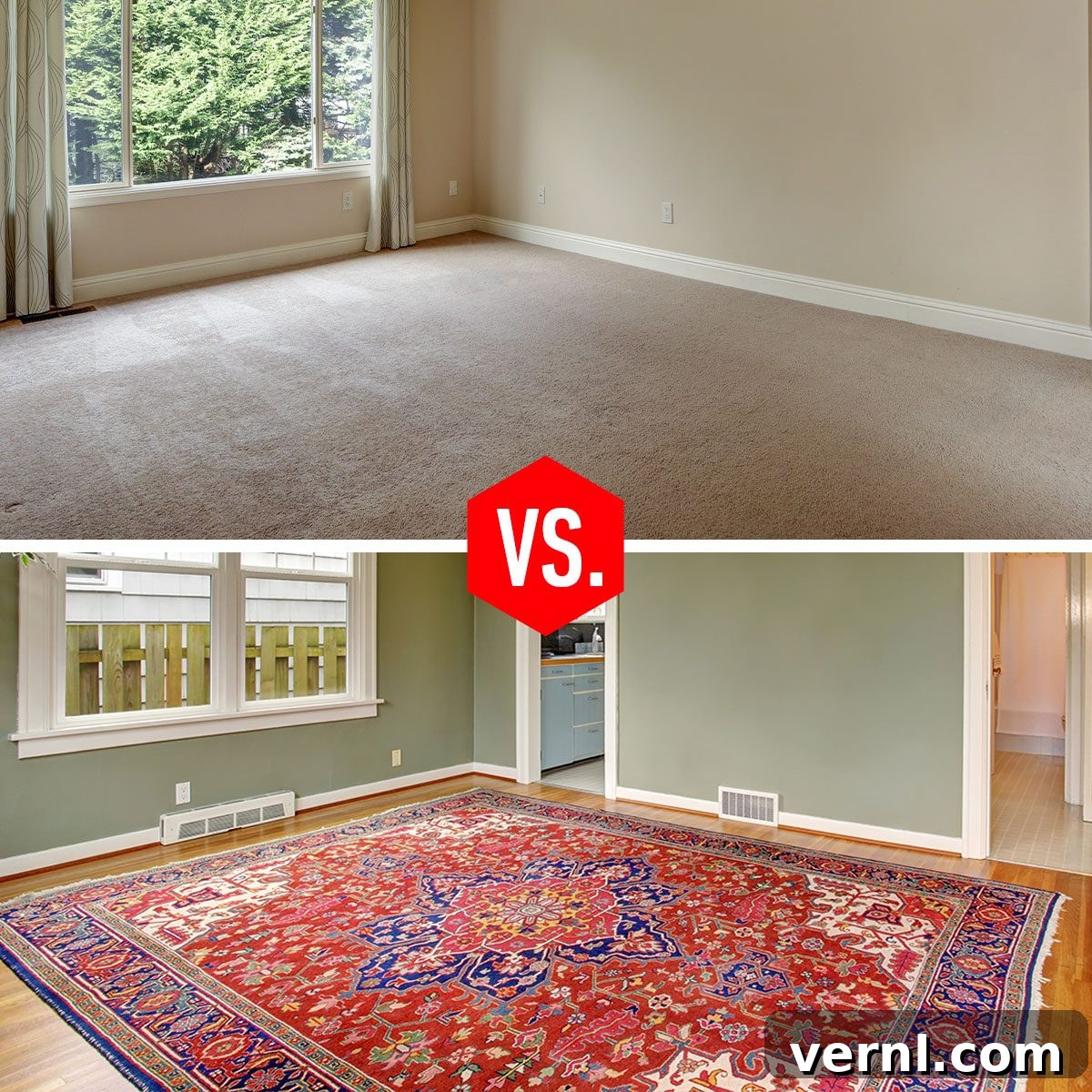
Carpet vs. Rugs: Choosing the Perfect Flooring for Your Home
Embarking on a home renovation or simply looking to refresh your living space often brings you face-to-face with a classic interior design dilemma: wall-to-wall carpeting or versatile area rugs? This choice isn’t merely about aesthetics; it profoundly impacts the comfort, acoustics, insulation, and overall feel of a room. As someone who has navigated the vast world of floor coverings, seeking that ideal balance between style and practicality, I understand the considerations involved in this significant decision. From the nostalgic charm of fully carpeted spaces (yes, even kitchens and bathrooms were once a trend!) to modern, layered looks, the options are plentiful and often perplexing.
My own home, shared with energetic dogs, presented a unique challenge. Their long-term joint health was a priority, leading me to seek maximum cushioning and slip-resistance. This led me to an unconventional yet effective solution: high-quality, neutral wall-to-wall carpets serving as a foundational layer, topped with vibrant, boldly patterned area rugs. This layering strategy not only provided comprehensive coverage and comfort crucial for my pets but also allowed me to infuse color, texture, and visual interest into high-traffic zones, protecting the underlying carpet from wear and tear. It’s a testament to the fact that sometimes, the best solution involves embracing both options strategically.
Interior designer Colette Shelton, known for her keen eye, offers a similar perspective on the versatility of rugs. “While renovating the CocoCozy Design House living room, I layered area rugs for a modern design look. I didn’t want to add wall-to-wall carpeting because it will make the living room look dated. I decided to layer area rugs to add a combination of color and texture to the neutral space.” Shelton further emphasizes the practical benefits: “One of the benefits of using area rugs is that you can always easily swap them out later if you want to change the design of any space.” This flexibility is a significant draw for many homeowners.
Understanding Wall-to-Wall Carpet
When we discuss wall-to-wall carpet, we’re referring to a flooring solution that spans an entire room, from one wall to the next. This type of carpet is meticulously installed using tack strips along the perimeter and stretched to achieve a seamless, taut fit. It’s a permanent or semi-permanent fixture that fundamentally transforms a space, offering a cohesive and often luxurious feel. It acts as a foundational element, influencing everything from ambient noise levels to thermal comfort.
While often associated with budget-friendly builder flips, the quality spectrum of wall-to-wall carpeting is vast. Design expert Beth Martin reminds us, “Quick builder flips and cheap apartments give wall-to-wall carpet a lousy name, but not all carpet is created equal. Luxury carpet is a phenomenal material, but it’s costly and not what is typically seen in most homes. If you have the budget for high-quality carpet, this is a fantastic and lavish option for bedrooms and family rooms.” She warns against opting for lower-end options: “Most carpet is seen as a budget solution because it’s easy to install and rip out, but the inexpensive versions are terrible. Cheap carpet off-gasses forever, is almost impossible to keep clean, and feels awful because it’s just plastic.” Investing in quality is paramount for long-term satisfaction and health.
Advantages of Wall-to-Wall Carpet
- Unrivaled Comfort and Warmth: Carpet provides a wonderfully soft, warm, and inviting surface underfoot, especially appealing in cooler climates or for bedrooms. It cushions falls, making it a safer option for homes with children or elderly residents, and can alleviate pressure on joints.
- Superior Sound Dampening: Its dense fibers absorb sound, significantly reducing echo and noise transfer between rooms or floors. This makes it ideal for nurseries, home offices, or multi-story homes where noise reduction is desired.
- Excellent Insulation: Carpet acts as an effective insulator, helping to regulate the internal temperature of a room year-round. It retains heat in winter, potentially lowering energy bills, and can make a room feel cooler in summer by preventing heat transfer from below.
- Extensive Variety and Customization: Available in an immense array of colors, patterns, textures, and fiber types (such as nylon for durability, wool for natural luxury, or polyester for stain resistance), carpet allows for deep customization to match any interior design scheme.
- Seamless and Cohesive Aesthetic: Wall-to-wall installation creates a uniform, expansive look that can make a room feel larger and more integrated. It provides a consistent backdrop for furniture and decor.
- Enhanced Safety: The non-slip surface of carpet inherently reduces the risk of slips and falls compared to hard flooring, providing peace of mind in busy households.
Disadvantages of Wall-to-Wall Carpet
- Demanding Maintenance: While regular vacuuming is essential, wall-to-wall carpet requires occasional professional deep cleaning to remove embedded dirt, allergens, and stains. Spills can be particularly challenging to clean and may require specialized treatments.
- Allergen Accumulation: Carpet fibers can trap allergens such as dust, pollen, pet dander, and mold spores, posing concerns for individuals with allergies or asthma. Regular, thorough cleaning is crucial to mitigate this.
- Long-Term Commitment: As a permanent fixture, changing wall-to-wall carpet is a significant undertaking in terms of time, effort, and cost. It’s less flexible for those who frequently desire decor changes.
- Vulnerability to Moisture Damage: Carpet can be susceptible to water damage, leading to mildew, mold growth, and unpleasant odors if not dried promptly and thoroughly after spills or leaks.
- Potential for Accelerated Wear: Budget-grade carpets, particularly in high-traffic areas, tend to show wear, matting, and staining more quickly than higher-quality options, necessitating earlier replacement.
- Resale Value Impact: While some buyers appreciate carpet, others may view wall-to-wall carpeting as outdated or prefer hard surfaces, potentially affecting a home’s resale appeal or requiring replacement.
Exploring Area Rugs
An area rug is a distinct piece of heavy fabric designed as a floor covering, characterized by its versatility and mobility. Unlike wall-to-wall carpet, a rug covers only a portion of the floor and is not permanently affixed. This makes it an incredibly adaptable element in home decor, capable of instantly transforming a room. Indoor rugs serve multiple purposes: they can define zones within an open-plan space, add a pop of color and pattern, introduce warmth, and enhance comfort. Similarly, outdoor rugs for wood decks or patios can effortlessly create a cozy ambiance or inject life into an otherwise drab exterior area, extending your living space outdoors.
Advantages of Area Rugs
- Unmatched Versatility and Flexibility: Area rugs are incredibly easy to move, replace, or rotate, allowing you to quickly refresh the look and feel of a room without a significant investment or commitment. You can swap them out seasonally, relocate them to different rooms, or even take them with you when you move.
- Effortless Cleaning and Maintenance: Most area rugs can be cleaned with a standard vacuum. Smaller rugs, particularly those made from durable synthetic fibers, can often be machine washed, offering a convenient cleaning solution. Spot cleaning is generally straightforward for minor spills.
- Floor Protection and Preservation: Rugs act as a protective barrier for hard floors (like hardwood, tile, or laminate), shielding them from scratches, dents, and wear, especially in high-traffic zones or under heavy furniture. Rugs are excellent for protecting hardwood floors.
- Expansive Design Variety: Area rugs are available in an even wider range of colors, patterns, shapes, sizes, and materials than carpets. This includes unique artisanal pieces, vintage finds, and mass-produced designs, offering endless possibilities for personal expression.
- Cost-Effective Design Updates: While high-quality, hand-knotted rugs can be costly, more affordable options allow you to dramatically transform a space, add character, or define zones without breaking the bank. They are an accessible way to experiment with trends.
- Zoning and Space Definition: In open-concept living areas, a strategically placed area rug can effectively delineate different functional zones, such as a living area from a dining space, creating visual structure and intimacy.
- Enhanced Comfort and Aesthetics: Rugs add a layer of softness and warmth underfoot, improving comfort, and contributing to the overall aesthetic appeal by introducing texture and visual interest.
Disadvantages of Area Rugs
- Potential Slipping Hazard: Without a proper rug pad underneath, area rugs can slide around on hard floors, bunch up, or curl at the edges, creating a significant tripping and slipping hazard. The right underlay is crucial for safety and rug longevity.
- Size and Placement Limitations: Rugs come in standard sizes, which may not always perfectly fit the dimensions or layout of your space, requiring careful planning and measurement. Incorrect sizing can disrupt the flow of a room.
- Partial Coverage and Insulation: Because rugs don’t cover the entire floor, they offer less comprehensive sound dampening and thermal insulation compared to wall-to-wall carpet. Gaps around the rug can still allow for heat loss and sound reflection.
- Tripping Risk: Even with a rug pad, the edges of some rugs, especially those with thicker piles or curled corners, can still pose a tripping risk if not properly maintained or secured.
- Less Uniform Appearance: While versatility is a strength, a collection of mismatched rugs can sometimes create a disjointed or cluttered look if not thoughtfully curated.
Making the Right Choice: Carpet or Rugs?
The decision between wall-to-wall carpet and area rugs ultimately hinges on your specific needs, lifestyle, design preferences, and budget. Each option offers distinct advantages and disadvantages that cater to different living situations and aesthetic goals. Consider these scenarios to help guide your choice:
Choose Wall-to-Wall Carpet If…
- You prioritize maximum comfort and warmth underfoot. Carpet provides an unparalleled soft landing and insulation, making rooms feel exceptionally cozy and inviting, especially in bedrooms or family rooms where bare feet are common.
- You desire superior sound absorption. For reducing echo in large rooms, minimizing noise transfer in multi-level homes, or creating a quiet, serene environment, carpet’s sound-dampening qualities are unmatched.
- You seek a cohesive, unified aesthetic. Wall-to-wall installation creates a seamless look that can make a room feel larger and more integrated, providing a consistent backdrop for your furniture and decor.
- You are looking for enhanced safety, especially for children or the elderly. The cushioned surface of carpet provides a softer landing in case of falls and reduces slip hazards, offering peace of mind.
- You aim to improve thermal insulation and potentially reduce energy bills. Carpet acts as an effective insulator, helping to maintain a comfortable indoor temperature year-round, which can lead to energy savings.
- You prefer a permanent, low-maintenance foundation. While deep cleaning is needed, daily vacuuming is typically sufficient, and you won’t need to worry about rug placement or slippage.
Choose Area Rugs If…
- You desire the flexibility to easily change your decor. Rugs offer an immediate and cost-effective way to update a room’s style, color palette, or theme without a major renovation.
- You have beautiful hard floors you wish to showcase and protect. Rugs allow you to highlight the natural beauty of hardwood, tile, or polished concrete while simultaneously protecting them from wear, scratches, and damage.
- You’re looking for a way to add distinct color, pattern, and texture to your room. A rug can serve as a focal point, tie disparate design elements together, or inject personality into a neutral space. For example, throwing a kitchen rug can bring visual interest and character to the kitchen.
- You need to define specific zones within an open-concept living area. A rug can visually separate a dining area from a living room, or a reading nook from a main conversational space, creating distinct functional zones.
- You rent your home or prefer non-permanent flooring solutions. Rugs are ideal for renters as they can be easily removed and transported, offering a way to personalize a space without altering the permanent fixtures.
- You want to add warmth and comfort to specific areas without covering the entire floor. Rugs provide a soft landing spot and insulation where needed, such as beside a bed or in a seating area.
Ultimately, the “best” choice is the one that aligns most closely with your lifestyle, aesthetic vision, and practical requirements. There’s no single right answer, and as my own home demonstrates, sometimes a thoughtful combination of both carpeting and rugs can create a space that is both beautiful and highly functional. Evaluate your needs, explore the vast options available, and make a decision that will enhance your home for years to come.
Next: Learn how to get creases out of rugs and discover tips to get rugs under beds for perfect placement.