
Your hot tub is a personal oasis, a place for relaxation and therapeutic enjoyment. However, much like a miniature ecosystem, it demands careful attention to maintain its delicate balance. Neglecting the intricate world of hot tub water chemistry can lead to a cascade of problems, ranging from bather discomfort to costly equipment damage and the inconvenient necessity of draining and refilling. A proactive approach to monitoring key chemical parameters, especially Total Alkalinity (TA), is crucial for ensuring a safe, clean, and crystal-clear experience. Understanding what hot tub alkalinity is, how it becomes imbalanced, and most importantly, how to correct it, is fundamental to hot tub ownership.
The Cornerstone of Hot Tub Water Chemistry: Total Alkalinity
According to Alicia Toedter, an expert in education and content at Leslie’s Pool Supplies, Total Alkalinity (TA) and pH are intrinsically linked, forming the bedrock of stable hot tub water chemistry. A healthy relationship between these two parameters is not just recommended; it’s absolutely critical for maintaining balanced water conditions, ensuring a safe environment for bathers, and preserving the clarity and cleanliness of your spa water.
“In essence,” Toedter explains, “Total Alkalinity is vital because it dictates the water’s capacity to sustain stable pH levels, thereby preventing dramatic fluctuations. When TA is within its optimal range, it functions as a robust buffer, effectively resisting abrupt shifts in pH that would otherwise occur when various chemicals are introduced into the water.” She further emphasizes that an unbalanced TA level inevitably leads to rapid pH fluctuations, making it incredibly challenging to bring the pH back into equilibrium. “An imbalanced pH, whether excessively high or low, can precipitate serious issues for both hot tub users and the hot tub’s components,” Toedter cautions.
Why Total Alkalinity is So Important for Your Hot Tub
Total Alkalinity serves as the primary defense against erratic pH behavior, often referred to as “pH bounce.” Without adequate TA, even minor additions of chemicals or common activities like jet operation can send your pH soaring or plummeting. This instability has several detrimental consequences:
- Bather Comfort: Unbalanced pH can cause significant eye and skin irritation, making the hot tub experience unpleasant and potentially harmful. Water that is too acidic (low pH) feels harsh, while water that is too basic (high pH) can also be irritating.
- Sanitizer Effectiveness: The efficacy of your chosen sanitizer (chlorine, bromine, etc.) is heavily dependent on a stable pH. If the pH is too high, sanitizers become sluggish and less effective at killing bacteria and algae, requiring more product to achieve the same results. Conversely, very low pH can cause sanitizers to dissipate too quickly.
- Equipment Longevity: Low pH makes water corrosive, slowly but surely damaging metal components like heaters, pumps, and jets. High pH, on the other hand, promotes scale formation, which can clog filters, restrict plumbing, and reduce the efficiency of your heater, leading to costly repairs or premature equipment failure.
- Water Clarity and Quality: Unbalanced TA and pH often manifest as cloudy water, making your hot tub uninviting. It can also lead to unsightly staining on surfaces, caused by dissolved minerals precipitating out of solution.
Mastering Your Hot Tub’s Chemistry: How to Test Water Parameters
Even if your hot tub water appears pristine, underlying chemical imbalances can be lurking, ready to cause problems. This is why hot tub professionals unanimously recommend a rigorous testing schedule: two to three times per week, and ideally before each use, using a reliable at-home test kit. Regular testing is your first line of defense against potential issues.
Home test kits come in two primary forms, each with its own advantages:
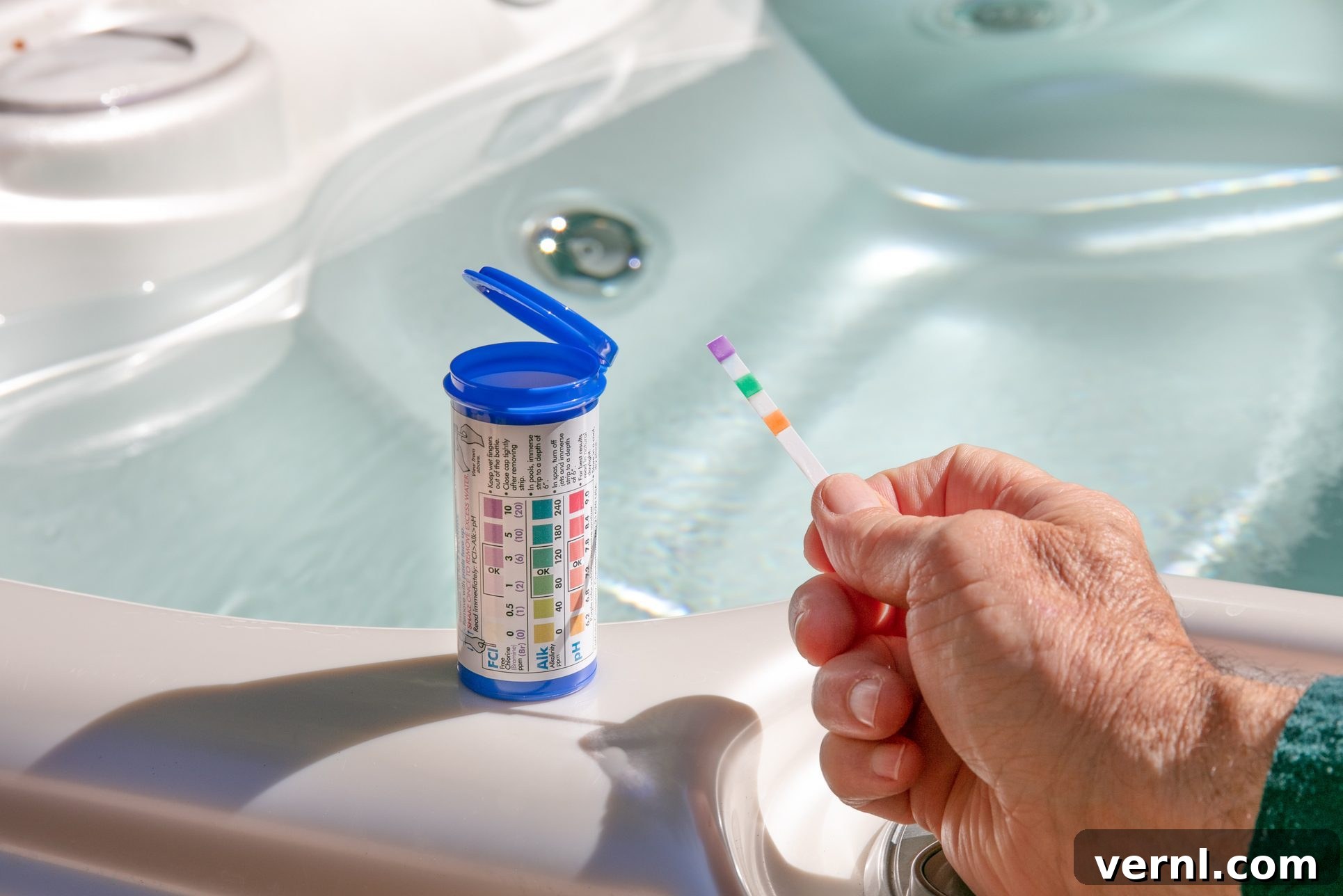
- Chemical Test Strips: These are the most convenient and widely used option. Test strips are designed to measure several crucial parameters simultaneously, including Total Alkalinity, pH, and sanitizer levels. To use them, you simply submerge the paper strip in the hot tub water according to the manufacturer’s instructions (usually for just a few seconds). Within less than a minute, different color pads (markers) on the strip will change. You then compare these colors to a color key provided on the strip container to quickly assess your hot tub’s chemical balance. While incredibly fast, their accuracy can sometimes be slightly less precise than liquid kits.
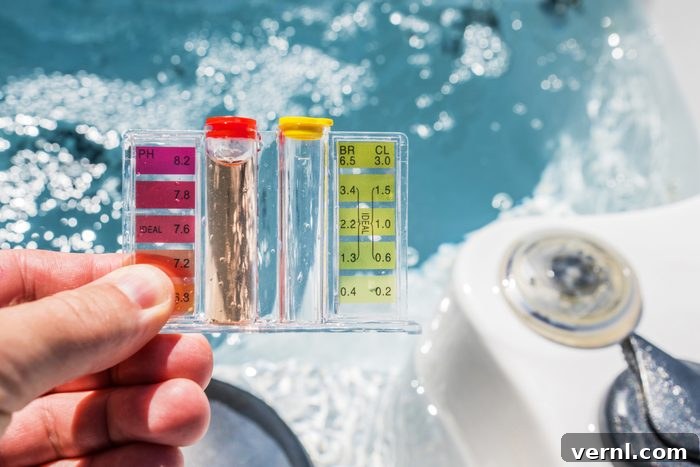
- Liquid Test Kits (Reagent Kits): Often considered more accurate, liquid test kits involve a slightly more involved process. With these kits, you collect a small sample of hot tub water in a dedicated vial, add specific drops of testing agent (reagents) to it, and then observe the water as it changes color. This color is then compared to a precise color key to determine the chemical levels. While they demand a bit more time and attention, they offer a higher degree of precision.
Toedter notes that both types of kits are functional for routine checks. However, for a more precise and comprehensive analysis, she advises getting your hot tub or pool water professionally tested every few weeks. This typically involves bringing a water sample to a reputable pool supply store. Many establishments, including Leslie’s, offer this valuable service free of charge, providing an in-depth report on your water’s chemistry and tailored recommendations for adjustments.
The generally accepted ideal ranges for hot tub water are: pH between 7.4 and 7.6, and Total Alkalinity between 80 to 120 parts per million (ppm). It’s important to note that these figures may vary slightly depending on whether you utilize chlorine or bromine as your primary sanitizer. Maintaining these ranges ensures optimal bather comfort, efficient sanitation, and protection for your hot tub’s components.
Understanding the Perils of High Alkalinity in Your Hot Tub
While the initial signs of elevated Total Alkalinity (TA) in your hot tub might be subtle or even unnoticeable, given time, its presence will become undeniably evident through a series of unpleasant symptoms. The interconnected nature of TA and pH means that high TA levels almost always lead to a corresponding increase in pH, exacerbating potential problems.
Toedter defines pH as “the measure of the acidity or basicity of the water.” When water becomes excessively acidic (low pH), it can lead to immediate discomfort for bathers, causing eye and skin irritation. More alarmingly, it can inflict damage upon the hot tub’s surfaces and equipment, potentially shortening the lifespan of your sanitizer. Conversely, when water is too basic (high pH), which is a common byproduct of high TA, it frequently results in significant scale buildup and murky, cloudy water conditions. This high pH environment also significantly diminishes the efficacy of your sanitizer, requiring more chemicals to achieve proper sanitation.
The visible manifestations of elevated TA or pH typically begin with persistent cloudy water that refuses to clear, even after sanitation. Soon after, scale formation will become apparent, often accompanied by unsightly staining on the hot tub’s surfaces. “Scale commonly presents as a white or off-white, rough, crusty residue,” Toedter explains, “most often found along the hot tub’s waterline or on submerged surfaces.” Beyond merely being an aesthetic nuisance, scale poses a serious threat to the hot tub’s internal mechanisms. It can accumulate within the intricate plumbing system, coat the heating element, and clog the filter cartridges, severely impeding their function and efficiency. Over an extended period, Toedter adds, “these scale deposits can evolve into discolored stains, the precise hue of which depends on the specific minerals, metals, body oils, and other contaminants present within the water.” These stains can be extremely difficult to remove and may even become permanent.
Unraveling the Mystery: What Causes High Alkalinity in a Hot Tub?
If you find yourself constantly battling stubbornly high Total Alkalinity (TA) levels in your hot tub, it’s not necessarily an indication of improper care. Several factors, some beyond your immediate control, can contribute to this persistent issue.
Toedter points out that one of the most prevalent culprits behind elevated TA levels originates directly from the source: the water used to fill the hot tub itself. “Certain regional water sources naturally possess higher inherent TA levels,” she explains. This means that if your municipal or well water has a naturally high buffering capacity, you’re starting at a disadvantage even before adding any chemicals. Water that is rich in minerals like bicarbonates and carbonates will inherently have a higher TA, making it a recurring challenge to maintain the ideal range.
Another common reason for elevated TA and pH levels, which can seem counterintuitive, is the very act of enjoying your hot tub: frequent use and especially vigorous jet action. “Aeration naturally drives the pH of the water higher,” Toedter clarifies. When the jets and aerators in your hot tub are actively running, they agitate the water, causing carbon dioxide (CO2) to off-gas from the water into the atmosphere. This loss of CO2, which acts as an acid in water, directly results in an increase in the water’s pH. Since TA acts as a buffer against pH changes, an increase in pH often pulls TA along with it, or at least makes it harder to reduce.
Other factors that can contribute to high TA include:
- Incorrect Chemical Additions: Accidentally adding too much of a pH increaser that also impacts TA, or using the wrong type of alkalinity increaser, can quickly throw off the balance.
- Evaporation: While water evaporates, minerals and chemicals do not. Over time, as water evaporates and you top off the hot tub with fresh water, the concentration of these dissolved solids can gradually increase, potentially leading to higher TA levels.
The Solution: How to Safely Lower Total Alkalinity in a Hot Tub
Rectifying high Total Alkalinity (TA) in a hot tub requires a targeted approach, involving the careful addition of specific chemicals designed to reduce this parameter. These products typically come in granular or liquid forms and are essentially acidic compounds. The process demands patience and precision, as drastic changes can lead to new imbalances.
Here’s a detailed, step-by-step guide on how to lower your hot tub’s alkalinity:
- Test Your Water Thoroughly: Before adding any chemicals, always re-test your hot tub water using reliable test strips or a liquid reagent kit. Confirm that your TA is indeed high (above 120 ppm) and note your current pH level.
- Choose the Right Product: Toedter emphatically recommends using a TA reducer that is specifically formulated and labeled for hot tub use. These products are typically acid-based, such as sodium bisulfate (pH decreaser/alkalinity reducer) or, less commonly for homeowners, muriatic acid. “Do not use pool chemicals to address this issue,” she warns, “as they are often more potent and can inflict damage on your hot tub’s surfaces and equipment. Only use chemicals if the label explicitly states suitability for hot tubs.”
- Safety First: Always wear appropriate personal protective equipment, including gloves and eye protection, when handling hot tub chemicals. Ensure adequate ventilation.
- Turn Off Jets and Air Blowers: Before adding the chemical, turn off all hot tub jets, air blowers, and pumps. This minimizes aeration, which can counteract your efforts by raising pH.
- Calculate and Add Incrementally: Refer to the product’s label for dosage instructions. It’s always best to start with a smaller amount than recommended, as it’s easier to add more than to correct an over-application. Typically, you’ll add the calculated amount of the TA reducer directly to the hot tub water, ideally broadcasting it evenly across the surface or pouring it slowly into the deepest part of the tub. Avoid pouring it directly onto equipment.
- Circulate the Water: After adding the chemical, turn on the hot tub’s jets and circulation pumps for approximately 30 minutes to an hour. This ensures thorough mixing of the chemical throughout the water. During this time, the acid in the reducer will neutralize some of the bicarbonates that contribute to TA.
- Wait and Retest: After the circulation period, turn off the jets and allow the water to settle for several hours (ideally 4-6 hours or even overnight) before re-testing. This allows the chemicals to fully react and the water chemistry to stabilize.
- Repeat if Necessary: If your TA levels are still above the ideal range (80-120 ppm) after the waiting period, repeat the process with smaller, incremental additions until you achieve the desired balance. Remember, patience is key.
It’s important to note that when you lower TA using an acid-based product, your pH will also decrease. Once TA is brought into its ideal range, it will then help to stabilize the pH, making it easier to adjust and maintain within its own optimal range (7.4-7.6).
Leslie’s Pool Supplies offers a range of specialized products to help balance TA and pH in your hot tub water:
- Leisure Time Spa Down: This product is designed to effectively lower both Total Alkalinity and pH, making it a convenient solution for addressing high levels of both.
- Leisure Time Alkalinity Increaser: If you find your TA levels are too low, this product will raise Total Alkalinity with minimal impact on pH, helping to restore that crucial buffering capacity.
- Leslie’s Spa pH Up: For instances where both your pH and Total Alkalinity are low, this product can be used to raise both parameters simultaneously.
Maintaining a Harmonious Hot Tub Experience
Achieving and maintaining balanced hot tub water chemistry, with Total Alkalinity and pH in their optimal ranges, is not a one-time fix but an ongoing commitment. By understanding the critical role of TA as a pH buffer, recognizing the signs and causes of imbalance, and knowing how to safely make adjustments, you empower yourself to keep your hot tub in peak condition.
Consistent vigilance through regular testing, judicious use of hot tub-specific chemicals, and a clear understanding of your water source are the pillars of a truly enjoyable and worry-free hot tub experience. A well-maintained hot tub isn’t just about sparkling water; it’s about protecting your investment, ensuring the health and comfort of all bathers, and maximizing those precious moments of relaxation.