In recent years, the charming phenomenon of Little Free Libraries has blossomed across neighborhoods worldwide, transforming ordinary spaces into vibrant hubs of community connection and shared knowledge. What started as a simple idea in 2009 by a non-profit organization has grown exponentially, with hundreds of thousands of these unique “take-a-book, leave-a-book” boxes gracing front yards across the U.S. alone, as proudly reported by the official Little Free Library website.
The appeal of these miniature libraries is immediately clear. They serve as powerful catalysts for fostering literacy, sparking the imaginations of young readers, and strengthening the bonds within communities. Beyond their primary function, Little Free Libraries also embody the spirit of sustainability, encouraging creative repurposing and giving new life to forgotten objects. While many people opt to build their libraries from scratch, a growing trend involves transforming existing structures into these beloved neighborhood treasures. We’ve scoured the internet to find some of the most ingenious and inspiring ideas for repurposing everyday items into captivating Little Free Libraries, proving that almost anything can become a vessel for stories and shared adventures.
Transforming Everyday Objects into Enchanting Little Free Libraries
The beauty of the Little Free Library movement lies not just in its mission but also in the incredible creativity it inspires. Homeowners and community members alike are finding innovative ways to give new purpose to old items, turning them into unique, character-filled book havens. From rustic barrels to nostalgic phone booths, these repurposed libraries stand as testaments to imagination, resourcefulness, and a shared love for reading. Dive into these creative ideas and discover how you can bring a touch of literary magic and sustainable charm to your own community.
Barrel: A Rustic Book Haven
Few items offer the rustic charm and robust structure of a wooden barrel, making it an excellent candidate for a distinctive Little Free Library. Whether it once held rainwater, craft beer, or fine wine, the hollow interior of a large barrel provides ample space for a collection of books. The natural curvature adds a unique aesthetic that instantly draws attention, blending seamlessly into garden landscapes or standing out as a focal point in a front yard. To convert a barrel effectively, start by thoroughly cleaning and treating the wood to ensure longevity against outdoor elements. The crucial step is to create an accessible, weather-protected opening. This can be achieved by cutting a section out and installing a hinged glass door, allowing patrons to easily view and select books while keeping the contents safe from rain, wind, and pests. Alternatively, a sturdy, weather-tight lid could be adapted. Interior shelves can be added to maximize storage and organization. Don’t forget to elevate the barrel slightly off the ground to prevent moisture damage from below. A barrel Little Free Library isn’t just a place for books; it’s a conversation starter, a piece of outdoor art, and a testament to sustainable living.
Phone Booth: A Blast from the Past
While most people don’t have a classic red phone booth casually lying around, encountering one at an antique store, a garage sale, or a salvage yard presents an incredible opportunity for a truly iconic Little Free Library. The inherent structure of a phone booth—complete with walls, a roof, and often a glass door—makes it an almost ready-made enclosure for books. This conversion taps into a deep sense of nostalgia, evoking images of a bygone era and instantly becoming a beloved landmark in any neighborhood. The process typically involves stripping out any remaining phone equipment, thoroughly cleaning the interior and exterior, and adding sturdy shelves. Some creative conversions have added multiple shelves to the back, providing generous storage capacity. Essential steps include weatherproofing the entire structure, especially sealing around the door and windows, and ensuring it is securely anchored to the ground. A splash of fresh paint, perhaps in a vibrant color, can further enhance its appeal. A phone booth library doesn’t just hold books; it holds history, charm, and the promise of a unique literary experience for all who pass by.
Pay Phone Without Booth: A Creative Urban Nook
Moving from the full phone booth, another innovative approach involves repurposing just the pay phone unit itself. This smaller-scale conversion offers a unique blend of urban nostalgia and quirky charm. A creative individual transformed an old pay phone into a compact library, ingeniously adding a delightful twist: free art supplies attached to the side. This demonstrates the versatility of Little Free Libraries, which can extend beyond books to include other items that enrich the community, such as seeds, small craft kits, or notes of encouragement. The compact nature of this type of library means it might not hold as many books as larger structures, but it excels at promoting intimate interaction and encouraging a sense of discovery. Key considerations for this conversion include ensuring the pay phone unit is cleaned of any potentially hazardous components, securely mounting it to a post or wall, and adding a small, weather-resistant enclosure for the books. This design is perfect for areas with limited space or for those who want to offer a more curated selection. It’s a subtle nod to the past that offers a bright, creative future for shared resources.
Newspaper Box: A Familiar Face Reimagined
The iconic newspaper box, once a staple on street corners, is now finding a second life as a popular choice for Little Free Libraries. These sturdy, weather-resistant units are readily available, often at low cost or even for free, making them an accessible option for aspiring library stewards. Their robust construction and front-facing transparent panels are ideal for displaying books and protecting them from the elements. The conversion process is straightforward: remove the coin mechanism and any interior dividers, thoroughly clean the box, and if desired, add shelves to maximize space. Many owners choose to leave them in their original state, allowing their familiar form to spark recognition, while others embrace the opportunity for artistic expression. One Pinterest user showcased a beautifully decorated newspaper box, while another ingeniously transformed theirs to resemble a friendly robot, adding a playful element that delights children and adults alike. These libraries are particularly accessible, often positioned at a convenient height for young readers, making them excellent tools for encouraging early literacy. A repurposed newspaper box is a practical, charming, and highly visible way to bring books to your community.
Microwave: Small Footprint, Big Impact
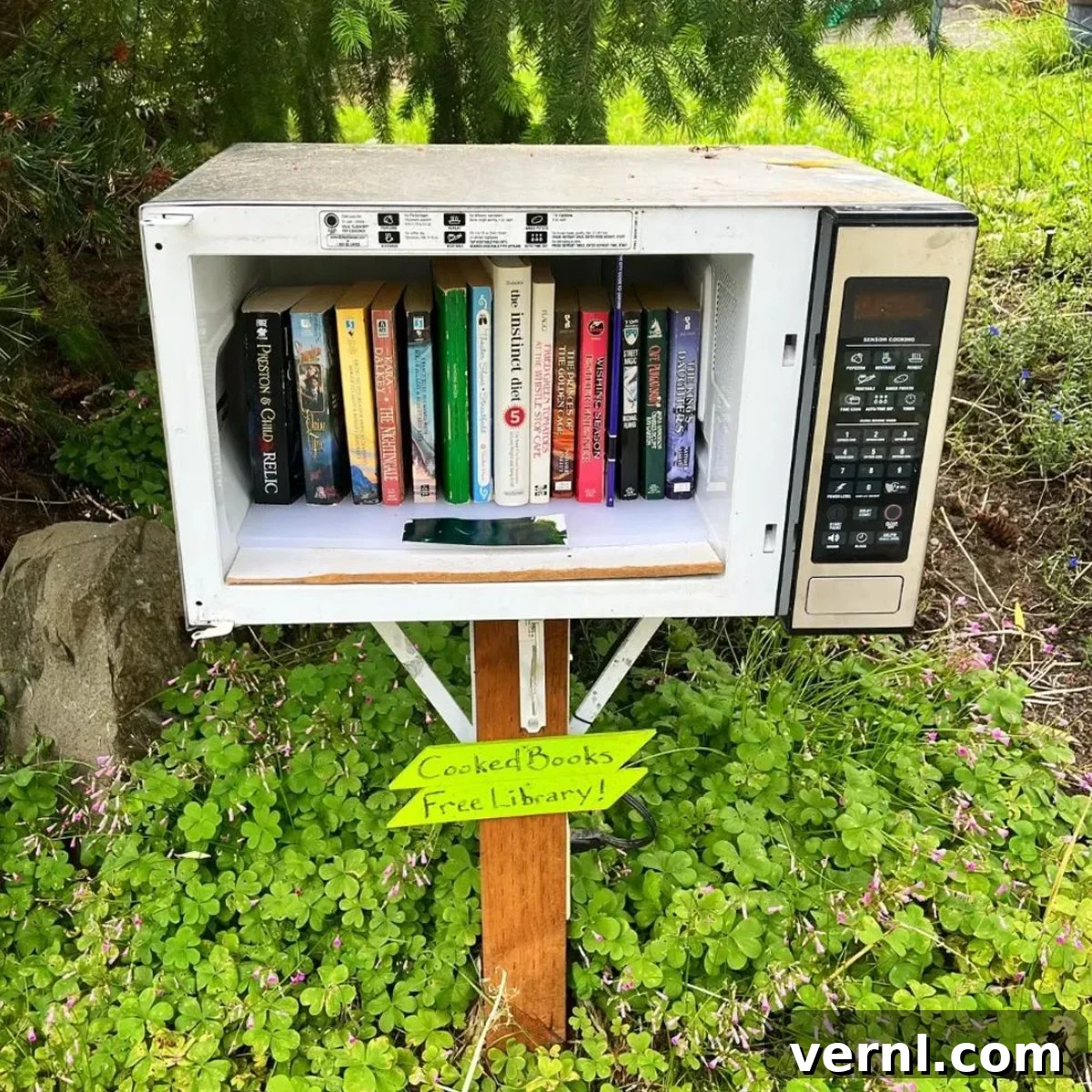
Instead of sending an old, defunct microwave to a landfill, why not give it a noble second purpose? Repurposing a microwave into a Little Free Library is a fantastic example of upcycling and promoting a waste-free lifestyle. While a microwave conversion might not hold as many books as some of the larger options on this list, its compact size and existing door make it surprisingly suitable. The key steps involve safely removing all internal electronic components, thoroughly cleaning the interior, and ensuring there are no sharp edges. A simple shelf can be added inside to hold a few books. The existing door and latch system provide a natural way to keep books protected from the weather. One creative example beautifully illustrates how a microwave can become a vibrant, albeit small, book exchange point. Similarly, a bread warmer or other small appliance with a clear door could be used. This option is perfect for those seeking a highly compact, low-cost, and environmentally conscious way to establish a Little Free Library, demonstrating that even the smallest spaces can make a significant impact on community literacy.
Washer and Dryer / Oven: Grand Scale Appliances, Grander Libraries
For those looking to make a truly bold statement, repurposing large appliances like an old washer or dryer, or even an oven, offers immense possibilities. These appliances provide a naturally sturdy and spacious shell, allowing for a substantial collection of books and even additional items. The sheer unexpectedness of a washing machine or oven acting as a library is sure to captivate passersby. The conversion process requires careful attention to safety and functionality. First, all internal mechanisms, wiring, and hazardous components must be completely and safely removed. The interiors should be thoroughly cleaned and sanitized. For washers and dryers, the drum can be removed, and sturdy shelves can be installed within the shell. Ovens also offer natural shelf space. Weatherproofing is paramount: ensure all openings are sealed, perhaps by adding a new door with a clear panel or reinforcing existing ones with weather stripping. Painting these appliances in bright, welcoming colors can transform their industrial look into something cheerful and inviting. Securing them firmly to the ground is also essential due to their size and weight. These conversions are not just libraries; they are impressive feats of recycling and artistic expression, turning household relics into vibrant community anchors that champion both reading and sustainability.
Wooden Cabinet: Elegant and Versatile Book Storage
A wooden cabinet, in its many forms, is an exceptionally versatile and often elegant choice for a Little Free Library. Whether it’s a discarded kitchen cabinet, a media console, or an old curio cabinet, its existing structure provides a ready-made enclosure. One Instagram user beautifully transformed a cabinet into a charming front yard library, demonstrating how a piece of indoor furniture can find a wonderful new life outdoors. The inherent shelves and doors of most cabinets simplify the conversion process. However, a critical step for any furniture repurposed for outdoor use is comprehensive weatherproofing. This involves cleaning, sanding, applying weather-resistant paint or sealant, and ensuring that any glass panels are securely fitted and sealed. Adding a slightly elevated base can further protect the library from ground moisture. Kitchen cabinets, with their varied sizes and styles, are particularly popular options due to their robust construction and ease of modification. The beauty of using a wooden cabinet lies in its potential for personalization, allowing for intricate painting, decorative touches, and a truly unique aesthetic that reflects the character of its steward and community.
Grandfather Clock: Timeless Tales for All Ages
For a touch of historical elegance and truly unique craftsmanship, an old wooden grandfather clock can be ingeniously repurposed into a Little Free Library. This conversion makes a stunning visual statement, preserving the clock’s stately presence while giving it a renewed purpose as a guardian of stories. One inspiring example showcases how the lower section of the clock can be adapted with shelves to hold books, while the upper section, often featuring the clock face, remains a beautiful decorative element. This design maintains the clock’s recognizable form, creating an instant landmark in a neighborhood. The tall, slender structure of a grandfather clock provides multiple levels for book storage, and its existing door can often be easily modified to include a transparent panel for visibility and weather protection. As with any wooden outdoor conversion, thorough weatherproofing is essential, including sealing the wood, protecting against moisture, and securing the structure firmly to prevent it from toppling. This timeless transformation encourages a moment of pause, inviting contemplation of both the passage of time and the endless journey through the pages of a book.
Filing Cabinet: Organized Literacy at Your Fingertips
In our increasingly digital world, traditional filing cabinets are often deemed obsolete, making them perfect candidates for creative repurposing. Their sturdy metal construction and multi-drawer design can be reimagined into a robust and unique Little Free Library. One Pinterest user’s conversion demonstrates how a filing cabinet can be transformed into a multi-level book exchange, offering ample storage space. The key to this transformation involves removing the drawers and their runners, cleaning the interior, and then installing fixed shelves to create open compartments for books. The existing metal shell provides excellent protection, but rust-proofing the exterior and interior, along with adding a coat of weather-resistant paint, is crucial for longevity. A hinged door or a series of small, transparent doors can be added to the front to keep books dry and visible. The industrial aesthetic of a filing cabinet can be embraced or softened with vibrant colors and decorative elements. This unique library solution not only prevents a bulky item from ending up in a landfill but also provides an incredibly durable and functional structure for sharing stories, making it a sustainable and practical choice for community engagement.
Light Fixture: An Illuminating Idea
Perhaps one of the most unconventional and artistically daring transformations on this list is repurposing a large light fixture into a Little Free Library. This option speaks to those who truly want their library to be a unique piece of art. The success of such a conversion hinges on careful selection and meticulous execution. Large, enclosed outdoor light fixtures or repurposed vintage streetlights can offer a clear, weather-protected space. The challenge lies in ensuring stability, safely removing any electrical components, and designing the interior to hold books. Glass panels, while offering visibility, require careful handling to prevent breakage and ensure complete weather sealing. While this type of library may hold fewer books due to its often intricate design and smaller capacity, its primary function becomes less about volume and more about aesthetic impact and sparking curiosity. It creates an enchanting, almost magical focal point, drawing people in not just for books but for the sheer wonder of its transformation. This concept truly exemplifies the boundless creativity within the Little Free Library movement, turning something designed to illuminate space into something that illuminates minds.
Boat: Sailing Through Stories
For coastal communities, lakeside homes, or simply those with a love for all things nautical, transforming a boat into a Little Free Library offers a captivating and thematically rich option. Creative homeowners have successfully converted everything from full-sized fishing boats and canoes to small model vessels into charming book exchanges. The natural hull of a boat provides an intriguing and often spacious container. The conversion typically involves cleaning the boat thoroughly, ensuring it’s stable on land, and creating internal shelves or compartments to house books. To protect the literary cargo from rain and moisture, adding a hinged glass panel door or a weather-tight lid is essential. The boat can be painted in vibrant colors, decorated with nautical themes, or even elevated on a stand to enhance its visibility and accessibility. This imaginative reuse creates not just a library but a sculptural element that tells a story even before the first book is opened. A boat library symbolizes a journey, an adventure, and the idea that knowledge can carry us far, making it an incredibly fitting and memorable addition to any community.
Embrace Creativity, Foster Community, and Share the Joy of Reading
The burgeoning popularity of Little Free Libraries is a heartwarming testament to the enduring power of community, literacy, and shared joy. These inspiring examples of repurposed objects demonstrate that with a little imagination and elbow grease, almost anything can be transformed into a welcoming beacon for readers. Each unique library, whether fashioned from a rustic barrel or a nostalgic phone booth, tells its own story, adding character and charm to its surroundings while fulfilling its noble mission. Beyond simply providing access to books, these inventive structures foster neighborhood connections, encourage sustainable practices, and ignite a lifelong love of reading in people of all ages.
Building or repurposing a Little Free Library is more than a DIY project; it’s an act of community building, a commitment to environmental stewardship, and a celebration of human ingenuity. It’s an invitation for neighbors to connect, to share ideas, and to embark on countless adventures through the pages of a book. So, whether you’re inspired by the robust utility of a filing cabinet or the timeless elegance of a grandfather clock, consider the possibilities that lie within forgotten objects. Unleash your creativity, join this beautiful movement, and contribute to a world where stories are always within reach. Start your own unique Little Free Library today and become a proud steward of literacy, community, and sustainable living.