
Upgrade Your Home Safety: The Essential Guide to Rerouting Your Main Water Shutoff Valve
A well-maintained home is a safe home, and at the heart of its safety lies a fundamental yet often overlooked component: the main water shutoff valve. This crucial device is your first line of defense against common household plumbing disasters, from a minor leaking faucet to a catastrophic burst pipe. The ability to quickly and easily turn off your home’s water supply can save you thousands in repair costs and prevent extensive water damage. Yet, for many homeowners, the main shutoff valve remains an enigma – hidden, inaccessible, or its location completely unknown.
Imagine facing a plumbing emergency, such as a rapidly gushing pipe, and scrambling to find a valve that’s tucked away in an obscure, hard-to-reach crawl space, or worse, not knowing it exists. This scenario isn’t just an inconvenience; it can lead to significant structural damage, ruined possessions, and a hefty repair bill. Professional plumbers, when faced with such challenges, often need more time and specialized equipment, which can translate into additional charges on your invoice. Ensuring your main water shutoff is readily accessible is not merely a matter of convenience; it’s a critical aspect of responsible homeownership and emergency preparedness.
Consider the experience of Rhonda from San Rafael, California, who never gave her main shutoff valve a second thought until she needed to replace a leaking angle stop on her toilet. Unable to locate her home’s main valve, she mistakenly assumed her property didn’t have one. Her only option was to attempt to shut off the water at the street, a task that required a special tool she didn’t possess. To compound the problem, the street valve was seized, requiring her to call the city water department. The five-day waiting period for workers to arrive proved disastrous; by then, her bathroom had suffered such severe flooding that a complete floor replacement became necessary. Rhonda’s unfortunate situation highlights the critical importance of a properly functioning and accessible main water shutoff valve within your home’s perimeter.
The good news is that enhancing your home’s plumbing safety by rerouting your home’s main water shutoff is often a straightforward process. It typically doesn’t even require removing the old valve entirely; you can simply leave it open and bypass it with a new, more accessible installation. In fact, the existing valve can be a useful tool, allowing you to temporarily shut off the water supply to facilitate the installation of your new, improved shutoff point.
What Is a Water Shutoff Valve and Why Is It So Important?
At its core, a water shutoff valve is a mechanical device designed to stop the flow of water through a pipe. While every fixture like a toilet or outdoor spigot typically has its own small shutoff valve, the main water shutoff valve is the master control, responsible for cutting off water to the entire property. This includes all indoor plumbing, outdoor spigots, and even sprinkler systems. Plumbing codes universally mandate the presence of a main shutoff valve for safety and maintenance purposes.
Main shutoff valves are usually 3/4-inch in diameter, designed to handle the primary water supply line. You’ll typically encounter two main types: gate valves and ball valves.
- Gate Valves: These older style valves often resemble outdoor spigots with spoked, multi-turn handles. To stop the water flow, you must rotate the handle several times, slowly lowering a “gate” inside the valve. While functional, gate valves are prone to issues as they age; their internal mechanisms can seize up, making them difficult or impossible to turn, or they may not fully close, allowing a trickle of water to pass through.
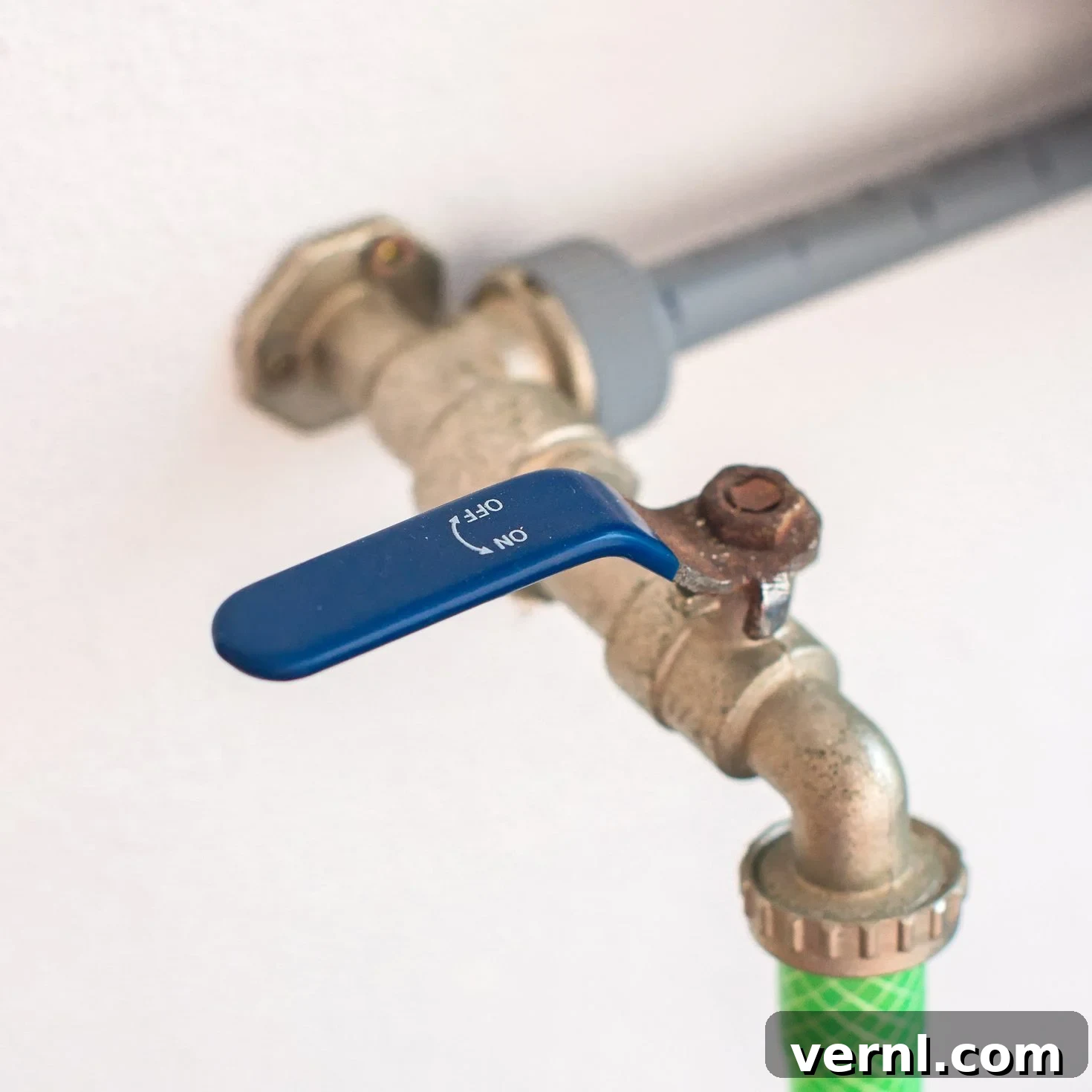
- Ball Valves: Modern plumbing installations almost exclusively use ball valves. These are easily recognizable by their lever-style handles, which typically rotate only 90 degrees (a quarter turn) from fully open to fully closed. When the handle is parallel with the pipe, the valve is open; when perpendicular, it’s closed. Ball valves are highly reliable, offer quick shutoff, and are less prone to seizing, making them the preferred choice for new installations and replacements. Their handles are often colored red or blue for easy identification, though older ones may lack this paint, blending in with their surroundings.
While some larger homes may feature multiple branch shutoff valves controlling specific sections of the plumbing system (like an entire bathroom or kitchen), the distinguishing characteristic of the main shutoff valve is its placement. It is invariably located near the point where the 3/4-inch main water line first enters the house, typically emerging from underground. In homes without basements, this valve is often found just above ground level within a crawl space. This common placement strategy was usually chosen for the convenience of plumbers during the initial construction and rough-in phase of the water pipes.
Key Reasons to Reroute Your Main Water Shutoff Valve
The primary motivation for rerouting your main water shutoff valve is to significantly improve its accessibility. This enhancement offers a multitude of benefits, bolstering your home’s safety, efficiency, and your peace of mind:
-
Enhanced Accessibility for DIY and Professional Repairs
Moving the valve from an inconvenient outdoor location or a cramped crawl space to an easily accessible spot, such as a laundry room, utility closet, or even a main hallway behind an access panel, makes a profound difference. An accessible shutoff valve empowers you to confidently undertake minor plumbing tasks, such as fixing a leaky faucet or replacing a toilet fill valve, without the need for a professional plumber. This DIY capability can lead to substantial savings on plumbing fees over time. Furthermore, if you do need to call a plumber, easy access to the main shutoff allows them to work more efficiently, potentially reducing labor costs.
-
Preventing Costly Water Damage During Emergencies
In the event of a major leak, a burst pipe, or even a natural disaster that compromises your plumbing system, the ability to quickly and easily shut off the water supply is paramount. A readily accessible valve allows you to react instantly, potentially preventing catastrophic water damage to your home’s structure, flooring, walls, and furnishings. Water damage can be incredibly expensive to remediate, often involving extensive drying, demolition, mold removal, and reconstruction. A fast response with an accessible shutoff valve can minimize the extent of the damage, significantly reducing repair costs and the disruption to your household.
-
Protecting Against Freezing Pipes During Winter Vacations
For homeowners who travel during colder months, especially in regions prone to freezing temperatures, an accessible main shutoff valve is invaluable for winterizing your plumbing system. By turning off the main water supply and then opening all faucets to drain the pipes, you can effectively prevent your pipes from freezing and bursting while you’re away. A burst pipe in an unoccupied home can lead to an unimaginable amount of water damage over several days or weeks, making this preventative measure an absolute necessity.
-
Increased Home Value and Peace of Mind
An updated and easily accessible main water shutoff valve contributes to the overall safety and functionality of your home. This can be a subtle but significant selling point should you decide to move, as it signals a well-maintained and thoughtfully upgraded property. More importantly, it provides you with invaluable peace of mind, knowing that you have immediate control over your home’s most vital utility in any situation.
Methods for Rerouting: Direct Installation or a Bypass Loop
When considering rerouting your main water shutoff valve, you generally have two main approaches, each suited to different plumbing configurations and accessibility needs.
1. Direct Installation
In many cases, installing a new shutoff valve in a more convenient location doesn’t require extensive re-plumbing. If your existing main water line comes up through the floor and the current shutoff is inconveniently located beneath it, a direct installation might be ideal. You can simply cut into the pipe above the floor level and install the new valve at a more accessible height. This method is straightforward when there’s an existing vertical run of pipe where a new valve can be inserted without altering the overall path of the main line.
Similarly, if your water meter and current shutoff valve are buried in an outdoor box, you can trace where the main supply pipe enters the house. Often, a good candidate location for a new main shutoff is just before the main line branches into separate hot and cold water lines, typically in the vicinity of the water heater. This point ensures that the new valve controls the entire incoming cold water supply before it is distributed throughout the house.
Before undertaking a direct installation, it’s crucial to thoroughly assess your existing plumbing, identify the most strategic and accessible point for the new valve, and ensure you have the necessary tools and plumbing knowledge. Always remember to shut off the water at the street or an upstream valve before cutting any pipes, and have buckets and towels ready to catch residual water.
2. The Bypass Loop
When the existing plumbing configuration doesn’t naturally allow for an accessible direct placement of a new shutoff valve, a bypass loop becomes an elegant and highly effective solution. This method involves constructing a new section of plumbing pipe that essentially “bypasses” the original, inconvenient location, bringing the new valve to an easy-to-reach spot.
A bypass loop is created by cutting out a section of the main supply line and replacing it with a custom-designed loop of piping. The new valve is then strategically placed within this loop, often at its highest point, in a desirable location such as a laundry room, a utility closet, or even discreetly behind an access panel in a bathroom or hallway. Instead of the water flowing directly through the original, cut-out section, it is diverted through this newly installed loop, where the new valve can effectively control the flow.
Material Choices for Your Bypass Loop
Bypass loops can be constructed using various plumbing materials, each with its own advantages:
- Copper: Copper piping is durable and long-lasting, a traditional choice for many plumbing systems. However, working with copper requires soldering skills, specialized tools (torch, solder, flux), and careful attention to safety. It’s generally more rigid and less forgiving for custom configurations.
- CPVC (Chlorinated Polyvinyl Chloride): CPVC is a type of plastic piping commonly used for hot and cold water distribution. It’s easier to work with than copper, requiring only solvent cement for connections, but it can be brittle if installed incorrectly or exposed to certain chemicals. Its rigidity can still pose challenges for tight spaces or complex bends.
- PEX (Cross-linked Polyethylene) Pipe: For bypass loops, PEX pipe is often the easiest and most flexible option, making it a favorite for DIYers and professional plumbers alike. After soldering or gluing appropriate adapters to your existing copper or CPVC main line, flexible PEX tubing can be snapped into place using crimp or compression fittings. Its flexibility allows you to easily run it under floors, behind walls, and around obstacles to the precise location where you need the new valve. As long as the diameter of the PEX pipe matches the existing main supply line (typically 3/4-inch), water pressure should remain unaffected. PEX offers excellent durability, is resistant to freezing and bursting (though not impervious), and is relatively inexpensive. It’s available in long rolls, minimizing the number of connections needed, which reduces potential leak points.
Regardless of the material chosen, careful planning, precise measurements, and adherence to local plumbing codes are essential for a successful bypass loop installation. If you are uncomfortable with any part of this process, consulting or hiring a qualified plumber is always recommended.
Maintaining Your Water Shutoff Valve
Once your main water shutoff valve is accessible and properly installed, ongoing maintenance is minimal but important. Regular exercise of the valve – turning it fully off and then fully on a couple of times a year – helps to prevent internal components from seizing up due to mineral deposits or corrosion. This simple action ensures that the valve will operate smoothly and reliably when you need it most. If you notice any stiffness or resistance when turning the valve, or if it doesn’t seem to fully open or close, it may be time for inspection or replacement by a professional.
Hiring a Professional vs. DIY Approach
Deciding whether to reroute your main water shutoff valve yourself or to hire a professional plumber depends on your comfort level, plumbing experience, and the complexity of the job. For simple direct installations with easily accessible pipes and familiar materials, an experienced DIY enthusiast might feel confident tackling the project. However, tasks involving cutting into the main water line, especially near the point of entry to your home, carry significant risks if not executed correctly. A leak in this area can cause immense damage very quickly.
For bypass loops, particularly those involving navigating pipes through walls or floors, or if you’re working with materials like copper that require specialized tools and skills, hiring a licensed plumber is highly recommended. Plumbers have the expertise, tools, and insurance to ensure the job is done correctly, safely, and in compliance with all local codes. They can also advise on the best placement and materials for your specific home, providing long-term peace of mind.
Conclusion: Invest in Your Home’s Future
An accessible and functional main water shutoff valve is more than just a convenience; it’s a vital safety feature for every home. Investing the time and effort to locate, inspect, and potentially reroute this critical component can protect your property from devastating water damage, simplify routine maintenance, and provide you with invaluable control during unexpected plumbing emergencies. Whether you choose a direct installation or opt for a bypass loop with modern materials like PEX, enhancing your main water shutoff valve is a smart investment in your home’s security, efficiency, and your family’s peace of mind for years to come.