
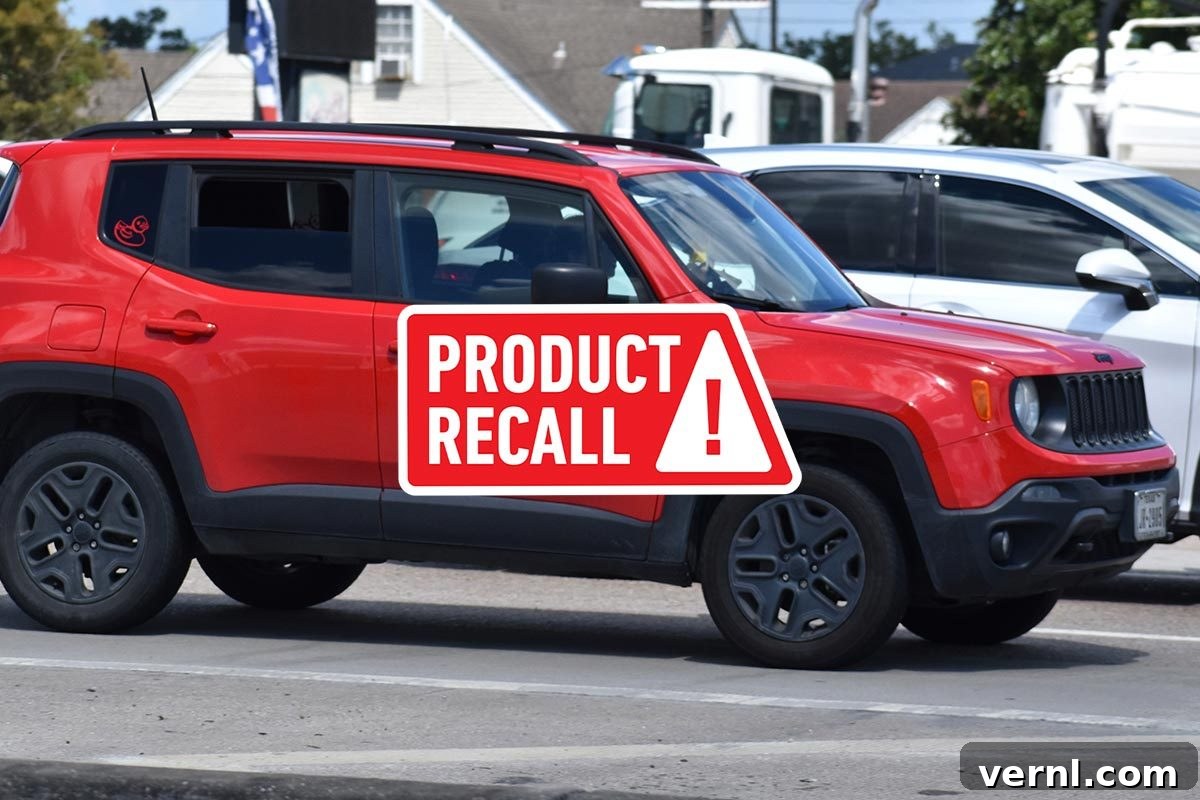
Auto recalls remain a consistent feature in automotive news, underscoring the ongoing commitment to vehicle safety and consumer protection. This week, the spotlight falls on Chrysler (FCA US, LLC), which announced a significant recall affecting thousands of its popular Jeep Renegade vehicles on December 10, 2024. This particular action diverges from some previous high-profile Jeep recalls, which often centered on critical issues like potential fire hazards or braking malfunctions. Instead, this latest recall addresses a crucial, yet often overlooked, component: the rear lighting system, specifically the reverse lights.
For any vehicle owner, understanding the details of a recall is paramount for ensuring personal safety and the safety of others on the road. We have meticulously analyzed the official recall brief to distill the most vital information for current and prospective Jeep Renegade owners. This comprehensive guide will explain the fundamental reasons behind this specific Jeep Renegade recall, delineate precisely which models and production years are impacted, and provide clear, actionable steps owners should take to address the issue. Staying informed and acting swiftly can make a significant difference in preventing potential hazards and maintaining peace of mind.
Understanding the Jeep Renegade Recall: Why Your Reverse Lights Matter
The core of this National Highway Traffic Safety Administration (NHTSA) recall revolves around a critical safety defect concerning the reverse lights in certain Jeep Renegade models. According to Chrysler’s official filing with the NHTSA, the issue stems from an “incorrect rear bumper light assembly” being inadvertently installed on the affected vehicles. While seemingly minor, a malfunctioning reverse light system carries substantial safety implications, elevating the risk of accidents during backing maneuvers.
Reverse lights serve a dual, indispensable purpose in vehicle operation. Firstly, they illuminate the area behind the vehicle, providing the driver with essential visibility when backing up, particularly in low-light conditions or unfamiliar environments. This improved visibility helps drivers identify obstacles, other vehicles, and pedestrians, minimizing the chances of collision. Secondly, and equally important, reverse lights act as a crucial visual signal to the surrounding environment. They are designed to clearly alert pedestrians, cyclists, and other drivers that the vehicle is actively moving backward. This clear warning allows others to anticipate the vehicle’s movement and take evasive action if necessary, significantly reducing the likelihood of a rear-end collision or striking a pedestrian.
When reverse lights are either dim, intermittent, or entirely non-functional due to an incorrect assembly, their ability to perform these vital functions is severely compromised. The NHTSA brief explicitly warns that “incorrect reverse lights may have reduced visibility.” This reduction in visibility not only hinders the driver’s ability to safely maneuver but also deprives others of the critical warning signal they rely on. The direct consequence, as highlighted by the safety agency, is an “increas[ed] the risk of a crash.” Imagine backing out of a busy parking space, a driveway, or even navigating a tight cul-de-sac at night without proper reverse light indication; the potential for a dangerous incident skyrockets. This recall, therefore, addresses a fundamental aspect of vehicle signaling and overall road safety, ensuring that all drivers and pedestrians can rely on consistent and clear communication from backing vehicles.
The Critical Role of Reverse Lights in Accident Prevention
Delving deeper into the functionality of reverse lights reveals why this particular recall, despite not involving fire or brake issues, is still highly significant. Modern vehicles are designed with layers of safety features, and signaling systems are foundational among them. Reverse lights are governed by specific Federal Motor Vehicle Safety Standards (FMVSS 108), which mandate their design, performance, and placement to ensure maximum effectiveness. A defect like an “incorrect rear bumper light assembly” could mean several things in practice: the wrong bulb type was installed, the wiring is faulty leading to inconsistent power, the reflector or lens assembly is designed improperly reducing light output, or even a complete failure of the light unit itself. Any of these scenarios directly contravenes safety standards and compromises the vehicle’s ability to operate safely.
The implications of faulty reverse lights extend beyond minor inconvenience. Pedestrians, especially children and the elderly, are particularly vulnerable. A study by KidsAndCars.org reveals that backover accidents claim dozens of lives and injure thousands annually in the U.S. In many of these tragic incidents, the driver may not have been aware of a child behind the vehicle. Functional reverse lights provide that crucial visual cue, giving precious seconds for a child or adult to move out of harm’s way. Furthermore, in crowded parking lots or urban environments, other drivers rely on these signals to anticipate movements and avoid collisions. Reduced visibility from incorrect lights translates directly into reduced reaction time for everyone involved, amplifying the potential for property damage, injuries, or worse. Chrysler’s proactive recall, mandated by regulatory bodies like NHTSA, serves as a vital safeguard against these preventable incidents, reinforcing the importance of every component in a vehicle’s safety ecosystem.
Which Jeep Renegade Vehicles Are Impacted by This Recall?
For current owners of Jeep Renegade vehicles, accurately identifying if your specific car is part of this recall is a critical first step. The NHTSA recall brief clearly states that Chrysler is recalling more than 2,100 units of the 2021, 2022, and 2023 model year Jeep Renegades. If you own a Jeep Renegade produced within these model years, there is a substantial likelihood that your vehicle is among those impacted by the incorrect rear bumper light assembly issue. It is imperative not to assume your vehicle is exempt simply because you haven’t yet noticed a problem with your reverse lights or received a direct notification.
The most definitive way to ascertain if your Jeep Renegade is affected is by checking its Vehicle Identification Number (VIN). The VIN is a unique 17-character code found on your vehicle’s dashboard (viewable through the windshield on the driver’s side) and on the driver’s side door jamb. You can visit the official NHTSA website at NHTSA.gov/Recalls and enter your VIN into their recall search tool. This search will immediately tell you if your specific vehicle has any open recalls, including this one. Alternatively, keep a close watch on your mail for an official owner notification letter from Chrysler, which will contain detailed information specific to your vehicle.
Until you can verify your vehicle’s status and, if necessary, get the problem remedied, it is strongly advised to limit your driving, especially during periods of reduced visibility such as nighttime, dusk, dawn, or inclement weather. If driving is unavoidable, exercise extreme caution whenever backing up. Visually inspect your reverse lights before each trip, particularly if you have to reverse. While we often take the functionality of our reverse lights for granted, their proper operation is a non-negotiable aspect of vehicle safety. A malfunctioning reverse light system significantly increases your risk of a crash, not only for yourself but also for unsuspecting pedestrians and other drivers. Prioritizing this check and subsequent repair is a direct investment in your safety and the safety of the community.
Immediate Precautions and Verifying Your Vehicle
Given the safety implications, immediate action and vigilance are paramount for affected Jeep Renegade owners. If you confirm your vehicle is part of this recall, or even if you suspect it might be, adopting certain precautions can help mitigate risks. Firstly, avoid parking scenarios that necessitate complex backing maneuvers, such as tight parallel parking spots or crowded multi-story garages, especially after dark. Opt for pull-through parking where possible. Secondly, when backing up, always use extra caution, manually checking blind spots more thoroughly, and considering asking a passenger to spot for you if available. While these are temporary measures, they can significantly reduce the risk until the permanent repair is made. Remember, the recall affects over 2,100 vehicles, a relatively small number compared to overall production, but each one represents a potential hazard that needs to be resolved promptly for the safety of its occupants and those around it.
The Remedy: How to Get Your Jeep Renegade Repaired
If you discover that your Jeep Renegade is one of the impacted vehicles in this recall, understanding the remedy process is the next crucial step. Chrysler (FCA US, LLC) has outlined a clear and systematic procedure to ensure that all affected vehicles receive the necessary repairs promptly and at no cost to the owner.
Owner Notification and What to Expect
The primary method of official communication from Chrysler to affected owners will be through mailed owner letters. The company has stated its intention to begin mailing these critical notifications in late January 2025. It is essential for all potentially affected Jeep Renegade owners to keep a close eye on their mailboxes during this period. These letters will serve as your official recall notice and will contain comprehensive information regarding the specific defect, the models and VINs affected, and, most importantly, detailed instructions on how to proceed with the repair process. The letter will also confirm that the repair will be conducted free of charge, in accordance with federal regulations governing safety recalls.
The Dealership Process: Inspection and Free Replacement
Upon receiving your owner letter, or even if you decide to act proactively by contacting customer service (details below), the next step will involve taking your vehicle to an authorized Chrysler, Dodge, Jeep, or Ram dealership. The dealership staff are fully informed about this recall and are equipped to handle the necessary inspections and repairs. During your visit, the dealership will perform an inspection of your vehicle’s rear bumper light assembly. This inspection will determine if your specific reverse lights are indeed faulty due to the incorrect assembly. Should the inspection confirm the defect, the dealership will proceed with replacing the faulty components. This repair, including all parts and labor, will be performed at absolutely no cost to you, the owner. Chrysler is legally obligated to cover all expenses associated with safety recalls, ensuring that owners are not financially burdened for a manufacturing defect.
Importance of Timely Action
While the owner letters are scheduled for late January, it is highly recommended not to delay once you receive your notification or confirm your vehicle’s status via VIN lookup. Prompt action ensures that the safety risk associated with malfunctioning reverse lights is eliminated as quickly as possible. Scheduling your appointment with the dealership in a timely manner helps to prioritize your safety and contributes to overall road safety for everyone. Dealerships typically have dedicated service departments and will work to accommodate recalled vehicles efficiently.
Taking Action: Essential Contact Information and Resources
For Jeep Renegade owners seeking further clarification, needing to schedule a repair, or simply wanting more immediate information without waiting for the mailed owner letter, several channels are available. Proactive engagement can ensure your vehicle’s safety is addressed as swiftly as possible.
Contacting FCA Customer Service
If you have specific questions about your vehicle, wish to confirm its recall status, or want to inquire about scheduling a repair appointment, you can directly contact FCA (Fiat Chrysler Automobiles) customer service. It is crucial to have the specific recall number ready when you call, as this will help the customer service representative quickly access the relevant information and assist you efficiently. The recall number for this issue is D7B.
- FCA Customer Service Phone Number: 1-800-853-1403
- Recall Reference Number: D7B
When you call, clearly state that you are inquiring about FCA recall number D7B for the Jeep Renegade reverse lights issue. The customer service team can guide you on the next steps, confirm if your VIN is affected, and potentially help you arrange an inspection at your local dealership.
Contacting the NHTSA Safety Hotline
The National Highway Traffic Safety Administration (NHTSA) is the federal agency responsible for vehicle safety and recalls. Their Safety Hotline is an excellent resource for general recall information, reporting safety defects, or if you believe your vehicle should be part of a recall but is not currently listed. When contacting NHTSA, you will need to reference their specific campaign number for this recall.
- NHTSA Safety Hotline Phone Number: 1-888-327-4236 (TTY: 1-800-424-9153)
- NHTSA Campaign Number: 24V918000
The NHTSA website (NHTSA.gov/Recalls) also offers a comprehensive VIN lookup tool, which is arguably the fastest way to check your vehicle for any open recalls. Simply enter your 17-digit VIN, and the system will provide an immediate report.
Documentation and Follow-Up
It is always advisable to keep a record of all your communications regarding the recall. This includes dates of calls, names of representatives you spoke with, and any reference numbers provided. When you take your vehicle in for repair, ensure you receive documentation from the dealership confirming that the recall repair (FCA Recall D7B) has been completed. This documentation can be vital for future reference or if any related issues arise down the line.
The Broader Significance of Automotive Recalls
While an individual recall like the one affecting Jeep Renegade reverse lights might seem specific, it is part of a much larger, critically important system designed to protect consumers and uphold safety standards across the automotive industry. Auto recalls are not merely inconveniences; they are essential mechanisms that ensure vehicle integrity, promote manufacturer accountability, and ultimately save lives.
Every year, millions of vehicles are subject to recalls for various issues, ranging from minor software glitches to severe mechanical defects. This consistent activity is a testament to the rigorous oversight exercised by regulatory bodies like NHTSA and the commitment (and legal obligation) of manufacturers to address safety concerns. When a defect is identified, whether through consumer complaints, internal testing, or regulatory investigation, a recall is initiated to correct the problem on all affected vehicles. This process is a cornerstone of modern consumer protection, ensuring that the vehicles we rely on daily meet stringent safety benchmarks.
The historical context of automotive safety highlights the profound impact of recalls. Decades ago, safety standards were far less comprehensive, and manufacturers sometimes lagged in addressing known defects. However, with the establishment of agencies like NHTSA and the evolution of consumer advocacy, the landscape has transformed. Today, manufacturers are held to a higher standard, and the recall process is designed to be transparent and effective. It means that when a recall is announced, it’s not necessarily a sign of a “bad” car but rather an indication that the safety system is working—identifying potential risks and taking corrective action before widespread harm occurs.
For vehicle owners, this broader understanding underscores the importance of proactive engagement with recall notifications. Beyond just the Jeep Renegade recall, it is prudent for all vehicle owners to periodically check for recalls pertaining to any vehicle they own, regardless of make or model year. Regularly visiting the NHTSA website or subscribing to recall alerts can empower owners to stay informed and act decisively. By participating in the recall process, owners not only safeguard their own well-being but also contribute to the collective effort to maintain and improve road safety for everyone.
Conclusion: Prioritizing Safety on the Road
The recall of specific 2021, 2022, and 2023 Jeep Renegade models for faulty reverse lights serves as a timely reminder of the continuous need for vigilance in vehicle safety. While the issue may appear minor on the surface, malfunctioning reverse lights significantly compromise visibility and communication on the road, thereby increasing the risk of preventable accidents involving other vehicles and vulnerable pedestrians.
For all owners of the affected Jeep Renegades, the message is clear and urgent: prioritize your safety by confirming your vehicle’s recall status without delay. Whether through the NHTSA VIN lookup tool or by awaiting your official owner notification letter, swift action is paramount. Once confirmed, promptly schedule your complimentary repair at an authorized dealership to rectify the “incorrect rear bumper light assembly” issue. Remember, the repair will be conducted entirely free of charge, ensuring that safety is never compromised due to financial concerns.
By taking these necessary steps, you not only protect yourself and your passengers but also contribute to a safer environment for everyone on our roads. This recall is a testament to the ongoing commitment to automotive safety, and your proactive participation is a crucial part of that commitment. Stay informed, act decisively, and drive safely.
Source
Reduced Visibility of Reverse Lights/FMVSS 108, National Highway Traffic Safety Administration, 2024.