
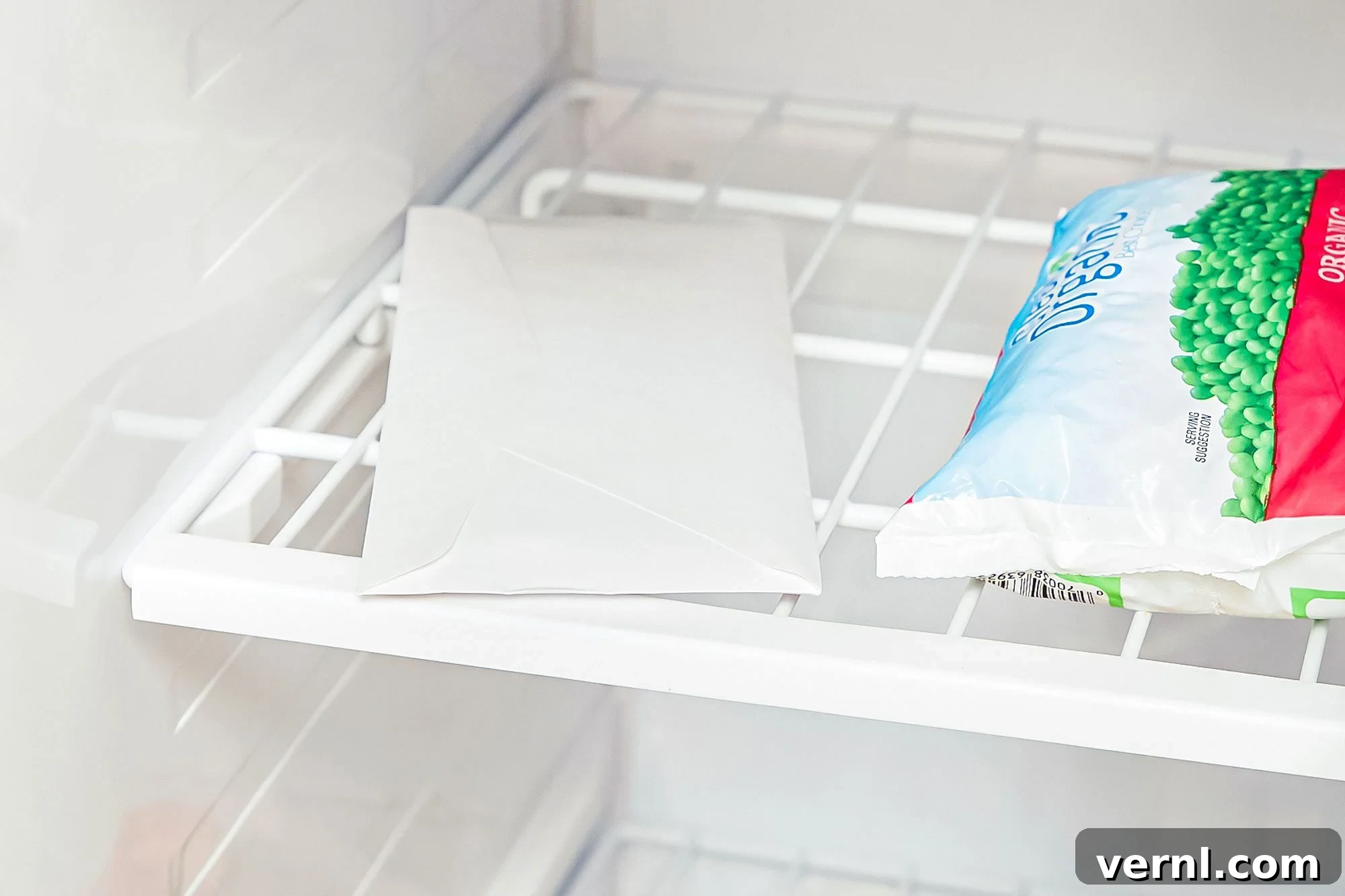
It’s a universal moment of frustration: you meticulously seal an envelope, only to realize a crucial item or document was forgotten inside. The immediate thought is often one of defeat – reopening it without causing irreversible damage seems impossible, leading to crumpled paper, torn edges, and the need to start over. But what if there was a simple, ingenious way to salvage the situation?
The idea of placing a sealed envelope in the freezer to loosen its adhesive might sound like something out of a quirky inventor’s notebook. Yet, this unconventional method has been a surprisingly effective trick employed by many for years to prevent damage to both the envelope and its valuable contents. The secret lies in a fascinating scientific principle: thermal expansion and contraction, which can delicately disrupt the strong bond of an envelope’s adhesive seal.
While not an absolute guarantee of success for every type of envelope or adhesive, this freezer hack stands out as an incredibly useful solution in specific, pressing situations. It offers a low-risk, non-destructive approach to correcting those common mailing oversights, saving you time, resources, and the frustration of redoing your work. This article will delve into the science, the methodology, and the nuances of making this curious trick work for you.
The Ingenious Science Behind the Freezer Hack
To truly appreciate the efficacy of the freezer method, one must understand the fundamental properties of the adhesive seal commonly found on envelopes. These seals are typically formulated from polymeric materials highly sensitive to environmental factors, particularly temperature fluctuations. When an envelope is sealed, the liquid adhesive is activated (often by moisture), then dries and hardens, creating a strong, almost impenetrable bond between the paper flaps. This bond, however, is not static; it’s a dynamic structure that reacts to its surroundings.
Understanding Thermal Expansion and Contraction
The core principle at play here is thermal expansion and contraction. Most materials, including the polymers that constitute envelope adhesives, tend to expand when heated and contract when cooled. When you place a sealed envelope into the extreme cold of a freezer, you are deliberately subjecting the adhesive to rapid cooling. As the adhesive material chills, its molecules slow down and draw closer together, causing the entire mass to shrink slightly.
How Contraction Weakens the Adhesive Bond
This controlled contraction is crucial. As the adhesive layer shrinks, it exerts stress on the bond it has formed with the paper fibers of the envelope. Unlike a clean break, this stress often leads to the formation of microscopic fractures or weaknesses along the adhesive line. The adhesive, now colder and less flexible, becomes more brittle. This increased brittleness, combined with the micro-fractures, significantly reduces the adhesive’s grip, making it far easier to gently pry the envelope open without the usual tearing and ripping of the paper itself. Essentially, the cold transforms a tenacious, flexible bond into a fragile, rigid one, ripe for separation.
Does It Really Work? Exploring the Effectiveness
In many instances, yes, the freezer hack proves remarkably effective. However, it’s vital to manage expectations: it is not a foolproof technique guaranteed to work every single time. The success rate of this method hinges on a variety of interconnected factors, making it a reliable but not infallible solution.
Key Variables Influencing Success:
- Type of Adhesive: Not all adhesives are created equal. Water-soluble gums, common on many standard envelopes, tend to respond well to temperature changes. Stronger, synthetic, or permanent adhesives, often found on security envelopes or specialty mailers, may be more resilient to the freezer’s effects. Some industrial-grade adhesives might be engineered to withstand extreme conditions, rendering this trick less potent.
- Quality and Material of the Envelope: The paper itself plays a role. Thicker, high-quality paper might hold its shape better under stress, while very thin or delicate paper might be more prone to tearing, even with a weakened seal. Coated or glossy papers can also react differently than standard matte finishes.
- Duration in the Freezer: Finding the optimal freezing time is critical. Too short, and the adhesive won’t have adequately contracted or become brittle. Too long, and there’s a risk of condensation build-up inside the bag, potentially damaging the envelope or its contents.
- Age of the Seal: A freshly sealed envelope might respond differently than one sealed months or years ago. Over time, some adhesives can become more stable and less susceptible to environmental changes, or conversely, more brittle simply due to aging.
- Freezer Temperature: While most home freezers operate at a standard temperature, variations can exist. A colder freezer will typically yield more pronounced results faster than a less cold one.
Understanding these variables helps in assessing the likelihood of success and allows for a more informed approach when attempting the hack. It’s often a process of trial and error, but with a high chance of success for standard envelopes.
Mastering the Freezer Method: A Step-by-Step Guide
Executing the freezer hack correctly is key to its success and to protecting your important documents. Follow these steps carefully to maximize your chances of safely opening a sealed envelope.
Step-by-Step Instructions:
- Preparation is Paramount: Enclose in a Resealable Bag
Before placing the envelope anywhere near the freezer, it is absolutely crucial to enclose it in a high-quality, resealable plastic bag. A Ziploc-style bag is ideal. This step serves a vital protective purpose: it acts as a barrier against moisture. Freezers are inherently humid environments, and condensation can easily form on cold surfaces when exposed to air. Direct exposure to moisture or frost could damage the envelope paper, smudge ink, or even ruin the contents inside. Ensure the bag is sealed tightly to create an airtight environment around the envelope.
- Strategic Temperature Exposure: The Right Amount of Chill
Place the bagged envelope flat in the freezer. The duration of its stay is critical. A minimum of one hour is generally recommended to allow the adhesive to cool thoroughly and contract. However, avoid leaving it for excessively long periods. While two hours is often considered a safe maximum, anything significantly beyond that without adequate protection could potentially risk condensation forming inside the bag (if not perfectly sealed) or even making the paper itself too brittle, increasing the chance of tearing during opening. The goal is to make the adhesive brittle, not the paper.
- Gentle Removal and Opening: The Moment of Truth
Once the allotted time has passed, carefully remove the bagged envelope from the freezer. Immediately, but gently, try to open the envelope. You can use a thin, blunt letter opener, a flat knife (with extreme caution), or even your fingernails. Apply even, steady pressure along the sealed flap. If the adhesive has successfully loosened, the flaps should separate with minimal resistance and without any tearing or ripping of the paper. Work slowly and methodically, peeling the flap back rather than forcing it.
- Troubleshooting and Persistence: What If It Stays Sealed?
If the envelope remains stubbornly sealed after the first attempt, resist the urge to force it open. Forcing it will almost certainly result in tearing the paper, defeating the purpose of the hack. Instead, allow the envelope to gradually return to room temperature while still inside its plastic bag. Once it’s warmed up, you can repeat the freezing process. Sometimes, a second cycle of contraction and expansion can further weaken a particularly strong adhesive bond, making it easier to open on the subsequent attempt. Patience is key here.
Important Considerations and Warnings
While the freezer hack is generally safe and effective, there are a few important points to consider to ensure you don’t inadvertently damage your mail or its contents.
- Delicate Contents: Be mindful of what’s inside the envelope. Items like photographs, heat-sensitive documents (e.g., thermal receipts), certain types of electronics, or documents printed with specific inkjet inks might be susceptible to damage from extreme cold or condensation. Always err on the side of caution.
- Ink Smudging: While the plastic bag helps, some inks, particularly those from older inkjet printers or certain markers, might be more prone to smudging or running if they come into contact with any residual moisture or if the paper itself becomes slightly damp upon warming.
- Legal Documents: For legal or official documents where tampering could have serious implications, consider the ramifications before attempting any method to reopen a sealed envelope. It’s often safer to create a new envelope and resend, documenting the original error if necessary.
- Re-sealing: After successfully opening an envelope, you’ll likely need to re-seal it. A standard glue stick, double-sided tape, or a new envelope are all viable options. Ensure the new seal is secure if the document is being re-mailed.
- Always Test: If you have multiple envelopes of the same type or are unsure about the adhesive’s reaction, consider testing the method on a less critical envelope first.
Beyond the Freezer: Alternative Methods (Use with Caution)
While the freezer method is preferred for its non-destructive nature, other techniques exist for opening sealed envelopes, though they often carry higher risks of damage.
- Steam: Holding an envelope over a steaming kettle can loosen water-soluble adhesives. However, this method is very tricky, easily wets the paper, causes wrinkling, and can smudge ink. Precision and speed are paramount, and it’s generally not recommended for valuable documents.
- Hair Dryer: Applying gentle heat from a hair dryer can sometimes reactivate or soften certain types of adhesives. Like steam, it carries the risk of warping paper, smudging ink, and potentially leaving a sticky residue. Control over heat and distance is crucial.
- Letter Openers (for non-stubborn seals): For envelopes that are very lightly sealed or have a weak adhesive, a sharp letter opener can sometimes be used to carefully slice along the edge of the flap without damaging the main body of the envelope. This requires a steady hand and is not suitable for firmly sealed envelopes.
These alternative methods highlight why the freezer trick remains a preferred choice: it works by altering the adhesive’s physical properties without directly introducing moisture or excessive heat, which are the primary culprits for document damage.
Why This Hack is a Valuable Skill
In our increasingly digital world, physical mail still holds significant importance, whether for personal correspondence, official documents, or business communications. The ability to safely open a sealed envelope without destruction offers numerous benefits:
- Saves Time and Effort: Avoiding the need to reprint documents, rewrite letters, or re-address envelopes can save a considerable amount of time and effort.
- Preserves Important Documents: For irreplaceable originals, contracts, certificates, or cherished letters, this method ensures their integrity is maintained, preventing costly re-issuance or sentimental loss.
- Cost-Effective: Eliminating the need for new envelopes, new stamps, and reprinting materials contributes to cost savings, especially in a business context where errors can quickly add up.
- Environmentally Conscious: By salvaging envelopes and their contents, you reduce waste, aligning with more sustainable practices.
Conclusion: A Cool Solution to a Common Problem
The unexpected freezer hack offers a remarkably elegant and often effective solution to the all-too-common problem of forgetting to enclose something in a sealed envelope. By leveraging the scientific principles of thermal contraction and brittleness, it provides a gentle, non-destructive way to retrieve your forgotten items or correct mailing errors. While its success isn’t absolute, understanding the science behind it and carefully following the procedural steps significantly increases your chances of success.
So, the next time you find yourself in that familiar predicament, don’t despair or reach for the nearest pair of scissors. Instead, head to your kitchen. A little chill might be all it takes to smoothly undo your mailing mistake, preserving your documents and your peace of mind. It’s a testament to how simple, everyday science can offer ingenious solutions to everyday frustrations.