
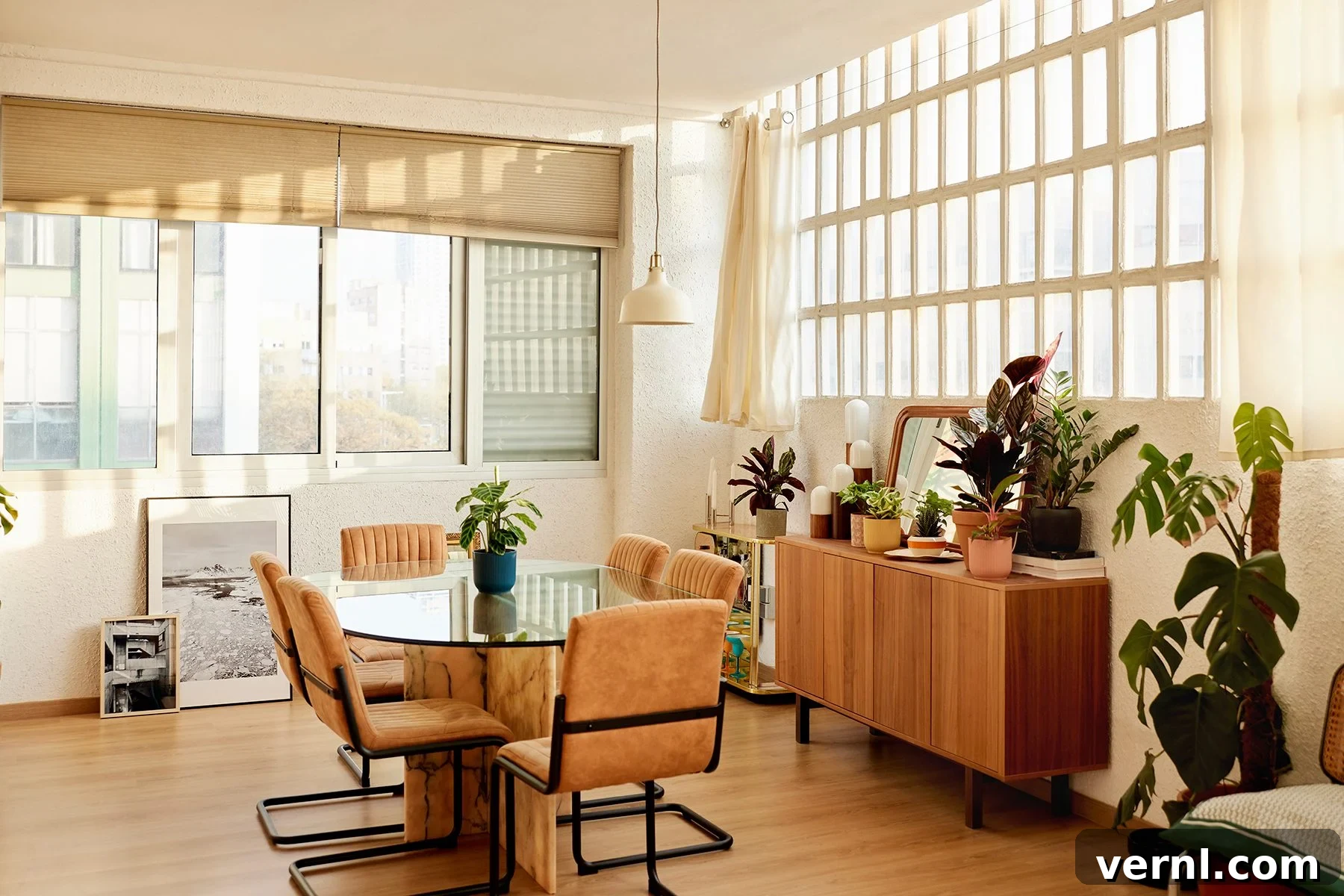
The landscape of work has dramatically shifted, with remote work becoming a cornerstone of modern professional life. This paradigm shift often leads individuals to seek innovative solutions for creating functional workspaces within their homes. For those without the luxury of a dedicated spare room to transform into a traditional home office, integrating a desk into the living room emerges as a compelling and increasingly popular option. This approach can be a game-changer for maximizing space in apartments, smaller homes, or simply for those who prefer to keep their bedrooms as pure sanctuaries of rest.
Navigating the nuances of merging work and leisure spaces requires thoughtful planning and design expertise. We’ve consulted with leading interior design professionals – Malak Bellajdel, Angie Kreller, and Leslie Dapper – to gather their insights on when a living room desk setup is most effective, and to uncover their top strategies for maintaining aesthetic cohesion, managing clutter, and fostering an environment conducive to concentration and productivity.
Unpacking the Home Office: Pros and Cons of a Living Room Desk
Deciding to place your workspace in the living room isn’t a decision to be taken lightly. It comes with its own set of advantages and challenges that are crucial to consider before redesigning your space.
The Advantages: Why a Living Room Desk Can Work Wonders
One of the primary benefits of incorporating a desk into your living room is its remarkable ability to create a highly functional workspace without the need to dedicate an entire room. As interior designer Malak Bellajdel eloquently explains, “This setup works exceptionally well for apartments, smaller homes, or any dwelling where square footage is at a premium. It allows you to utilize existing space more efficiently, turning an underutilized corner into a productive hub.” This makes remote work accessible even in compact living situations, sidestepping the need for costly renovations or moves.
Furthermore, the location of your workspace can significantly impact your daily routines and overall well-being. Interior designer Angie Kreller highlights a key psychological advantage: placing your desk in the living room, as opposed to a bedroom office, can substantially enhance productivity. “When your workspace is separate from your sleep space, you’re less susceptible to the temptation of lying down for a quick break that turns into an extended nap,” Kreller observes. This clear delineation helps maintain your bedroom as a relaxing retreat, free from the mental associations of work-related stress. Additionally, for those frequent video calls, a living room backdrop provides a more professional and aesthetically pleasing environment, eliminating concerns about an unmade bed or personal clutter in your private quarters appearing on screen.
Beyond these practical benefits, a living room desk offers unparalleled flexibility. It allows for a more integrated lifestyle, where work can seamlessly blend with family life, especially for those who need to supervise children or manage household tasks while working. It also means you’re not isolated in a separate room, promoting a sense of connection with other household members. For individuals who only work remotely occasionally, or use a computer for hobbies and personal administration, a living room desk offers a convenient, multi-purpose station without requiring a dedicated room that would otherwise sit unused for much of the time.
The Disadvantages: Potential Hurdles to Overcome
While the advantages are compelling, a living room desk isn’t a universal solution. Bellajdel cautions that certain living situations may render this setup less than ideal. “If a client has small children or active pets, maintaining a professional and undisturbed workspace can become incredibly challenging,” she points out. The constant ebb and flow of family life, along with potential interruptions, can severely impact focus and concentration, making it difficult to conduct important calls or concentrate on complex tasks.
Aesthetics also play a critical role. “You must consider the visual impact,” Bellajdel advises. “If a client has a very specific design vision for their living space – perhaps a minimalist aesthetic or a carefully curated theme – the introduction of a functional desk could disrupt that visual flow and compromise the desired ambiance.” A poorly integrated desk can stick out like a sore thumb, undermining the room’s overall design integrity.
Leslie Dapper, another respected interior designer, expresses a more reserved perspective on living room workspaces. “I’ve found that not only can these spaces quickly become inundated with paperwork and files, but they’re also often not conducive to sustained productivity,” Dapper shares. The very nature of a living room, designed for relaxation and entertainment, presents numerous opportunities for distractions – from television noise and family conversations to simply the visual presence of leisure items. Dapper further elaborates on the psychological challenge: “When it’s time to unwind and use your living room for its intended purpose, it becomes incredibly difficult to mentally distinguish between the work zone and the relaxation zone. This blurring of lines can make it hard to truly switch off and achieve proper rest.” The constant visual reminder of work can inadvertently extend working hours and impede mental detachment, leading to increased stress and decreased work-life balance.
Another significant drawback can be a lack of privacy. Important phone calls or virtual meetings might be challenging if other household members are present or if background noise is an issue. Unlike a dedicated office with a closed door, a living room setup offers little personal space for confidential discussions or deep, uninterrupted work that requires intense focus.
Mastering the Blend: Expert Tips for a Successful Living Room Desk Setup
If, after weighing the pros and cons, you’ve decided that a living room desk is the right choice for you, the next step is to implement it thoughtfully. Success hinges on a harmonious blend of style, functionality, and ergonomic considerations. Here are expert tips to help you create a workspace that enhances, rather than detracts from, your living environment.
1. Pick the Perfect Position: Location, Location, Location
The placement of your desk is paramount. Bellajdel emphasizes the importance of considering the overall flow of the space. “The desk should never obstruct pathways or create awkward, unusable corners,” she advises. Ideal spots include tucking a desk into an existing alcove, utilizing a wall space beside a fireplace, or ingeniously incorporating it into the often-overlooked area beneath your stairs. These creative solutions allow you to establish a home office without it encroaching on the main living area or disrupting foot traffic.
Beyond flow, ergonomics are crucial. You need ample room not just for the desk itself, but also for an ergonomic office chair and sufficient space to move comfortably. A cramped setup can lead to poor posture, discomfort, and long-term health issues. Ensure there’s enough clearance behind and around your chair to push back, stand up, and stretch without bumping into furniture or walls.
For those who subscribe to the principles of Feng Shui, the ancient Chinese art of arranging environments to create balance and harmony, desk placement holds significant meaning. Avoid positioning your desk so that you face a wall with your back to the doorway, as this can create a sense of vulnerability and unease. The ideal “commanding position” allows you to see the door without being directly in line with it, fostering a sense of control and openness. If facing a wall is your only option, mitigate this by placing a mirror in front of you, reflecting the doorway and expanding your perceived view, thereby restoring a sense of command and awareness.
Finally, consider proximity to power outlets and internet connectivity. Strategically placing your desk near these necessities will minimize unsightly cable clutter and ensure a reliable connection, vital for any modern workspace.
2. Create a Cohesive Design: Seamless Integration is Key
The desk shouldn’t look like an afterthought. Keller strongly recommends ensuring that the desk style, materials, and color palette complement the rest of your living room’s design. “You want the aesthetic you’re striving for to be cohesive, making the desk feel like an intentional part of the room rather than an alien element,” she explains. “This approach transforms the desk from a purely functional workstation into a deliberate ‘accessory,’ enriching the overall design.”
Think about the existing furniture. If your living room leans towards a minimalist Scandinavian style, choose a desk with clean lines, light wood, or a sleek white finish. For a rustic or industrial living room, opt for a desk made of reclaimed wood and metal. Consider the scale as well; a bulky desk can overpower a small living room, while a delicate one might look lost in a grand space. Integrating the desk means selecting finishes that echo other pieces in the room, such as the legs of a coffee table or the frame of a bookshelf. Even the desk chair should align with the room’s aesthetic; choose one that is comfortable but also visually appealing, perhaps upholstered in a fabric that matches your sofa or armchairs.
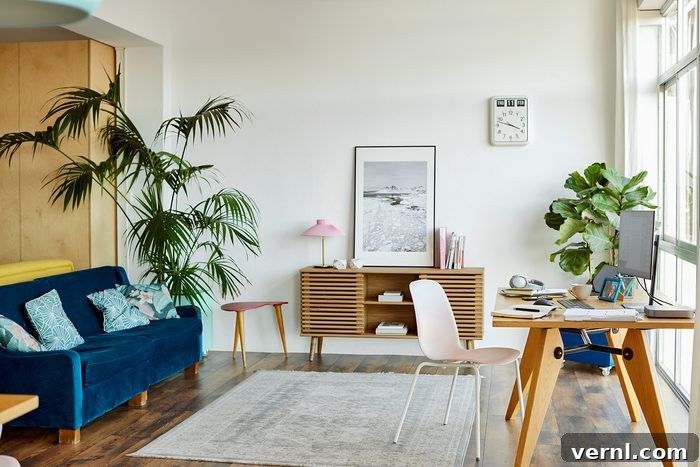
3. Good Lighting is Key: Brighten Your Workspace and Mood
Proper lighting is fundamental for both productivity and well-being. “Whenever possible, try to position your desk near a window,” Bellajdel advises. “Natural light isn’t just excellent for productivity and reducing eye strain; it also helps the desk area feel like an organic extension of the room, rather than a separate, artificial space.” The psychological benefits of natural light, including improved mood and energy levels, cannot be overstated.
However, while natural light is beneficial, direct sun exposure can lead to glare on your screen and privacy concerns. Avoid placing your seat directly in front of a window if it causes distractions or makes video calls challenging due to backlighting. Instead, position your desk perpendicular to the window to maximize natural light without direct glare. Complement natural light with appropriate artificial lighting. A good task lamp on your desk is essential for focused work, while ambient lighting from overhead fixtures or floor lamps ensures the overall room remains well-lit and welcoming. Consider smart lighting solutions that allow you to adjust brightness and color temperature to suit different tasks and times of day, creating a versatile and comfortable work environment.
4. Use Storage Wisely: Conquer Clutter and Maintain Serenity
One of the biggest challenges of a living room office is preventing work-related clutter from encroaching on your relaxation zone. Bellajdel highlights this concern: “If the living room is intended to be a true sanctuary for unwinding, many people find it difficult to relax when work materials are constantly visible.” Effective storage is not just about tidiness; it’s about maintaining mental separation between work and leisure.
Integrate smart home office organization solutions. Opt for a desk with built-in drawers, compartments, or hidden cubbies. Utilize stylish, discreet baskets or decorative boxes on overhead bookshelves or console tables to stash away files, stationery, and other supplies at the end of the workday. Consider multi-functional furniture, such as an ottoman with hidden storage, or a credenza that looks like a decorative piece but conceals office essentials. Digital organization is equally important; minimize physical paperwork by digitizing documents whenever possible. The goal is to make all work-related items disappear from view when not in use, signaling to your brain that it’s time to relax.
5. You Don’t Need to Opt for a Full Desk Setup: Embrace Compact Alternatives
The notion of a traditional, bulky executive desk doesn’t always fit into modern living spaces or lifestyles. If you’re struggling to envision how to incorporate a large desk into a compact living room, or if you simply don’t want a constant visual reminder of work, there are numerous innovative alternatives. “So much of what we do now can be accomplished on a laptop, making a full desk setup often feel unnecessary,” Dapper points out.
Consider a discreet, adjustable-height standing desk for small spaces, which can be easily folded or tucked away in a closet at the end of the working day. A fold-down, wall-mounted desk platform is another practical and space-saving alternative, disappearing flush against the wall when not in use. Console tables, often found in hallways or behind sofas, can double as sleek laptop desks. Even a sturdy floating shelf, paired with an ergonomic stool, can serve as a minimalist workstation. Secretary desks, with their ability to close up and hide the workspace, offer a classic and elegant solution. These compact and flexible options ensure that your living room maintains its primary function as a space for relaxation and social interaction, while still providing a functional spot for occasional or full-time remote work.
6. Personalize Your Workspace: Make it Your Own
Even though it’s in the living room, your workspace should still feel like yours. Personal touches can make the area more inviting and inspire productivity. Add a small plant to bring a touch of nature and improve air quality. A framed photo, a unique pen holder, or a piece of inspiring art can inject personality without overwhelming the space. Choose a comfortable, ergonomic chair that also complements the room’s decor – perhaps a stylish upholstered chair rather than a stark office chair. These elements not only make the space more enjoyable but also help define it as your personal productivity zone within the larger living area.
7. Set Boundaries and Expectations: Manage Noise and Interruptions
Working in a shared living space requires clear communication and boundaries with other household members. Discuss expectations regarding quiet times, especially during important meetings or focused work periods. Consider using noise-canceling headphones to minimize distractions. When it’s family time, make a conscious effort to put away work items and signal that your workday is over. This helps everyone, including yourself, distinguish between work and leisure, ensuring that the living room can effectively serve both purposes without constant friction or confusion.
Conclusion: Crafting Your Harmonious Living Room Workspace
Integrating a desk into your living room is more than just a spatial arrangement; it’s a strategic design choice that can significantly impact your productivity, work-life balance, and overall home comfort. While challenges such as potential distractions and aesthetic cohesion exist, they are far from insurmountable. By thoughtfully considering desk placement, prioritizing cohesive design, optimizing lighting, implementing smart storage solutions, and embracing flexible desk alternatives, you can create a harmonious and highly functional workspace.
The insights from Malak Bellajdel, Angie Kreller, and Leslie Dapper underscore the importance of deliberate planning and a personalized approach. Whether you’re a full-time remote worker or simply need a dedicated spot for occasional tasks, a well-designed living room desk can transform an underutilized corner into a powerful hub of creativity and efficiency, all while preserving the warmth and relaxation of your home’s central gathering space. Embrace the possibilities, and redefine how you work and live within the comfort of your own home.
About the Experts Shaping Our Work-From-Home Insights
- Malak Bellajdel, a distinguished professional with a B.Arch in Architecture, serves as the in-house interior design expert at Interior Moderna. Her expertise provides a foundation for functional and aesthetically pleasing designs. (Interview conducted via email, Sept. 23, 2024).
- Leslie Dapper brings over 30 years of invaluable experience in interior design as the lead designer at Rumor Designs. Her practical insights are rooted in extensive real-world application. (Interview conducted via email, Sept. 23, 2024).
- Angelique (Angie) Kreller holds a Bachelor of Interior Design and is the dedicated in-house interior designer for Yabby. Her forward-thinking design philosophy contributes to innovative home solutions. (Interview conducted via email, Sept. 24, 2024).