
Revitalize Your Lawn: A Comprehensive Guide to Identifying and Fixing Brown Grass
A lush, green lawn is often the centerpiece of a beautiful home, but when your vibrant turf starts to turn brown, it can be a frustrating and often perplexing problem. Brown grass isn’t just an aesthetic issue; it’s a clear signal that something in your lawn’s environment or care routine needs immediate attention. Understanding the root cause is the first and most crucial step toward bringing your lawn back to its glorious green state. This comprehensive guide will explore the most common reasons your grass might be browning and provide actionable, effective solutions to restore its health and color, ensuring your lawn thrives season after season.
Why is My Grass Brown? Uncovering the Causes of Lawn Discoloration
Brown patches can appear for a myriad of reasons, ranging from simple care mistakes to more complex issues like pervasive pests or stubborn diseases. Let’s delve into the primary culprits that might be transforming your verdant lawn into an uninviting sea of brown, offering insights into how to diagnose and address each problem effectively.
Over-Application of Fertilizer: The Risk of Fertilizer Burn
While fertilizer is an essential nutrient boost for a healthy lawn, an excessive amount can actually be detrimental. If you’ve recently applied fertilizer and are now noticing brown spots or a general browning of your grass, you might be dealing with “fertilizer burn.” This phenomenon occurs when the high salt content in synthetic fertilizers draws moisture out of the grass blades and roots, effectively dehydrating and burning them. Certain types of quick-release, high-nitrogen fertilizers are particularly prone to causing this issue if not applied accurately or followed by sufficient watering.
How to Fix Brown Grass Caused by Fertilizer Burn
If fertilizer burn is confirmed as the culprit, immediate action is crucial to mitigate the damage. The most effective fix for brown grass in this scenario is to thoroughly soak the affected areas with a generous amount of water. This heavy watering helps to dilute the concentrated chemicals and flush them deeper into the soil, moving them away from the sensitive grass roots. Continue watering regularly for several days to ensure maximum dilution and leaching. After treating, maintain a vigilant eye for any new crabgrass sprouts, as they tend to thrive in disturbed or stressed soil conditions and might require additional herbicide treatment. Once the grass begins to show signs of recovery, or if the damage is extensive, be sure to reseed those areas in the optimal season (typically fall for cool-season grasses or spring for warm-season grasses) to promote healthy, even growth across your lawn.

The Hidden Damage of a Dull Mower Blade
When it comes to effective lawn care, the sharpness of your mower blade is often an overlooked detail, yet it plays a significant role in your grass’s overall health and appearance. Dull mower blades rip through the grass blades instead of slicing them cleanly. This tearing action creates ragged, torn edges on each blade, which severely stresses the plant. These damaged edges make the grass more susceptible to diseases, pest infestations, and environmental stressors, as the plant expends more energy trying to heal itself. You can always tell a lawn that’s been mowed with a dull blade because it often has a distinctive brownish or whitish tint on the top, giving it a fuzzy, unhealthy appearance. To confirm the damage, get down on your hands and knees and examine the tips of the grass blades; they will appear frayed, split, and discolored. To keep your lawn in pristine, healthy shape, make it a standard practice to sharpen your mower blade at least once each season, or more frequently if you mow a large area or have particularly tough grass varieties.
Improper Watering Practices: Are You Thirsty or Drowning Your Lawn?
Water is the lifeblood of your lawn, but the method and frequency of watering make all the difference. If you’re watering your lawn with a simple hose or an inefficient, improperly calibrated sprinkler system, you’re likely not distributing water evenly. This can lead to a patchwork of brown areas where the grass is severely parched, while other spots may be overwatered. Both scenarios are detrimental to lawn health. Underwatering causes the grass to become dehydrated, go dormant as a survival mechanism, and turn brown. Conversely, overwatering can suffocate grass roots by displacing essential oxygen in the soil, encourage rampant fungal growth, and leach vital nutrients from the root zone. Inconsistent and incorrect watering not only causes unsightly brown patches but can also needlessly inflate your water bill.
Optimal Watering for a Healthy, Green Lawn
For a truly healthy and vibrant lawn, the goal is deep, infrequent watering. Aim for approximately one to one-and-a-half inches of water per week, delivered in one or two comprehensive sessions rather than numerous shallow ones. This approach encourages grass roots to grow deeper into the soil, making them much more resilient to periods of drought and heat stress. The best time to water your lawn is in the early morning (before 10 AM). This timing minimizes water loss due to evaporation and allows the grass blades ample time to dry before nightfall, which significantly helps in preventing the development and spread of fungal diseases. With advancements in modern technology, sophisticated sprinkler systems can now be programmed with specific zones and timers to deliver precise amounts of water to where it’s needed most, optimizing both grass health and precious water conservation efforts.
Why is My Grass Dying in Patches? The Problem of Mowing Your Grass Too Short
While cutting your grass very short might seem like a convenient way to reduce mowing frequency, your lawn absolutely doesn’t appreciate it. Mowing too short, often referred to as “scalping,” severely stresses the individual grass plants. By removing an excessive amount of the grass blade, you drastically reduce the plant’s surface area for photosynthesis – the critical process by which it produces energy. Moreover, cutting the blades too short exposes the delicate soil underneath to the direct, harsh rays of the hot sun, causing it to dry out rapidly. This leads to widespread browning, significantly weakens the grass, and can even encourage the germination and growth of invasive weeds, foster fungal diseases, and attract damaging insect pests. Always adhere to the fundamental “one-third rule,” which dictates that you should never remove more than one-third of the grass blade’s total height in a single mowing session. Adjust your mower deck to an appropriate height for your specific grass type, which generally falls between 2.5 to 3.5 inches for most common cool and warm-season lawn grasses. Taller grass also helps shade the soil, retaining moisture and suppressing weed growth.
For more handy tips on maintaining your lawn and optimizing your mowing techniques, consider exploring comprehensive guides that can further enhance your lawn care routine.

Why is My Grass Turning Brown and Yellow? The Menace of Dog Spots on Grass
Our beloved canine companions can inadvertently wreak havoc on our meticulously maintained lawns, leaving behind distinct brown and yellow patches commonly known as “dog spots.” These unsightly spots are primarily caused by the high concentration of nitrogenous compounds, particularly urea, present in dog urine. While nitrogen is a vital nutrient for grass growth, an excessive amount delivered in a concentrated area acts much like an overdose of fertilizer, effectively burning the grass. This results in dead, brown spots often surrounded by a characteristic ring of unusually dark green, stimulated growth where the urine was diluted to a beneficial level.
An Ounce of Prevention: Minimizing Dog Spot Damage
- Hydrate Designated Areas: Regularly soak your pet’s preferred urination spots in your lawn with fresh water. This practice helps to immediately dilute the urine’s concentrated salts and chemicals, preventing them from accumulating to toxic levels in the root zone before they can kill the grass.
- Boost Overall Lawn Health: Fertilize your entire lawn uniformly in the spring to encourage robust, dense growth and a consistent, vibrant color. A healthy, thick lawn is inherently more resilient and can better withstand and mask any minor discoloration caused by occasional pet urine.
- Train for Specific Zones: Consider training your pet to relieve themselves in a designated, less visible area of your yard. You can cover this zone with mulch, gravel, or even plant urine-resistant ground cover. If using grass in this area, be prepared to replace or repair it more frequently.
- Keep Pets Hydrated: Always ensure your pet has constant access to fresh, clean water. A well-hydrated pet produces less concentrated urine, which can significantly lessen the severity of damage to your lawn.
How to Get Rid of Existing Dog Spots and Repair Your Lawn
Repairing existing dog spots requires a bit of effort but is an entirely achievable task that can restore your lawn’s appearance:
- Dilute Immediately: As soon as you notice a fresh dog spot, or even a recently formed one, soak the affected patch until the grass is thoroughly wet. This action immediately dilutes the urine acids and salts, washing them deeper into the soil, beyond the grass roots, where they are far less harmful.
- Remove Dead Grass: Once the grass in the spot is visibly dead and brown, gently scrape up the lifeless turf with a hand rake or a stiff brush and remove all debris from the area.
- Prepare the Soil: Using your rake or a small hand trowel, rough up the exposed soil surface to loosen it about 1/2-inch deep. Grass seeds germinate much better and establish stronger roots in soft, aerated soil rather than compacted dirt.
- Apply Topsoil and Seed: Sprinkle on a 1/2-inch-thick layer of fresh, high-quality topsoil, then evenly pepper it with a generous amount of grass seed appropriate for your climate and existing lawn type.
- Cover and Firm: Lightly cover the newly sown seeds with a very thin pinch of additional soil or compost and gently press it down with your foot or a roller to ensure excellent seed-to-soil contact. This is crucial for successful germination.
- Maintain Moisture: Keep the reseeded area consistently moist, but never waterlogged, until the new grass grows to an established height of about three inches. This usually means light watering several times a day, especially in warm, dry weather.
Why is My Grass Dying? The Impact of Poor Soil Quality
The foundation of a truly healthy and resilient lawn is healthy soil. Poor soil quality, particularly in the form of soil compaction, is a widespread reason grass turns brown and eventually dies. Compaction occurs when soil particles are pressed tightly together, significantly reducing the vital spaces normally filled with air, water, and essential nutrients. When these critical elements cannot penetrate the soil effectively, your grass roots struggle to grow deep, spread out, and access the resources they desperately need to thrive. This leads to shallow, weak root systems that are highly susceptible to drought stress, nutrient deficiencies, and overall fragility, ultimately resulting in brown, dying patches.
The Solution: Lawn Aeration for Improved Soil Health
If you’ve identified compaction as a contributing problem to your brown grass, it’s definitively time to aerate your lawn. Aeration is the process of creating small holes or removing plugs of soil from the lawn, which helps to loosen the compacted earth, dramatically improve air circulation, and allow water, fertilizers, and essential nutrients to reach the grass roots more effectively. This process encourages deeper, stronger root growth and contributes to overall stronger, healthier, and more resilient grass. The best time to aerate your lawn is during its active growing season, typically in the fall for cool-season grasses (allowing roots to recover before winter) and in late spring to early summer for warm-season grasses. Following aeration, consider topdressing your lawn with a thin layer of nutrient-rich compost to further enrich the soil and improve its long-term structure and fertility.
Other Reasons Your Grass is Turning Brown and Dying
Beyond the primary causes discussed, several other environmental, biological, and maintenance factors can contribute to your lawn’s decline and browning. Understanding these additional culprits is key to a holistic approach to lawn care:
- Buried Debris: Your lawn may have buried debris, such as old construction materials, forgotten rocks, or decaying tree stumps, just beneath the surface. These hidden obstacles can impede healthy root growth, alter soil drainage patterns (creating either boggy or overly dry spots), and cause localized nutrient deficiencies, ultimately leading to irregular patterns of uneven browning and stressed grass.
- Erosion Issues: Lawns with significant slopes are particularly susceptible to erosion, especially during heavy rainfall. Erosion occurs when the topsoil, along with crucial nutrients and even grass seed, is washed away. This loss of vital soil components leaves grass roots exposed, unable to anchor properly, and deprived of essential nutrients. Ground covers are an excellent, natural way to reduce erosion on slopes, stabilizing the soil, enhancing moisture retention, and adding appealing greenery. Succulents, for instance, make pretty, easy-to-care-for ground covers that are both effective at soil stabilization and aesthetically pleasing.
- Competition from Tree Roots and Shade: Growing lush grass directly under large, mature trees can be a significant challenge because tree roots compete aggressively with grass for available water and nutrients, and the dense tree canopy creates deep shade. However, it’s not an impossible task when you carefully select and use shade-tolerant grasses appropriate for your specific climate zone. Consider adding a layer of nutrient-rich compost to the soil and adjusting your watering schedule to water more frequently in these competitive areas to compensate for the tree’s demands.
- Insufficient Water in Sunny Spots: Different areas of your lawn often require varying amounts of care and attention, and this is especially true for sunny spots that receive prolonged, intense heat throughout the day. If your grass is consistently turning brown in these exposed areas, it could simply be because it’s not getting enough water to counteract the increased evaporation and heat stress. Lawns typically need at least one to one-and-a-half inches of water per week to remain healthy and vibrantly green. Picking the right sprinkler system or specific sprinkler heads for particular sunny or exposed spots in your yard is one of the most effective ways to ensure adequate hydration and keep all parts of your lawn healthy.
- Natural Grass Dormancy: If different spots of your yard turn brown seasonally and then green up again, you may simply have a mix of grass types, some of which are programmed for natural dormancy. Some grasses, particularly cool-season varieties during intense summer heat or warm-season varieties in the cold of winter, will naturally go dormant as a survival mechanism to conserve energy during harsh environmental conditions. Dormant grass isn’t dead; it’s merely in a resting state and will typically green up again when more favorable temperatures and moisture conditions return. Minimal watering can help dormant grass survive, but avoid heavy fertilization.
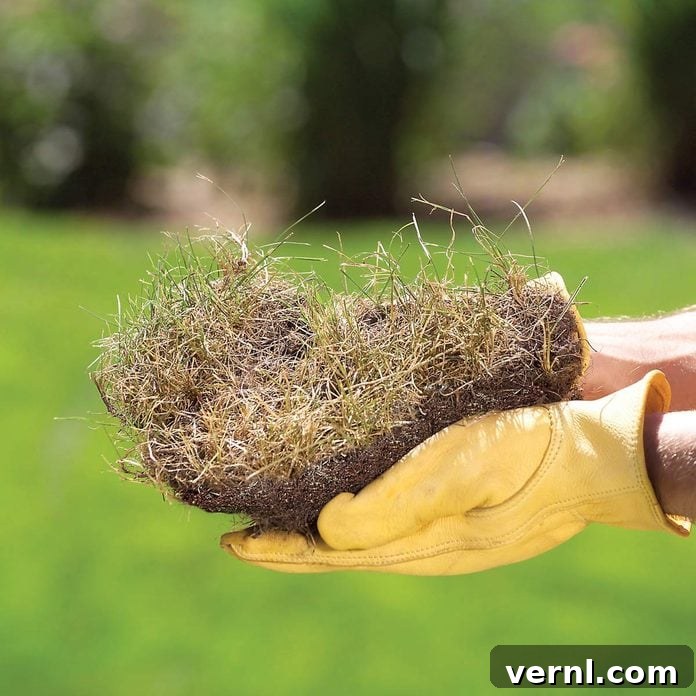
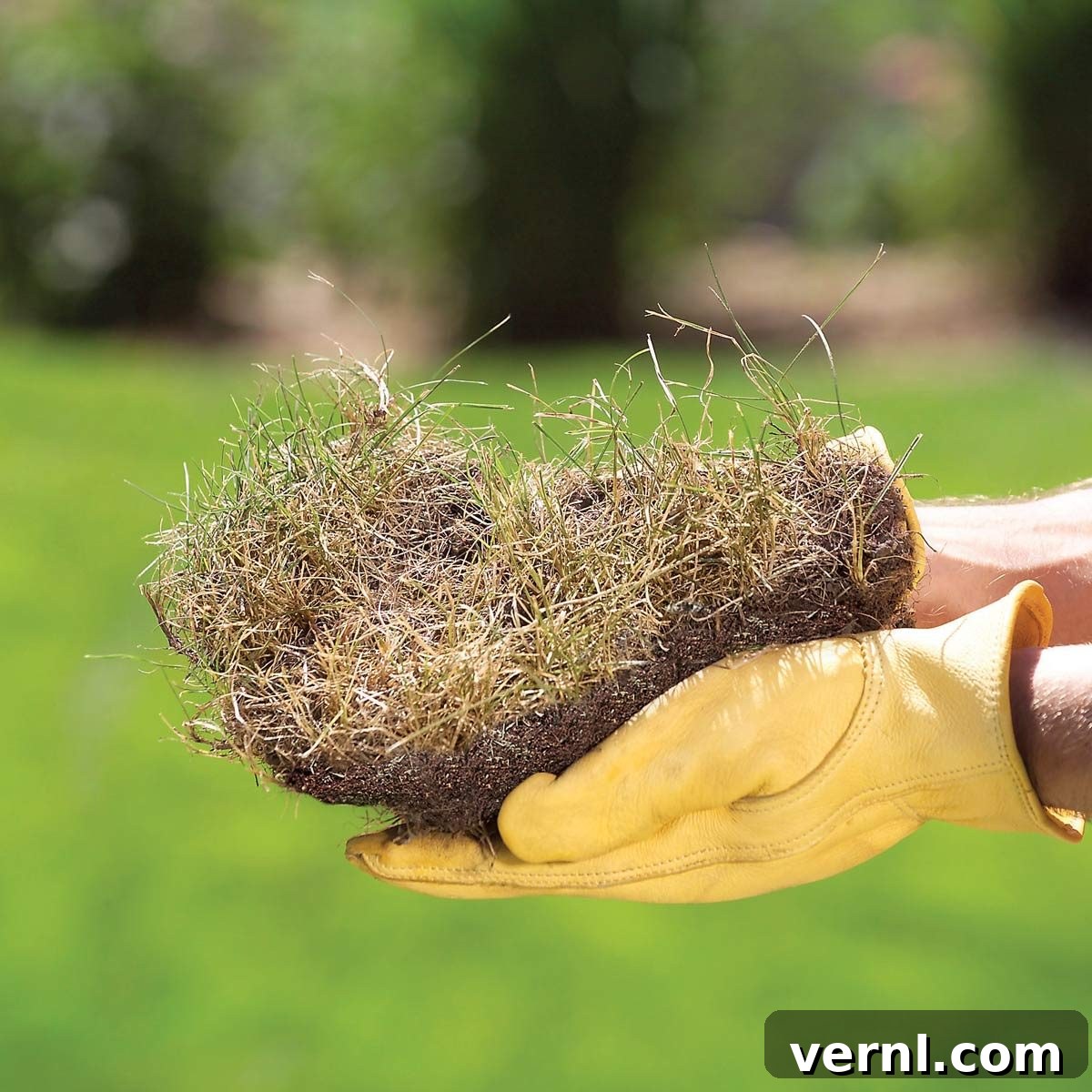
- Excessive Thatch Buildup: Thatch is a dense, interwoven layer of living and dead organic matter, such as grass clippings, roots, and stems, that accumulates between the green grass blades and the underlying soil surface. If this buildup becomes too thick (exceeding ½ inch), it creates a barrier that prevents water, air, and essential nutrients from reaching the soil and roots, effectively choking out healthy grass. Excessive thatch can also create an ideal breeding ground for various pests and fungal diseases. Regular aerating your lawn and raking with a dethatching rake, or applying a thin layer of new topsoil or compost, will help break down existing thatch and significantly improve your lawn’s overall health and vigor.
- Grub Infestations: Grubs are the white, C-shaped larvae of various beetles (like Japanese beetles, May beetles, or June bugs) that primarily feed on the tender roots of grass. If left unchecked, these voracious feeders can cause significant and widespread dead spots, as the grass, deprived of its root system, will easily pull up like a piece of loose carpet. Other signs of grub damage include irregular brown patches that expand over time, a spongy feel to the turf, and increased activity from animals (like raccoons, skunks, or birds) digging in your lawn. To confirm an infestation, dig a square foot of turf in a suspected area and count the grubs; if you find six to 10 grubs in a square foot, treatment is strongly recommended. Treat your lawn with an insecticide specifically formulated for grubs, always following the manufacturer’s directions carefully regarding application rates and timing. Alternatively, consult with a professional yard service for expert diagnosis and effective biological or chemical treatment options.
- Chinch Bug Damage: Chinch bugs are tiny, sap-sucking insects that are particularly prevalent in warmer climates and often thrive in hot, dry areas, especially along the edges of sidewalks and driveways. They extract vital fluids from grass blades, simultaneously injecting a toxin that causes the grass to turn yellow, then red-brown, and eventually die. Signs include irregular yellow patches that rapidly expand and coalesce into larger brown areas. To confirm, carefully inspect the base of the grass blades. Many chinch bug populations have developed resistance to certain pesticides, but products like Talstar have proven effective against chinch bugs. You can buy it now on Amazon. Always ensure you accurately identify the specific pest before proceeding with any chemical treatment.
- Grass Fungus and Diseases: Various grass fungi and diseases can manifest as brown, yellow, or otherwise discolored patches on your lawn. Some, like snow mold, typically appear in early spring after snowmelt, while others, such as brown patch or dollar spot, commonly emerge in the middle of summer, especially when the weather turns hot and humid. Improper watering practices, particularly watering in the evening or at night, can significantly lead to fungus growth because the grass blades remain wet for extended periods, creating an ideal environment for spores to proliferate. Improving air circulation, ensuring proper drainage, and watering exclusively in the early morning are key preventative measures. If a fungal infection is present, commercial products like Scotts DiseaseEx Lawn Fungicide can help control and eliminate active grass fungus. You can buy it now on Amazon.
- High Traffic and Obstructions: If your lawn experiences frequent foot traffic from people or pets, you can expect some distinct traffic paths to emerge, as compacted soil quickly damages grass and prevents recovery. Similarly, if you habitually leave objects like toys, inflatable pools, or outdoor furniture out on your lawn for extended periods, they block essential sunlight and airflow, while also trapping moisture and heat. This creates an unhealthy microclimate that will very likely result in unsightly brown spots underneath within just a couple of days. Regularly moving these items and varying foot traffic routes can significantly help minimize damage and allow grass to recover.
How to Make Grass Green Fast: From Patchy to Pristine
Transforming a patchy, brown, and lifeless lawn into a lush, green oasis can seem like a monumental task, but with the right strategy and consistent effort, it’s entirely achievable. Many homeowners have successfully revived their lawns, turning dead spots into vibrant turf within a season or two, often with a reasonable investment of time and resources. The key to rapid and lasting green-up is a consistent, multi-pronged approach that accurately addresses the underlying issues and actively promotes vigorous new growth.
To effectively and efficiently transform a struggling lawn, focus on these critical, interconnected steps:
- Accurate Diagnosis of the Problem: As detailed throughout this guide, the very first step is to accurately identify the primary cause(s) of your lawn’s browning. Is it soil compaction, improper watering, a pest infestation, or a fungal disease? Correct diagnosis is truly half the battle, guiding all subsequent actions.
- Soil Amendment and Aeration: If soil compaction is identified as an issue, aerate your lawn thoroughly to improve air, water, and nutrient penetration to the root zone. Follow up by spreading a thin layer of nutrient-rich compost (topdressing) to enhance soil structure, fertility, and microbial activity.
- Implement a Proper Watering Schedule: Immediately adopt a deep, infrequent watering schedule, aiming for 1 to 1.5 inches of water per week, delivered primarily in the early morning. This approach is fundamental for encouraging deep root growth and improving drought resilience.
- Strategic and Balanced Fertilization: Apply a balanced, slow-release fertilizer tailored to your specific grass type and based on soil test recommendations. Avoid the temptation to over-fertilize, as this can quickly lead to fertilizer burn.
- Overseeding and Reseeding Bare Patches: For bare spots or areas with thin grass, overseed with a high-quality grass seed that closely matches your existing lawn type and is suitable for your climate. Fall is often the ideal time for cool-season grasses, while late spring is generally better for warm-season varieties. Ensure excellent seed-to-soil contact and keep the newly seeded areas consistently moist until germination and establishment.
- Targeted Pest and Disease Control: Swiftly address any identified grub, chinch bug, or fungal infestations with appropriate, targeted treatments. Always read and follow product instructions carefully to ensure efficacy and safety.
- Adhere to Mowing Best Practices: Continue to mow your lawn at the correct height (typically 2.5-3.5 inches), never removing more than one-third of the grass blade at a time. Regularly sharpen your mower blade to ensure clean cuts, which minimizes stress on the grass.
Here’s a detailed breakdown of what it takes to transform a dead lawn into green grass fast, often involving a strategic combination of these techniques implemented consistently over several months to achieve truly remarkable and lasting results.
Maintaining a Healthy, Green Lawn Year-Round: Your Long-Term Strategy
Once you’ve successfully brought your grass back to its vibrant green, the focus naturally shifts to maintaining its pristine health and proactively preventing future browning. A healthy lawn is a resilient lawn, far better equipped to withstand environmental stresses, pest pressures, and common diseases. Consistent, proactive care is the key to ensuring your lawn remains a source of pride year after year:
- Regular Soil Testing: Make it a habit to test your soil every 2-3 years. This allows you to monitor its pH and nutrient levels accurately, enabling you to make precise adjustments with amendments or fertilizers as needed.
- Seasonal and Balanced Fertilization: Follow a consistent fertilization schedule that is specifically tailored to your grass type, local climate, and the results of your soil tests. This ensures your lawn receives the right nutrients at the right time.
- Smart and Efficient Watering: Stick rigidly to a deep and infrequent watering schedule, adjusting the frequency and duration based on natural rainfall, seasonal changes, and the specific needs of your grass. Consider investing in smart irrigation controllers that use weather data to optimize watering.
- Proactive Weed Management: Address any weeds promptly as soon as they appear, before they have a chance to compete aggressively with your desirable grass for vital resources like water, nutrients, and sunlight.
- Vigilant Pest and Disease Monitoring: Regularly inspect your lawn for any early signs of pest infestations or fungal diseases. Early detection is absolutely critical for preventing widespread damage and making treatment simpler and more effective.
- Adhere to Proper Mowing Techniques: Continue to mow your lawn at the appropriate height for your grass type with sharp blades, never removing too much at once. Whenever possible, leave the grass clippings on the lawn; they decompose quickly, returning valuable nutrients to the soil.
- Consistent Thatch Control: Regularly check your lawn’s thatch layer. If it exceeds ½ inch, perform dethatching to ensure proper water, air, and nutrient penetration to the root zone, preventing the issues associated with excessive thatch.
By diligently implementing these comprehensive and proactive lawn care practices, you can ensure your lawn remains a beautiful, vibrant, and healthy landscape feature for years to come. Here’s how to keep grass green and maintain a healthy lawn for the long term, making your yard the envy of the neighborhood.