As a seasoned professional in the turf industry, with a distinguished career spanning many years in the commercial mowing equipment sector, my ability to discern a high-quality mower is finely tuned. Therefore, when I first encountered a John Deere lawn tractor, I was exceptionally prepared for the comprehensive testing ahead. My commitment to thoroughness is unwavering: I subjected this machine to rigorous trials over several months, ensuring I could deliver a truly insightful and reliable assessment. This meticulous approach guarantees you receive the most accurate and practical information available.
Understanding the John Deere Lawn Tractor: A Legacy of Innovation
John Deere, a brand steeped in history and innovation, was founded in 1804, making its presence felt for centuries. However, it wasn’t until 1963 that this iconic manufacturer ventured into the realm of lawn tractors, a pioneering move around the same era as competitors like Cub Cadet. The late 1990s saw John Deere further expand its horizons with the introduction of its first zero-turn mower, revolutionizing maneuverability for large properties. While John Deere continues to excel in producing various types of mowing equipment, including advanced zero-turn models, my focus for this review was specifically on a conventional, belly-mounted lawn tractor.
Upon receiving the unit, I was immediately struck by its robust build and the promise of a superior mowing experience. The moment of ignition confirmed my initial impressions; a powerful engine rumbled to life, hinting at the impressive torque and capability this machine was ready to unleash. Beyond the initial thrill of cruising effortlessly across my lawn, garnering envious glances from neighbors, I dedicated myself to a deeper evaluation of its performance and user experience.
It’s crucial to distinguish the lawn tractor from its zero-turn counterpart. Zero-turn mowers are renowned for their exceptional speed and agility, often favored by professional landscapers or those with sprawling, obstacle-heavy properties. They occupy a prominent space in large retail stores and power equipment dealerships, celebrated for their productivity and ability to navigate tight spaces with precision. However, mastering a zero-turn mower typically involves a considerable learning curve, requiring a specific skill set to operate effectively. In stark contrast, the John Deere lawn tractor offers an intuitive and accessible operation. Its controls are straightforward, designed for anyone who can confidently drive a car, making it an ideal choice for a vast majority of homeowners seeking efficiency without complexity.
Rigorous Testing: Putting the John Deere Lawn Tractor to the Ultimate Test
My property, while not vast, presents a uniquely challenging proving ground for any lawn tractor. It’s a landscape intricately woven with numerous obstacles: several mature trees, meticulously maintained garden beds, strategically placed bird feeders, and various other landscaping features nestled within countless nooks and crannies. Adding to this complexity are a couple of modest yet discernible hills, which often prove to be a significant test for a mower’s power and traction. Confronted with such diverse terrain, my primary question wasn’t about my own readiness, but whether the John Deere lawn tractor was truly up to the task.
My comprehensive testing protocol began with several initial mowings, during which I meticulously determined the most effective angles of approach and exit for navigating around the myriad obstacles. To my pleasant surprise, the lawn tractor exhibited remarkable maneuverability, gracefully hugging contours and corners. This agility significantly reduced the amount of supplementary trimming required to achieve a pristine finish, an invaluable time-saver for any homeowner. However, it’s worth noting that for exceptionally compact lawns with very limited open space, a standard belly-mount lawn tractor might not always be the most optimal choice due to its turning radius compared to walk-behind or smaller ride-on alternatives.
The core objectives of my evaluation were twofold: to precisely gauge the machine’s ease of operation and to thoroughly assess its cutting performance. This included not only the quality of the cut—how uniformly and cleanly it trimmed the grass—but also its inherent maneuverability and overall productivity across varying conditions. I am delighted to report that the John Deere X Series lawn tractor I tested excelled in nearly all these critical areas, consistently demonstrating high performance in tackling lawns of diverse sizes, complex shapes, and challenging configurations. Its ability to maintain a consistent cut while navigating my obstacle-rich landscape was particularly impressive, affirming its status as a top-tier performer in its class.
Key Advantages: What Makes the John Deere Lawn Tractor Stand Out
- Optimally Designed Operator’s Station: An ergonomic layout that prioritizes user comfort and intuitive control.
- Smooth Hydrostatic Transmission: Features a responsive two-pedal system for seamless speed and direction changes.
- Exceptional Cutting Performance: Delivers a consistently clean and professional-grade cut across various grass types.
- Unparalleled Versatility: A wide array of compatible attachments extends its utility beyond mowing, enabling year-round tasks.
- Simplified Maintenance: Engineered for easy servicing, reducing downtime and effort for routine upkeep.
- Powerful Engine Options: Equipped with robust horsepower (HP) engines, providing ample power for demanding tasks.
Areas for Improvement: Considerations for Potential Buyers
- Occasional Power Lag on Hills: When ascending steep inclines with the mower deck engaged, the unit can feel slightly underpowered.
- Cumbersome Manual PTO Re-engagement: The process of re-engaging the Power Take-Off (PTO) after backing up requires a specific manual action that can be somewhat inconvenient.
In-Depth Features of the John Deere Lawn Tractor
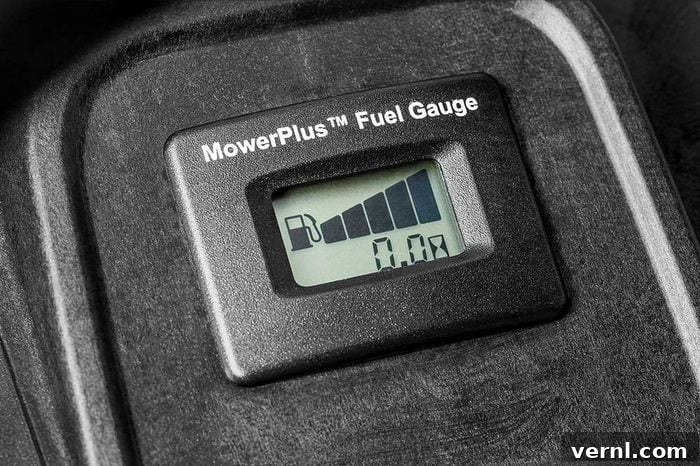
Upon closer inspection of the John Deere lawn tractor, the first element that truly captured my attention was the impeccably designed display dash. Its layout is both clear and incredibly easy to read, providing all essential operational information at a glance. Key indicators such as the fuel gauge, tachometer, voltmeter, and hour meter are prominently featured, offering comprehensive insights into the tractor’s status and performance. My particular unit did not include power steering, a feature I initially thought might pose a challenge, especially when navigating my obstacle-laden lawn. However, my concerns quickly dissipated. Guiding the mower around trees, garden edges, and other landscape elements proved to be remarkably effortless, making me question the actual necessity of power steering for this model.
For those with expansive, unobstructed lawns, the tractor also includes an automotive-style cruise control system. Once activated, this feature allows for consistent speed control, significantly reducing operator fatigue during prolonged mowing sessions. Disengaging cruise control is as simple as a gentle tap on the brake pedal. Comfort is paramount during extended operation, and the adjustable seat contributes significantly to the overall ergonomic excellence of the operator’s station. Thoughtful additions such as a small storage compartment and a convenient cup holder further enhance the user experience, providing practical utility during tasks.
Starting the John Deere lawn tractor is consistently quick and reliable, thanks to its easy-start electronic ignition system. John Deere places a strong emphasis on operator safety, integrating numerous features and proximity switches designed to prevent personal injury and property damage. For instance, the engine is programmed not to start unless the parking brake is securely engaged. A critical safety measure, particularly when mowing, is the automatic disengagement of the blades when the operator attempts to reverse. While this is an invaluable safety function, the subsequent manual re-engagement of the PTO (by pushing the button down and then pulling it up again) can be a bit cumbersome. Fortunately, a designated switch is available to intentionally override this safety feature, offering flexibility for experienced users in specific situations. To dismount the mower with the engine still running, the blades must be disengaged and the parking brake activated, ensuring a safe exit.
One of the most impressive aspects of this machine is its infinitely variable hydrostatic transmission. This sophisticated system allows for seamless control over travel speed in both forward and reverse directions. By simply adjusting the pressure applied to the Twin Touch pedals with the right foot, operators can precisely increase or decrease speed with remarkable ease and fluidity. The hydrostatic transmission also provides dynamic braking; when the foot is lifted from the forward/reverse pedals, the mower smoothly and automatically comes to a complete stop without requiring the use of the brake pedal. This feature not only enhances safety but also improves control, as the mower will not coast when the transmission is in the neutral position.
The overall design of the mower contributes to its excellent maneuverability. It adeptly hugs sharp corners, navigates tightly around trees, and follows garden edging with impressive precision. Its well-engineered steering system and geometric configuration work in harmony to maintain an incredibly tight uncut circle, measuring approximately 18 inches. This is a truly remarkable achievement for a conventional belly-mount lawn tractor, allowing for minimal missed spots and reducing the need for follow-up trimming. The mower is also equipped with large, robust turf tires that provide excellent grip and stability across various surfaces. However, I did observe a slight power deficiency when attempting sharp uphill turns. While this might be an ambitious maneuver for any mower, the unit visibly struggled, requiring extra effort and appearing to momentarily stall during this specific challenging situation.
Comparing Models: A Comprehensive John Deere Lawn Tractor Review
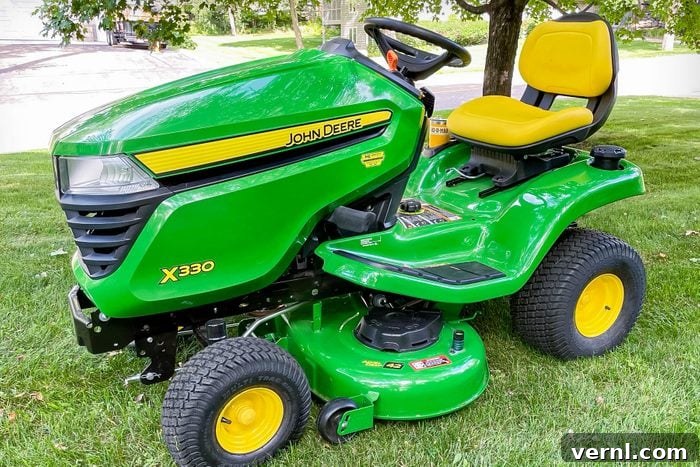
John Deere boasts an extensive portfolio of mowing equipment, catering to a diverse range of needs, from residential lawns to commercial landscapes and specialized golf and turf applications. Within its revered lawn tractor lineup, several series stand out, each designed with specific features and capabilities to suit different users and property types. For this review, our testing focused on a model from the esteemed X300 series, a line that perfectly exemplifies the unwavering quality and engineering excellence synonymous with the John Deere brand. Understanding the distinctions between these series is crucial for making an informed purchasing decision:
- John Deere 100 Series: Representing the most accessible entry point into the John Deere lawn tractor family, the 100 Series is ideal for homeowners with smaller to medium-sized lawns who prioritize reliability and value. These models typically come with a robust two-year warranty, offering peace of mind, and feature durable mower decks available in sizes up to 54 inches, providing efficient cutting for residential properties.
- John Deere 200 Series: Stepping up in features, the 200 Series offers an enhanced experience for homeowners seeking a bit more convenience and durability. Units in this line are backed by an impressive three-year warranty, reflecting John Deere’s confidence in their longevity. A notable inclusion is cruise control, a highly valued feature for maintaining consistent speed across larger, open areas. These models typically feature slightly smaller deck sizes, making them suitable for properties where maneuverability around moderate obstacles is a key consideration.
- John Deere X300 Series: The series we tested, the X300, is a favorite among those who demand superior control and a professional-grade cut. A hallmark of this series is the inclusion of Twin Touch foot pedals, which provide intuitive and effortless control over speed and direction, enhancing the overall driving experience. Furthermore, these models are equipped with an advanced deck leveling system, ensuring a perfectly even cut every time, regardless of terrain variations. The X300 Series is an excellent choice for discerning homeowners who appreciate precision and comfort.
- John Deere X500 Series: Representing the pinnacle of John Deere’s residential lawn tractor offerings, the X500 Series is designed for the most demanding users and challenging properties. As the priciest line, it justifies its cost with an extended warranty of up to 500 hours or four years, signaling exceptional durability. These models feature the strongest horsepower engines available in the lawn tractor range, making them capable of handling the toughest mowing conditions and heavier attachments. Enhanced comfort is also a priority, with a larger, more ergonomic 21-inch seat designed for extended periods of operation. The X500 Series is the ultimate choice for those seeking maximum power, comfort, and longevity.
Final Verdict: The Enduring Appeal of a John Deere Lawn Tractor
My formative years were spent on a small farm in Southeastern Minnesota, where my father was an ardent John Deere loyalist. Despite this personal connection, I approach this review with complete impartiality. In fact, throughout my career, I’ve had experience competing against John Deere products in the specialized golf and sports turf markets. I recognize that John Deere is by no means the sole manufacturer of excellent riding lawn mowers; many other reputable brands, such as Cub Cadet, Husqvarna, and Kubota, also deliver outstanding products. Yet, there is an undeniable, almost nostalgic, comfort I derive from operating a John Deere lawn tractor. It instills a profound sense of assurance, stemming from the knowledge that I am investing in a product of enduring quality and reliability.
Indeed, a John Deere lawn tractor represents a significant investment, but this cost is justified by the exceptional craftsmanship and performance it offers. Since 1963, John Deere has been consistently producing high-quality lawn tractors, instantly recognizable by their iconic green and yellow livery. They are, in essence, the genuine article in the world of lawn care equipment, setting a benchmark that many other manufacturers aspire to emulate. As Benjamin Franklin wisely stated, “The bitterness of poor quality remains long after the sweetness of low price is forgotten.” This adage perfectly encapsulates the value proposition of a John Deere; its superior performance and longevity far outweigh the initial monetary outlay.
While no machine is entirely without its imperfections, the John Deere lawn tractor, after extensive personal use and a thorough examination of its various components and overall functionality, firmly stands at the apex of the lawn tractor hierarchy. It delivers a blend of power, precision, comfort, and durability that is difficult to match, making it a standout choice for anyone serious about maintaining their lawn.
Where to Purchase Your John Deere Lawn Tractor
Similar to many premier equipment manufacturers, John Deere structures its product offerings into a “good-better-best” tiered selection, ensuring there’s a model to suit various needs and budgets. The most extensive inventory, along with comprehensive support and information, is readily available on John Deere’s official website. Additionally, a wide range of models can be found at authorized John Deere dealerships and licensed retailers across the country. These outlets provide opportunities for customers to see the tractors firsthand, receive expert advice, and explore financing options. Prices for John Deere lawn tractors typically start around $2,400, offering a premium entry into a world of reliable and efficient lawn care.
Frequently Asked Questions About John Deere Lawn Tractors
What is John Deere’s best riding mower?
While “best” can be subjective and depend on individual needs, the John Deere X500 series is widely regarded as their top-tier offering among lawn tractors. These models provide an unparalleled combination of robust performance, exceptional durability, and a suite of advanced features, making them ideal for demanding users with larger properties or challenging terrain who require superior power and comfort.
Who manufactures John Deere riding lawn tractors?
John Deere is entirely responsible for the design and manufacture of all its riding lawn tractors. The company began its journey into agricultural tools and vehicles in 1873 in Grand Detour, Illinois. Today, John Deere maintains its commitment to quality by manufacturing its riding lawn tractors primarily in the USA, with key facilities located in Wisconsin and other strategic locations, upholding a proud tradition of American craftsmanship.
What brand engine does the John Deere X330 have?
The John Deere X330, a prominent model within the X300 series, is powered by a reliable and efficient 22-horsepower Cyclonic engine. This engine is specifically designed to deliver consistent power and performance, ensuring smooth operation and effective mowing even in challenging conditions.
What is the primary difference between a riding lawn mower and a riding lawn tractor?
The distinction between a riding lawn mower and a riding lawn tractor lies mainly in their capabilities and intended applications. Riding lawn mowers are typically more compact and are best suited for smaller, relatively flat lawns that require routine cutting and minimal maintenance. They are excellent for straightforward mowing tasks. Conversely, a lawn tractor offers greater versatility and power, making it more suitable for larger lawns, properties with rugged or uneven terrain, and a wider range of tasks beyond just mowing. Lawn tractors are often designed to accept various attachments, transforming them into multi-purpose machines for year-round property maintenance.
What is the average lifespan of a John Deere lawn mower?
On average, a well-maintained John Deere riding mower can be expected to provide between 1,000 and 1,500 hours of reliable operation. However, achieving this longevity is contingent upon diligent and proper maintenance. Regular servicing, adherence to manufacturer guidelines for fluid changes, blade sharpening, and general upkeep are crucial for ensuring the mower runs smoothly and efficiently for its full potential lifespan.
Why You Should Trust This Review
This comprehensive review is underpinned by the extensive expertise of Joe Churchill, a professional with an impressive 40-year career in the Green Industry. Throughout his distinguished tenure, Joe has been instrumental in guiding a diverse clientele, including lawn care professionals, golf course managers, and sports turf specialists, towards achieving healthier, more sustainable turf environments. His knowledge extends beyond professional circles; as an adjunct instructor at North Hennepin Technical School and a frequent speaker at industry conferences, Joe is also passionate about assisting everyday homeowners in overcoming their lawn challenges, whether through his contributions to Family Handyman or through hands-on advice at his local garden center. His deep, practical understanding ensures that the insights and assessments provided on the John Deere riding lawn tractor are not only authoritative but also genuinely trustworthy and applicable.
Further enhancing the reliability of this article, Paul Rankin, Content Updates Editor at Family Handyman, contributed valuable research and updated the content. Paul, a former commerce editor at Bob Vila, has been crafting insightful shopping guides since 2021, bringing an additional layer of meticulous research and editorial excellence to this review.