
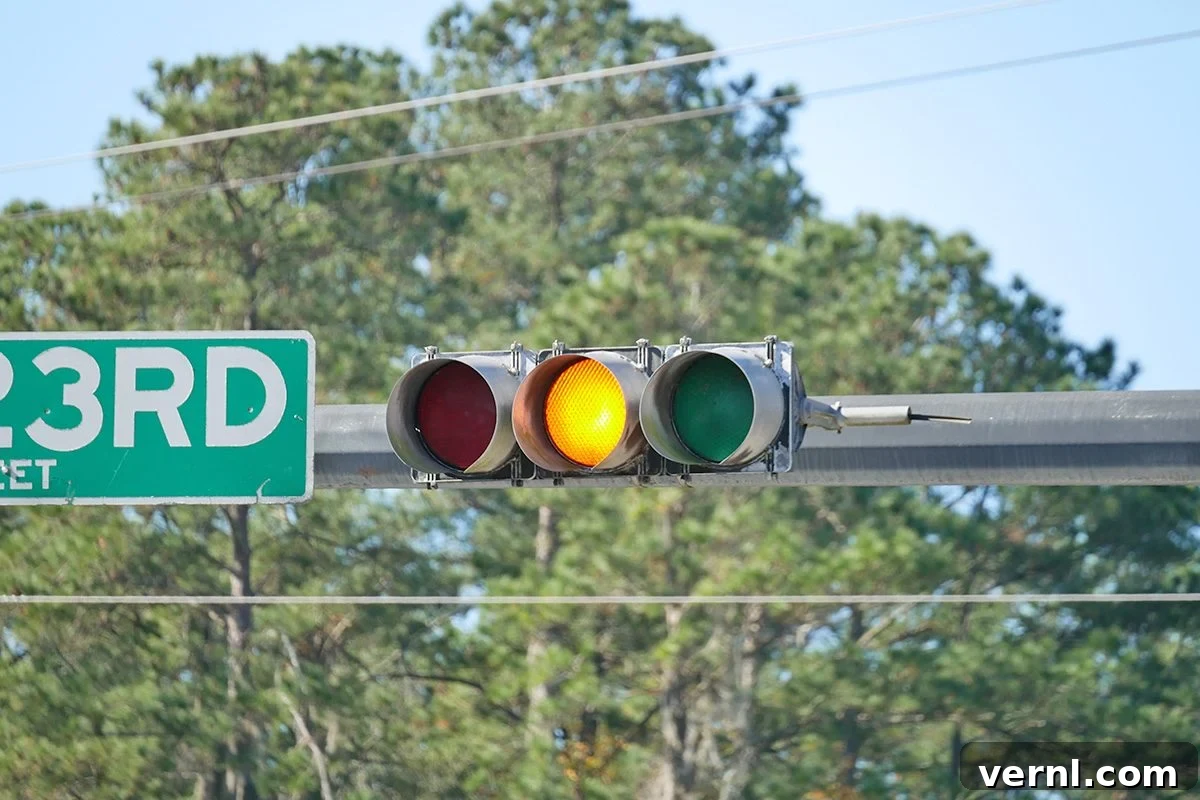
Decoding the Yellow Light: Navigating the Intersection of Law and Safety
The universal driver’s dilemma: you’re approaching an intersection, and just as your front tires near the white stop line, the traffic light transitions from green to yellow. In that fleeting moment, a wave of uncertainty washes over you. Your foot instinctively hovers, caught between the accelerator and the brake. The car behind you is closer than you’d like, adding pressure to an already tense situation. Is it safer to slam on the brakes, risking a rear-end collision, or to press forward, potentially running a red light? This critical decision point is one nearly every driver faces on a regular basis. While green lights mean go and red lights mean stop, the yellow light operates in a nuanced grey area that often leads to confusion and, sometimes, dangerous situations. Understanding the actual rules and best practices when a light turns yellow is not just about avoiding a ticket; it’s fundamentally about ensuring road safety for everyone.
What a Yellow Light Actually Means: Decoding the Signal

Unlike the definitive commands of “green means go” and “red means stop,” yellow lights serve as a critical warning. They signal that the traffic flow from your direction is about to be halted, and a red light is imminent. However, this doesn’t automatically render it illegal to enter the intersection. The primary purpose of a yellow light is to allow vehicles that are already in or very close to the intersection to clear it safely before the opposing traffic or cross-traffic receives a green light. It also provides an opportunity for drivers approaching the intersection to come to a safe stop.
The Legal Grey Area: When is it Safe to Proceed?
In most jurisdictions across the United States and many other countries, the legality of proceeding through a yellow light hinges on a crucial factor: safety. It is generally legal to enter an intersection on a yellow light if it is unsafe to stop. For instance, the California Driver Handbook advises drivers to stop if they can do so safely, but explicitly states that if they cannot, they may proceed with caution. This principle is widely adopted, indicating that a yellow light is not a hard stop command, but rather a warning to prepare for a stop. Key considerations for a “safe stop” include your current speed, the distance to the intersection, road conditions (wet, icy), and the following distance of vehicles behind you. Suddenly slamming on your brakes to avoid a yellow light could lead to a rear-end collision, which is often considered a greater hazard than cautiously clearing the intersection.
The ‘Point of No Return’ and Practical Implications
Many traffic laws incorporate the concept of a “point of no return” when addressing yellow lights. For example, some regulations, such as the principles outlined in general traffic codes like Article 38.1 (referring to a general standard, not specific US law in this context, but illustrative of the concept), state that if your vehicle has already crossed the stop line or entered the intersection when the light turns yellow, you are permitted—and often expected—to continue through. Conversely, if you have not yet crossed the stop line and can safely come to a halt without abrupt braking or putting yourself or others at risk, then stopping is the expected action. This point is critical for preventing gridlock within intersections and reducing the risk of collisions.
Beyond Legality: The Importance of Safety
While passing through a yellow light might not always be illegal, it doesn’t automatically make it safe. A concerning 2015 survey from the National Highway Traffic Safety Administration (NHTSA) highlighted this disparity: 40% of drivers admitted to occasionally entering intersections just as the light transitioned from yellow to red, and an additional 11% reported doing so often. This behavior, often termed “red light running,” significantly elevates the risk of severe accidents, particularly T-bone collisions. In the same survey, 10% of drivers confessed to sometimes cutting in front of other vehicles, with 2% doing so frequently. Such aggressive driving patterns at intersections are a major cause of fatalities and injuries, underscoring that while the law provides guidelines, individual driver judgment and a commitment to safety are paramount.
Understanding Enforcement: Police and Red Light Cameras
When does a yellow light transition into a red light violation? This often comes down to the precise timing and the discretion of law enforcement. If you enter an intersection while the light is yellow and it changes to red while you are still actively clearing it, a police officer might deem it a red light violation, depending on factors like your speed, how close you were to the intersection when the light changed, and the officer’s interpretation of “safe stopping distance.” Traffic cameras, increasingly common in many urban areas, operate on similar principles. Typically, if the light turns red before your front tires enter the intersection (i.e., cross the stop line), it will likely be registered as a violation, resulting in a citation. Understanding these enforcement mechanisms is crucial for responsible driving.
Why Yellow Light Timing is Crucial for Road Safety
The duration of a yellow light is not uniform across all intersections, states, or even countries. Some intersections provide a generous window for drivers to react, allowing ample time to stop or proceed safely. Others, however, have yellow light durations that are so brief they can catch even the most attentive and careful drivers off guard, leaving them precariously in the middle of an intersection as the light turns red. This inconsistency is a major contributor to driver frustration and, more importantly, a significant factor in traffic accidents.
Engineering Standards vs. Real-World Variance
The Institute of Transportation Engineers (ITE) provides recommended standards for yellow light timing, usually based on the posted speed limit of the roadway. For instance, a common guideline suggests yellow lights should last approximately 3 to 6 seconds, with longer durations for higher speed limits. These standards are designed to provide a safe “clearance interval” for drivers. However, not all cities or counties strictly adhere to these recommendations, or they may adjust them based on specific intersection geometries, traffic volumes, or local policies. This variance explains why some intersections can feel exceptionally rushed, even when you believe you are driving correctly and responsibly.
The Impact of Timing on Driver Behavior and Accident Rates
Even a slight alteration in yellow light duration can have a profound impact on road safety. The Insurance Institute for Highway Safety (IIHS) has demonstrated this clearly: a study in Philadelphia found that extending yellow light times by just one second resulted in a remarkable 36% reduction in red-light running violations. This data suggests that many instances of red-light running are not due to intentional disregard for the law, but rather misjudgments of timing or insufficient time to react. A slightly longer yellow light provides drivers with a better opportunity to make a safe and informed decision—either to stop comfortably or to clear the intersection without accelerating unnecessarily. Proper yellow light timing is a key component of effective traffic engineering, contributing directly to safer roads and fewer collisions.
Navigating the Yellow Light Dilemma: Best Practices and Defensive Driving
The yellow light represents a complex decision-making point for drivers. While laws provide a framework, the ultimate responsibility for safety lies with the individual driver. Understanding the nuances and adopting a defensive driving approach can help mitigate risks and ensure smoother, safer travels through intersections.
Making the Split-Second Decision: Factors to Consider
When faced with a yellow light, your decision to stop or proceed should be based on a rapid assessment of several critical factors:
- Speed and Distance: How fast are you going? How far are you from the stop line? If you’re traveling at a high speed and are very close, stopping safely might be impossible without locking up your brakes or risking a skid.
- Road Conditions: Is the road wet, icy, or covered in gravel? These conditions significantly increase stopping distances and reduce tire traction, making abrupt stops more dangerous.
- Traffic Behind You: Check your rearview mirror. Is there a vehicle tailgating you? A sudden stop could result in a rear-end collision. Prioritizing avoiding a collision is crucial.
- Intersection Status: Are there pedestrians in the crosswalk? Are there vehicles already in the intersection completing turns? Proceed with extreme caution if you decide to go through.
- The “Point of No Return”: As discussed, if your front tires are already over the stop line, it is generally safer to continue clearing the intersection than to attempt a hazardous stop.
The Role of Driver Intent and Awareness
It’s important to distinguish between intentionally “beating” a yellow light and safely clearing an intersection. Accelerating to rush through a yellow light that is about to turn red, especially when a safe stop was clearly possible, is reckless and dangerous. This aggressive behavior increases the risk of crashes, particularly with cross-traffic or vehicles making left turns. A responsible driver, on the other hand, approaches every intersection with heightened awareness, anticipating potential light changes and being prepared to react appropriately.
Defensive Driving Strategies at Intersections
To avoid the yellow light dilemma altogether, cultivate defensive driving habits:
- Maintain a Safe Following Distance: This provides you with more time and space to react to sudden stops or light changes ahead.
- Scan Ahead: Look beyond the car directly in front of you. Observe the traffic light well in advance, and watch for brake lights further down the road.
- Cover Your Brake: As you approach any intersection, take your foot off the accelerator and hover it over the brake pedal. This shaves precious milliseconds off your reaction time.
- Be Prepared to Stop: Always assume the light might change. If you’re not sure you can clear the intersection safely, prepare to stop.
- Know Your Local Laws: While the general principles are similar, specific local ordinances regarding yellow lights and red light camera enforcement can vary. Always verify the laws where you are driving.
Conclusion: Driving Smarter at Intersections
The yellow traffic light, far from being a simple indicator, is a complex signal that demands quick judgment, an understanding of traffic laws, and a strong commitment to safety. It is not a free pass to speed through an intersection, nor is it always a mandatory stop. Instead, it’s a crucial warning period designed to facilitate the safe and orderly flow of traffic. By understanding its true meaning, recognizing the critical factors involved in the split-second decision-making process, and practicing defensive driving techniques, motorists can navigate yellow lights with greater confidence and significantly contribute to overall road safety. Ultimately, driving smarter at intersections means making informed decisions that prioritize the well-being of all road users over rigid adherence to a single interpretation.
Related Articles
- Do You Know What That Little Button on Your Seat Belt Is For?
- What Those Lines on Your Backup Camera Really Tell You
- Here’s What The Small Panel On Your Car’s Front Bumper Is For