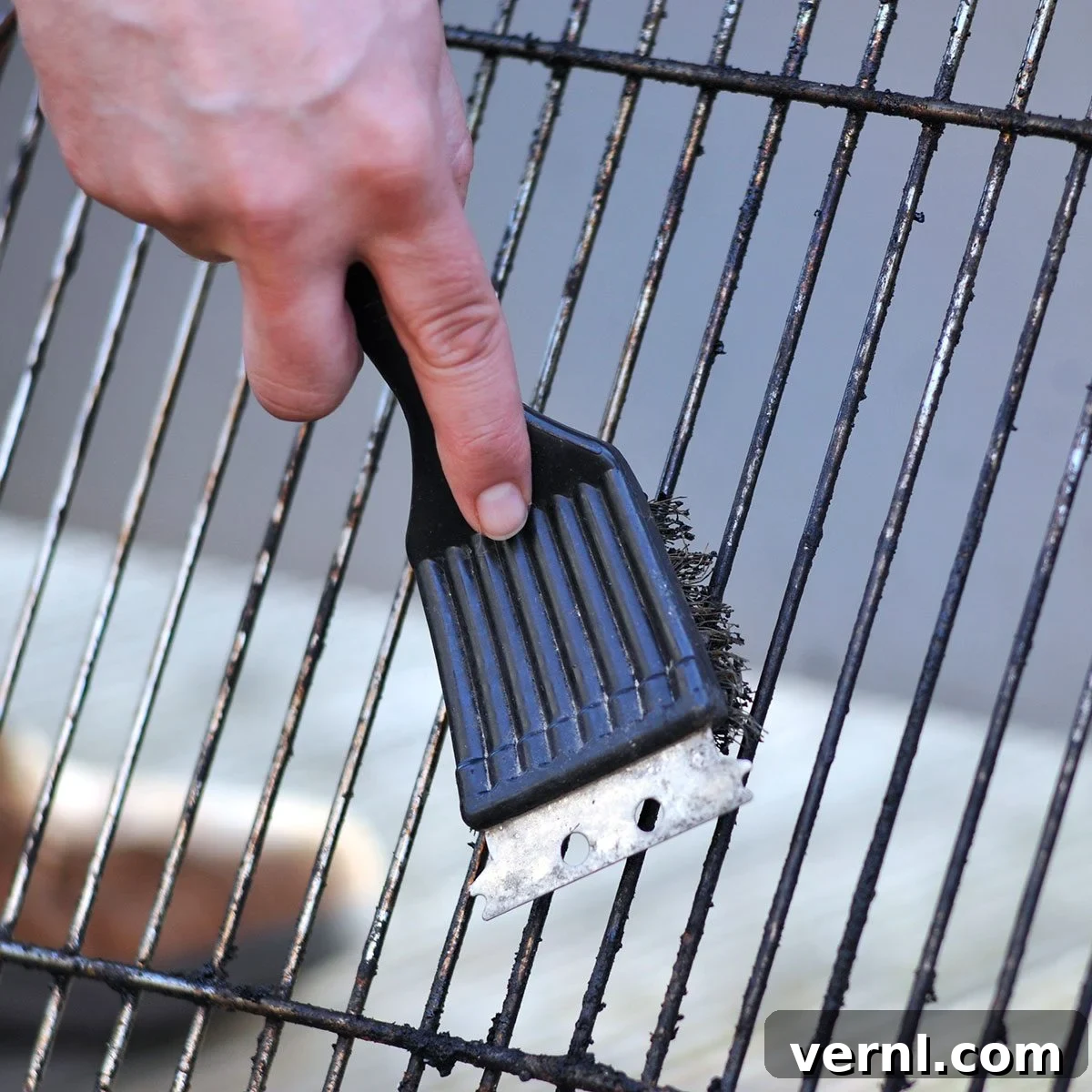
For both seasoned pitmasters and enthusiastic home cooks, a clean grill is the cornerstone of delicious and safe outdoor cooking. Achieving that perfect sear and flavorful char relies not only on quality ingredients and expert technique but also on properly maintained equipment. While many reach for the familiar wire grill brush to tackle stubborn residue, this seemingly indispensable tool harbors a hidden danger that could compromise your culinary creations and, more importantly, your health. This comprehensive guide delves into the controversial world of wire grill brushes, exposing their potential hazards and offering a range of safer, equally effective alternatives to ensure your grilling experience remains top-notch and worry-free.
We’ve consulted with leading pitmasters, grilling experts, and professional chefs who share their insights on what wire grill brushes are, why their safety is a serious concern, and how you can transition to superior grill cleaning methods that prioritize both cleanliness and well-being. Prepare to transform your grill cleaning routine and discover the tools that will help you achieve perfectly clean grates without the inherent risks.
Understanding Wire Grill Brushes: A Common, Yet Risky, Tool
At its core, a wire grill brush is precisely what its name implies: a cleaning tool equipped with numerous stiff, metallic bristles. Typically, these bristles are crafted from durable materials such as stainless steel, brass, or even carbon steel, designed for their abrasive properties. As Mark Greenfield, the insightful director of culinary operations at Executive Table Group in Vancouver, British Columbia, explains, “Wire grill brushes are tools designed to clean grill grates by scraping off food residue and carbon buildup.” Most designs feature a robust handle for a firm grip, attached to a brush head packed with these metallic bristles. They gained widespread popularity due to their perceived efficiency and aggressive cleaning power, often making quick work of baked-on food and grease after an intense grilling session. Many grill enthusiasts gravitated towards them for their ability to seemingly restore grates to a pristine condition with minimal effort, making them a staple in countless BBQ toolkits.
While their robust construction and scraping action can indeed remove tough grime, it’s this very characteristic that underpins their inherent risk. The promise of a sparkling clean grill often overshadows the potential consequences of relying on such an aggressive cleaning method. Understanding their construction is the first step toward appreciating why so many grilling professionals are now advocating for a move away from these traditional tools in favor of safer, more thoughtful alternatives that still deliver exceptional cleaning results.
The Hidden Danger: Are Wire Grill Brushes Truly Safe to Use?
Despite their widespread use and apparent effectiveness, the consensus among grilling experts is that wire grill brushes, while capable of cleaning, pose significant safety risks that far outweigh their convenience. The most critical and alarming issue centers around bristle shedding. “The biggest issue is bristle shedding,” emphatically states Erica Blaire Roby, a celebrated pitmaster and owner of Blue Smoke Blaire’s Competition BBQ Team in Houston, Texas. “If a wire bristle detaches and ends up on the grill, it can find its way into food, and then into someone’s throat or digestive tract.”
This isn’t merely a theoretical concern; it’s a documented medical hazard. According to a cautionary report from MU Health Care, the ingestion of a grill brush wire can lead to severe and potentially life-threatening injuries. These minuscule, razor-sharp wires have the potential to puncture or lacerate delicate tissues in the tonsils, mouth, neck, and throat, often requiring emergency medical intervention, including surgery, to remove them. Imagine savoring a perfectly grilled steak, only to find a microscopic piece of metal embedded within, posing an immediate threat to your health.
Mark Greenfield further elaborates on the gravity of the situation, explaining that even if such an incident is statistically “not very probable” with careful use, the consequences can be catastrophic. The peace of mind that should accompany a meal prepared with love is shattered by the anxiety of potential injury. This risk isn’t just theoretical; it’s a stark reality for some. Paul Jimenez, a respected grilling expert and content creator (@bigpaulonthegrill), shares a chilling personal account: “I recently discovered a small wire from my grill brush in a steak I had grilled, and it has caused me to move away from wire grill brushes going forward.” This firsthand experience underscores the insidious nature of the problem—bristles are incredibly difficult to spot and can easily go unnoticed until it’s too late.
Given these very real dangers, it becomes abundantly clear that relying on wire grill brushes introduces an unnecessary and avoidable risk into the joyous act of grilling. While some may argue for meticulous inspection after cleaning, the microscopic size and reflective nature of these bristles make complete detection virtually impossible, leaving a constant, lingering doubt. For the health and safety of yourself, your family, and your guests, exercising extreme caution or, ideally, discontinuing the use of wire grill brushes altogether is a vital step toward safer grilling practices.
Why Reconsider: Beyond the Immediate Bristle Threat
The potential for bristle ingestion is, without a doubt, the most compelling reason to re-evaluate your choice of grill cleaning tools. However, there are additional practical and long-term considerations that strengthen the argument against wire grill brushes. Greenfield emphasizes, “In a busy restaurant environment or at home, it’s easy to miss a tiny piece of metal hiding between grates.” This statement highlights the impracticality of relying on human vigilance alone to prevent injury. The sheer volume of intricate grate patterns and the often-dim lighting conditions typical of outdoor grilling make it incredibly challenging to spot every rogue bristle.
Furthermore, the very nature of grill cleaning—high heat and frequent, aggressive scrubbing—contributes to the degradation of wire brushes. Greenfield notes, “wire brushes tend to degrade quickly under high heat and frequent use, leading to more opportunities for bristle loss.” Each cleaning session weakens the bristles, making them more prone to snapping off and becoming lodged on your cooking surface. This degradation is a continuous cycle, meaning that even a relatively new brush can pose a risk, and an older, worn brush becomes a dangerously unreliable tool. The problem isn’t just about initial quality; it’s about the inevitable wear and tear accelerating the danger.
Moreover, while the immediate health risk is paramount, consider the environmental impact. Bristles can fall into gardens, get washed into drainage systems, or simply become lost fragments in outdoor spaces, potentially posing a minor hazard to pets and wildlife. By choosing alternatives, you’re not just safeguarding human health but also contributing to a cleaner, safer grilling environment in a broader sense. Ultimately, the cumulative risks—from immediate injury to the difficulty of thorough inspection and the inevitable degradation of the tool—make a strong case for seeking out cleaning solutions that offer both effectiveness and absolute peace of mind.
Safe and Effective Alternatives to Wire Grill Brushes
The good news is that opting out of wire grill brushes doesn’t mean sacrificing a clean grill. A variety of innovative and time-tested alternatives exist, offering superior cleaning power without the inherent risks of shedding bristles. Making the switch to these safer tools will not only enhance your grilling safety but also often provide a more satisfying and effective cleaning experience.
Grill Bricks and Pumice Stones: The Conforming Cleaners
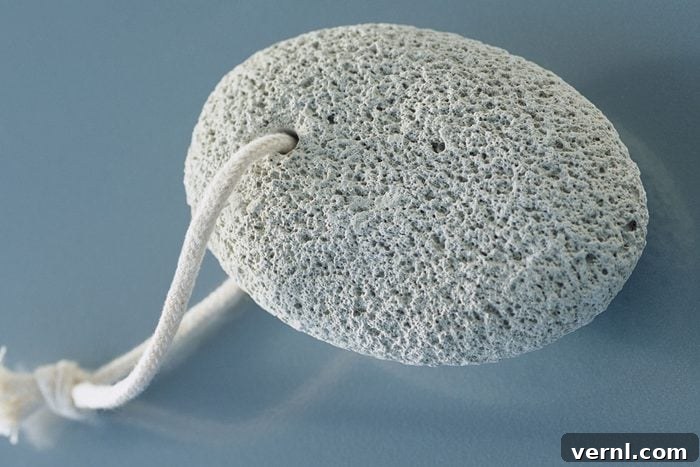
Among the most popular and effective substitutes are grill bricks, often made from pumice stone or similar abrasive, non-toxic materials. These blocks are designed to scour away grime and carbon buildup without leaving behind dangerous fragments. “Pumice conforms to the grill shape and wears down with use with no bristles to break off,” explains Mark Greenfield. This conforming quality allows the brick to get into the crevices of your grates, ensuring a thorough clean that wire brushes often miss. To use, simply rub the brick over warm grates, applying firm pressure. As you scrub, the brick will slowly wear down, molding itself to the unique contours of your grill. The key advantage here is the complete absence of bristles, eliminating any risk of ingestion. However, Greenfield advises, “You do want to ensure you wipe down afterwards to avoid getting any grit left behind on the grates.” A simple wipe with a damp cloth or paper towel is usually sufficient to remove any minor abrasive residue, leaving your grates perfectly clean and safe.
Wooden Grill Scrapers: The Natural Groove Formers
Another excellent bristle-free alternative gaining significant traction is the wooden grill scraper. These ingenious tools are typically crafted from hard wood and feature a flat edge that, with repeated use, naturally forms custom grooves that perfectly match the unique pattern of your grill gr grates. “These naturally form grooves that match your grill over time,” says Greenfield. “They’re completely bristle-free, safe, and surprisingly effective once worn in.” The process is simple: use the wooden scraper on a hot grill after cooking. The heat helps to char and shape the wood, creating those custom grooves that precisely fit your grates. This allows for highly effective cleaning, reaching deep into the grates to dislodge stubborn residue. Wooden scrapers are incredibly durable, environmentally friendly, and, most importantly, completely free of any potentially harmful loose components.
Nylon Grill Brushes: Gentle Yet Effective for Cool Grills
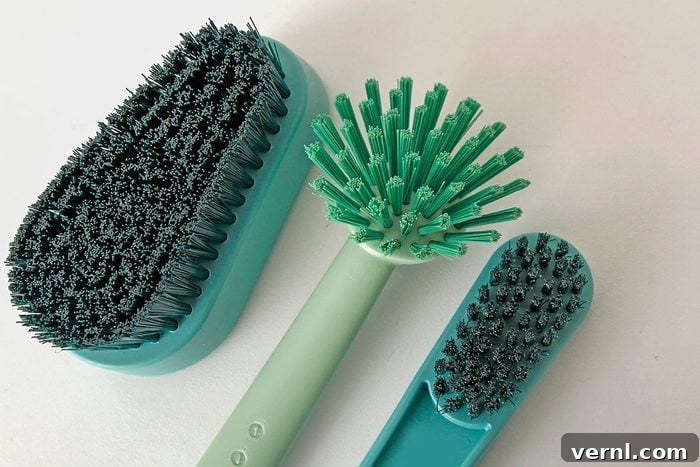
For those who prefer a brush-like tool but demand bristle-free safety, nylon grill brushes present a compelling option. These brushes feature robust, non-metallic bristles made from nylon or other heat-resistant synthetic materials. The critical distinction is that these “bristles” are designed to be flexible and non-shedding, making them a much safer choice than their wire counterparts. Paul Jimenez notes that while these brushes are excellent for preventing scratches, “they should only be used on cool grills.” Applying a nylon brush to hot grates can cause the bristles to melt, rendering the brush ineffective and potentially leaving behind melted plastic residue. When used correctly on a cooled grill, nylon brushes are highly effective at removing loose debris and surface grime, particularly on delicate surfaces like porcelain-coated grates where wire brushes could cause damage.
Additional Smart Cleaning Solutions for Your Grill
Beyond the primary alternatives, several other ingenious methods can help keep your grill impeccably clean:
- Aluminum Foil Ball: For an immediate, cost-effective solution, crumple a large sheet of heavy-duty aluminum foil into a tight ball. Hold it with a pair of tongs and scrub the hot grates. This acts as an abrasive scrubber, effectively scraping away burnt-on food.
- Onion Half: Believe it or not, a cut onion can be a powerful grill cleaner. Spear half an onion with a fork and rub it vigorously over hot grates. The natural acids and steam released by the onion work to loosen grime, making it easier to wipe away. It also imparts a subtle flavor for your next cook!
- Steam Cleaners/Grill Steamers: Specialized grill steamers use hot water and steam to soften and lift stubborn residue. These tools are chemical-free and incredibly effective, especially for deep cleaning.
- Dedicated Grill Scrapers (non-bristled metal): Some tools are essentially robust metal spatulas or scrapers designed with various edges to fit different grate shapes. These provide intense scraping power without any bristle risk.
- Vinegar and Baking Soda Paste: For a more thorough, periodic deep clean, a paste made from baking soda and a splash of vinegar can be applied to cool grates. Let it sit for a while before scrubbing with a non-abrasive pad and rinsing. This combination helps break down grease and carbon naturally.
By exploring these diverse and effective alternatives, you can confidently maintain a sparkling clean grill, ensuring every meal is not only delicious but also completely safe from the hidden dangers of wire bristles. The transition away from wire brushes is a simple, yet profound, upgrade to your grilling safety and experience.
Best Practices for Impeccable Grill Hygiene
Beyond choosing the right cleaning tools, adopting a consistent routine of best practices for grill hygiene is crucial for safety, longevity, and optimal cooking performance. A well-maintained grill cooks better, lasts longer, and significantly reduces the risk of contamination.
- Clean After Every Use (While Warm): The golden rule of grill cleaning is to do it while the grill is still warm. The residual heat makes it much easier to loosen and remove food particles before they harden and stick permanently. Using your chosen bristle-free scraper or pumice stone at this stage is highly effective.
- Pre-heat and Scrape Before Each Cook: Before you even place your first ingredient on the grill, pre-heat it to a high temperature. This will incinerate any lingering food bits from the previous session, turning them into ash. Once heated, give the grates a quick scrape with your preferred safe tool to remove this ash, ensuring a clean cooking surface.
- Oil the Grates: After cleaning and before cooking, lightly oil your grates with a high smoke point oil (like grapeseed or canola oil) using a paper towel held with tongs. This not only helps prevent food from sticking but also adds a layer of protection against rust.
- Perform Periodic Deep Cleans: While routine cleaning keeps your grates spotless, it’s essential to perform a deeper clean of the entire grill—including the grates, flavorizer bars, heat deflectors, and internal components—a few times a grilling season. This involves removing all internal parts, scrubbing them thoroughly, and cleaning out any accumulated grease and debris from the grill body.
- Inspect Your Tools Regularly: Even safe tools can wear down over time. Regularly inspect your grill bricks for signs of excessive wear, wooden scrapers for splintering (though rare), and nylon brushes for any signs of melting or degradation. Replacing tools as needed ensures maximum effectiveness and safety.
- Safety First: Always wear heat-resistant gloves when cleaning a warm grill. Ensure your grill is stable and that you have proper ventilation, especially when using cleaning solutions during a deep clean.
By integrating these practices into your grilling routine, you’ll not only keep your grill in pristine condition but also safeguard against potential health hazards, allowing you to enjoy countless delicious and worry-free BBQ sessions.
About the Experts
- Paul Jimenez is a grilling expert and content creator (@bigpaulonthegrill). With more than 10 years of grilling experience, he has acquired vital grilling skills and knowledge, including deep insights into grill tools and safety, informed by his own cautionary experiences.
- Mark Greenfield serves as the director of culinary operations at Executive Table Group in Vancouver, British Columbia. As an overseeing chef for the esteemed Executive Hotels & Resorts, he remains meticulously informed about the latest grilling tools and the essential safety protocols required to maintain the highest standards in professional kitchens. Prior to his current role, he amassed over a decade of experience as a chef.
- Erica Blaire Roby is a celebrated pitmaster and the proud owner of Blue Smoke Blaire’s Competition BBQ Team in Houston, Texas. Throughout her impressive career spanning over six years as a pitmaster, she achieved national recognition as the winner of Season 2 of Food Network’s “BBQ Brawl” and has passionately shared her expertise by teaching BBQ classes across Texas.
Sources
-
Medicine.Missouri.edu: MU Doctor Reminds Wire BBQ Grill Brushes Can Cause Injuries