
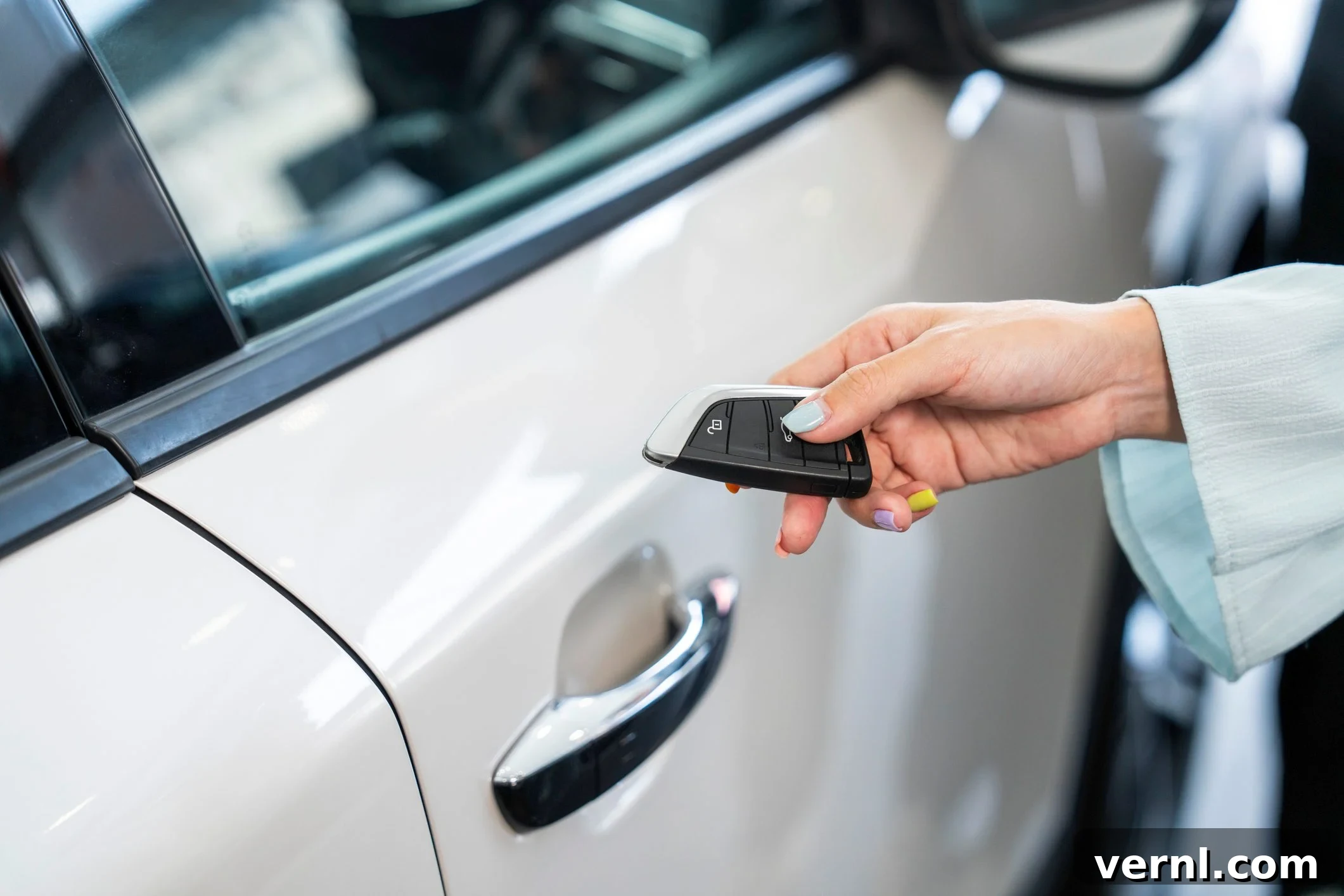
Imagine stepping into a freezing cold car on a bitter winter morning, or a scorching hot vehicle after a long day in the summer sun. The discomfort is undeniable, and waiting for your car to reach a comfortable temperature can feel like an eternity, especially when you’re in a hurry. This common frustration, faced by drivers in various climates, has a remarkably simple and effective solution: a remote start system. These innovative systems offer unparalleled convenience, allowing you to warm up your engine and pre-condition your vehicle’s interior climate control from the comfort of your home or office. Beyond just comfort, a remote start can also provide practical benefits, from engine health to enhanced vehicle security, making it a valuable addition to almost any car owner’s life.
The market for remote start systems is vast, ranging from incredibly affordable options found online for as little as $40 to more sophisticated, feature-rich units. However, it’s crucial to understand that the initial low price of some systems can be misleading. Many budget-friendly remote start kits often require additional, and potentially costly, anti-theft bypass modules to integrate seamlessly with your vehicle’s existing security features. Furthermore, the installation process can be intricate, involving precise wire splicing and the potential for extensive troubleshooting if issues arise. If you possess a knack for automotive electronics, are comfortable reading wiring diagrams, and have identified a system compatible with your specific vehicle make and model, a DIY installation is certainly achievable and can result in significant savings. However, for those less mechanically inclined, understanding the complexities involved is key to making an informed decision.
This comprehensive guide will delve into everything you need to know about remote start systems, from their fundamental operation and various types to installation costs, compatibility, and essential safety considerations. By the end, you’ll be well-equipped to decide if a remote starter is the right upgrade for your vehicle and whether professional installation is a worthwhile investment.
What Does Remote Start Do?
At its core, a remote start system empowers the driver to start their vehicle’s engine wirelessly using a dedicated key fob, a smartphone application, or sometimes even a smartwatch. This fundamental capability allows the engine to warm up or cool down, circulate fluids, and activate the climate control system before you even step inside. Beyond mere convenience, these systems are designed with security in mind. When a vehicle is remotely started, the doors typically remain locked, maintaining the same level of security as when the car is off. Many advanced systems incorporate a secondary safety feature: if the brake pedal is pressed without the vehicle’s actual key in the ignition (or within range for push-button start vehicles), the engine will automatically shut off. This ingenious mechanism significantly deters car theft, as an unauthorized individual would be unable to drive the vehicle away even if they managed to gain entry.
How Does Remote Start Work?
The underlying principle of a remote start system involves emulating the standard ignition sequence of your vehicle without the physical key being present. When you press the remote start button on your key fob or smart device, a coded radio signal is transmitted. This signal is received by the main remote starter module, which is professionally installed and integrated into your vehicle’s electrical system, typically beneath the dashboard. Upon receiving the valid signal, the module then sends specific commands to your vehicle’s computer (ECU) and various electrical components. It effectively simulates turning the key, activating the ignition, engaging the starter motor, and allowing the engine to fire up. Once the engine is running, the module continuously monitors essential parameters, ensuring safe operation and maintaining vehicle security until you enter the car with your key and take over control.
Remote Start System Types
Understanding the different categories of remote start systems is essential for choosing the right one for your vehicle. These systems are primarily classified based on their underlying technology and communication capabilities.
Analog vs. Digital
The distinction between analog and digital remote start systems largely correlates with the age and technological sophistication of your vehicle. Think of analog systems as the older generation and digital systems as the modern, more integrated solution.
- Analog Systems: These systems are typically required for older vehicles, generally those manufactured before the mid-2000s. Analog remote starters operate by directly tapping into specific wires within the vehicle’s electrical harness. Each function, such as ignition, accessory, starter, and door locks, requires a separate hardwired connection. While effective, this approach can be more labor-intensive to install and often necessitates extensive splicing wires. If an older car also features an anti-theft or immobilizer system, an additional digital bypass module is almost always required to momentarily disable or emulate the security system, allowing the car to start. Integrating these components often demands significant technical knowledge and experience.
- Digital Systems: Modern vehicles, especially those from the mid-2000s onward, are almost exclusively designed with sophisticated digital electronics, including CAN Bus (Controller Area Network) systems. Digital remote start systems are specifically engineered to integrate seamlessly with these advanced vehicle networks. Instead of numerous individual wire splices, digital systems often communicate directly with the vehicle’s computer via data wires. This “plug-and-play” or “data-to-data” connection significantly simplifies installation, reduces the need for extensive wiring, and minimizes the risk of electrical issues. Digital systems are inherently more compatible with existing factory anti-theft measures and vehicle-specific electronics, often eliminating the need for separate bypass modules or integrating them more efficiently.
One-Way vs. Two-way
The “one-way” and “two-way” classification refers to the direction of communication between your remote control (key fob or smart device) and your vehicle.
- One-Way Systems: These are the most basic and straightforward remote start systems. A one-way system sends a signal from your remote to the vehicle, instructing it to start. However, it does not send any feedback from the vehicle back to your remote. This means you won’t receive confirmation that the car has actually started, or any other status updates. You’ll need to visually confirm the car has started or listen for the engine. One-way systems often utilize the vehicle’s existing key fob, and their operational range is typically limited, making them suitable for situations where you have a clear line of sight to your car or are parked relatively close.
- Two-Way Systems: As the name suggests, two-way systems offer bidirectional communication. When you send a command from your remote, the vehicle’s remote start module not only receives the command but also transmits a confirmation signal back to your remote. This confirmation can be auditory (a beep), visual (an LED light), or displayed on an LCD screen on a more advanced fob. More sophisticated two-way systems can relay a wealth of information back to you, such as engine temperature, cabin temperature, door lock status, battery voltage, and even fuel level. The operational range for two-way systems is generally significantly greater than one-way systems, often extending up to a mile or more. Advanced two-way systems can also integrate with smartphone applications, allowing you to control and monitor your vehicle from virtually any distance, as long as both your phone and the car have an internet connection. This advanced connectivity often comes with additional features like GPS tracking, geofencing, and remote locking/unlocking.
How Much Does It Cost to Install Remote Start?
The total cost of adding a remote start system to your vehicle can vary significantly, ranging anywhere from a few hundred dollars to over a thousand. This price comprises both the cost of the remote start system itself and the professional installation labor. Most automotive shops specializing in these installations will charge a minimum of a few hundred dollars for a basic system, with prices escalating based on several factors. These include the make, model, and year of your vehicle, as newer or more complex vehicles (especially those with advanced security or data networks) often require more sophisticated modules and longer installation times. The choice of system—whether a simple one-way or a feature-rich two-way with smartphone integration—also directly impacts the price. Expect higher costs for premium brands, extended range, and additional features like keyless entry, trunk release, or integration with heated seats. Labor rates, which vary by location and shop expertise, also play a substantial role in the overall expense. It’s always advisable to get a detailed quote that itemizes both parts and labor before committing to an installation.
Where to Get Remote Start Installed?
While your general mechanic might be skilled in routine vehicle maintenance, installing a remote start system is a specialized task that requires specific expertise in automotive electronics, wiring, and module programming. It’s highly recommended to seek out a shop dedicated to installing car alarms, audio systems, and remote start solutions. These specialized facilities employ technicians who are trained and experienced in integrating complex aftermarket electronics with modern vehicle systems. They possess the necessary diagnostic tools, programming equipment, and an in-depth understanding of various vehicle wiring schematics and anti-theft protocols. Choosing an experienced professional minimizes the risk of improper installation, electrical issues, or damage to your vehicle’s sensitive electronics, ensuring that your remote start system functions reliably and safely for years to come.
Can You Install Remote Start Yourself?
The question of whether you can install a remote start system yourself largely depends on your technical skills, patience, and the specific system you choose. For individuals who are comfortable reading complex wiring diagrams, have a solid understanding of automotive electrical systems, and can confidently make precise and secure electrical splices, a DIY installation is absolutely feasible and can lead to considerable cost savings on labor. However, it’s crucial to acknowledge that incorrect wiring can lead to a host of problems, from system malfunctions to potential damage to your vehicle’s electrical components or even fire hazards. Fortunately, advancements in technology have introduced “plug-and-play” remote start systems for certain vehicle models. These innovative kits are designed to connect directly into your vehicle’s existing wiring harnesses and connections, often requiring no cutting or splicing of wires. They drastically simplify the installation process, making it much more accessible for the average DIYer. Before attempting any installation, thoroughly research the make, model, and trim package of your specific vehicle to determine the compatibility and complexity of the system you’re considering. This research will help you assess whether the project aligns with your skill level or if it’s best entrusted to qualified professionals.
Can You Add Remote Start to Any Car?
While remote start systems offer widespread compatibility, it’s not universally applicable to every single vehicle, and compatibility can vary significantly based on vehicle type and transmission. Most late-model vehicles equipped with automatic transmissions can readily accommodate an analog remote start system. For newer vehicles, typically from the mid-2000s and onward, which feature more integrated digital networks and advanced security systems, specific digital remote start solutions are required. The key is to ensure the chosen system is designed to integrate seamlessly with your vehicle’s particular electronics and anti-theft measures. For these modern vehicles, it’s highly recommended to perform an internet search using your exact make, model, and year, or to consult directly with the service department at your dealership. They can provide definitive information on which remote start systems are fully compatible and can be safely installed without voiding warranties or causing electrical conflicts. While manual transmission vehicles can sometimes be fitted with remote start, it’s generally not recommended for older models due to significant safety concerns regarding unintentional engagement of the transmission. Newer manual transmission remote start systems incorporate sophisticated safety interlocks (like requiring the parking brake to be set and the vehicle to be in neutral) to prevent accidental starting in gear, making them a safer option.
How to Use Remote Start for Your Car
Using a remote start system is designed to be incredibly straightforward and intuitive, prioritizing convenience. For the vast majority of systems, operation is as simple as pressing a button on a dedicated key fob. Often, this involves pressing the start button a specific number of times (e.g., three times) or holding it down for a few seconds. For advanced two-way systems, particularly those with integrated smartphone connectivity, you can simply open an app on your smart device, confirm your vehicle’s status, and tap the start icon. As long as you are within the system’s operational range—which can vary from a few hundred feet for basic one-way systems to virtually unlimited distances with cellular-based smartphone solutions—your vehicle will spring to life, allowing its engine to warm up or the cabin to cool down to your preferred setting. Many systems also include options for remote locking and unlocking doors, or even popping the trunk, adding to the overall convenience.
Remote Start Safety Precautions
While remote start systems offer incredible convenience, it is absolutely paramount to adhere to critical safety precautions to prevent dangerous situations. The most crucial rule is: NEVER start your vehicle if it’s parked in an enclosed or poorly ventilated space, such as a closed garage. Running an internal combustion engine, even for a short period, produces carbon monoxide (CO), a colorless, odorless, and highly toxic gas. The rapid build-up of CO in an enclosed space can be lethal to humans and pets, leading to carbon monoxide poisoning without any warning signs. Always ensure your vehicle is parked in an open area or a garage with the main door fully open to allow for proper ventilation when using remote start. Additionally, always make sure your vehicle is in park and the parking brake is engaged before remote starting, especially if your system allows for manual transmission compatibility, to prevent any unintended vehicle movement.
Frequently Asked Questions
Does a remote start system make my car easier to steal?
No, quite the opposite. Most modern remote start systems are designed with advanced security features that make your car even harder to steal. When remotely started, the vehicle’s doors remain locked, and the engine will typically shut off immediately if the brake pedal is pressed or the gear shifter is moved without the physical key present. Many systems also integrate with or enhance your vehicle’s existing immobilizer and anti-theft features, providing an extra layer of protection against unauthorized access and theft.
How much range do I need?
The ideal range for your remote start system depends entirely on your typical parking situations. If you primarily park in your driveway directly outside your home, a system with a limited range (e.g., a few hundred feet) might be perfectly adequate. However, if you frequently park in large, sprawling parking lots at work, shopping malls, or apartment complexes, you’ll likely need a system with a much greater range, possibly extending up to a mile or more. Consider where you most commonly park and how far you’ll be from your vehicle to choose a system that offers sufficient coverage for your everyday needs. For ultimate range, smartphone-controlled systems offer virtually unlimited range as long as both your phone and the car have a cellular signal.
What is the difference between a one-way and two-way system?
The core difference lies in the communication flow. A one-way system sends a signal *to* the vehicle to initiate a command (like starting the engine) but does not receive any feedback from the vehicle. You rely on visual confirmation. A two-way system, however, sends a command *to* the vehicle and then receives a confirmation signal *back* from the vehicle. This feedback confirms that the command was successfully executed (e.g., engine started, doors locked) and can also relay useful information such as engine and cabin temperature, door status, or battery voltage, often displayed on the remote’s screen or smartphone app.
Can I install a remote start system on a car with a manual transmission?
Yes, it is possible to install a remote start system on vehicles with manual transmissions, but it requires specific safety precautions and specialized systems. For older vehicles, it’s generally not recommended due to the inherent risk of accidentally starting the car in gear. However, modern remote start systems designed for manual transmissions include sophisticated failsafe mechanisms. These systems typically require a specific “reservation mode” sequence to be engaged before you leave the vehicle (e.g., setting the parking brake, placing the transmission in neutral, then removing the key). If this sequence is not followed, or if the system detects the transmission is not in neutral or the parking brake is not engaged, it will prevent the engine from starting remotely, significantly enhancing safety.