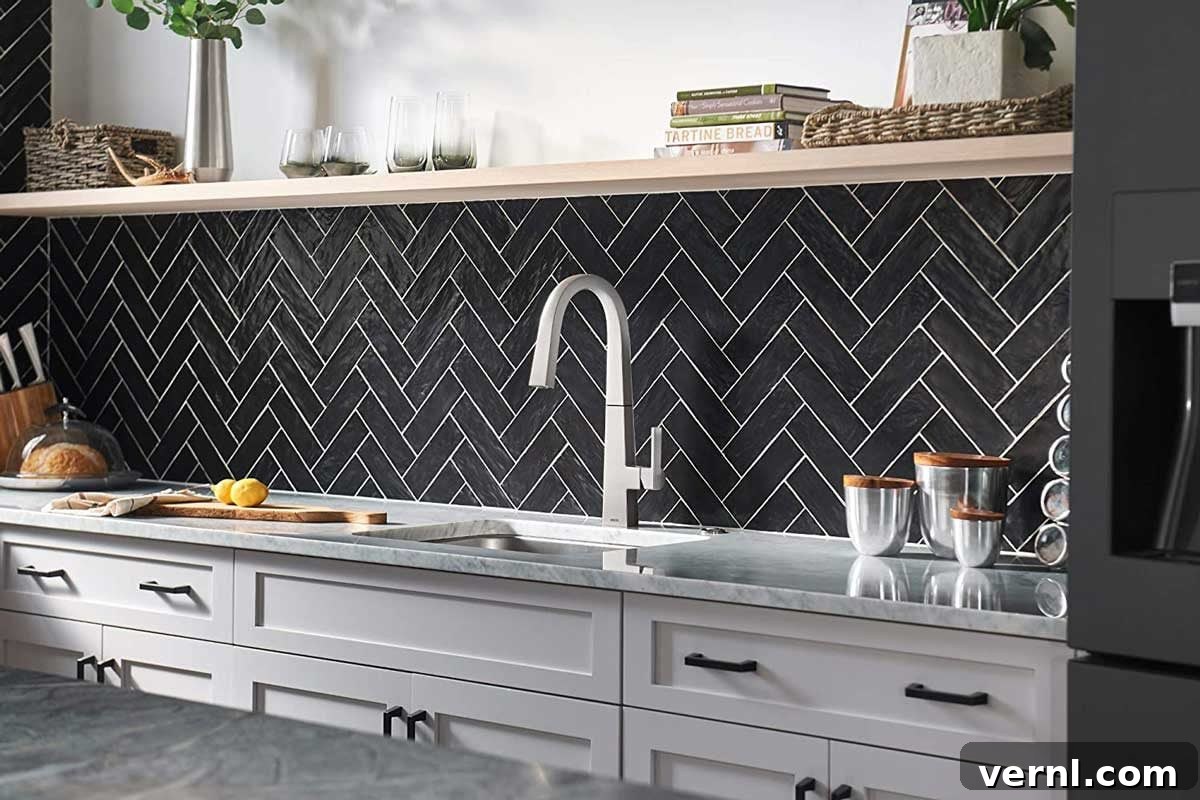
In an era where innovation seamlessly integrates into every corner of our lives, the concept of a “smart” device has expanded far beyond smartphones and computers. We now live in a world equipped with smart light bulbs, intelligent thermostats, secure smart locks, and even automated pet feeders. Amidst this technological evolution, an exciting and highly functional innovation is rapidly gaining traction: the smart sink faucet. While motion sensor faucets have been a staple in public restrooms and commercial settings for years, their sophisticated counterparts are now making a significant impact in residential kitchens and bathrooms, offering a myriad of benefits ranging from enhanced hygiene and significant water conservation to long-term cost savings.
What Defines a Smart Faucet?
Unlike conventional faucets that operate purely mechanically, smart faucets are equipped with advanced technology that necessitates an energy source. This power can be supplied either through batteries—which typically offer a lifespan of two to five years, depending on usage and battery type (AA or C batteries are common for extended life, as noted by Joseph Wood, master plumber and founder of Boston Standard Company)—or by connecting to a dedicated power source located beneath the sink. While batteries will require occasional charging or replacement, a key advantage of many smart faucets is their ability to function as a regular manual faucet even during a power outage or when batteries deplete, ensuring continuous water access, albeit without the smart functionalities.
At the heart of a smart faucet’s operation is the solenoid valve. As Wood explains, this is “a magnetic valve that turns the water on and off.” Solenoid valves are ubiquitous in modern homes and vehicles, found in everything from electronic locks and washing machines to refrigerator icemakers. In a smart faucet, the solenoid valve allows for precise control of water flow, enabling activation with or without physical touch, making it a cornerstone of the faucet’s intelligent capabilities. This crucial component, combined with advanced sensors and control systems, elevates a simple water fixture into an integral part of the smart home ecosystem, offering unparalleled convenience and efficiency.
Advanced Features of Smart Faucets
Revolutionary Activation: Touch, Touchless, and Voice Control
One of the most compelling aspects of smart faucets is their diverse and intuitive activation methods, designed to enhance user experience and hygiene. The most sought-after feature is often touchless activation. A hands-free faucet allows users to operate the water flow without physical contact, a particularly invaluable feature when hands are dirty, for instance, after handling raw chicken or gardening. This eliminates the need to touch potentially contaminated surfaces, significantly reducing the spread of germs and minimizing cleanup time, contributing to a healthier living environment.
Within the realm of touchless technology, two primary sub-types stand out. Voice-activated faucets represent the pinnacle of convenience, responding to spoken commands. Much like other smart home devices such as Amazon’s Alexa or Google Assistant, these faucets can turn on, turn off, or even dispense specific amounts of water purely through vocal instructions, making multitasking in the kitchen or bathroom effortlessly simple. The second type, commonly referred to as hands-free faucets, utilizes infrared sensors. As Wood explains, these sensors “detect a particular ‘depth of field’ and only activate on entry and exit to this field,” mirroring the operation of automatic faucets commonly found in public spaces.
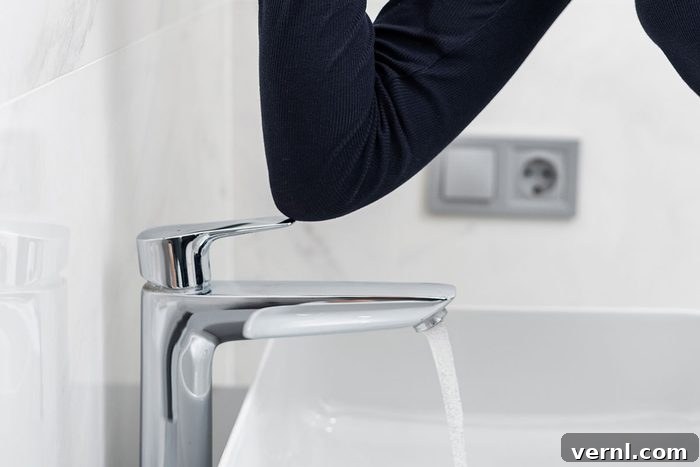
Beyond touchless options, some smart faucets ingeniously incorporate touch-activated technology. These faucets leverage capacitance, harnessing the body’s natural electrical current for activation—a principle akin to how smartphone screens or touch-sensitive lamps operate. This feature offers immense practicality: instead of gripping a handle with dirty or dough-covered hands, users can simply tap the faucet with a wrist or elbow, maintaining cleanliness and enhancing convenience during various kitchen or bathroom tasks. This blend of activation methods ensures a smart faucet caters to a wide array of user preferences and situational needs.
Advanced Water Delivery, Monitoring, and Conservation Capabilities
Smart faucets go far beyond mere on/off functionality. Their intelligence extends to precise water management, offering features that promote efficiency, sustainability, and health. One highly innovative feature is the ability to measure and dispense exact amounts of water. James Walsh, Vice President of Product Management for American Standard, highlights the Beale MeasureFill Touch Faucet as an excellent example. This faucet can deliver precise volumes of water, up to 40 ounces on demand, eliminating the guesswork from cooking and baking. “Simply use the dial to set the amount of water you need and never eyeball a measurement again,” Walsh states, emphasizing the intuitive nature and practical benefits of this technology.
Water conservation is another cornerstone of smart faucet design. Many models come equipped with built-in shutoff timers, which automatically halt water flow after a predetermined period, typically two or five minutes. This feature is invaluable in preventing accidental water waste. As Wood points out, “Maybe a kid did not close the faucet all the way,” or perhaps “you’ve been called out of the room for something.” In such scenarios, the faucet proactively turns itself off, saving water instead of letting it run needlessly. Similarly, some smart faucets can provide gentle reminders to turn off the water while performing routine tasks like brushing teeth, further embedding water-saving habits into daily life. Advanced models even integrate sophisticated leak detection systems that can identify and respond to plumbing issues, preventing costly water damage and potential mold growth.
Beyond quantity, smart faucets also address water quality. While any faucet can be fitted with an external filter, smart faucets offer integrated solutions with superior capabilities. They often utilize the same effective filtering technologies found in other home water filters, but with an added layer of intelligence. “The benefit of smart faucets is that many can provide real-time analytics about the water in your home,” Wood explains. This means users can gain precise information on which contaminants have been filtered out, offering an unprecedented level of transparency and control over their drinking water quality. Walsh elaborates on this, mentioning The Saybrook Filtered Kitchen Faucet, which “eliminates 99.6 percent of lead, 96.9 percent of chlorine and 92.6 percent of Class I particulates from your tap water.” With a simple push of a button, users can switch between filtered water for drinking and unfiltered tap water for cleaning. An intelligent LED indicator light even notifies users when the filter requires replacement, ensuring optimal performance and safety.
Smart Faucet Designs and Aesthetic Integration
The world of smart faucets offers a wide spectrum of design choices, ensuring there’s a perfect match for every home aesthetic and budget. For those looking for an entry point into smart water technology without a full overhaul, various smart faucet attachments are available. These adapters connect to your existing faucet, converting it into a touchless or motion-activated system. They are typically more budget-friendly, often costing less than $50, and many feature a rechargeable, built-in battery for convenience, such as this touchless smart faucet adaptor. It’s crucial, however, to verify compatibility with your existing faucet before purchasing an adapter.
For those seeking a comprehensive upgrade, full smart faucet replacements offer an extensive array of styles, finishes, and functionalities. Major brands are committed to providing designs that complement any interior décor. “Expect chrome and brushed nickel to be everywhere,” says Wood, indicating their enduring popularity. However, for a more distinctive statement, “polished brass, brushed stainless and black to be on the brands that have invested more heavily in their lineup.” This means consumers can find timeless smart faucets that blend seamlessly with traditional designs, sleek modern smart faucets featuring minimalist lines, or even ornate, antique-inspired smart faucets that evoke classic elegance. Whether your preference is for a cutting-edge matte black fixture, a sophisticated brushed gold finish, or a classic polished chrome, there is a smart faucet design engineered to perfectly match and elevate the aesthetic of any home, marrying advanced technology with impeccable style.
Compelling Reasons to Invest in a Smart Faucet
Unparalleled Hygiene and Cleanliness
One of the most significant advantages of integrating a smart faucet into your home is the dramatic improvement in hygiene. Touchless faucets, by their very design, play a crucial role in maintaining a cleaner and healthier environment. Consider the common scenario: your hands are soiled—perhaps from preparing food like raw meat, gardening, or cleaning—and you need to wash them. With a traditional faucet, you would invariably touch the handles or levers, transferring germs and grime onto the fixture itself. As Wood vividly illustrates, “Imagine only needing to move your hands to the right spot, or just tapping it with your forearm.” By eliminating the necessity of gripping a knob or lifting a handle, smart faucets effectively prevent cross-contamination. This not only reduces the spread of bacteria and viruses within the household but also minimizes the frequency and intensity of cleaning required for your fixtures, contributing to a more sanitary kitchen and bathroom.
Sustainable Water Conservation and Cost Savings
Beyond hygiene, smart faucets are an exemplary choice for the environmentally conscious and budget-minded homeowner. Features such as integrated leak detection systems and automatic shutoff timers transform these fixtures into powerful tools for water conservation. By promptly identifying and responding to leaks, smart faucets prevent significant water waste and potential damage to your home. The automatic shutoff feature ensures that water isn’t inadvertently left running, whether due to a forgotten task, a child’s oversight, or a momentary distraction. This proactive approach helps to conserve water around the home, which is not only beneficial for the environment by reducing strain on natural resources but also directly translates into noticeable savings on your monthly water bill. In the long run, the investment in a smart faucet can pay for itself through reduced utility costs and prevented expenses from water damage.
Enhanced Convenience and Modern Living
The sheer convenience offered by smart faucets significantly elevates daily routines. Hands-free operation, voice commands, and precision dispensing streamline various tasks, making them quicker and more efficient. Imagine filling a pot to an exact measurement while simultaneously attending to other cooking tasks, or simply asking your faucet to turn on with a vocal command when your hands are full. This level of automation and control empowers users to multitask more effectively and provides an unparalleled user experience.
Accessibility and Future-Proofing Your Home
For individuals with limited mobility or certain disabilities, touchless and voice-activated faucets can be life-changing, offering greater independence and ease of use in the kitchen and bathroom. Furthermore, integrating smart faucets aligns with the growing trend of smart home technology, potentially increasing your home’s appeal and value to future buyers who appreciate modern amenities and technological advancements. A smart faucet is not just a utility; it’s an upgrade that enhances lifestyle, promotes sustainability, and adds a touch of future-forward sophistication to any residence.
Considerations Before Making the Switch
While the benefits of smart faucets are compelling, it’s important for potential buyers to weigh a few considerations. The initial investment for a smart faucet can be substantially higher, often more than double the price of a regular faucet. This increased upfront cost is a key factor to consider, although it’s often offset by long-term savings in water usage and enhanced features. Additionally, the reliance on an energy source—whether batteries or direct electrical connection—means there’s a dependency that traditional faucets don’t have. While most smart faucets include a manual override, losing smart capabilities during a power outage or battery depletion can be an adjustment.
Maintenance also plays a role; batteries need periodic replacement, and sensors may require occasional cleaning to ensure optimal performance. For advanced features like real-time water analytics or app control, a stable Wi-Fi connection is often necessary, which could be a point of concern in areas with unreliable internet. Finally, there might be a slight learning curve as users adapt to new control methods like voice commands or sensor activation, but this is typically overcome quickly with regular use.
Conclusion: Is a Smart Faucet Right for You?
The burgeoning market for smart home technology has brought forth innovations that redefine convenience, efficiency, and hygiene, and the smart faucet stands as a prime example. From its advanced activation methods—including touchless, touch-activated, and voice control—to its sophisticated water management features like precision dispensing, automatic shutoff timers, and real-time water quality monitoring, a smart faucet offers a transformative upgrade to any kitchen or bathroom. It promotes a healthier living environment by minimizing germ transmission, contributes significantly to water conservation efforts, and provides unparalleled ease of use that enhances daily tasks.
While the initial cost may be higher compared to conventional fixtures, the long-term benefits in terms of water bill savings, reduced cleaning time, and the prevention of potential water damage represent a valuable return on investment. For individuals who embrace the smart home ethos and are willing to invest in cutting-edge features that promise both efficiency and luxury, a smart faucet is far more than just a tap; it’s a testament to modern living. It offers a blend of time-saving perks, money-saving advantages, and an elevated sense of cleanliness and control that makes it a truly intelligent addition to any contemporary household.