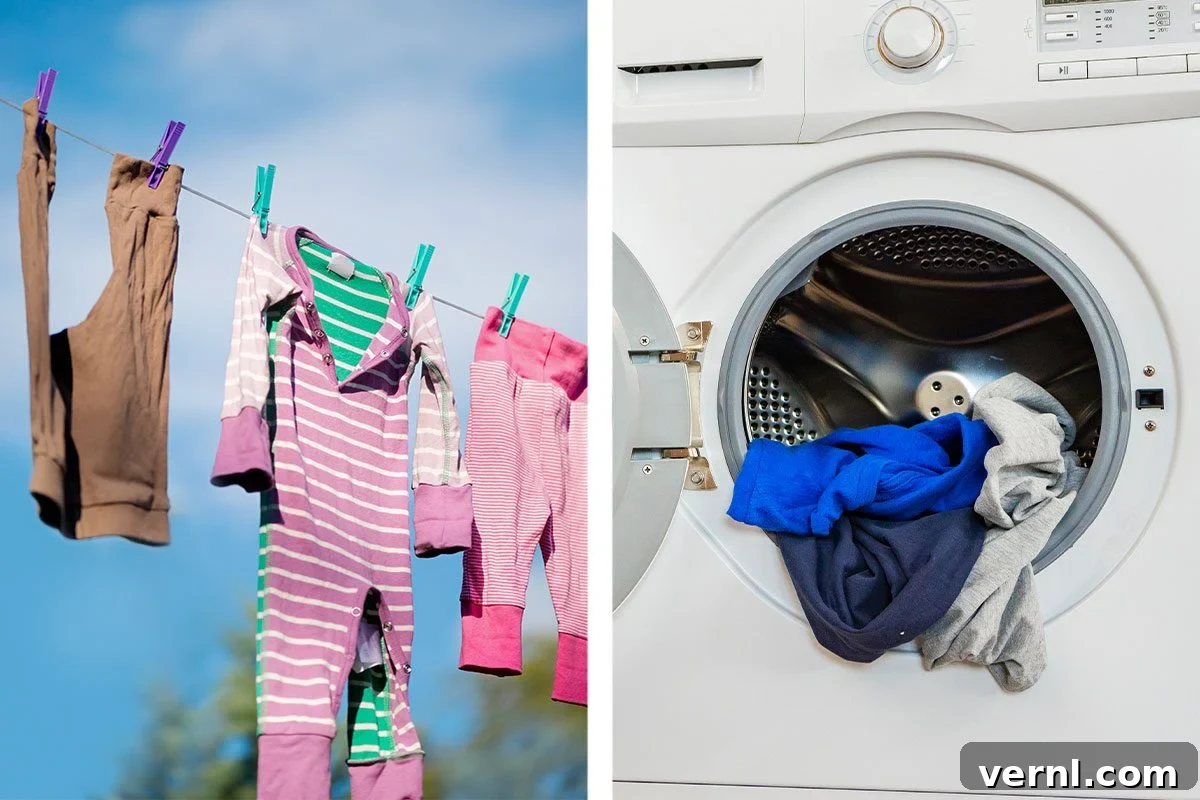
Laundry, an undeniable and recurring household task, is a fundamental part of maintaining a functional wardrobe. Without regularly attending to it, the pile of dirty clothes grows, eventually leaving you with no clean garments to wear. While many households are equipped with the modern convenience of a machine dryer to streamline this process, others may opt for the time-honored tradition of line drying. Both methods undeniably achieve the ultimate goal of drying clothes, yet they present distinct advantages and disadvantages that warrant careful consideration. The crucial question that often arises for consumers is: which method truly offers the best outcome for your clothes, your budget, and your lifestyle – line drying or the conventional machine dryer?
In this comprehensive guide, we delve deep into the nuances of line drying versus machine drying. We’ve consulted with leading laundry and cleaning experts who shed light on the fundamental differences between these two prevalent methods. Their invaluable insights will help you understand how each approach impacts your garments, your energy consumption, and even your environmental footprint. Moreover, they provide practical advice and actionable tips to help you confidently determine the optimal drying strategy tailored to your specific clothing items and personal needs.
Line Drying vs. Machine Dryer: Understanding the Drying Mechanisms
To truly appreciate the distinction between these methods, it’s essential to understand the underlying mechanics of how each dries your clothes.
“Line drying, often perceived as a more traditional approach, involves suspending your freshly washed, damp clothes on a clothesline, a sturdy drying rack, or even a simple rope,” explains Joy Ramos, operations manager at Bear Brothers Cleaning. “Whether positioned outdoors under the warmth of the sun and the flow of natural breezes, or indoors during inclement weather, this method harnesses the power of air circulation. The surrounding air gradually works to draw out and evaporate moisture from the fabric fibers, a slow yet effective process.” This natural interaction allows clothes to dry gently without exposure to artificial heat.
Conversely, Mary Gagliardi, a respected cleaning expert and in-house scientist for Clorox, outlines the operation of a traditional machine dryer: “This appliance functions by actively blowing heated air through a tumbling drum, where the laundry constantly rotates. As the warm air circulates, it rapidly absorbs moisture from the fabrics. This moist air is then systematically evacuated from the machine, a cycle that continues until the entire load reaches a dry state. The constant motion and controlled heat accelerate the drying process significantly compared to ambient air drying.”
Line Drying vs. Machine Dryer: A Detailed Look at Pros and Cons
Making an informed decision between line drying and using a machine dryer requires a thorough evaluation of their respective advantages and disadvantages across various factors, from garment care to cost and convenience.
Benefits of Line-Drying Clothes
- Extends Garment Lifespan and Preserves Quality: One of the most compelling reasons to line dry is its gentle impact on fabric. Matthew O’Connor, CEO of NoScrubs.com, highlights that “line drying significantly prolongs a garment’s lifespan by mitigating fiber breakdown. Unlike the harsh heat and tumbling action of a dryer, air drying reduces wear and tear, prevents stretching or shrinking, and helps maintain the original shape and vibrant colors of your clothes.” This gentle treatment means your cherished delicate shirts, dresses, or even everyday items can remain in excellent condition for much longer. Always consult the care label on your garment’s tag for specific manufacturer recommendations, but generally, line drying is the safest bet for fragile textiles.
- Significant Energy and Cost Savings: Line drying is an incredibly economical choice. It requires no electricity or gas, aside from the initial purchase of a drying rack, a clothesline, and a few clothespins – which are typically one-time, low-cost investments that last for years. This method completely eliminates the utility expenses associated with running a power-hungry machine dryer, making it an ideal solution for those on a strict budget or anyone committed to reducing their household energy consumption and carbon footprint. Over time, these savings can be substantial.
- Leverages Natural Benefits of Sun and Air: Drying clothes outdoors harnesses the natural elements with remarkable benefits. “The sun’s ultraviolet (UV) rays act as a natural bleaching agent for whites, helping them appear brighter without the need for harsh chemicals,” Ramos states. “Additionally, sunlight is a natural disinfectant, effectively killing bacteria and mites on fabrics. The circulating fresh air infuses your clothes with a naturally clean, crisp scent that often surpasses any artificial fragrance from dryer sheets, leaving them smelling incredibly fresh and revitalized.”
- Reduces Static Cling and Wrinkles (with proper technique): Line drying naturally minimizes static electricity build-up that often occurs in machine dryers. While clothes might feel stiff if left on the line for too long, proper shaking before hanging and removing them promptly can result in fewer wrinkles, potentially reducing ironing time.
Drawbacks of Line-Drying Clothes
- Time-Consuming and Weather Dependent: The most significant drawback of line drying is the time investment. “Unlike the relatively swift cycles of a machine dryer, line-drying clothes can be considerably more time-consuming,” says Ramos. “Thicker fabrics like denim, towels, or heavy blankets can take several hours, or even an entire day, to dry completely.” This process is also entirely at the mercy of the weather. Rainy, humid, or excessively cold conditions can drastically extend drying times or make outdoor drying impractical altogether.
- Potential for Clothing Distortion: While generally gentle, line drying can sometimes lead to distortion, particularly with certain types of garments. Gagliardi explains, “Wet laundry holds substantial water weight, and when initially hung, this gravitational pull can stretch or distort the fabric, causing it to lose its original shape.” Sweaters, intricately constructed clothing, knits, and antique textiles are especially vulnerable to this issue. Proper hanging techniques, such as laying delicate items flat, are crucial to mitigate this risk.
- Space Requirements and Aesthetic Considerations: Line drying, especially for larger loads, demands adequate space, whether it’s an outdoor clothesline or an indoor drying rack. This can be a challenge for apartment dwellers or homes with limited yard space. Additionally, some homeowners associations or local regulations may have restrictions on outdoor clotheslines for aesthetic reasons.
- Exposure to Outdoor Allergens and Pollutants: Clothes dried outdoors can inadvertently pick up pollen, dust, or other airborne pollutants, which might be an issue for individuals with allergies or respiratory sensitivities.
Benefits of Drying Clothes in the Dryer
- Unmatched Efficiency and Speed: The primary advantage of machine drying is its superior speed and convenience. “Machine drying offers a significantly faster alternative to line drying, particularly beneficial in most climates,” Gagliardi asserts. “It’s an ideal solution for busy individuals or families who need quick turnaround times for their laundry.” Modern dryers often come with sensor drying technology that detects moisture levels and automatically stops when clothes are dry, preventing over-drying.
- Greater Control and Enhanced Fabric Care Features: Modern dryers offer a range of customizable settings that provide precise control over the drying process. “Many drying machines excel at efficiently capturing lint, pet hair, and dust from your clothes, keeping your garments looking cleaner,” Ramos points out. “Furthermore, a dryer operates reliably regardless of external weather conditions – rain or shine – eliminating any uncertainty and allowing for consistent laundry scheduling.” Features like wrinkle guard, steam cycles, and various heat settings (from air fluff to high heat) cater to different fabric types and desired outcomes.
- Softness and Fluffiness: The tumbling action and heat in a dryer often leave clothes, especially towels and bedding, feeling softer and fluffier than line-dried items, which can sometimes feel stiff.
Drawbacks of Drying Clothes in the Dryer
- Risk of Shrinking, Fading, or Damage: A significant downside of machine drying is the potential for fabric damage. Repeated exposure to high heat and the continuous tumbling action can cause clothes to shrink, fade colors, or weaken fabric fibers over time, leading to pilling and premature wear. Delicate materials like silk, wool, and certain synthetics are particularly susceptible to heat damage, which can alter their texture and integrity.
- Higher Utility Bills and Environmental Impact: Operating a machine dryer consumes a substantial amount of energy, contributing significantly to household utility bills, especially electricity. Dryers are among the most energy-intensive appliances, and their frequent use can noticeably impact monthly expenses. From an environmental perspective, this high energy consumption translates into a larger carbon footprint compared to the passive nature of line drying.
- Potential Safety Hazard if Neglected: Alicia Sokowlowski, president and co-CEO of AspenClean, highlights a crucial safety concern associated with machine dryers. “If not regularly cleaned, accumulated lint buildup within the dryer vent and lint trap can become a serious fire hazard,” she cautions. Beyond fire risks, frequent use can lead to mechanical issues that require maintenance or repairs, adding to the overall cost and inconvenience.
Line Drying vs. Dryer: Which Is Better for Your Clothes?

The optimal drying method is not a one-size-fits-all answer; it largely hinges on the specific type of clothing you’re drying, its fabric composition, and the frequency of washing. Achieving a balance between preserving garment quality and enjoying convenience is key.
Gagliardi shares her personal approach: “I lean towards line drying, especially for items where shrinkage or color fading is a concern. During cooler or wetter months, I’ll often line dry indoors with the aid of a dehumidifier to manage moisture effectively.” This technique helps maintain the integrity of delicate fabrics and keeps colors vibrant. “However,” she adds, “for everyday necessities like towels, bedding, socks, and underwear, I prioritize the convenience and speed offered by machine drying. These items are generally more robust and tolerate the dryer’s heat well.”
Ramos echoes this sentiment, strongly recommending line-drying clothes that you want to keep looking fresh and bright for as long as possible. “Line drying is significantly gentler on fabric fibers, minimizing the wear and tear that can occur with machine tumbling,” he tells Family Handyman. “This gentle treatment is instrumental in preventing common issues such as shrinking, stretching, and fading, thereby preserving the original aesthetic and structural quality of your garments.” Ultimately, a hybrid approach, where you select the drying method based on the garment’s specific needs, often proves to be the most effective strategy.
Line Drying vs. Dryer: Which Costs More?
When evaluating the financial implications, using a traditional machine dryer unequivocally costs more over its lifespan than line drying. The expenses associated with a dryer extend beyond its initial purchase price, encompassing significant ongoing operational costs. These include the substantial electricity or gas required to power the appliance for each load, which can add up considerably on monthly utility bills. Furthermore, potential maintenance issues, repairs, and the eventual replacement of the appliance contribute to its higher overall cost.
In contrast, line drying presents a much more budget-friendly alternative. The initial investment is minimal, typically involving only the purchase of a clothesline, clothespins, or a drying rack. While Gagliardi suggests a dehumidifier for indoor line drying during certain seasons, this is generally a one-time purchase designed for longevity, making the ongoing costs virtually non-existent. Over years of use, the cumulative savings from avoiding dryer-related utility expenses can be substantial, making line drying the more economically sound choice.
Tips for Effective Line-Drying Clothes
If you’re considering incorporating line drying into your laundry routine, Joy Ramos offers these expert tips to ensure optimal results and garment care:
- Ensure Ample Air Circulation: When hanging clothes, leave sufficient space between each item. This crucial step allows air to circulate freely around the fabric, promoting faster and more even drying. Overcrowding the line or rack will trap moisture and extend drying times.
- Protect Colors from Sun Fading: For colored or dark clothing, turn them inside out before hanging them in direct sunlight. The sun’s powerful UV rays can cause dyes to fade over time, but turning garments inside out protects the visible exterior from this bleaching effect, preserving their vibrancy.
- Prevent Stretching with Delicates: Delicate items, such as knit sweaters, silk blouses, or garments with intricate embellishments, should ideally be laid flat on a clean, dry surface or a mesh drying rack. This technique distributes their weight evenly, preventing gravity from stretching or distorting the fabric while it’s wet and vulnerable.
- Minimize Stiffness with a Shake: Wet garments often dry with a stiff texture, especially if left on the line for an extended period. To combat this, give each garment a thorough shake before hanging it up. This action helps to loosen the fibers and can significantly reduce that rigid feeling once dry, potentially saving you ironing time.
- Choose Appropriate Clothespins: Opt for plastic or wooden clothespins over metal ones. Metal clothespins, particularly older or worn ones, can rust, and this rust can transfer onto your damp fabric, leaving unsightly and often permanent stains. Plastic or wooden alternatives are safer and won’t damage your clothes.
Tips for Efficient Dryer Use
For those who rely on machine dryers, Alicia Sokowlowski provides essential tips to ensure efficiency, safety, and optimal garment care:
- Clean the Lint Trap After Every Load: This is a critical safety and efficiency measure. A clean lint trap allows for maximum airflow, which is essential for efficient drying and preventing overheating. Lint buildup is a major fire hazard, so making this a habit after every single load is non-negotiable.
- Utilize Dryer Balls: Adding wool or rubber dryer balls to your load can significantly reduce both static cling and drying time. They work by separating clothes as they tumble, allowing hot air to circulate more effectively. Wool dryer balls also absorb some moisture, further accelerating the process, and can even naturally soften fabrics.
- Separate Fabrics by Weight and Type: For the most even and efficient drying, avoid mixing heavy items like towels and jeans with lightweight delicate items in the same load. Heavy fabrics take much longer to dry, meaning lighter items will be over-dried and potentially damaged if left in for the entire cycle. Separating loads allows you to use appropriate settings and drying times for each type of fabric.
- Avoid Overloading the Dryer: While tempting to pack in as many clothes as possible, an overloaded dryer restricts airflow. Good airflow is paramount for effective moisture removal. When the dryer is too full, clothes remain clumped together, leading to uneven drying and longer cycle times. Leave enough space for items to tumble freely.
- When in Doubt, Use the Lowest Heat Setting: High heat is often the culprit behind shrinking, fading, and damaging fabrics. If you’re unsure about the appropriate heat level for a particular item or load, always err on the side of caution and select the lowest heat setting available. This gentle approach will protect your clothes from heat-induced damage and extend their lifespan.
Frequently Asked Questions (FAQ) About Drying Clothes
Can you line dry clothes in the winter?
Yes, line drying clothes in the winter is certainly possible, though its practicality heavily depends on the specific weather conditions and climate of your region. “Warmer, drier southern states will find this method considerably easier and more efficient than residents in colder, rainy northern regions, where high humidity and freezing temperatures can slow drying significantly,” notes Gagliardi.
Sokowlowski further explains that “even cold air possesses the capacity to dry clothes, as water can evaporate even when frozen – a process known as sublimation.” However, she cautions that “you should anticipate a much slower drying time in colder temperatures. It’s also wise to avoid line drying outdoors during heavy rain or snowfall, as this will simply add more moisture to your clothes rather than drying them.” For colder climates, an indoor drying rack combined with a dehumidifier is often a more reliable winter solution.
Can you line dry clothes inside?
Absolutely, line drying clothes indoors is a perfectly viable option, especially for those lacking outdoor space or living in unfavorable climates. The key is to have sufficient space to set up a drying rack or an indoor clothesline. If you choose to line dry inside, Gagliardi strongly recommends having a dehumidifier readily available. “A dehumidifier will actively help to extract the excess moisture that evaporates from your drying clothes, preventing a buildup of humidity in your living space,” she advises. This not only speeds up the drying process but also mitigates potential issues like mold, mildew, and a damp odor in your home.
What are the best fabrics to line-dry versus put in the dryer?
The optimal drying method largely varies based on the fabric type, the item’s size, and crucial manufacturing care instructions found on its label. “Terry cloth towels, for example, will achieve a soft and fluffy texture much more quickly in a machine dryer, though they can certainly be line-dried to conserve energy,” explains Gagliardi.
She continues, “Sheets and other tightly woven cotton or linen fabrics are quite versatile and can be effectively dried using either line drying or a machine dryer, depending on your preference and time constraints.” For wool items that are labeled for hand washing or machine washing on a delicate cycle, it’s generally best to lay them flat to dry to prevent stretching or shrinking. However, some specific wool blends might allow for tumble drying on a very low heat setting, so always check the care label meticulously to avoid damaging these delicate fibers.
About The Experts
Our comprehensive guide draws upon the expertise of leading professionals in the fields of cleaning and fabric care:
- Joy Ramos: Operations Manager at Bear Brothers Cleaning, offering insights into practical laundry and cleaning solutions.
- Mary Gagliardi: A distinguished Cleaning Expert and in-house Scientist for Clorox, providing valuable perspectives on fabric science and effective cleaning methodologies.
- Matthew O’Connor: CEO of NoScrubs.com, specializing in garment longevity and care, particularly for professional attire.
- Alicia Sokowlowski: President and Co-CEO of AspenClean, an authority on eco-friendly cleaning practices and household safety.
RELATED:
- The Real Reason Aluminum Foil Has a Shiny Side and a Dull Side
- Think Adirondack Chairs Are Uncomfortable? You’re Using Them Wrong
- Why You Shouldn’t Crush Aluminum Cans Before Recycling