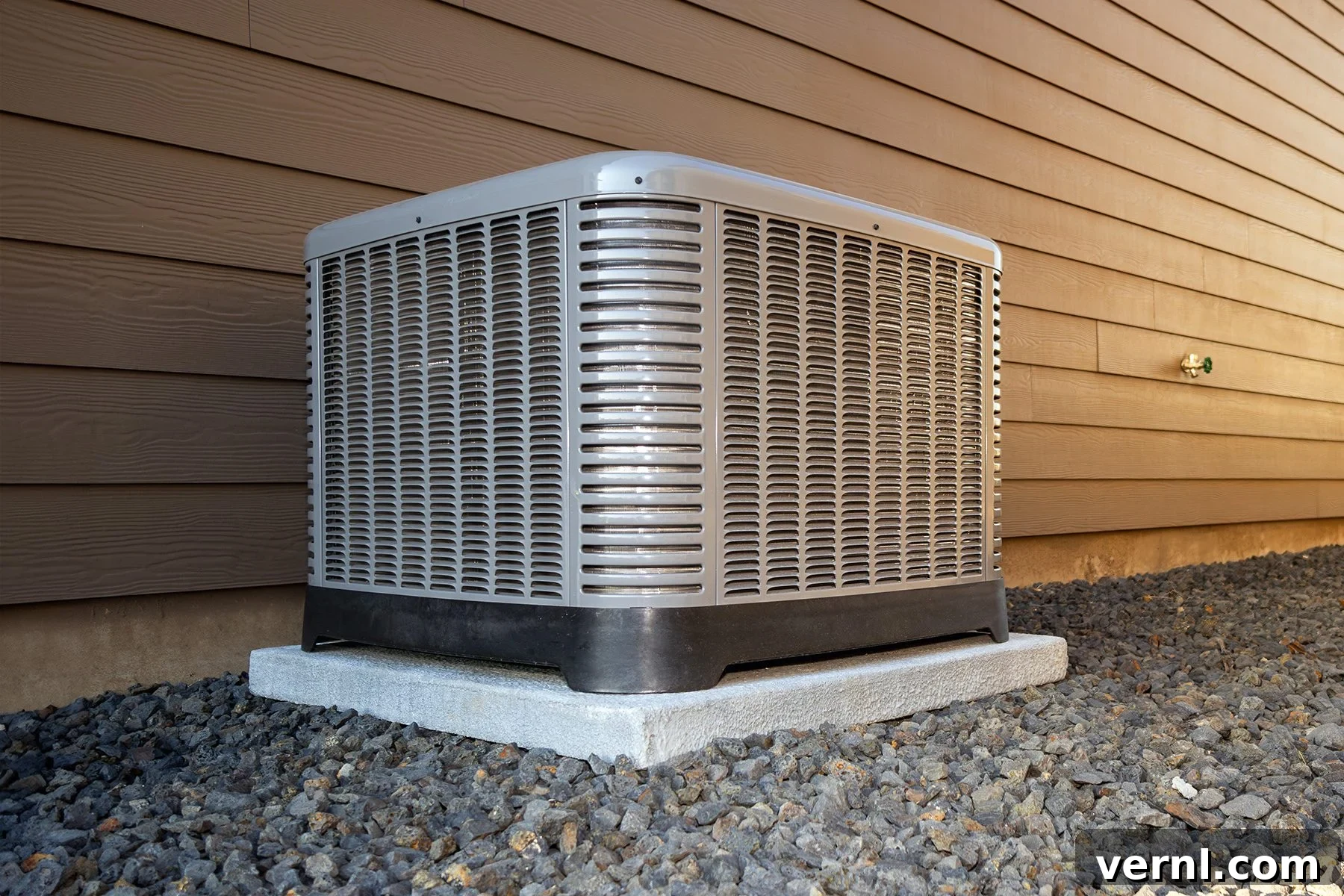
For decades, conventional heat pumps have been a staple in heating and cooling homes, with approximately one-third of households in the United States already utilizing one. Historically, their prevalence has been concentrated in warmer southern and southwestern states, primarily due to their diminished efficiency in sub-freezing temperatures. While they excel in temperate climates, their performance has been notoriously inefficient and costly to operate during the harsh, cold winters of Northern regions. This limitation has often deterred homeowners in colder climates from embracing the full potential of heat pump technology.
However, a revolutionary solution has emerged that marries the best of both worlds: pairing a high-efficiency heat pump with a traditional furnace. This innovative dual-fuel system allows these components to work in seamless synergy, not only providing effective cooling during sweltering summers but also delivering robust, economical heating even in the most bitterly cold winter conditions. This hybrid approach overcomes the long-standing challenge of heat pump performance in extreme cold, offering a truly versatile and energy-efficient HVAC solution for any climate.
Dive deeper into the mechanics, benefits, and considerations of this advanced heating and cooling system. We’ll explore how it functions, who stands to benefit most, and what factors to consider before installation, drawing on expert insights from two seasoned heating, ventilation, and air conditioning (HVAC) professionals: Liam Hogan of Hogan Mechanical Incorporated and Alexander Siv from Amherst Heating and Plumbing.
Understanding the Dual-Fuel Heat Pump HVAC System: A Hybrid Approach to Home Comfort
A dual-fuel heat pump HVAC system represents a sophisticated evolution in home climate control, ingeniously combining the strengths of an electric heat pump with a traditional gas, oil, or propane furnace. This integrated system is meticulously designed to cater to a home’s complete heating and cooling requirements, adapting intelligently to varying outdoor temperatures and optimizing energy consumption year-round. Unlike conventional systems that rely solely on one primary method for heating and another for cooling, the dual-fuel system intelligently switches between its components to maximize efficiency and comfort.
The core principle is simple yet powerful: the heat pump takes the lead during moderate temperatures, while the furnace steps in when the mercury truly plummets. During cooler seasons, such as the crisp days of fall and the mild stretches of spring, the heat pump efficiently extracts latent heat from the outdoor air, even when it feels cool to us, and transfers it indoors to warm your home. This process is remarkably energy-efficient because it merely moves existing heat rather than generating it through combustion. As Liam Hogan points out, “Heat pumps are really efficient and limit gas usage, so are a nice alternative heat source in a home during cool, but not cold months.” This ability to use electricity to move heat rather than create it significantly reduces energy consumption and operational costs during these shoulder seasons.
Conversely, when winter arrives with its severe, sub-freezing temperatures, the traditional furnace assumes primary heating responsibilities. At these extremely low temperatures, a heat pump’s efficiency can decline as there’s less heat energy to extract from the outside air. The furnace, fueled by natural gas, propane, or oil, then kicks in to provide powerful, rapid heating, ensuring your home remains warm and comfortable regardless of how cold it gets outside. This strategic handover ensures that you always have an effective and efficient heating source.
Beyond its heating capabilities, the dual-fuel system also excels in warmer months. It operates just like a high-efficiency central air conditioner during summer, with the heat pump reversing its cycle to extract heat from your indoor air and expel it outdoors. This provides robust and cost-effective cooling, making it a truly year-round solution. Alexander Siv perfectly encapsulates its versatility: “It’s like the best of both worlds. You get the efficiency of the heat pump for cooling in the summer and some heat in the spring and fall. Then, in the winter, you get the heating efficiency of a furnace.” This comprehensive approach offers homeowners unparalleled comfort, significant energy savings, and the peace of mind that comes with a reliable, adaptable HVAC system.
How a Heat Pump with Furnace System Achieves Optimal Performance
The ingenious design of a dual-fuel heat pump system lies in its ability to intelligently alternate between its two power sources: electricity for the heat pump and gas or oil for the furnace. The pivotal factor triggering this transition is the fluctuating outdoor temperature, managed by a sophisticated smart thermostat. This “balance point” technology allows the system to operate at peak efficiency throughout the year, ensuring comfort and cost savings.
Cold Weather Operation: The Intelligent Switch
The primary advantage of a heat pump in cooler weather is its remarkable efficiency. As long as the ambient temperature remains above approximately 35 degrees Fahrenheit (around 2 degrees Celsius), an air-source heat pump can efficiently capture and transfer heat from the outside air into your home. Under optimal conditions, a heat pump can deliver a Coefficient of Performance (COP) of 3.0 or even higher, meaning it transfers 300 percent or more energy than it consumes in electricity. This makes it an incredibly cost-effective heating method during milder cold spells, like those often experienced in late fall and early spring.
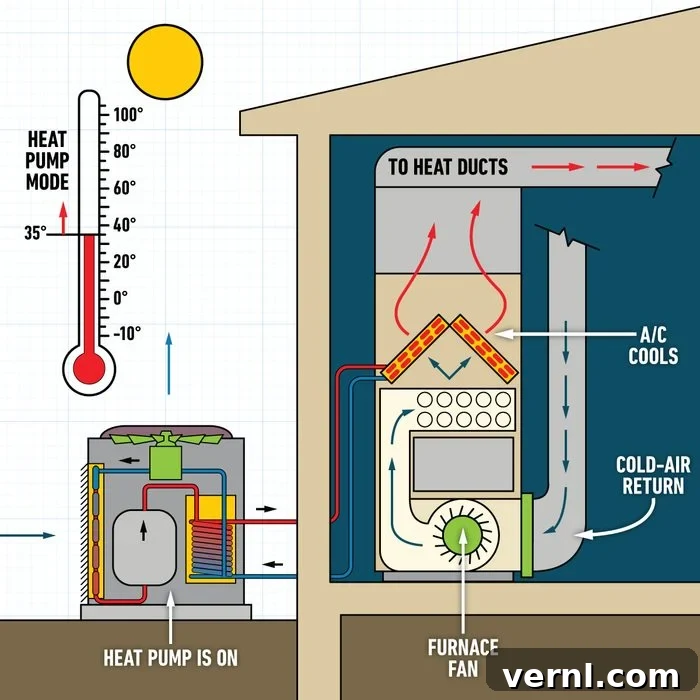
During these cooler but not frigid months, the heat pump diligently handles all heating duties. The dual-fuel system cleverly integrates the furnace into this process, not by firing its burners, but by utilizing its powerful air distribution features. The heat pump sends warm refrigerant through the furnace’s indoor coil (which also acts as the evaporator coil for cooling). The furnace fan then draws cool air from the home’s cold-air return ducts, blows it over this now-warmed coil, and circulates the conditioned, heated air throughout the house. This method ensures that the home benefits from the heat pump’s efficiency while leveraging the existing ductwork and fan system of the furnace.
However, as temperatures continue to drop, typically below the system’s pre-set balance point (often around 35°F to 40°F, or 2°C to 4°C), the heat pump’s efficiency begins to wane. This is the critical moment when the furnace seamlessly takes over. Modern dual-fuel systems are equipped with smart thermostats that continuously monitor outdoor temperatures. As Liam Hogan explains regarding systems in colder regions like Massachusetts, “In Massachusetts, your thermostat makes the switch to the furnace when it’s 32 degrees outside or colder.” This automatic transition ensures that the home maintains consistent comfort without excessive energy consumption, leveraging the furnace’s robust heating capabilities when the heat pump would struggle.
Warm Weather Operation: The Reversible Air Conditioner
As depicted in the accompanying illustration, an air-source heat pump is fundamentally a reversible air conditioner. Both systems share key components, including a compressor—a high-pressure pump responsible for circulating refrigerant—and a network of indoor and outdoor coils. This refrigerant, a volatile gas, moves through these coils, which are expertly designed to facilitate the capture and release of heat. In essence, an air conditioner can only move heat in one direction: from indoors to outdoors, thereby cooling your home.
The distinguishing feature of a heat pump, however, is its versatility. Thanks to an additional component known as a switchover valve (or reversing valve), a heat pump can alter the direction of refrigerant flow. This unique capability allows it to move heat in either direction, enabling both heating and cooling functions. In the summer months, the heat pump reverses its cycle, effectively transforming into an air conditioner. Cold liquid refrigerant flows through the indoor coil, absorbing heat from your home’s air. This heat-laden refrigerant is then compressed and released outdoors, cooling your living space with the same efficiency and comfort as a conventional air conditioning unit. This dual functionality eliminates the need for a separate air conditioning system, streamlining your HVAC setup and maximizing your investment.
Determining if a Heat Pump with Furnace System is Right for Your Home
Deciding whether a dual-fuel heat pump system is the ideal choice for your home requires careful consideration of several factors. It’s a significant investment that promises long-term savings and enhanced comfort, but a proper assessment is crucial. The first step towards making an informed decision is always to consult with a qualified heating contractor who can conduct a thorough evaluation tailored to your specific circumstances.
- Start with a Comprehensive Heating and Cooling Load Analysis: Never rely on the specifications of your existing furnace or air conditioner. Home renovations, such as new insulation, upgraded windows, or even a room addition, can dramatically alter your home’s heating and cooling requirements. A professional installer will perform a detailed load calculation, often referred to as a Manual J calculation. This precise assessment takes into account your home’s square footage, ceiling heights, window and door types, insulation levels, local climate data, and even the number of occupants. Proper sizing of your new HVAC system is paramount. An undersized system will struggle to maintain comfort and run inefficiently, while an oversized system will cycle too frequently, leading to uneven temperatures, increased wear and tear, and higher energy bills. Insist that your installer measures and double-checks all calculations to ensure the proposed system perfectly matches your home’s unique thermal needs.
- Conduct a Comparative Cost Analysis: The financial viability of a dual-fuel system can vary significantly based on your local energy prices. If you reside in an area with particularly low natural gas rates and comparatively high electricity prices, the payback period for a heat pump might be longer, potentially negating some of the immediate savings. Your HVAC installer is equipped to help you with this crucial analysis. They can factor in current local energy rates, including peak and off-peak electrical rates, to provide a realistic projection of your potential savings and the system’s return on investment (ROI). This analysis should compare the operational costs of a dual-fuel system against a conventional furnace-only or AC-only setup, giving you a clear picture of long-term financial benefits. Understanding these variables is key to making an economically sound decision.
- Inquire About System Compatibility: While dual-fuel heat pumps are often designed to be relatively straightforward replacements for existing central air conditioning units, the compatibility with your current furnace is a critical consideration. Older furnaces, especially those lacking modern controls or variable-speed blower motors, may not seamlessly integrate with a new, technologically advanced hybrid system. As Alexander Siv cautions, “It will need to be determined whether the current furnace can be controlled together with the new heat pump equipment.” Modern dual-fuel systems require smart thermostats and control boards that can orchestrate the precise switching between the heat pump and the furnace. An older furnace might necessitate upgrades or even a full replacement to ensure optimal performance and seamless integration with the new heat pump component. Your HVAC professional will assess your existing furnace’s age, condition, and control capabilities to advise on compatibility.
- Consider Environmental Benefits: Beyond the immediate financial savings and enhanced comfort, a dual-fuel system offers significant environmental advantages. By primarily using the electric heat pump for a large portion of the year, you substantially reduce your reliance on fossil fuels like natural gas, oil, or propane. This translates directly into a lower carbon footprint and reduced greenhouse gas emissions, contributing to a healthier planet. For environmentally conscious homeowners, this aspect can be a powerful motivator for upgrading to a hybrid system.
Investment: How Much Does a Heat Pump with a Furnace Cost?
The initial investment for a dual-fuel heat pump system coupled with a furnace is typically higher than installing a conventional furnace and central air conditioner separately. This is due to the advanced technology, greater complexity, and the dual functionality of the heat pump component. According to Liam Hogan, “A typical gas furnace with an air conditioner will be between $8,000 to $10,000.” For a dual-fuel heat pump with furnace installation, “Expect to pay between $12,000 to $15,000.”
However, these figures are general estimates, and the actual cost can fluctuate significantly based on several factors:
- System Size and Efficiency Ratings: Larger homes require more powerful units, and systems with higher SEER (Seasonal Energy Efficiency Ratio) and HSPF (Heating Seasonal Performance Factor) ratings, indicating greater efficiency, generally come with a higher price tag.
- Brand and Model: Premium brands and models with advanced features like variable-speed compressors or smart diagnostic capabilities will cost more.
- Installation Complexity: Factors such as the need for new ductwork, electrical upgrades, refrigerant line extensions, or specialized equipment for installation can increase labor costs.
- Geographic Location: Installation costs can vary by region due to differences in labor rates and local regulations.
- Existing Equipment Compatibility: If your current furnace or ductwork requires significant modifications or replacement to be compatible, this will add to the overall expense.
While the upfront cost is higher, it’s crucial to view this as an investment in long-term energy savings, enhanced home comfort, and increased property value. The operational savings from the heat pump’s efficiency, combined with potential rebates and tax credits, can help offset the initial outlay over time.
Unlocking Savings: Tax Credits and Incentives for Heat Pumps
Beyond the inherent long-term energy savings, upgrading to a dual-fuel heat pump system can offer immediate financial benefits through various tax credits and rebates. These incentives are often designed to encourage homeowners to adopt more energy-efficient and environmentally friendly heating and cooling solutions, helping to reduce the initial investment barrier.
In the United States, significant federal incentives are available, most notably through the Inflation Reduction Act (IRA). This legislation offers substantial tax credits, such as the Energy Efficient Home Improvement Credit (25C), which provides up to 30% of the cost of eligible home energy improvements, including heat pumps, with an annual credit limit of $2,000 for heat pumps. Additionally, point-of-sale rebates through the High-Efficiency Electric Home Rebate Act (HEEHRA) may cover up to $8,000 for qualifying heat pump installations for certain income levels, although these rebates are administered at the state level and are still being rolled out in many areas.
It’s not just federal programs; many state and local governments, as well as utility companies, offer their own incentives. These can include additional rebates, low-interest loan programs, or specific tax breaks for installing high-efficiency HVAC systems. These local incentives can significantly reduce your out-of-pocket expenses and accelerate your return on investment.
To fully capitalize on these opportunities, it’s highly recommended to consult with your HVAC installer and your local utility company. They are often well-informed about the latest available incentives in your specific area and can guide you through the application process for qualifying programs. Proactive research can transform a substantial upgrade into a more accessible and financially rewarding home improvement project.
Frequently Asked Questions About Dual-Fuel Heat Pump Systems
What are the downsides to a dual-fuel heat pump system?
While highly efficient, a primary downside is the higher initial installation cost compared to a standalone furnace and air conditioner. As Alexander Siv notes, “It’s a great system upgrade if you can afford it.” Additionally, while quieter than older models, outdoor heat pump units can produce a low hum. Maintenance is also crucial; neglected systems can lose efficiency. However, the energy savings typically outweigh these initial drawbacks over the system’s lifespan.
At what temperature is a heat pump considered “useless” or inefficient?
Generally, air-source heat pumps begin to lose significant efficiency and require supplementary heating when outdoor temperatures drop to around 35 degrees Fahrenheit (2 degrees Celsius) or colder. At these points, the amount of heat energy available in the outside air becomes too low for the heat pump to efficiently extract, causing its Coefficient of Performance (COP) to decline. This is precisely why the furnace component of a dual-fuel system is crucial, seamlessly taking over to provide effective heating below this balance point, ensuring consistent warmth without excessive energy consumption.
Can heat pumps effectively cool your house in 100-degree weather?
Yes, most modern heat pump models are engineered to effectively cool your house even in high ambient temperatures, typically up to 115 degrees Fahrenheit (46 degrees Celsius). Their cooling mechanism is essentially that of a central air conditioner, which is designed to operate efficiently in hot climates. High-efficiency models often incorporate variable-speed compressors that can adjust their output to maintain comfort even during extreme heat waves, ensuring your home remains cool and comfortable.
What’s the “20-degree rule” for heat pumps during cooling season?
The “20-degree rule” for heat pumps (and air conditioners) suggests that you should never set your thermostat more than 20 degrees Fahrenheit (approximately 11 degrees Celsius) cooler than the outside temperature. For example, if it’s 90 degrees F (32 degrees C) outside, your thermostat should ideally not be set lower than 70 degrees F (21 degrees C). The reason for this rule is efficiency and system longevity. Trying to drastically drop the indoor temperature puts immense strain on the HVAC system, forcing it to run continuously and consume excessive energy. It can also lead to issues like coil freeze-up and reduced dehumidification. Gradually lowering the temperature allows the system to operate more efficiently and effectively, maintaining comfort without overworking the unit.
What are the typical maintenance requirements for a dual-fuel system?
Like any advanced HVAC system, dual-fuel units require regular maintenance to ensure optimal performance and longevity. This typically involves annual inspections by a qualified HVAC technician. Maintenance tasks include cleaning or replacing air filters, checking refrigerant levels, inspecting electrical connections, lubricating moving parts, cleaning coils, and verifying the proper functioning of both the heat pump and furnace components, including the intelligent switchover mechanism. Regular professional tune-ups can identify potential issues early, prevent costly breakdowns, and ensure the system operates at its peak efficiency.
What is the expected lifespan of a dual-fuel heat pump system?
With proper installation and regular maintenance, a dual-fuel heat pump system can last a significant period. The outdoor heat pump unit typically has a lifespan of 10 to 15 years, similar to a central air conditioner, as it experiences more wear and tear from exposure to the elements. The indoor furnace component, however, can often last 15 to 20 years or even longer, especially since it doesn’t run continuously throughout the year like a standalone furnace might in colder climates. The intelligent switching between components in a dual-fuel system can potentially extend the lifespan of both units by reducing continuous operation time for each, leading to less wear and tear over the system’s overall service life.
About the Experts
- Alexander Siv is the proud owner of Amherst Heating and Plumbing, serving Amherst, Massachusetts, and surrounding communities. He holds a master plumber’s license in Massachusetts and brings over a decade of comprehensive plumbing experience to his work, ensuring expert solutions for heating and plumbing needs.
- Liam Hogan is the esteemed owner of Hogan Mechanical Incorporated, a full-service residential and commercial plumbing and heating company based in Springfield, Massachusetts. With ten years of extensive industry experience, Liam and his team are dedicated to providing top-tier mechanical services.
Embracing a dual-fuel heat pump system is more than just an upgrade; it’s an investment in a smarter, more sustainable, and ultimately more comfortable home. By intelligently combining the efficiency of a heat pump with the robust power of a furnace, these systems offer unparalleled adaptability to any climate, ensuring optimal comfort and significant energy savings throughout the year. As energy costs fluctuate and environmental concerns grow, a dual-fuel system stands out as a forward-thinking solution for modern homeowners. Consult with trusted HVAC professionals today to explore how this innovative technology can transform your home’s heating and cooling experience for decades to come.