
A functional garage door is a cornerstone of modern home convenience, offering secure storage and easy vehicle access. However, like any mechanical system, automatic garage door openers can fail, often at the most inconvenient times – during a power outage, a motor malfunction, or a sensor blockage. When your automatic opener stops working, you might find yourself trapped inside or outside your garage, facing unexpected frustration. But fear not; there’s a reliable, manual method to operate your garage door, ensuring you always have a way out (or in). This guide will walk you through the essential steps for manually opening your garage door from both inside and outside, equip you with crucial safety knowledge, and provide insights into maintaining your system for optimal performance and security.
The ability to manually open your garage door is more than just a convenience; it’s a vital aspect of home preparedness. Imagine a scenario where a sudden power outage leaves you unable to get your car out for an important appointment, or worse, leaves you stranded inside a garage with no alternative exit. Knowing how to engage the emergency release mechanism provides peace of mind, transforming a potential crisis into a minor inconvenience. While you might still need to conserve your refrigerator’s chill and put off binge-watching your favorite shows, at least you won’t be locked out of essential transportation. This guide covers everything from securing your garage door to understanding its various components, ensuring you’re ready for any situation.
Your garage door system, whether it features elegant sliding garage doors, sleek glass garage doors, or classic wood garage doors, relies on an overhead opener for automated function. However, every garage door opener is equipped with a fundamental safety feature: the emergency release cord. This simple mechanism is your lifeline when the automated system fails, allowing you to disengage the door from the opener and operate it manually. It’s especially reassuring to know this if you find yourself working in a garage without a side entrance when the power suddenly goes out. Without this crucial override, you’d be stuck until power returns or a technician arrives. Understanding how and when to use this cord is paramount for every homeowner. While we’re focusing on manual operation, remember to also explore troubleshooting garage door openers, garage door maintenance tips, and even advanced topics like repairing garage door springs and cables, winterizing your garage door, or how to make a self-closing garage service door. Also, be sure to check the common reasons for your garage door not opening and learn how to prevent your garage door opener from becoming a lightning rod. And while you’re at it, don’t miss these cool upgrades for your garage!
Manually Opening the Garage Door from Inside
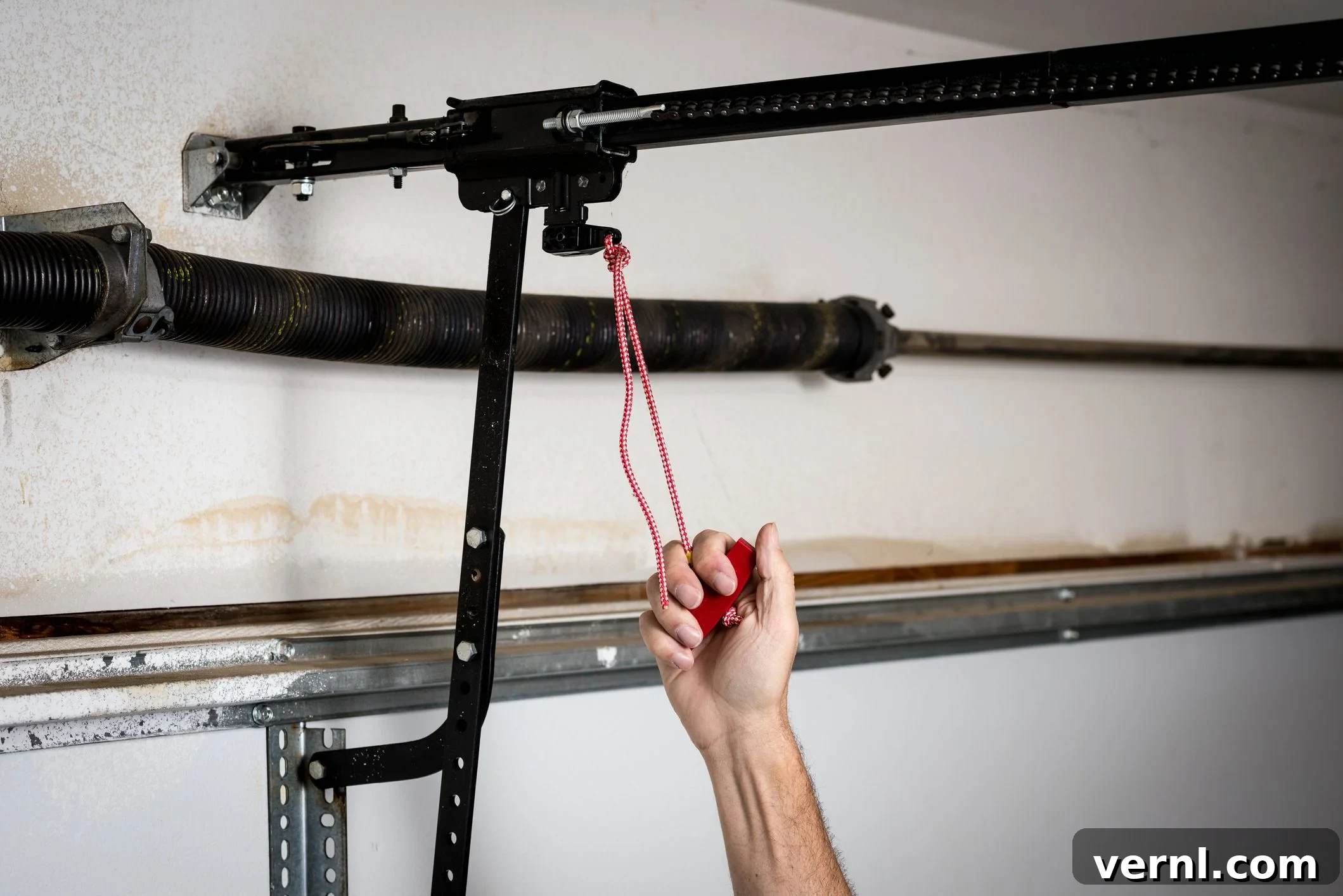
Finding yourself unable to open your garage door from inside, perhaps due to a power outage or a sudden malfunction of your automatic opener, can be disconcerting. Fortunately, the process for manually opening it is straightforward and designed for such emergencies. The key component you’ll need to locate is the emergency release cord. This cord typically hangs down from the trolley, which is the mechanism that connects the opener’s arm to the door itself, allowing it to move along the overhead track. The release cord is usually easily identifiable by its bright red color and a T-shaped handle at the end, making it stand out against the garage’s ceiling.
Once you’ve successfully located this critical cord, proceed with the following steps, ensuring each is performed carefully for your safety:
- Pull the Emergency Release Cord to Disengage the Trolley: This is the most crucial step. Firmly pull the red cord downwards. This action will release the trolley from the opener’s drive mechanism, allowing the door to be moved manually. Depending on your garage door opener model, you may need to pull the cord sharply towards the inside of the garage. This specific pull helps to keep the trolley disengaged, preventing it from accidentally springing back into the locked position before you’re ready to reconnect it. You should hear a distinct click, indicating that the mechanism has been successfully disengaged.
- Unplug the Garage Door Opener: After disengaging the trolley, it is absolutely essential to unplug the automatic door opener from its power source. This step is vital for two reasons: firstly, it prevents the motor from unexpectedly starting up if the power returns, which could make it significantly more difficult or even dangerous to re-engage the trolley later. Secondly, it safeguards the opener’s motor from potential damage during manual operation or unexpected power surges.
- Unlock the Garage Door (If Applicable): Some garage doors, especially older models or those with additional security measures, might have a manual lock mechanism on the door itself. Before attempting to lift the door, ensure that any such locks are fully disengaged. Attempting to lift a locked door can cause damage to the door, tracks, or even lead to personal injury.
- Lift the Door to the Completely Open Position: With the trolley disengaged and any locks released, you can now manually lift the garage door. Grip the bottom edge or a sturdy handle on the door firmly and lift it steadily upwards. Garage doors are heavy, so be prepared for their weight. It is imperative that you lift the door completely, ensuring it settles securely into the fully open position along the overhead tracks. Never attempt to open the door only partway and then leave it. A partially open garage door can unexpectedly fall due to wind, gravity, or an imbalance in the springs, posing a severe risk of injury to anyone standing in the doorway or underneath it.
Opening the Garage Door from Outside
What if you’re outside your home, the power is out, or your opener has failed, and your garage lacks a convenient side entrance? In such a situation, you won’t be able to access the emergency release cord directly from within the garage. This scenario calls for a specific emergency access method designed for exterior entry. Many garages without a pedestrian access door are equipped with an external access panel or kit. This feature typically consists of a small, key-locked cylinder or panel installed near the top center of the garage door itself. It’s a crucial security and convenience feature that allows you to trigger the internal emergency release from the outside.
If your garage is equipped with such a system, follow these steps to gain entry:
- Locate and Unlock the External Access Panel: First, find the external key lock cylinder or panel. It’s usually a small, round or rectangular fixture, often resembling a simple door lock, positioned centrally on the top section of the garage door. Use the appropriate key to unlock it. Once unlocked, you’ll typically be able to pull the cylinder out or open the small panel, revealing a cable connected to the internal emergency release mechanism.
- Reach Inside and Pull the Emergency Release Cord: With the access panel open, carefully reach your hand inside. You’ll need to locate and grasp the cable that is directly connected to the emergency release cord’s handle inside the garage. Once you have a firm grip, pull this cable firmly. This action will disengage the trolley from the garage door opener, just as if you were pulling the red cord from the inside. You should hear the distinct click confirming the release.
- Unlock and Lift the Door: After the trolley is disengaged, ensure any manual locks on the garage door itself are disengaged (if present). Then, grasp the bottom of the garage door and lift it manually. Remember that garage doors are heavy, so be prepared for a significant amount of weight. Lift the door steadily and completely until it rests securely in the fully open position. As with inside operation, never leave the door partially open, as it could unexpectedly close and cause injury.
- Unplug the Door Opener (if safe and accessible): As soon as the door is open, if it is safe and practical to do so, try to reach the power outlet for the garage door opener and unplug it. This prevents the opener from coming on unexpectedly if power is restored, which could complicate the process of reconnecting the door or even pose a safety hazard. If the outlet is too high or inaccessible from outside or while the door is open, prioritize safety and reconnect the door before attempting to unplug, or wait until you can safely access it from inside.
If your garage does not have a side entrance and also lacks an external access panel, it presents a significant security and emergency access vulnerability. In such cases, considering the installation of an emergency release kit is highly recommended to prevent future lockout situations.
Garage Door Opening Safety Tips: Prioritizing Your Well-being
Manually operating a garage door, while often necessary, carries inherent risks due to the door’s significant weight and the powerful spring system that assists its movement. Garage doors are deceptively heavy, often weighing hundreds of pounds. The torsion or extension springs that counterbalance this weight and make the door seem light are under an extreme amount of tension. This tension can be incredibly dangerous if mishandled. Therefore, exercising extreme caution and adhering to strict safety protocols is paramount whenever you engage in manual operation or any form of garage door maintenance or repair. Ignoring these warnings can lead to serious injury or further damage to your garage door system.
- Never Force a Stuck Door: If you’ve disengaged the trolley and unlocked the door, but it refuses to move, do not attempt to force it open. This resistance is a clear indication of an underlying problem. The tracks could be bent, one of the cables might have snapped, or, most critically, the highly tensioned springs could be damaged or broken. Forcing the door in such a state could exacerbate the damage, causing the door to jump off its tracks, or even lead to a sudden and uncontrolled release of spring tension, which can be catastrophic. If the door doesn’t move freely, call a qualified garage door technician immediately. They have the expertise and specialized tools to diagnose and safely resolve such issues.
- Use the Emergency Release Cord Only When the Door Is Fully Closed: This is a critical safety rule that cannot be overstated. The emergency release cord is designed to disengage the door from the opener when the door is in a fully closed and resting position. If you pull the release cord while the door is open or even partially open, the door will lose all support from the opener and could come crashing down with immense force. This uncontrolled descent poses a severe risk of crushing injuries to anyone or anything beneath it. Always ensure the door is completely closed before pulling the emergency release.
- Keep the Open Doorway Clear: Once you have manually lifted and opened the garage door, always keep the doorway and the immediate area beneath the door’s path clear. Even a fully open garage door can be susceptible to unexpected movements. A strong gust of wind, for instance, could cause the door to swing or drop unexpectedly. Furthermore, ensure no children, pets, or objects are positioned directly underneath the door, as an accidental closure could lead to serious injury or damage.
- Beware of Torsion and Extension Springs: These springs are under extreme, dangerous tension and are not DIY repair items. They are integral to balancing the door’s weight. If you suspect a spring is broken or malfunctioning (e.g., the door feels incredibly heavy, or you hear a loud snap), do not attempt to repair or adjust them yourself. Spring work should always be left to trained professionals.
- Inspect for Obstructions: Before attempting to lift the door manually, quickly scan the tracks and the door’s path for any obstructions. Even small items can cause the door to bind or fall.
- Wear Protective Gear: When handling a heavy garage door, wearing sturdy gloves can protect your hands from pinches, scrapes, and the general grime that accumulates on garage door components.
- Consider a Two-Person Lift: If your garage door feels excessively heavy even after disengaging the trolley, or if you are unsure of your ability to lift it safely alone, consider enlisting the help of another person. A coordinated two-person lift can significantly reduce strain and improve safety.
How to Reset an Electric Door Opener: Reconnecting After Manual Operation
Once the power is restored or the issue with your automatic opener has been resolved, the final step is to reconnect the garage door to the opener’s trolley mechanism. This process reactivates the automatic function of your door. The method for resetting your electric door opener can vary slightly depending on the make and model of your specific unit. It’s always a good idea to consult your owner’s manual for the most accurate and model-specific instructions.
However, most modern garage door openers generally fall into one of two categories for reconnection:
- Automatic Reconnection Models: Some advanced garage door opener systems are designed with a self-resetting feature. If you have one of these convenient models, the reconnection process is quite simple. All you need to do is ensure the garage door is fully closed. Once the door is down, activate the door opener using your remote control, wall button, or keypad. The opener’s trolley will automatically re-engage with the door’s arm as it cycles through its opening and closing sequence. The system will detect the connection and resume normal operation without any manual intervention from you.
- Manual Reconnection Models: For other common models, a small manual step is required to re-engage the trolley. After ensuring the power to the opener is back on and the door is in the fully closed position, you will need to pull the emergency release cord once more. This time, instead of pulling it straight down, pull it sharply in the direction of the garage door itself. This action releases a spring-loaded lever or mechanism, causing the trolley to snap back onto the overhead track’s drive system, effectively reconnecting it to the door’s arm. You should hear a distinct click or feel the mechanism engage as it locks into place.
If you encounter any difficulties reconnecting the trolley or if the door opener struggles to operate smoothly after reconnection, refer to your owner’s manual for specific troubleshooting steps. Common issues can include misaligned safety sensors, remote control battery problems, or minor opener malfunctions that might require a reset or professional attention. Always ensure the safety sensors at the bottom of the garage door tracks are clear and properly aligned, as these often prevent automatic operation.
Beyond Emergencies: Proactive Garage Door Maintenance and Security
While knowing how to manually open your garage door is essential for emergencies, preventing such situations through regular maintenance and enhancing security are equally important. Proactive care can significantly extend the life of your garage door system and minimize unexpected breakdowns. Consider these aspects to keep your garage door in top condition:
- Regular Maintenance Checks: Implement a routine schedule for inspecting your garage door. This includes checking the rollers, hinges, cables, and tracks for wear and tear, rust, or obstructions. Lubricating moving parts like rollers and hinges every few months can prevent friction and ensure smooth, quiet operation. Check the balance of your door by disengaging the opener and manually lifting the door to waist height; it should stay in place without assistance. If it falls or rises, your springs need adjustment by a professional.
- Enhance Garage Door Security: A garage door can be a vulnerable entry point for intruders. Beyond the manual operation, consider additional security measures like installing a sliding bolt lock on the inside, especially when you’re away for extended periods. Devices that secure the emergency release lever can prevent it from being manipulated from the outside with a wire hanger. Integrating your garage door opener into a smart home system can provide remote monitoring and control, adding an extra layer of security.
- Winterizing Your Garage Door: Cold weather can take a toll on garage door components. Ensure your bottom seal is intact to prevent drafts and keep out pests, as detailed in fixing garage door bottom seal. Lubricate moving parts with a silicone-based spray that won’t freeze. Check the weatherstripping around the door frame for cracks or gaps, replacing it if necessary to maintain insulation and protect against the elements.
- Troubleshooting Common Issues: Familiarize yourself with common garage door opener problems. Often, a remote control not working simply needs new batteries. If the door reverses unexpectedly, check the safety sensors for obstructions or misalignment. Learning basic troubleshooting steps can often resolve minor issues without the need for a service call. For more complex problems, like those involving springs or cables, always defer to a professional.
The ability to operate your garage door manually during power outages or mechanical failures is a valuable skill for any homeowner. It provides security, convenience, and, most importantly, peace of mind. By understanding the emergency release mechanism, practicing safe operation, and implementing a proactive maintenance routine, you can ensure your garage door remains a reliable and accessible part of your home. Being prepared means you’re never truly stuck. Next, explore what to do if the garage door opens by itself.