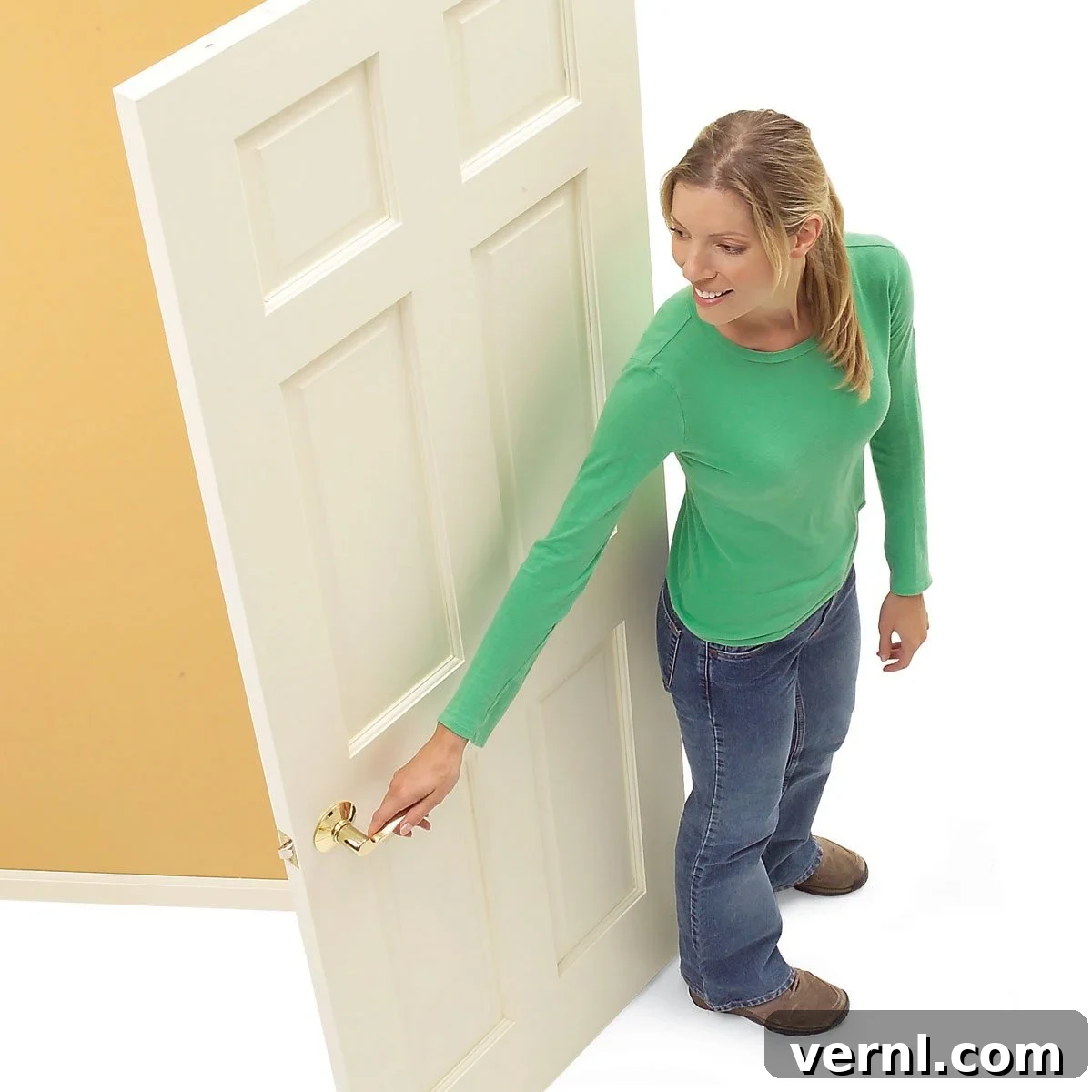
Mastering Door Handing: Your Essential Guide to Door Swing Direction
Embarking on a home renovation project, whether it’s a minor refresh or a major overhaul, involves countless decisions. Among these, a seemingly simple detail can become a significant hurdle if overlooked: the direction a door swings. This crucial aspect, known as door handing, dictates whether a door opens to the right or to the left, and it carries profound implications for the functionality, flow, and even the aesthetic appeal of your living spaces. Misjudging this can lead to expensive errors, delays, and a less-than-optimal design.
For many, including those who occasionally mix up left and right, correctly identifying door handing can be surprisingly tricky. You might find yourself scratching your head, trying to visualize the swing before placing an order. Imagine framing a new doorway in your home; typically, you’ll want the door to swing away from the nearest wall, maximizing space and avoiding obstructions. But when you face the empty frame, does that mean you need a left-hand or a right-hand door? Getting this wrong can mean ordering a door that’s completely unsuitable for your setup, costing you time, money, and frustration. This comprehensive guide aims to demystify door handing, providing you with the knowledge to make informed decisions and ensure your renovation project goes smoothly.
The Critical Importance of Door Swing Direction in Home Design
The direction your door swings is far more than a minor technicality; it’s a fundamental element that influences daily life within your home. Thoughtful consideration of door handing can enhance convenience, improve accessibility, and contribute significantly to the overall harmony of a room. Conversely, a poorly chosen swing can create inconvenient obstructions, hinder movement, and even compromise safety.
Optimizing Space and Flow
In smaller rooms, such as bathrooms, utility closets, or compact bedrooms, every inch counts. A door that swings into an already limited space can obstruct walkways, block furniture placement, or even collide with fixtures like toilets or sinks. By choosing a swing that moves the door away from these critical areas, you preserve valuable floor space and maintain an open, functional layout. Consider a bathroom door: if it swings inwards and hits the vanity, it’s not just an annoyance; it’s a design flaw that impacts daily usability. An outward swing (if practical for the hallway) or a strategic inward swing that doesn’t impede movement is essential.
Enhancing Accessibility and Safety
For homes prioritizing accessibility, door handing is paramount. Doors that swing in a direction that facilitates easy entry and exit, especially for individuals using wheelchairs or mobility aids, are critical. An appropriate swing ensures there’s enough clear space for maneuverability immediately inside or outside the doorway. Furthermore, in emergency situations, a door that swings outward into a clear hallway or away from potential interior obstructions can provide a safer and quicker exit path.
Aesthetic Considerations and Furniture Placement
Beyond pure functionality, door swing impacts the aesthetics of a room. The way a door rests when open, or the direction it reveals the interior space, can affect the visual balance. Strategically chosen door handing allows for optimal furniture placement, ensuring that a sofa isn’t constantly nudged by an opening door, or that a beautiful piece of art isn’t perpetually hidden behind it. It allows for a more cohesive and intentional interior design.
Identifying Door Handing: A Step-by-Step Approach
When you’re ready to determine the correct door handing for your project, it’s essential to use a consistent and widely accepted method. This prevents confusion, especially when communicating with suppliers or contractors. There’s a clear distinction to be made between ordering a simple door slab and a pre-hung unit.
Slab Doors vs. Pre-Hung Units: When Handing is Crucial
- Slab Doors: A slab door is essentially just the door panel itself, without hinges, a frame (jamb), or hardware holes. When you purchase a slab door, you have the flexibility to install the hinges and drill for the doorknob yourself. This means you can choose its swing direction during installation. This offers maximum adaptability but requires more work on your part.
- Pre-Hung Doors: A pre-hung door comes as a complete unit: the door slab is pre-attached to its frame with hinges already installed, and often the holes for the doorknob and latch are pre-drilled. For pre-hung doors, door handing is absolutely crucial because it cannot be converted or changed once manufactured. Ordering the wrong hand means you’ll have a door that swings in the incorrect direction for your opening, rendering it useless for its intended purpose.
The terms “left-handed” and “right-handed” can be a source of confusion, especially when you’re trying to visualize the swing without the physical door in front of you. However, by following a simple, clear guideline, you can accurately identify the handing every time.
The Definitive Method for Determining Door Handing (DIN Standard)
To accurately determine the handing of a door (or the handing you need for a new door), follow this straightforward method, which aligns with the common DIN (Deutsches Institut für Normung) standard:
- Stand in the doorway with your back to the side of the door jamb where the hinges are installed or will be installed. Imagine the door is already hanging in the frame.
- Observe the position of the doorknob/handle.
- If the doorknob is on your right-hand side, the door is a right-hand door.
- If the doorknob is on your left-hand side, the door is a left-hand door.
This method works reliably for both interior and exterior doors. Always double-check your assessment, especially for multiple doors in a project.
- Pro tip for ordering: While the above method is standard, miscommunication can still occur. When placing an order, especially over the phone, the person taking your order might not fully grasp the nuances of door handedness. To avoid costly errors, consider ordering your doors in person. This allows you to visually demonstrate the desired swing direction or even draw a simple diagram, leaving no room for misunderstanding.
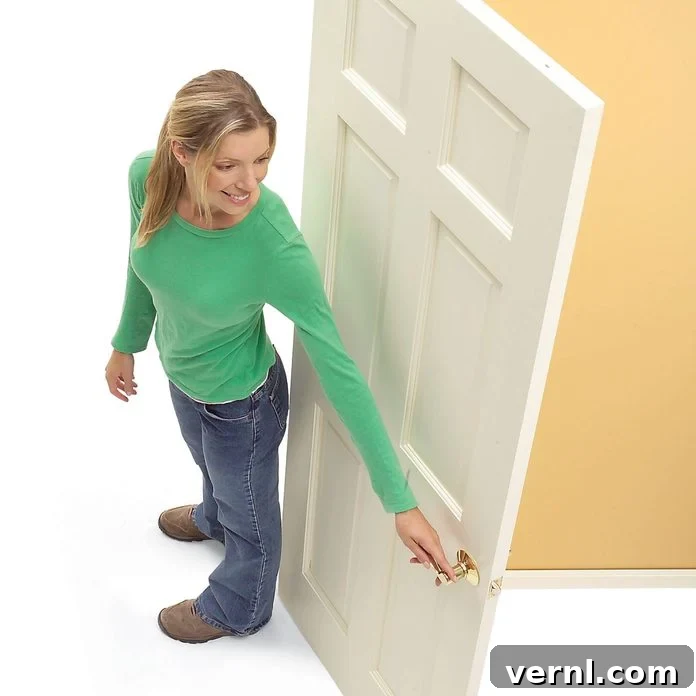
Understanding a Left-Hand Door Swing
Based on our definitive method, a left-hand door is characterized by its hinges being on the left side when you stand with your back to the hinge-side jamb, and the doorknob/handle consequently being on the left as well. When you open a left-hand door, it swings away from you to the left. This means that if you’re pushing the door open, you’ll naturally push it towards your left, and the door panel will end up on the left side of the opening. Visually, consider the image above; if you stand with your back to the hinges on the left, the handle is on your left, confirming it as a left-hand swing. This setup is often preferred where the primary approach to the door is from the right, or where the left side of the room provides a clear space for the door to rest when open, without impeding traffic or furniture.
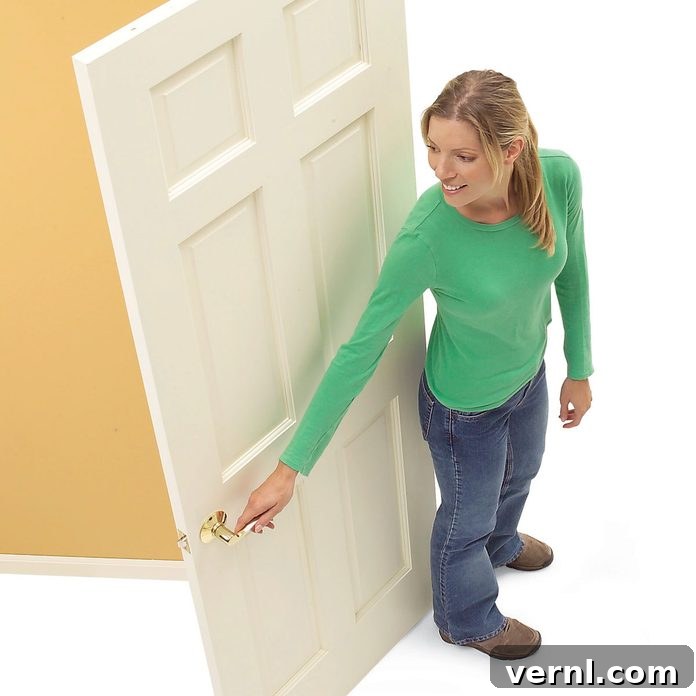
Understanding a Right-Hand Door Swing
Following the same identification method, a right-hand door has its hinges on the right side when you stand with your back to the hinge-side jamb. Consequently, the doorknob/handle will be on your right. When you open a right-hand door, it swings away from you to the right. If you were to push this door open, you’d naturally push it towards your right, and the door panel would end up resting on the right side of the opening. The image above clearly illustrates this; standing with your back to the hinges on the right, the handle is on your right, confirming it as a right-hand swing. This type of swing is typically chosen when the room’s layout or the approach to the door makes a rightward opening more practical, perhaps to avoid a wall, another door, or a piece of furniture that might be on the left side of the opening.
Can You Convert a Left-Hand Swing Door to a Right-Hand Swing?
The short answer is: it’s generally not practical, especially for pre-hung doors. While theoretically possible for a slab door with significant modifications, it’s rarely recommended due to the effort, cost, and potential compromise to the door’s integrity and appearance.
To convert a pre-drilled and pre-mortised door (like a pre-hung unit) from one swing direction to the other, you would need to:
- Remove the Hinges: This would involve taking the door off its frame and removing the existing hinges.
- Relocate Hinge Mortises: The existing mortises (recesses for the hinges) on the frame and the door slab would need to be filled, patched, and sanded smooth. New mortises would then have to be precisely routed on the opposite side of both the door and the frame. This requires precision carpentry and matching the existing finish.
- Move the Doorknob and Latch Hole: The existing hole for the doorknob and latch mechanism would need to be filled and patched. A new hole would then have to be drilled on the opposite side of the door. This is particularly challenging for doors with intricate designs or specific hardware.
- Refinishing: After all the patching, filling, and sanding, the door and frame would almost certainly need to be repainted or refinished to hide the alterations. Achieving a seamless match can be difficult.
For most homeowners, the labor involved, the potential for an imperfect finish, and the risk of damaging the door make this conversion economically unfeasible compared to simply purchasing a new door with the correct handing. It’s far more cost-effective and less stressful to ensure the correct handing is ordered from the outset.
FAQ: Navigating Common Questions About Door Handing
Is Door Handing Standardized Globally?
Unfortunately, no, door handing is not universally standardized, which can add a layer of complexity and confusion, particularly for those involved in international projects or purchasing components from different regions. The method we’ve described and extensively used in this guide, where you stand with your back to the hinges, and the knob’s position dictates “left” or “right,” corresponds to the DIN (Deutsches Institut für Normung) method, which is widely adopted in Germany and many other parts of continental Europe.
However, other standards exist. The ISO (International Organization for Standardization) handing method, prevalent in the UK and certain other countries, uses a different approach, often assigning numerals to describe door swing. For instance, an ISO “5” door swings clockwise when you close it, which would correspond to a left-hand door according to the DIN method described here. Conversely, an ISO “6” door swings counter-clockwise when closed, equating to a right-hand door by the DIN standard. This critical difference underscores why it’s always best to clarify which standard a supplier uses and, ideally, to order doors in person or with clear diagrams to eliminate any ambiguity.
Why is my Door Swing Direction So Important?
As we’ve discussed, the direction a door swings is not a trivial detail; it profoundly impacts the functionality, safety, and aesthetics of your space. Here’s a summary of key reasons why careful consideration of door handing is paramount:
- Preventing Obstructions: An incorrect swing can cause the door to collide with furniture, other doors, appliances (like refrigerators or dishwashers in a kitchen), or fixed bathroom fixtures (toilets, vanities, shower doors). This creates inconvenience and can damage both the door and the obstructing item.
- Optimizing Space and Layout: The swing dictates how a room is accessed and utilized. A properly handed door ensures smooth traffic flow, maximizes usable floor space, and allows for optimal placement of furniture and decorative elements. It prevents awkward maneuvering around an open door.
- Ensuring Accessibility: For individuals with mobility challenges, the correct door swing is vital for easy and safe passage. It ensures sufficient clear space for wheelchairs, walkers, or simply for carrying objects through a doorway without impedance.
- Compatibility with Existing Jambs: When replacing only the door slab and reusing an existing frame, you must match the original door’s handing precisely, as the hinge mortises and doorknob bore will already be cut into the jamb.
- Emergency Egress: In critical situations, a door that swings in a clear, unobstructed path can be a matter of safety, allowing for quick exits without fumbling or getting trapped.
- Aesthetic Harmony: From a design perspective, the door swing affects how a room presents itself. It can either open up a space invitingly or create a visual barrier.
Careful planning and accurate identification of door handing are essential steps in any successful home improvement project, preventing costly reworks and ensuring your doors serve their purpose effectively and elegantly.
Source
- iDigHardware: Door Handing – International Methods; (2023)