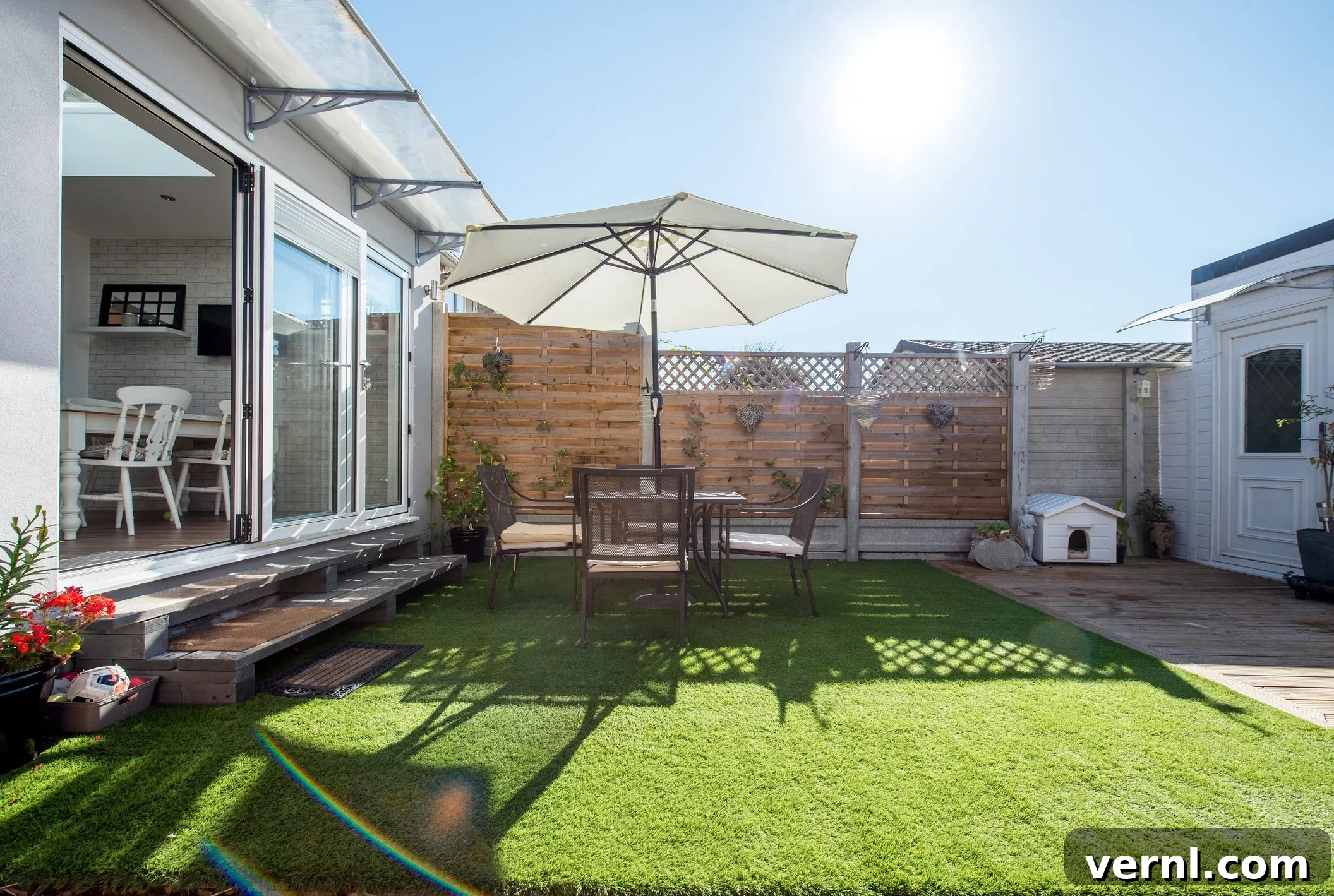
For many homeowners, the dream of a lush, green lawn often clashes with the reality of relentless maintenance. Mowing, weeding, fertilizing, and watering can quickly turn a backyard oasis into a never-ending chore, especially when battling extreme temperatures. The thought of replacing thirsty natural grass with drought-resistant alternatives like cacti and rocks often crosses the mind. But what if there was a solution that offered the aesthetic appeal of a traditional lawn without the demanding upkeep? Enter artificial grass – a revolutionary landscaping option gaining immense popularity.
Gone are the days when artificial turf meant an unappealing, hard plastic surface reminiscent of outdated sports fields. Today’s synthetic grass products are engineered with cutting-edge technology to mimic the look and feel of natural grass with astonishing realism. Joe Raboine, vice president of design at Belgard, highlights this evolution: “Today’s styles fit every aesthetic and budget, so do your research.” If you’re contemplating making the switch to an artificial lawn, we’ve compiled all the essential information you need to make an informed decision for your outdoor space.
What Is Artificial Grass Made Of?
Artificial grass, often referred to as synthetic turf or fake grass, serves as a high-performance, synthetic alternative to real turfgrass. While initially developed and popularized for sports venues to provide consistent play surfaces in challenging conditions, artificial grass has seamlessly transitioned into residential and commercial settings. Its rapid rise in popularity stems from its evergreen beauty, significantly reduced maintenance requirements, exceptional durability, and its ability to maintain a pristine appearance throughout the year, regardless of climate or season.
Exploring Artificial Turf Materials and Their Characteristics
The variety in artificial grass styles is vast, encompassing differences in color gradients, thatch layers, pile height, and density, all contributing to a unique aesthetic and feel. However, the core of the turf itself is typically crafted from three primary synthetic polymers, each offering distinct advantages and drawbacks:
- Nylon: Renowned for its unparalleled strength and resilience, nylon turf is often considered the most durable option. Raboine notes, “Nylon turf is the strongest and holds up the best in hot or cold climates, but is typically the stiffest to the touch and expensive.” Its robustness makes it an excellent choice for high-traffic areas or specialized applications like putting greens where extreme durability is paramount. However, nylon’s inherent stiffness can result in a less natural feel, and its porous nature means it can absorb water, which might be a consideration for drainage.
- Polyethylene: Often regarded as the premium choice for residential landscapes, polyethylene excels in replicating the natural look and soft texture of real grass. “Polyethylene is the most premium option because of its more natural look and texture,” Raboine explains. This material is highly nonporous, enhancing its durability and resistance to moisture, making it less prone to odors and easier to clean. It stands up remarkably well to various weather conditions and heavy usage, offering a blend of aesthetic appeal and functional performance.
- Polypropylene: As the most cost-effective of the three primary turf materials, polypropylene offers an accessible entry point into artificial landscaping. While budget-friendly, it has certain limitations in terms of performance. It doesn’t retain its shape as effectively as nylon or polyethylene, meaning it can flatten under heavy foot traffic over time. Additionally, its resistance to high heat is lower, and its overall durability is less robust. Raboine suggests, “Raboine recommends this option for aesthetics only,” making it suitable for areas with minimal foot traffic or where budget is the primary concern, and a softer, less resilient feel is acceptable.
When selecting your artificial grass, Raboine advises choosing a medium-density, medium-pile height option that incorporates some “thatch” (the curly, brownish fibers at the base of the blades). “This will provide the most natural appearance and won’t break your budget,” he says. The thatch layer is crucial for realism, adding depth and mimicking the underlying layer of natural grass. Furthermore, always insist on seeing and touching actual samples at your home to ensure the color, texture, and feel align with your expectations before making a final purchase.
The Importance of Infill Materials
Beyond the synthetic fibers, another critical component of a high-performing artificial lawn is the infill material. Infill is spread between the grass blades, serving multiple vital functions:
- Weight and Stability: It helps weigh down the turf, preventing wrinkles and keeping the blades upright.
- Cushioning and Shock Absorption: Provides a softer, more forgiving surface, essential for play areas.
- Blade Support: Helps the grass blades stand erect, preventing matting and ensuring a lush appearance.
- Drainage and Odor Control: Specific infills like ZeoFill can absorb moisture and ammonia from pet urine, reducing odors.
Common infill types include silica sand (most economical), crumb rubber (offers excellent cushioning but can get hot), and specialized organic or coated sand infills designed for cooling or antimicrobial properties.
Technological Innovations in Synthetic Grass
The evolution of synthetic grass has been driven by continuous technological advancements, transforming it from a rudimentary solution into a sophisticated landscaping product. Modern artificial turf materials are engineered with a focus on both performance and environmental responsibility, offering a range of superior properties that cater to contemporary needs:
- Non-toxic and Antimicrobial Properties: Today’s turf is designed to be free from harmful chemicals, making it safe for children and pets. Integrated antimicrobial agents inhibit the growth of bacteria, mold, and mildew, ensuring a more hygienic surface, especially important in pet relief areas.
- Enhanced Heat Resistance and Cooling Technologies: A common concern with older artificial turf was its tendency to heat up under direct sunlight. Innovations now include specialized yarn treatments and infill materials (like HydroChill or T°Cool) that can significantly reduce surface temperatures, making the turf more comfortable to walk on, even in hot climates.
- Resilient Yarns for Grass Blades: Advanced polymer science has led to the development of highly resilient yarns that mimic the look and feel of natural grass blades. These fibers are designed with a “memory” effect, allowing them to spring back to an upright position after being stepped on, maintaining the turf’s lush appearance over time.
- Advanced Density and Infill Texture: Higher yarn density and varied blade shapes contribute to a fuller, more natural look. Coupled with finely textured infills, this creates a realistic cushioning effect underfoot, enhancing comfort and playability.
- Excellent Permeability and Drainage Systems: Modern artificial turf features sophisticated backing systems with perforations that allow water to drain efficiently, preventing puddling and promoting quicker drying. This is crucial for managing rainwater, pet waste, and ensuring the turf remains clean and odor-free.
- Recyclability and a Low Carbon Footprint: Many manufacturers are now prioritizing sustainability, developing recyclable turf products and employing manufacturing processes that reduce environmental impact. This commitment to eco-friendliness contributes to a lower carbon footprint throughout the product lifecycle.
Best Use Cases for Artificial Grass
The demanding nature of natural lawn care – the endless cycle of mowing, fertilizing, watering, and pest control – is a primary driver for many homeowners considering artificial grass. Joe Raboine affirms this, stating that the number one reason people install artificial grass is for its unparalleled ease of maintenance. Beyond just saving time and effort, synthetic turf is incredibly resilient and adaptable. “Turf is a great option,” Raboine says, “as it always looks great, no matter the conditions.” This makes it an ideal choice for a variety of challenging backyard scenarios:
Eliminating Constant Lawn Maintenance
Imagine reclaiming weekends previously spent on yard work. Artificial grass entirely eliminates the need for mowing, trimming, fertilizing, and most weeding. This translates to significant savings in time, labor, and ongoing expenses for equipment, fuel, and chemicals, offering true freedom from the traditional lawn grind.
Transforming Areas with Excess Shade
Natural turfgrasses, even those specifically bred for shade tolerance, require a certain amount of sunlight to thrive. In perpetually shaded areas under dense tree canopies or beside tall buildings, achieving a lush, green lawn can be an ongoing battle against thinning grass and bare patches. Artificial grass, however, is not dependent on sunlight, making it the perfect solution for creating vibrant, green spaces where natural grass simply won’t grow. It provides an instant, evergreen carpet that brightens up dark corners of the yard.
Conquering Dry Climates and Water Scarcity
In regions grappling with drought, water restrictions, or high water costs, maintaining a natural lawn can be environmentally unsustainable and financially burdensome. Irrigating a lawn in many parts of the country is no longer a viable option. Installing artificial grass allows homeowners to dramatically reduce or eliminate water consumption for landscaping purposes, contributing to significant water conservation efforts and a noticeably lower water bill. It offers a consistently green lawn without the guilt of excessive water use.
Optimizing Small Yards and Urban Spaces
For homeowners with compact city lawns or postage-stamp sized yards, the effort of hauling out a heavy mower for a mere 10-minute job can feel disproportionate. Moreover, valuable garage or shed space is often consumed by lawn care equipment. Artificial grass provides a practical, clean, and visually expansive solution for small yards, balconies, and rooftops, maximizing usable outdoor space without the maintenance overhead. It creates a pristine, clutter-free aesthetic perfect for urban living.
Simplifying Hard-to-Mow and Irregular Yards
Multi-level lawns, steep slopes, narrow strips, or intricately shaped garden beds can turn mowing into a precarious and exhausting task. The original article’s author notes, “I used to lift my lawnmower up five steps every time I mowed.” For such challenging terrains, artificial grass offers an undeniable advantage. Once installed, it conforms to any contour, providing a uniform, maintenance-free surface that eliminates the risks and difficulties associated with maneuvering lawn equipment in awkward spaces.
Creating Pet-Friendly Zones
For pet owners, artificial grass is a game-changer. It provides a clean, durable surface that stands up to digging, running, and pet waste. Modern turf systems with excellent drainage and antimicrobial infills prevent odors and ensure easy cleanup, making it an ideal choice for dog runs, pet relief areas, and general play spaces, keeping both pets and owners happy.
Designing Safe and Engaging Play Areas
Beyond aesthetics, artificial turf is increasingly favored for playgrounds, parks, and schools due to its inherent safety features. With enhanced shock absorption and a consistent, even surface, it minimizes the risk of injuries from falls, providing a soft landing for children at play. Its clean, allergen-free nature further contributes to a healthier play environment.
Enhancing Pool Surrounds and Patios
Around swimming pools, artificial grass prevents mud, eliminates clippings from tracking into the water, and provides a comfortable, non-slip surface. It’s also excellent for patios, rooftop decks, and balconies, offering a soft, green touch that complements hardscaping and extends living spaces.
How to Choose the Right Artificial Grass for Your Lawn
Selecting the ideal artificial grass involves more than just picking a color. It requires considering the intended use, desired aesthetic, and specific performance requirements for your outdoor space. Whether you’re aiming for a pristine, manicured look or a durable surface for active play, understanding key characteristics will guide your decision. For instance, for a soft, lush aesthetic and comfortable feel, longer-pile synthetic grass is often preferred. Conversely, for areas hosting heavy sports or high-impact activities, a short-pile, high-density, sports-friendly synthetic turf designed for resilience is typically the best choice.
When choosing artificial grass, carefully evaluate the importance of the following factors based on your specific purpose and preferences:
- Natural Color and Blends: Look for turf that incorporates various shades of green, along with brown or tan thatch layers, to accurately mimic the look of natural grass. Avoid overly bright or uniform green colors, which can appear artificial.
- Yarn Density: This refers to the number of individual grass blades per square inch. Higher density generally means a fuller, more luxurious feel and appearance, but can also impact cost and drainage.
- Pile Height: The length of the grass blades. Taller piles (e.g., 1.5 to 2.5 inches) offer a lush, natural appearance, while shorter piles (e.g., 0.5 to 1 inch) are more durable for high-traffic or sports areas and easier to clean.
- Resilience of Grass Blades: This refers to the ability of the fibers to spring back to an upright position after being compressed. Turf with good resilience will resist matting and maintain its volume over time, especially in high-traffic zones.
- Antimicrobial Infills: Especially crucial for pet owners, these specialized infills (like ZeoFill) help neutralize odors by absorbing ammonia from pet urine and inhibit bacterial growth, ensuring a cleaner, more hygienic surface.
- Permeability and Drainage Quality: Excellent drainage is paramount. Ensure the turf’s backing system has sufficient perforations to allow water (and pet waste) to pass through quickly and efficiently, preventing puddling and odors.
- Comfort for Walking: The combination of fiber material, pile height, density, and infill contributes to how soft and comfortable the turf feels underfoot. For barefoot walking or children’s play, a softer, more cushioned option is desirable.
- UV Stability: A critical factor for longevity. High-quality artificial grass is UV-treated to prevent fading and degradation from prolonged exposure to sunlight, ensuring its color remains vibrant for years.
- Warranty: Always review the manufacturer’s warranty for coverage on UV degradation, material defects, and general wear and tear. A longer, comprehensive warranty indicates a higher quality product.
- Installation Method: Consider whether you plan a DIY installation or will hire professionals. Proper base preparation (compacted aggregate, weed barrier) is fundamental for optimal drainage and longevity, regardless of who installs it.
Climate Considerations for Artificial Grass and Maintenance
One of the significant advantages of artificial grass is its remarkable adaptability to diverse climates. Raboine confirms its resilience: “Artificial grass can handle just about anything — heavy snow, lots of trees, high humidity and regular downpours.” These environmental factors, he explains, “won’t impact the longevity of the turf.” However, they do necessitate specific maintenance routines to keep your synthetic lawn looking its best and performing optimally.
Maintenance Under Tree Cover
While beautiful shade trees can help keep your artificial grass cooler during scorching summers, they also present a maintenance challenge: debris. Regular removal of leaves, sticks, acorns, and pine needles is essential. If left to accumulate, this organic matter will break down and embed itself within the turf’s thatch layer, becoming increasingly difficult to remove and potentially impeding drainage or encouraging weed growth. Raboine advises, “A blower works really well and should be done often if you have trees and debris overhead.” A leaf blower is highly effective for quick cleanup, and a shop vacuum can be used for more stubborn debris. A stiff-bristled broom can also help lift and remove embedded particles.
Managing Heavy Snow and Ice
Before winter arrives, ensure you’ve thoroughly cleaned your artificial lawn of all debris. When heavy snow falls, Raboine suggests that if you don’t need to use the turf during winter, “it’s best to just let snow and ice naturally melt.” This prevents potential damage from improper removal. If the space is necessary for walking or for pets, use a plastic snow shovel without a metal edge to gently push away snow. Avoid metal shovels, which can damage the synthetic fibers or backing. A push broom can also effectively clear lighter snowfalls, ensuring the turf remains intact and functional.
Addressing Hot Climates and Sun Exposure
Artificial grass is perfectly suitable for any climate, but direct, intense sunlight can indeed cause the turf’s surface to become uncomfortably hot, especially darker shades or lower-quality products. This is a crucial consideration if you have children or pets who will be using the area extensively. Higher-quality artificial grasses often incorporate advanced cooling technologies in their fibers or are designed to absorb less heat than cheaper alternatives. Consider strategic landscaping features such as shade trees, pergolas, umbrellas, or shade sails to break up large, exposed sections of artificial turf. Additionally, specialized infills, like those with cooling properties, can significantly reduce surface temperatures. Raboine emphasizes, “Choosing a high-quality UV-resistant turf will ensure longevity” and help prevent fading and degradation over time, even under harsh sun.
Navigating Rain and High Humidity
One of the most appealing aspects of artificial grass is its complete independence from watering. Rain and humidity pose no threat to the turf itself. However, superior drainage is absolutely critical for the long-term performance and cleanliness of your artificial lawn. This is precisely why the initial upfront cost of artificial turf includes significant investment in ground preparation. The sub-base, typically composed of carefully layered and compacted decomposed granite and sand, is engineered to facilitate rapid and efficient water flow down through the turf and into the ground beneath. This prevents waterlogging, minimizes mildew growth, and ensures that pet waste is thoroughly rinsed away. Raboine advises, “Polyethylene products with nylon backing — with drain holes — are preferred in most cases,” as this combination offers an optimal balance of natural aesthetics, durability, and efficient water management.
Is Artificial Grass Safe for Children and Pets?
The safety of artificial grass for the youngest members of our families and our beloved pets is a top priority for manufacturers. Modern advancements have made synthetic turf an increasingly appealing and secure ground cover for playgrounds, parks, schools, and residential backyards. An artificial grass lawn offers an inviting, open space for pets to roam and play without the concerns of mud, pesticides, or excessive heat. To ensure it remains a safe and hygienic environment, selecting the right product and maintaining it regularly are paramount. Look for artificial grass with the following enhanced features:
- Enhanced Shock Absorption: Designed with fall protection in mind, many turf systems for play areas incorporate cushioning underlays to absorb impact, protecting children’s knees and elbows from falls and meeting critical fall height safety standards.
- Excellent Permeability, Drainage, and Stain Resistance: Superior drainage is vital for pet owners, allowing pet urine and rainwater to pass through quickly, preventing odors and ensuring a clean surface. Stain-resistant fibers also make cleanup easier.
- Built-in Antimicrobial Protection: Many high-quality artificial grasses include integrated antimicrobial agents in their fibers or infill materials. These actively inhibit the growth of bacteria, mold, and mildew, contributing to a more hygienic play and pet area.
- Free from Harmful Chemicals and Allergens: Reputable artificial grass products are manufactured to be lead-free and free from other heavy metals and toxic chemicals. They also don’t produce pollen, making them an excellent choice for allergy sufferers.
- Naturally Resistant to Bugs and Pests: Unlike natural grass, artificial turf doesn’t offer a hospitable environment for common lawn pests like fleas, ticks, and mosquitos, as there’s no soil to burrow into or organic matter to feed on. This reduces the need for chemical pesticides in your yard.
Beyond these inherent features, regular cleaning – including rinsing with water, brushing to maintain pile height, and occasionally using an enzymatic cleaner for pet areas – is crucial to maintaining a safe, sanitary, and aesthetically pleasing artificial lawn for everyone to enjoy.
Frequently Asked Questions About Artificial Grass
How long does artificial grass last?
The lifespan of artificial turf can vary depending on its quality, the amount of foot traffic it receives, and how well it’s maintained. Typically, high-quality artificial grass is designed to last between 8 to 10 years, with many manufacturers offering warranties that extend up to 15 years or even a lifetime for certain aspects like UV stability and material defects. Proper installation and regular maintenance can significantly contribute to maximizing its longevity.
Which artificial grass is best for a residential lawn?
For most residential lawn applications, polyethylene artificial grass is widely considered the best choice. It offers an optimal balance of aesthetics, durability, and comfort. Polyethylene turf boasts a soft, natural texture, vibrant green color options, and an impressively realistic appearance that closely mimics real grass. Its resilience and non-porous nature also make it excellent for everyday use, including families with children and pets.
How much does artificial grass cost?
The cost of artificial grass varies significantly based on material quality, pile height, density, and manufacturer. Installation costs, which include site preparation, infill, and labor, are often a major component. On average, homeowners can expect to pay anywhere from $5 to $20 per square foot for both materials and professional installation, though this can fluctuate based on location and project complexity. While the upfront investment is higher than natural sod, the long-term savings on water, maintenance, and landscaping services can provide a substantial return on investment.
Can you install artificial grass yourself?
While DIY installation is possible for small, straightforward areas, installing artificial grass properly is a labor-intensive process that requires specific tools, skills, and careful attention to detail for optimal drainage and longevity. Challenges include preparing a stable, level base, seaming turf sections seamlessly, and correctly applying infill. For larger areas or complex landscapes, hiring a professional installer is highly recommended to ensure a flawless and durable finish that maximizes the turf’s lifespan and performance.
Does artificial grass get hot?
Yes, like any dark surface exposed to direct sunlight, artificial grass can get warm. However, modern advancements have addressed this concern. Higher-quality turf products often incorporate cooler-technology fibers or lighter color blends. Additionally, specialized infills, such as those with HydroChill technology, can retain moisture and release it slowly through evaporation, significantly reducing surface temperatures. Strategic shading from trees, pergolas, or shade sails can also help keep the turf cooler in hot climates.
How do you clean artificial grass?
Maintaining artificial grass is straightforward. Regular cleaning involves:
- Rinsing: Periodically rinse the turf with a garden hose to remove dust, pollen, and light debris.
- Brushing: Use a stiff-bristled broom or power brush against the grain to fluff up the fibers and maintain their upright appearance, especially in high-traffic areas.
- Pet Waste: For pet urine, rinse the area thoroughly with water and use an enzymatic cleaner specifically designed for artificial turf to neutralize odors. Solid waste should be picked up promptly.
- Debris Removal: Use a leaf blower, rake, or shop vacuum to remove leaves, twigs, and other organic matter.
About the Expert
- Joe Raboine, vice president of design atBelgard, an outdoor living enthusiast, is nationally renowned as an expert on hardscapes and outdoor living design.
Sources:
- Artificial Grass Pros: “Best Artificial Grass”
- Lawn love: “How to Clean Artificial Grass”
- University Hospitals: “Artificial Turf Versus Natural Grass”
- Science Direct: “Artificial lawns: Environmental and societal considerations of an ecological simulacrum”
- USDA: “Football Turf a Source of Protein?”